In their new Forefront article, Sonal Parasrampuria, L. Daniel Muldoon, Neda Najmitabrizi, Mattan Alalouf, Patrick Hardy, Eliot Fishman, Purva Rawal, and Elizabeth Fowler of @CMSinnovates lays out the four principles and key considerations the Innovation Center uses when setting financial benchmarks for upcoming models. https://t.co/Vbnzs3f5jK
In their new Forefront article, @SMBernheim, Julia Driessen, Noemi Rudolph, Jacob K. Quinton, L. Daniel Muldoon, Tom Duvall, Purva Rawal, and Elizabeth Fowler of @CMSinnovates discuss how the Quality Pathway strategic initiative can drive greater care improvements through the use of multiple complementary levers of change, such as jointly using payment incentives and care delivery requirements to support a common goal. https://t.co/xVQzyyzd3R
In 2024 the Innovation Center launched a new initiative to strengthen the focus on quality in our models. Read the latest on the Quality Pathway initiative and how it’s helping to improve patient care in the new @Health_Affairs Forefront: https://t.co/Hbf5ziT9qE
Dive into the latest from CMS Innovation Center! Discover how we are enhancing quality, prioritizing patient outcomes, and elevating care experiences through our new Quality Pathway. Learn more in @nejmcatalyst: https://t.co/EWHneavibs
Phase 2 of the Value-Based Insurance Design Model has shown a notable increase in model participation & a shift in addressing #healthrelatedsocialneeds. For more info, visit the findings 🔎: https://t.co/QbdCiHXMPz
Payment reform "offers the opportunity to move toward paying for value with a key focus on higher-quality patient- and family-centered care. For far too many patients, hospice has become an “add on” to an already expensive course of care and another silo of health care." https://t.co/aBSUJiorkv
CMMI "plans to continue focusing on the use of voluntary participation models and to develop models in new areas, including prescription drugs, Medicare Advantage, mental and behavioral health, and program integrity."
https://t.co/tCJpKlG71s
"People’s aversion to losses is precisely the reason why an upfront, negotiated benchmark is not the same as a prospective payment"
"The strength of an incentive and, consequently, the resulting value for patients, could be a function of the timing of the actual payment." https://t.co/gcvfBVTmnr
Common view that much end-of-life care is inconsistent w/ patient preferences, is filled w/ both hope & hype, & if only ppl understood odds of recovery then things would improve. How do we square this w/ EOL intensity being so similar b/t docs and others?
https://t.co/FRNJyiNuuK
Compelling new data on how #US administrative billing complexity and costs are totally out of whack @CMSGov https://t.co/65RYIJQTG6 by @GottliebEcon@Health_Affairs
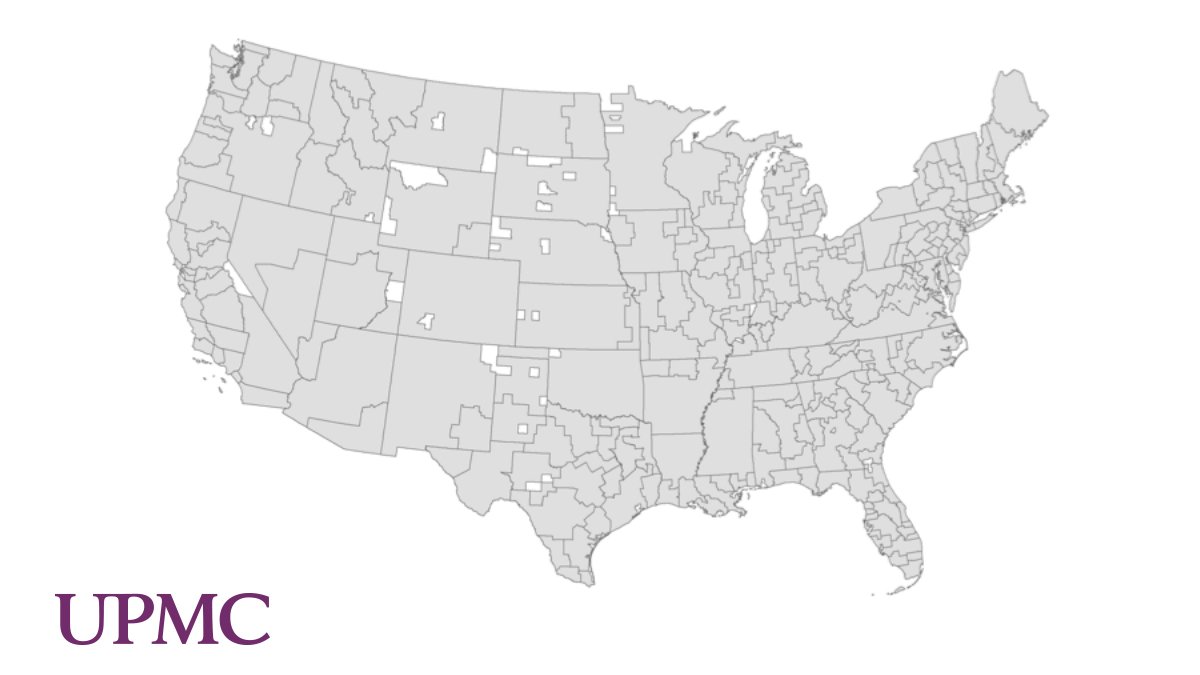
UPMC physicians and @PittHealthSci scientists have created an emergency and trauma care referral map that will allow states and groups of counties to implement quality improvement programs.
Read about the research behind the 326 referral regions: https://t.co/cGerZfdbHB
"The lag between performance and evaluation, the “black box” of risk adjustment, and benchmarks that are perceived as constantly moving targets, all contribute to a reluctance to move ahead with two-sided risk." @Farzad_MD@Travis_Broome https://t.co/PjePU2EM33
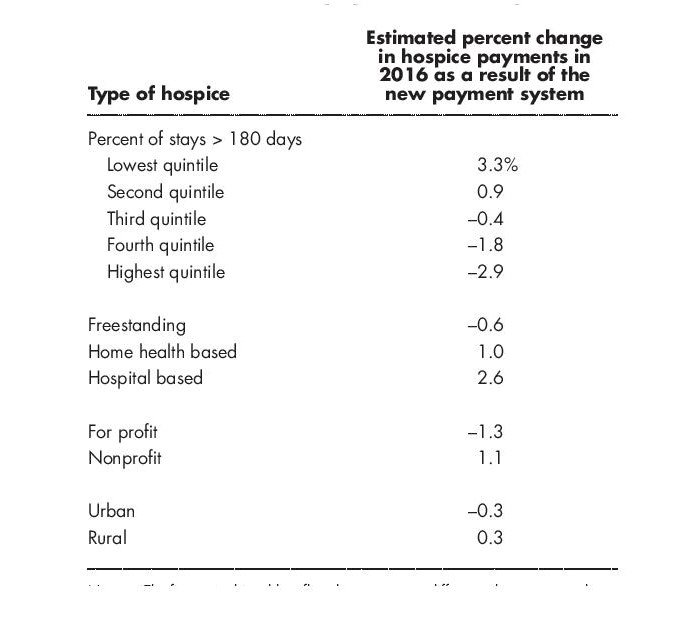
"The new payment system may reduce some of the variation in margins across providers, but substantial variation is likely to remain." #hpm https://t.co/KzDP3kzYIm
"Wherever products are too complex for customers to understand, and where subsidies and complex regulation add to the muddle, huge profits can opaquely be made." https://t.co/Q2IpStmTUW
New study demonstrates the feasibility of collecting perceived (egocentric) neighborhoods through online mapping surveys to help address the uncertain geographic context problem (UGCoP). @zandodson https://t.co/3olH8DuPPT
The budget deal will allow Medicare Advantage plans to pay for long-term care services. The first time Medicare will provide these benefits. https://t.co/nxbrDPCBPN
Periyakoil: "The hospice model has remained static and not been sufficiently adapted to the rapidly changing needs of people who are nearing the end of life." Fails the needs of older persons who are disabled #geriatrics#hpm https://t.co/asWGvP13a7
"There is an important tension in the managed competition of government-run insurance programs between protection (the desire to protect vulnerable individuals) and innovation (the desire to let private entities continually improve their products)" https://t.co/d07ldW2EIN
Important tension exists in #ManagedCompetition of government-run insurance programs between protection and innovation. #MedicareAdvantage and #PartD Benefits reflect this. https://t.co/oyXUbUbQud