Bus Driver Fined Only 2,000 Baht After Nearly Hitting Pedestrian
A bus driver was reportedly fined only 2,000 baht, about US$61, after running a red light and nearly hitting a person about to cross at a zebra crossing.
Thailand imposes the same penalties on all vehicle classes: up to 4,000 baht, about $122, for running a red light or failing to stop for pedestrians at a zebra crossing. The offences carry deductions of two points and one point, respectively.
Critics have long argued that Thailand’s traffic penalties are too small to deter repeat offences. Singapore distinguishes between vehicle classes, imposing about $314 on cars and $393 on heavy vehicles such as buses for running a red light. Vietnam fines cars and buses about $691–$767, while motorcycles face fines of about $154–$230. Malaysia allows a compound of up to $75 or a court fine of up to $497, while Indonesia’s maximum is about $28 or up to two months’ detention.
Vietnam’s tougher penalties appear to have improved compliance after taking effect in January 2025. Detected red-light offences fell 36.6% year on year during the first three months, while crashes fell about 28%. Across 2025, traffic accidents declined 22.2%, deaths 6.35% and injuries 29.9%, although officials also credited stricter enforcement, licence-point deductions, surveillance technology and infrastructure improvements.
#Thailand #TrafficLaw #TrafficDiscipline
Nach Massaker an Schule: Thailand ringt mit seinem Waffenproblem
Das Königreich Thailand steht unter Schock: Ein 14-Jähriger hat erst seine Großeltern erschossen und dann an seiner Schule Lehrer, Schüler und sich selbst getötet.
https://t.co/mxa0FXTjwZ
While the junta continues to seek legitimacy, soldiers in ethnic areas are depriving civilians of their humanity with endless attacks threatening local safety & security. ⚠️A drone strike killed five civilians—including a baby on Aug 4 in #Karenni.
https://t.co/RfZvoAPDil
Scam-Fabriken in Myanmar:
Der große Betrug
May sucht in Thailand nach Arbeit und landet als Zwangsarbeiterin in Myanmar. Dort organisieren Kriminelle Online-Scams mit Opfern auf der ganzen Welt. https://t.co/yPTWJsqqlx
21.37h: I don't know about you, but the official #ThaiElection26 count webpage by the EC is not trickling like in 2023, but comes in batches like in 2019 where the % suddenly jumps... https://t.co/ee1oncaAiP
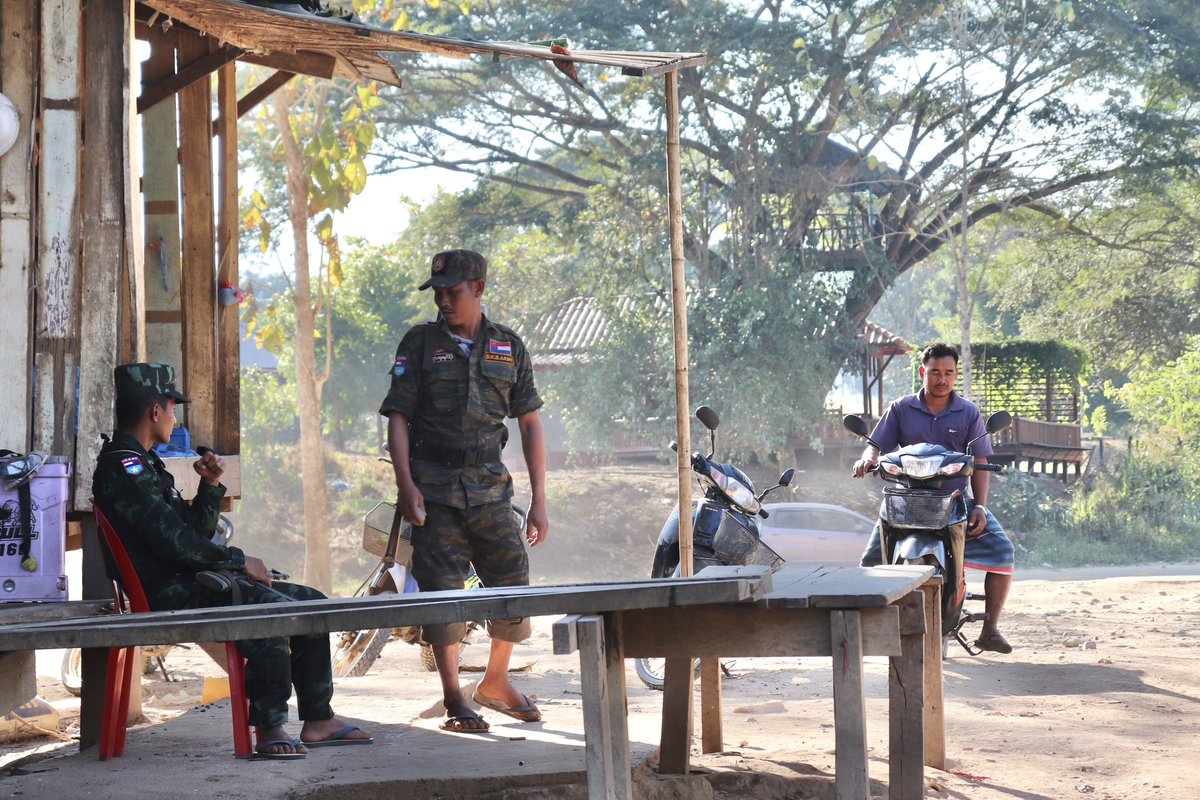
The scam compounds named HONG TAI (Tai Chang 1) and Hexin (Tai Chang 2) operate in DKBA-controlled areas. Survivors report severe beatings and denial of medical care.
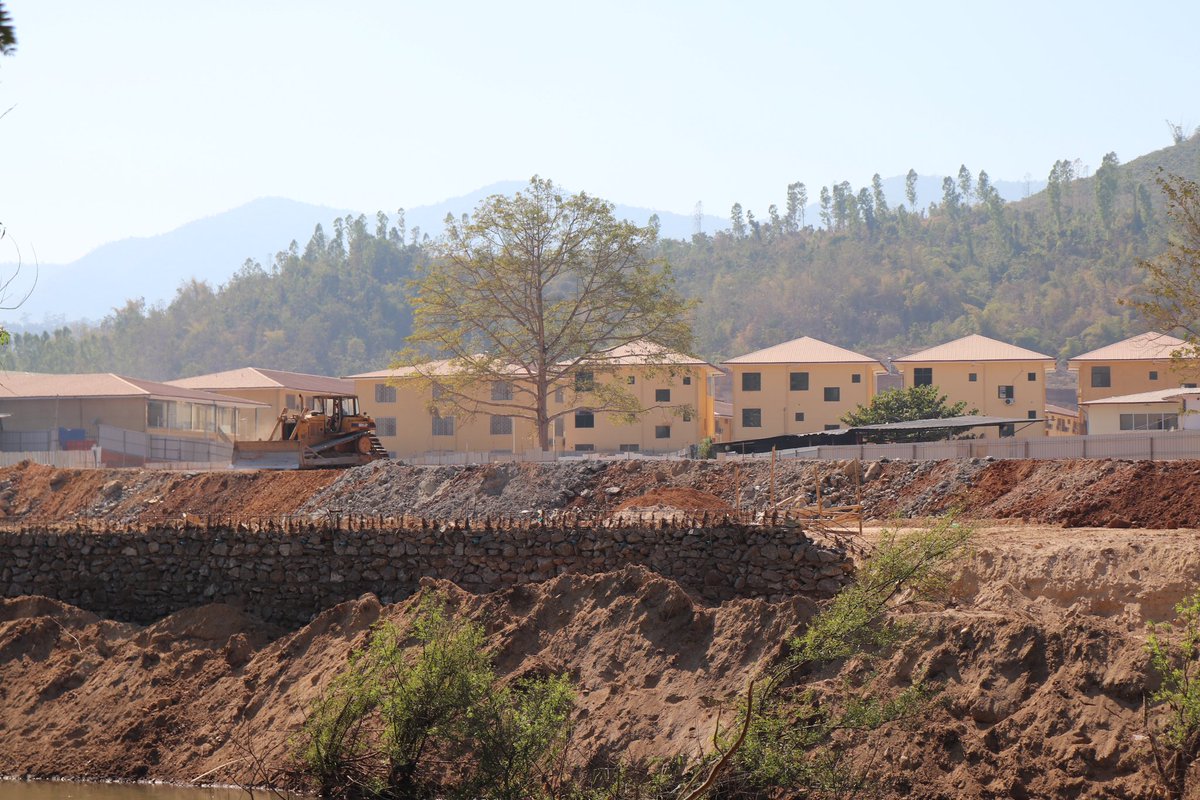
Photos I took a few months ago show scam compounds under construction south of Myawaddy. Now, those sites are up and running—controlled by Chinese mafia, and holding trafficked victims in brutal conditions. #Myawaddy#HumanTrafficking Photos:@julikueng
The public prosecutor has decided not to indict US academic Dr Paul Chambers, a lecturer at Naresuan University's Faculty of Social Sciences, on charges of royal defamation and violation of the Computer Crimes Act, filed against him over a blurb on the ISEAS – Yusof Ishak Institute’s website promoting a webinar, which Chambers said he did not write or publish because he is not an admin for the site.
The public prosecutor in Phitsanulok will be informing the police, who will then decide whether to object to the public prosecutor's decision not to indict Chambers.
Link in reply.
Protestor at Shangri-La Hotel in #Bangkok which is hosting #BIMSTEC. He calls the leader of Myanmar’s junta a “tyrant.” Min Aung Hlaing is here while many of his people struggle to get the aid and help they need after a devastating earthquake.
🧵 (1/3) The federal grants that fund Radio Free Asia and partner networks were terminated Saturday morning, according to a grant termination notice received by RFA.
https://t.co/OQFjgZgpTj
We are very grateful to the United States for all the support. I’m thankful to President Trump, Congress for their bipartisan support, and American people. Ukrainians have always appreciated this support, especially during these three years of full-scale invasion.
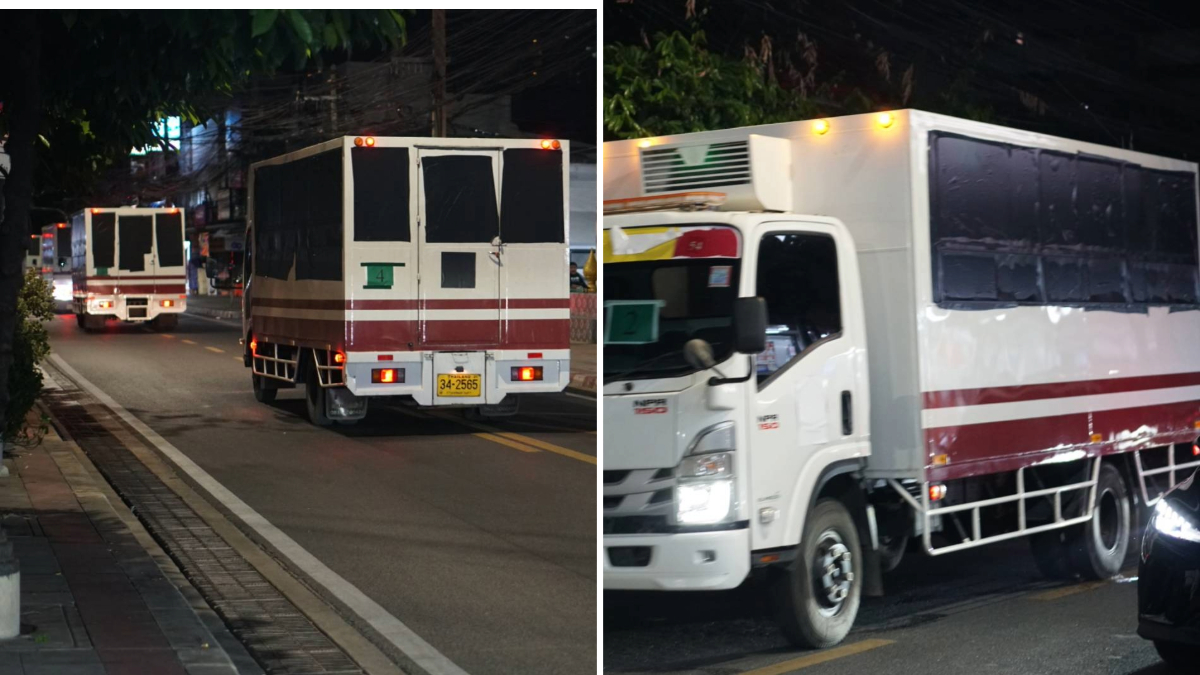
Six transport trucks with windows covered in black tape were seen leaving the Immigration Detention Center (IDC) in Suan Phlu last night. Reports suggest Thai authorities are secretly deporting 48 Uyghur refugees who have been detained for over a decade to China.
Human Rights Watch (HRW) has expressed deep concern, stating that the operation violated standard procedures. The use of black tape to seal vehicles is unprecedented, and police escorts blocking the convoy prevented anyone from tracking its destination.
This comes as international warnings indicate that the Thai government has reversed its commitment not to deport Uyghur detainees to China. The 2022 Act on the Prevention and Suppression of Torture and Enforced Disappearances and international law prohibit returning individuals to countries where they may face torture, enforced disappearance, or persecution.
Despite previous assurances, reports suggest that secret deportations have already taken place. The U.S. Department of State has raised concerns with Congress, and the new U.S. Secretary of State has warned that deporting Uyghurs to China puts them at extreme risk of serious human rights violations, including genocide.
HRW has called on the Thai government to ensure the safety of Uyghurs in its custody and to stop any further deportations. As a UN Human Rights Council member, Thailand is obligated to protect refugees and must not send them to countries where they could be harmed. The secrecy surrounding the operation raises serious questions about its intent.
Since 2015, around 300 Uyghurs have sought refuge in Thailand. Of these, 170 women and children were sent to Turkey, while 109 were deported to China. Currently, 48 remain—43 in detention and five in prison for attempted escapes. Concerns about their health, including hunger strikes, and fears of deportation persist.
HRW has urged the Thai government and Prime Minister to confirm the Uyghurs' safety and immediately stop any deportation plans. Sending them to China could put their lives at risk.
#Thailand #China #Uyghur #Refugees #HumanRights #UNHRC
Thai authorities' reasons for deporting Uyghur refugees, who had been held at the Immigration Detention Center (IDC) in Suan Phlu for over a decade, to China, as stated by Government Spokesperson Jirayu Huangsap, include:
(1) The Chinese government made an official request through diplomatic channels for the Thai government to repatriate 45 Uyghur Chinese nationals who entered Thailand illegally and had been detained here for over 10 years without charges (except for some who attempted to escape and assaulted officers).
(2) The Chinese government said that these individuals are all Chinese nationals and provided supporting evidence and documents.
(3) The Chinese government states that the individuals' offenses were minor, related to illegal departure from China, and that there is no evidence of serious crimes. Upon return to China, they will be allowed to reunite with their families and resume normal life. The Chinese government guarantees full protection and safety for them.
(4) The Chinese government was willing to allow Thai officials to observe the individuals' safe return to their families to ensure their safety.
(5) The Chinese government was also prepared to allow periodic visits from Thai representatives to confirm that these individuals safely returned to their families and resumed normal lives.
(6) The Chinese government (including both the Ministry of Foreign Affairs and the Ministry of Public Security) issued an official statement confirming its commitment to the safety and protection of these individuals.
(7) In its consideration, the Thai government took these factors into account:
7.1 The repatriation of foreigners is Thailand's sovereign right, carried out for the benefit of the country. Thailand did not cause the issue and had no involvement in it. Instead, it had shouldered the burden of caring for these individuals for over 10 years. Rather than receiving support or appreciation, Thailand faced criticism and pressure to act according to others' demands, without regard for its own reasoning. Thailand affirms that repatriation was not for the benefit of any other country but to resolve the human rights violations these individuals had faced for over 10 years while Thailand had borne the burden.
7.2 The process followed Thailand's domestic laws.
7.3 It served Thailand's interests in maintaining relations with other countries.
7.4 It aligned with human rights principles, especially the non-refoulement principle, ensuring that individuals were not sent back to harm. The Chinese government confirmed and guaranteed full protection and security for them.
7.5 The matter had been thoroughly reviewed by the relevant Thai authorities.
7.6 These individuals were detained for illegal immigration and had been held in cramped conditions for over 10 years. The international community recognized this as a serious violation of human rights.
Vid via PM's Press Office
#Thailand #China #Uyghur #Refugees #HumanRights