Voltage fade is a tricky problem for Li-rich cathodes. In @JJMarie13's latest paper, we follow the oxygen redox reaction to uncover how voltage fade arises. Take a look at @NatureMaterials and watch this space for more from the @CATMAT_FI team soon. https://t.co/KPghvHNfYO
Q. Do Ni-rich cathodes form trapped O2 within them when charged in Li-ion batteries?
A. We believe so, and in our latest work we show how. 👇
Credit to @MJuelsholt and Jun Chen for driving this work as part of the @FaradayInst's @CATMAT_FI project. https://t.co/biOg7Gqqf7
We are excited to share our new publication in Nature Chemistry: "Why charging Li–air batteries with current low-voltage mediators is slow and singlet oxygen does not explain degradation"
@NatureChemistry@OxfordMaterials#BattChat
https://t.co/MniBkQQapK
What happens when electrons are removed from oxide ions in battery cathodes? Our new paper in @NatureEnergyJnl reveals that electron holes can delocalise across the O sublattice, underpinning the reversible high voltage O-redox plateau. Read it all here👉https://t.co/ukh09EnkyV
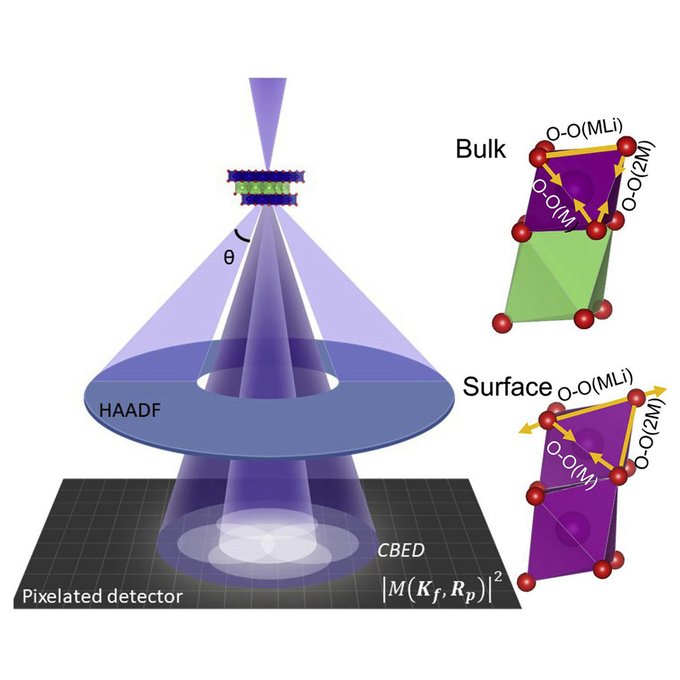
Oxygen redox in a disordered rocksalt structure forms trapped O2 molecules. Even though there is already disorder, the structure must still rearrange to accommodate O2, giving rise to voltage hysteresis. Read @KitMccoll excellent study from
@CATMAT_FI in @NatureComms for more!⬇️
I am happy to see our latest work on Joule, https://t.co/AdGcjEWbPr
We show unique understandings on the Li-rich metal oxides high-energy battery materials in terms of oxygen lattice evolution. We understand more about the problems resulting from this and aim to resolve them soon
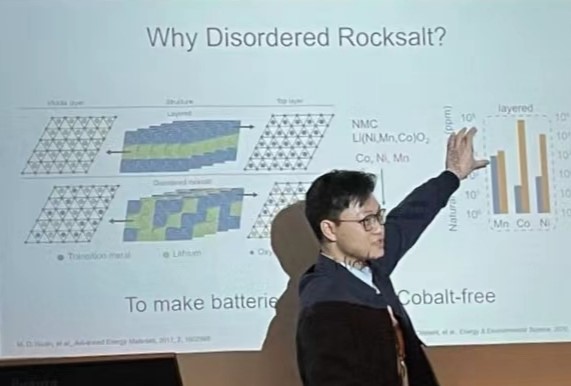
Liquan Pi wins the Hetherington Prize 2021. This is awarded for the best talk at the 2nd year symposium. Liquan's presentation on disordered rocksalt cathodes was judged to be the winner for the effectiveness of his communication. Congratulations, Liquan! @OxfordMaterials