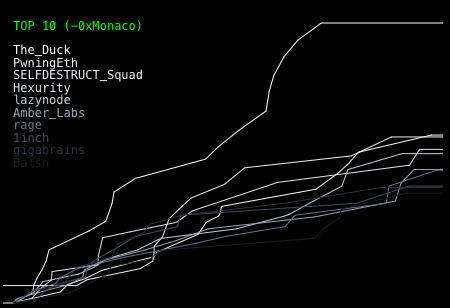
This effectively makes # of unsolved challenges to be 0 for The Duck :) It was a fun weekend activity that allowed Theori researchers to show off their deep knowledge and strong skills in Web3 security.
Thanks to @paradigm_ctf for hosting the CTF!
Can finally share the details of a really nice Redis RCE found by @xint_official back in December. IMO, the bug is really cool!
In short, carefully crafting eviction parameters and blocking on a key can cause a client to self-evict during unblocking, leading to a use-after-free!
Surfaced by Xint Code — our AI vuln research platform — pointed at the kernel's crypto/ for about an hour, on a starting hunch from @5unKn0wn.
Came back with CopyFail (plus others, still in coordinated disclosure).
Write-up + PoC (exploit): https://t.co/RgEXCiqzE5
Xint Code: https://t.co/BDYUap5huu
Patch your Linux boxes!
https://t.co/VWOUDbLAn2 is a trivially exploitable logic bug in Linux, reachable on all major distros released in the last 9 years. A small, portable python script gets root on all platforms.
Found by the teams at @theori_io and @xint_official
More details below
https://t.co/9f6T96PvPX
Patch your Linux boxes!
https://t.co/VWOUDbLAn2 is a trivially exploitable logic bug in Linux, reachable on all major distros released in the last 9 years. A small, portable python script gets root on all platforms.
Found by the teams at @theori_io and @xint_official
More details below
https://t.co/9f6T96PvPX
'Before [Xint security researcher @tjbecker] started working on automatic bug finding with AI, he worked on vulnerability research, finding zero days and reporting them to maintainers. He said it used to take him weeks or months to find a high-impact vulnerability in a brand-new codebase, and now it only takes hours.
“I just drop the code into our AI bug-finding tool [Xint] and in a couple hours I get a report with a bunch of candidate vulnerabilities, and most of them end up checking out and being real issues,” he said. “The bar to diving into a new million-line codebase and finding a bug is so much lower than it used to be.”'
Great report from @verge looking into the new era of cybersecurity, where even non-technical attackers can use AI to find the weaknesses in the apps and networks of organizations faster and at a scale never thought possible before.
https://t.co/NsfEVbfnI8
Join award-winning security researcher @tylerni7 on @TechstrongTV for this hands-on workshop for product security practitioners. In this workshop he will:
1) go deep into how AI-native AppSec differs from traditional tools and methods
2) share the pitfalls of poorly harnessed AI bug finding
3) and provide a demonstration of how the scaffolding (and not the model) is what will provide superior results for what product security looks like in the real world
https://t.co/15pRJNpuDY
Big news: Samsung Electronics selected Xint as a strategic tool to overcome the limitations of traditional manual security audits and to eliminate security blind spots. Leveraging AI on top of Theori's expertise as world class hackers, Xint autonomously analyzes the structure and context of services within complex infrastructures. This allows it to identify potential penetration paths from an actual attacker's perspective, even within frequently updated hybrid cloud environments.
https://t.co/gXqERYZezp
Sounds like there's an insider? NUKE every K8s cluster 💣💣💣💣💣💣
> Rather, the attacker was able to gain access to the list of RPCs our DVN uses, compromise two of them – which were independent nodes running on separate clusters without direct connection to each other – and swap out binaries running the op-geth nodes.
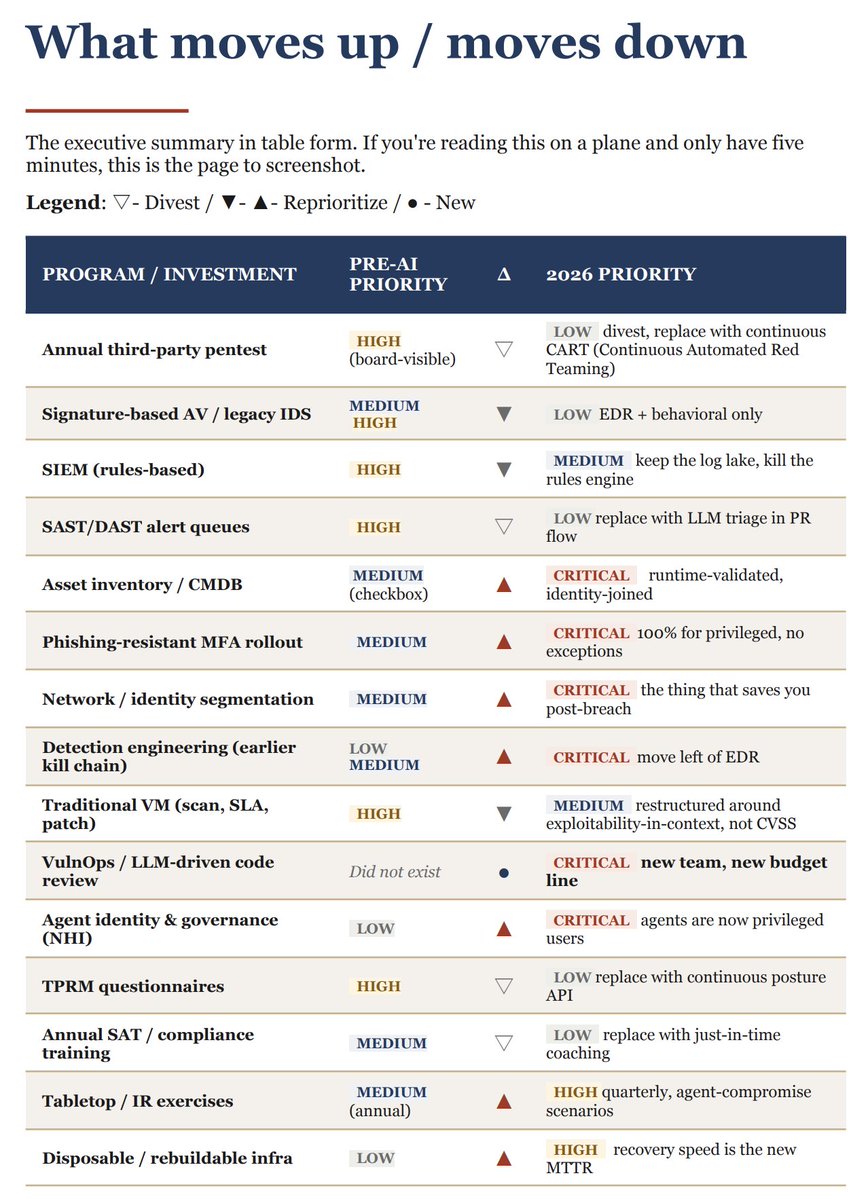
. @mubix shared this on LinkedIn and thought some of you might find it useful: “A Practical Reprioritization Guide for CISOs Entering the AI Vulnerability Era”
https://t.co/UaJUb82ecG
Our AI code scanner, Xint Code, finds all 4 featured Mythos vulnerabilities (OpenBSD, FreeBSD, firecracker, FFmpeg) using its default pipeline (no custom prompts or configuration).
These same scans found over 10 new vulnerabilities in OpenBSD, FFmpeg, and FreeBSD.
@Jeyffre what do you say on zip slip type bugs?
path traversal is a spec issue, and i believe those are hard to be modeled (unless AI understands the specs and the threat models), and FV probably won’t catch it.
so feels like there's still room for humans here.
We’re expanding Trusted Access for Cyber with additional tiers for authenticated cybersecurity defenders.
Customers in the highest tiers can request access to GPT-5.4-Cyber, a version of GPT-5.4 fine-tuned for cybersecurity use cases, enabling more advanced defensive workflows.
https://t.co/RMMXQklFar