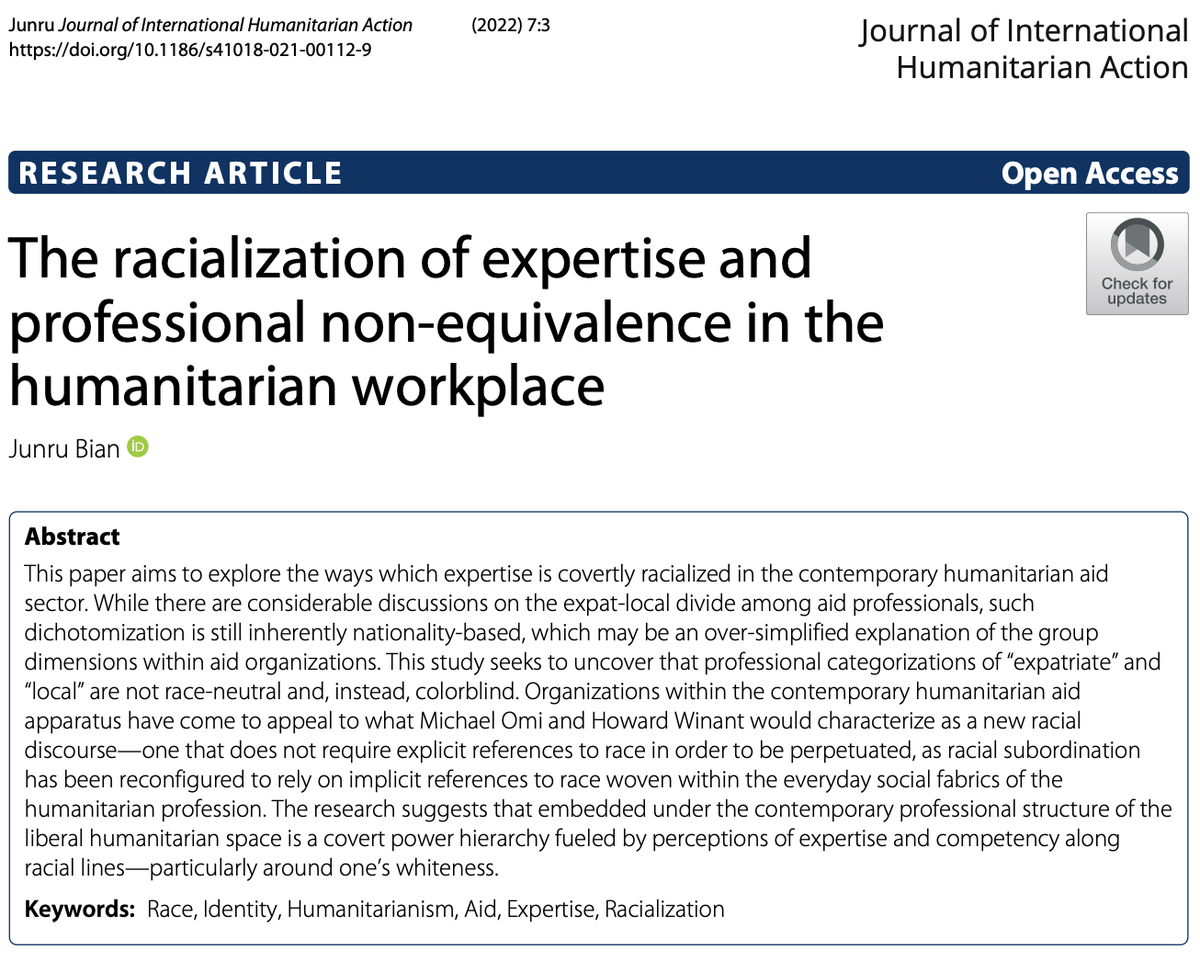
I am so thrilled that this paper is finally out! Experiencing so many emotions looking at my first-ever, and first solo-authored, peer-reviewed publication. So surreal to see my own name in this format. I am also happy to say that you can read it here: https://t.co/Fs1TDKy2dH
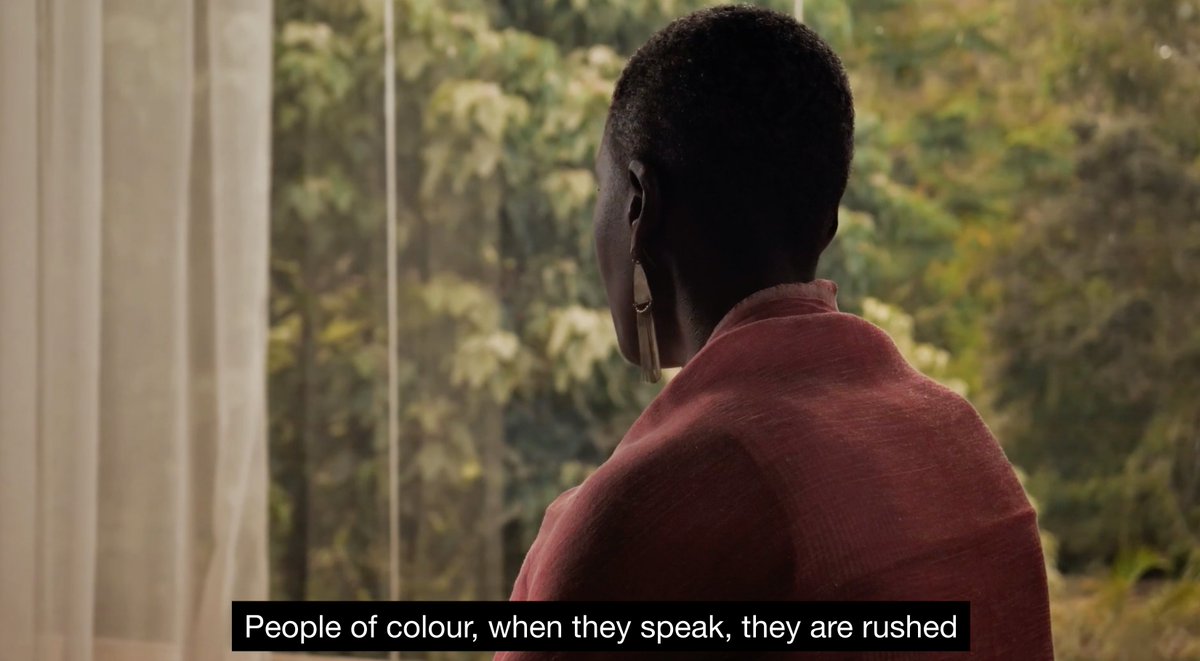
A great documentary by my friend Dr. Hannah Strohmeier @ChariteBerlin, telling the often untold stories on the mental health challenges of individuals from racialized communities working in the humanitarian profession founded upon a history colonialism:
https://t.co/40ofG19oSa
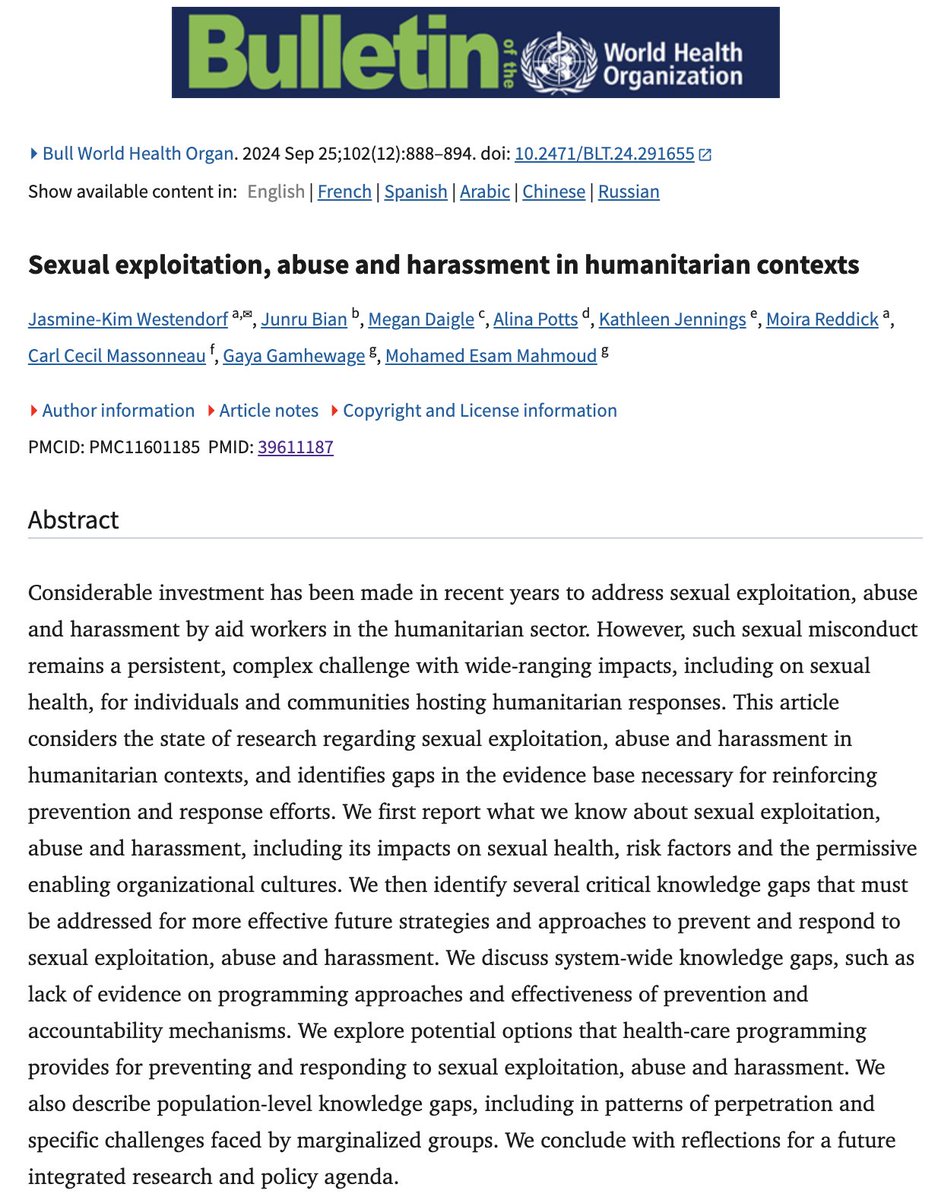
Following a series of @WHO consultations on preventing and responding to sexual exploitation, abuse and harassment by its personnel, we have worked to identify a research and policy agenda on #SEAH in humanitarian contexts.
It is now open-access here:
https://t.co/1OIcNN569V
Delighted to announce that our book, "United Nations Peacekeeping and the Politics of Authoritarianism", with amazing co-authors @SvBillerbeck, @otansey and Birte Gippert, will be published by Oxford University Press in early 2025!
This is an excellent and so sharply written piece. That decades later we are STILL delivering any kind of 'aid' to women that includes hand washing and hygiene is miserable, and this so eloquently sets out the politics of WHY this still happens. On to the reading list it goes! 🙏🏽
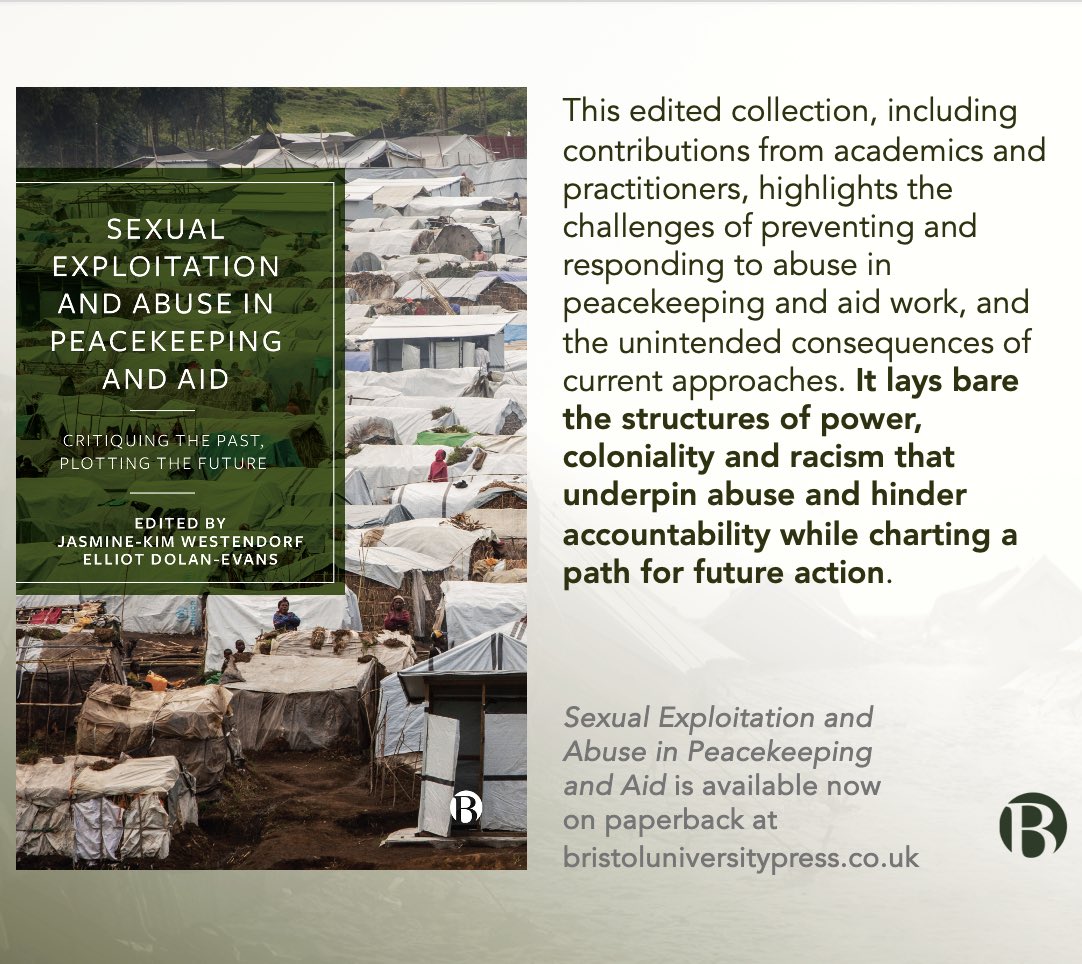
Our chapter is part of a prescient book that seeks to carefully address complex discussions on SEA in peacekeeping and aid edited by the incredible @jasminekimw and @EDolanEvans, now available on accessible paperback format with @BrisUniPress!
https://t.co/CLaoR4trhB
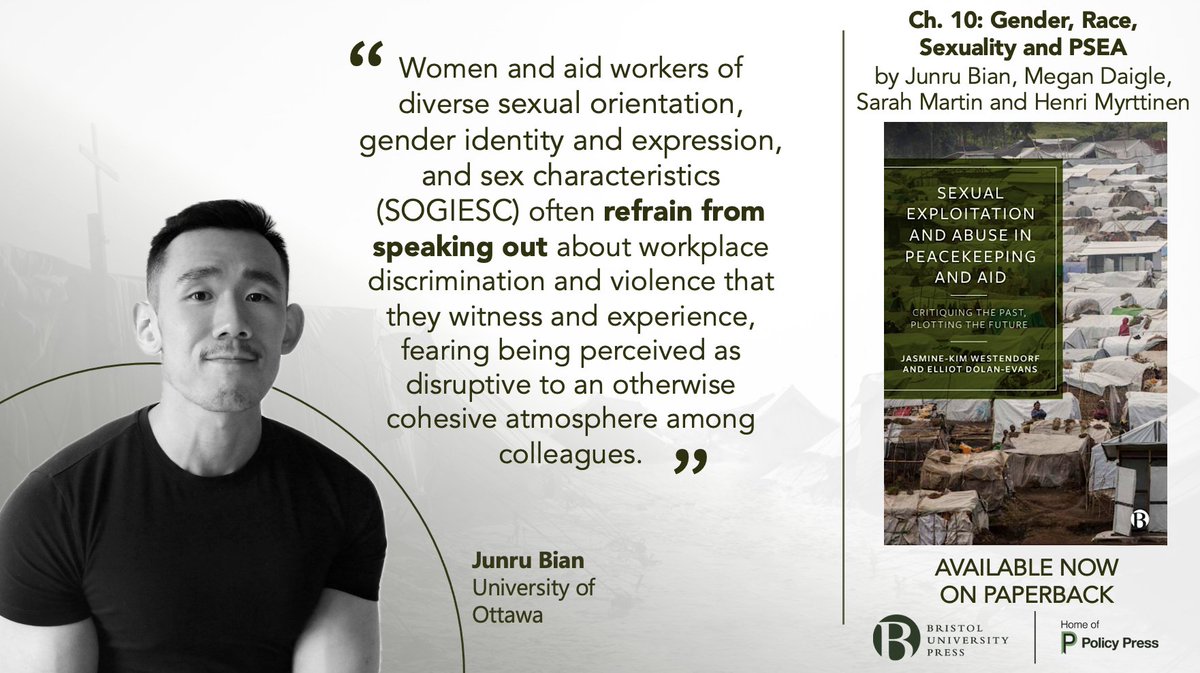
In our new chapter, @megandorothea, @HMyrttinen, @smartindc and I talk about how existing aid organizational policies may maintain conducive environments for incidences of SEA and how aid workers with diverse racial, gender and sexual identities are coping with them. A thread ⬇️
Then, @junrubian@megandorothea@HMyrttinen@smartindc take up questions of race, sexuality & gender, examining the colonial-patriarchal, heteronormative foundations of the humanitarian system and how these enable SEA --
In this logic, the moment an SEA policy asks staff to report themselves, the policy may already have highly compromised effectiveness. We get to know this through understanding not only what aid workers go through, but also what they have been doing (or not doing) in response.