Anthropic really is burning more and more dev goodwill
Claude Code is suddenly getting unusable for stuff you could use it before (as in a day before!) and the AI now refuses to so stuff that it doesn’t think is strictly to do with software development.
No transparency why ofc
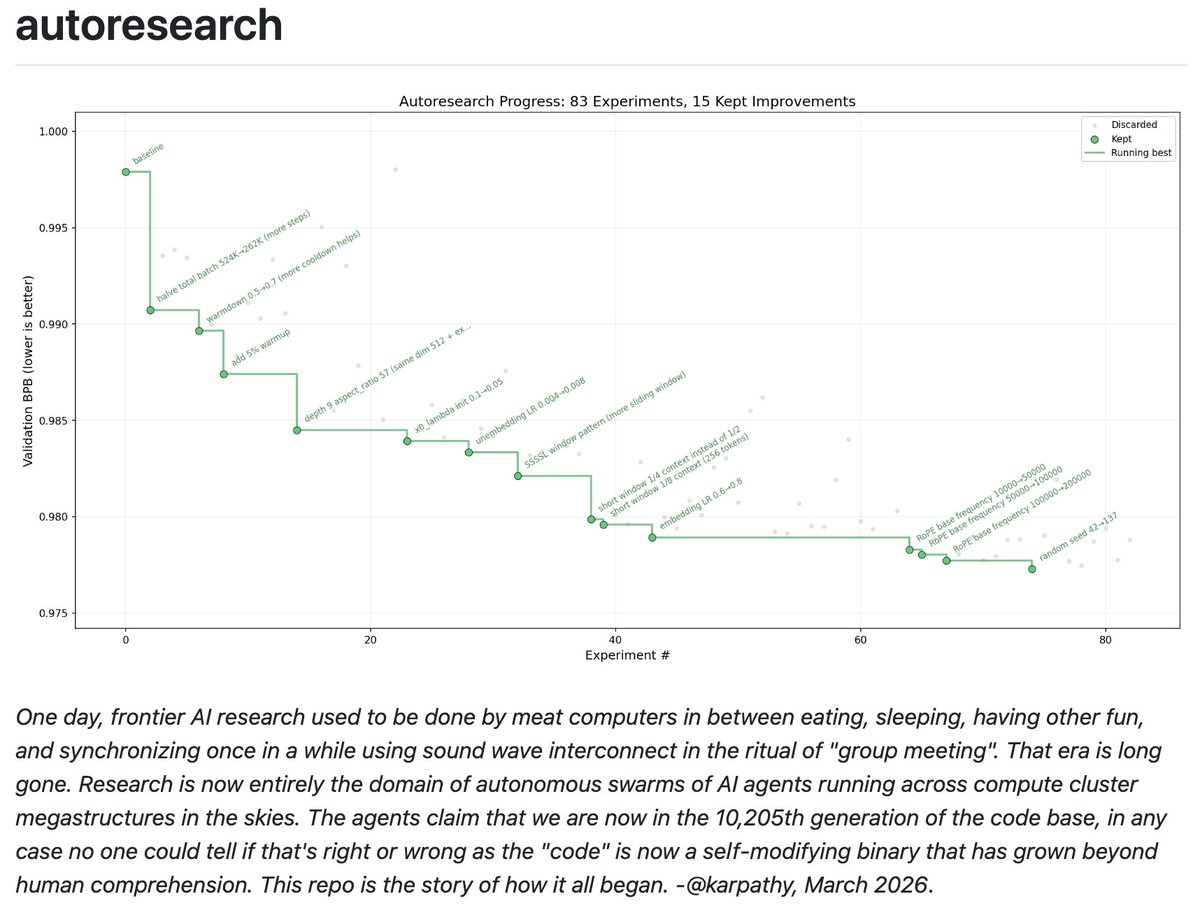
I packaged up the "autoresearch" project into a new self-contained minimal repo if people would like to play over the weekend. It's basically nanochat LLM training core stripped down to a single-GPU, one file version of ~630 lines of code, then:
- the human iterates on the prompt (.md)
- the AI agent iterates on the training code (.py)
The goal is to engineer your agents to make the fastest research progress indefinitely and without any of your own involvement. In the image, every dot is a complete LLM training run that lasts exactly 5 minutes. The agent works in an autonomous loop on a git feature branch and accumulates git commits to the training script as it finds better settings (of lower validation loss by the end) of the neural network architecture, the optimizer, all the hyperparameters, etc. You can imagine comparing the research progress of different prompts, different agents, etc.
https://t.co/YCvOwwjOzF
Part code, part sci-fi, and a pinch of psychosis :)
Bought a new Mac mini to properly tinker with claws over the weekend. The apple store person told me they are selling like hotcakes and everyone is confused :)
I'm definitely a bit sus'd to run OpenClaw specifically - giving my private data/keys to 400K lines of vibe coded monster that is being actively attacked at scale is not very appealing at all. Already seeing reports of exposed instances, RCE vulnerabilities, supply chain poisoning, malicious or compromised skills in the registry, it feels like a complete wild west and a security nightmare. But I do love the concept and I think that just like LLM agents were a new layer on top of LLMs, Claws are now a new layer on top of LLM agents, taking the orchestration, scheduling, context, tool calls and a kind of persistence to a next level.
Looking around, and given that the high level idea is clear, there are a lot of smaller Claws starting to pop out. For example, on a quick skim NanoClaw looks really interesting in that the core engine is ~4000 lines of code (fits into both my head and that of AI agents, so it feels manageable, auditable, flexible, etc.) and runs everything in containers by default. I also love their approach to configurability - it's not done via config files it's done via skills! For example, /add-telegram instructs your AI agent how to modify the actual code to integrate Telegram. I haven't come across this yet and it slightly blew my mind earlier today as a new, AI-enabled approach to preventing config mess and if-then-else monsters. Basically - the implied new meta is to write the most maximally forkable repo and then have skills that fork it into any desired more exotic configuration. Very cool.
Anyway there are many others - e.g. nanobot, zeroclaw, ironclaw, picoclaw (lol @ prefixes). There are also cloud-hosted alternatives but tbh I don't love these because it feels much harder to tinker with. In particular, local setup allows easy connection to home automation gadgets on the local network. And I don't know, there is something aesthetically pleasing about there being a physical device 'possessed' by a little ghost of a personal digital house elf.
Not 100% sure what my setup ends up looking like just yet but Claws are an awesome, exciting new layer of the AI stack.
@KevinMSchindler it definitely depends on how hard the task is.
4 sessions usually work when i’m sure that with one initial and one or two follow-ups, i’ll get what i want.
when the task is harder and needs to be split into smaller chunks prompted in sequence, i can’t stay that parallel anymore
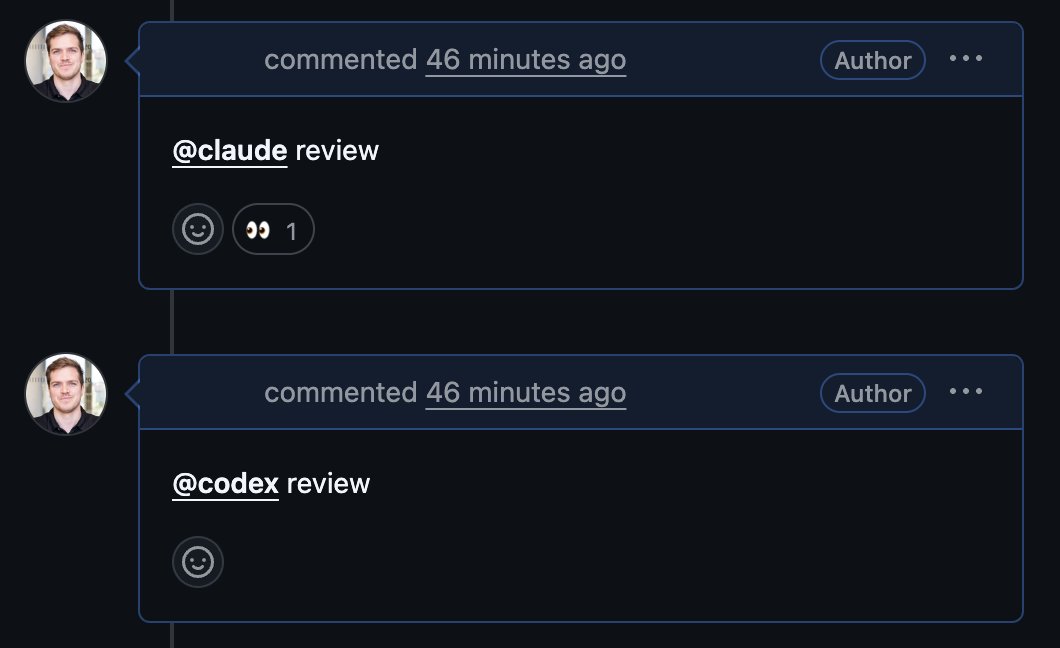
some days I'm juggling 4 codex sessions in parallel for medium-hard changes
other days it's 2 claude code sessions in two codebases for harder features
Indiehacking is not a lottery.
You just need to be pretty good at a lot of different things. Nobody likes to say it out loud, because it sounds like bragging. But the reality is:
You need to be a competent programmer to ship your product and make sure it can stay stable
You need to be a decent enough designer to make it look attractive to customers.
You need to be a marketer to know how to promote it.
You need to be a business person to know how it’s going to work as an ongoing company.
I don’t want to call anyone out but. Taking a year to build a buggy platform where people pay you for an interview, this misses on multiple criteria. Technically unsound, design is subjective so I won’t say anything, marketing was spot on, but business-wise you’re just trading your time for money like a freelancer or consultant, it was never going to work as a business.
I wish that person well because I really think they have found their personal “market fit” with the new job.
But to dismiss indiehacking as a lottery or a cult is wrong. I have watched people around me IRL and online become rich from indiehacking and it’s because they kept trying, they kept learning, and when finally their thing hit it off, it was because they had amassed skills that made them good at many different things.
You can cultivate skill and talent through experience. And luck just magnifies it.
be careful who you ask for opinions on agentic coding
horse riders tend to say cars are loud, smelly, and unnecessary
ask the ones who actually learned to drive
people who say using LLMs to code is "bad" are only paying attention to people who aren't any good at anything
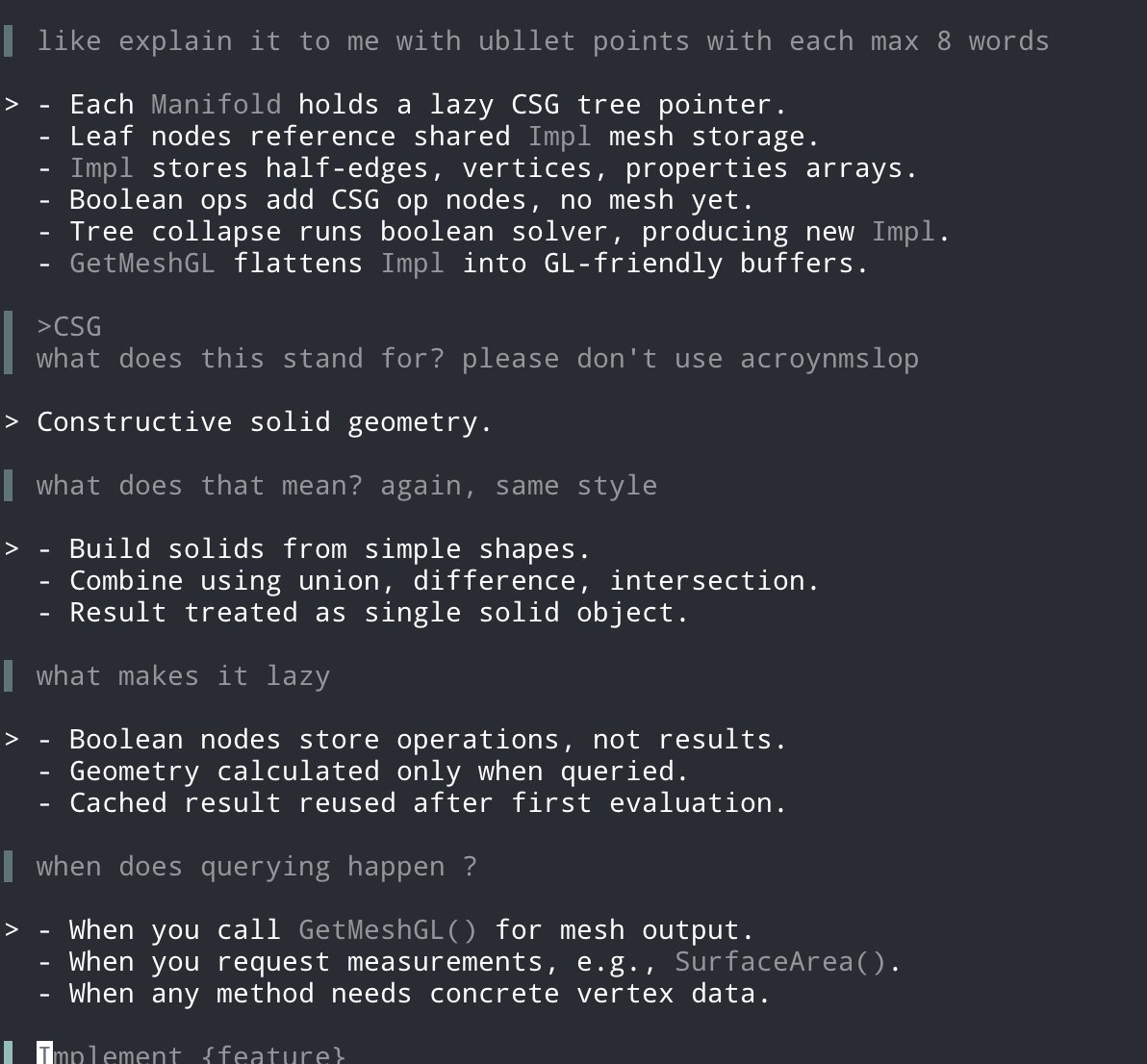
you can ask it questions and ask it to write scripts to validate
this is infinitely faster than reading it yourself, and even then you'd need to write validators
@iamtechonda@waghnakh_21 true, and I have no good answer
I’m advising my juniors to fully read generated implementation plans and code - to understand the llms implementation and decisions being made
not sure if this is enough