12 Sites to Practice Coding with Exercises ✨😍
🔹 codewars . com
🔹 leetcode . com
🔹 hackerrank . com
🔹 topcoder . com
🔹 exercism . org
🔹 coderbyte . com
🔹 codingame . com
🔹 codechef . com
🔹 projecteuler . net
🔹 edabit . com
🔹 codeforces. com
🔹 hackerearth. com
How does Docker Work? Is Docker still relevant?
Docker's architecture comprises three main components:
🔹 Docker Client
This is the interface through which users interact. It communicates with the Docker daemon.
🔹 Docker Host
Here, the Docker daemon listens for Docker API requests and manages various Docker objects, including images, containers, networks, and volumes.
🔹 Docker Registry
This is where Docker images are stored. Docker Hub, for instance, is a widely-used public registry.
–
Subscribe to our weekly newsletter to get a Free System Design PDF (158 pages): https://t.co/FIzCeaWsZV
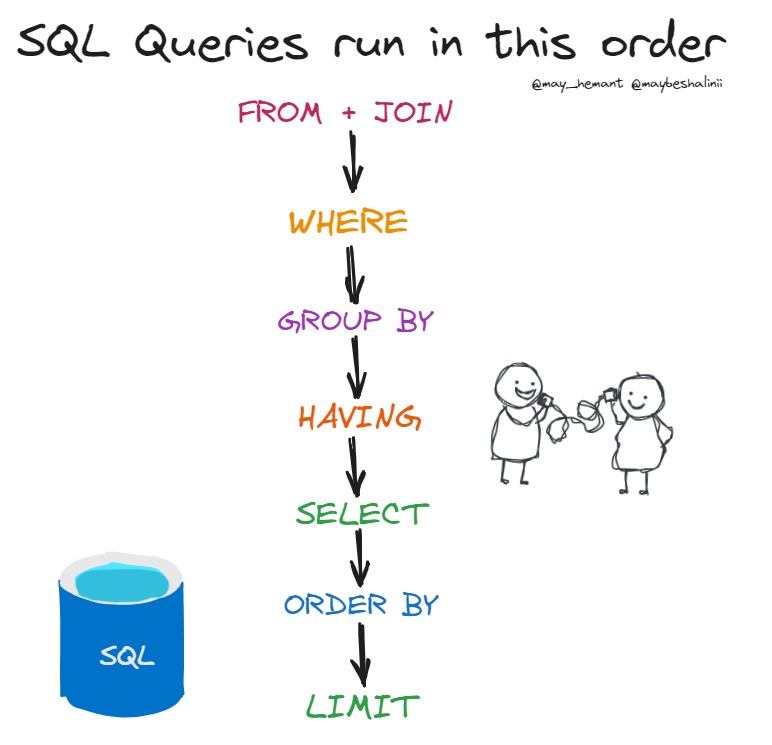
In which order SQL queries run?🔎👇
In SQL, the order in which queries are processed is typically defined by the logical query processing order. The logical query processing order is different from the order in which the SQL statements are written in the query.
Here is the general logical order in which SQL queries are processed:
1. FROM clause:
The data sources (tables, views, etc.) specified in the FROM clause are processed first.
This involves reading the data from the tables and combining data from multiple sources if there are joins.
2. WHERE clause:
The WHERE clause is applied to filter the rows based on the specified conditions.
Rows that do not meet the criteria in the WHERE clause are excluded from further processing.
3. GROUP BY clause:
If a GROUP BY clause is present, rows are then grouped based on the specified columns.
Aggregate functions (like SUM, COUNT, AVG) are then applied to each group.
4. HAVING clause:
If a HAVING clause is present, it filters groups based on aggregate conditions.
Groups that do not meet the criteria in the HAVING clause are excluded.
5. SELECT clause:
The SELECT clause is then applied to the result set.
Columns are selected, and expressions are computed.
6. ORDER BY clause:
If an ORDER BY clause is present, the result set is then sorted based on the specified columns.
7. LIMIT/OFFSET (if applicable):
If there is a LIMIT or OFFSET clause (used in some database systems), the final result set is then limited or offset accordingly.
Learn for free:
Linux → https://t.co/XS7O51To7s
Docker → https://t.co/xCZGNQVhXO
Kubernetes → https://t.co/G03Jt3WBTZ
Grafana → https://t.co/OriloT26TR
Service Mesh → https://t.co/SgvGiuznJ2
Prometheus → https://t.co/1LAHna4Mtm
Logging → https://t.co/Fa7bV9c3NX
Coding → https://t.co/OkCI6Bzozx
Btw, do you need a mentor? Mentored 4 amazing folks in last 8 days. Quite happy with the outcomes. Check profile for details.
Hope it's useful. Thank you for reading.
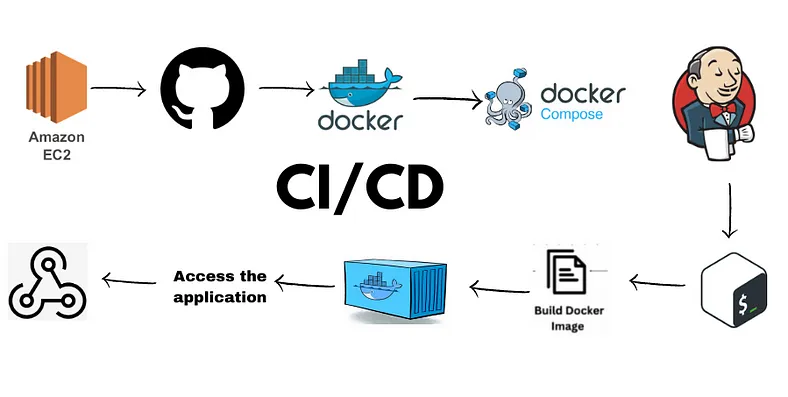
Complete Jenkins CI/CD Project
In this post you will be deploying a node.js application on EC2 instance and we will create a CICD pipeline using Jenkins.
Tools we will be using in the project:
- AWS-EC2
- GitHub
- Docker
- Jenkins
Source: https://t.co/nWeOXc7dgE
Want to learn Kubernetes but need help figuring out where to start? 🤷♂️
I have got a solution for you. ☕️
𝐈𝐟 𝐲𝐨𝐮 𝐚𝐫𝐞 𝐬𝐭𝐮𝐜𝐤 𝐢𝐧 𝐭𝐮𝐭𝐨𝐫𝐢𝐚𝐥 𝐡𝐞𝐥𝐥 👿 and need help with your learning journey, start with the CKA 2024 YouTube playlist. It was curated from a beginner's perspective and includes all the prerequisites, such as Docker, DNS, networking, storage, etc. You only need to know basic Linux administration; this series will cover the rest.
𝐖𝐚𝐢𝐭, 𝐭𝐡𝐞𝐫𝐞'𝐬 𝐦𝐨𝐫𝐞. It includes practical demonstrations, real-time projects, use cases, troubleshooting scenarios, and assignments after each video.
𝐖𝐡𝐚𝐭 𝐢𝐟 𝐰𝐞 𝐚𝐫𝐞 𝐬𝐭𝐮𝐜𝐤 𝐬𝐨𝐦𝐞𝐰𝐡𝐞𝐫𝐞 𝐚𝐧𝐝 𝐧𝐞𝐞𝐝 𝐬𝐨𝐦𝐞 𝐦𝐨𝐫𝐞 𝐡𝐞𝐥𝐩? ❤️Do not worry; we have a fantastic @thecloudopscomm to assist you wherever you are stuck. Either comment on the video or join our community Discord server and ask for assistance; you will get help as soon as possible.
𝐋𝐚𝐬𝐭 𝐛𝐮𝐭 𝐧𝐨𝐭 𝐥𝐞𝐚𝐬𝐭, ✍ we have a dedicated Github repo for this series, which includes all the assignments(regularly updated after each video upload), code snippets, valuable links, notes, and diagrams to simplify the learning process.
𝐓𝐡𝐞 𝐛𝐞𝐬𝐭 𝐩𝐚𝐫𝐭? 🆓 It's all FREE. We only need your love and support to spread the word and invite you to join us on this learning journey.
𝐀𝐧𝐝 𝐧𝐨𝐭 𝐣𝐮𝐬𝐭 𝐟𝐫𝐞𝐞; we also have fabulous prizes 🏆 for the learners who perform exceptionally well in the assignments. (details in the GitHub repo)
We publish 4 weekly videos, 12 already completed, and 28 more to go!
All the links are there in the first comment :) Happy learning
#cncf #cka #kubernetes #techtutorialswithpiyush #40daysofkubernetes
Introducing Charts.
A collection of chart components that you can copy and paste into your apps.
Built on top of Recharts. Beautifully designed. Open Source.
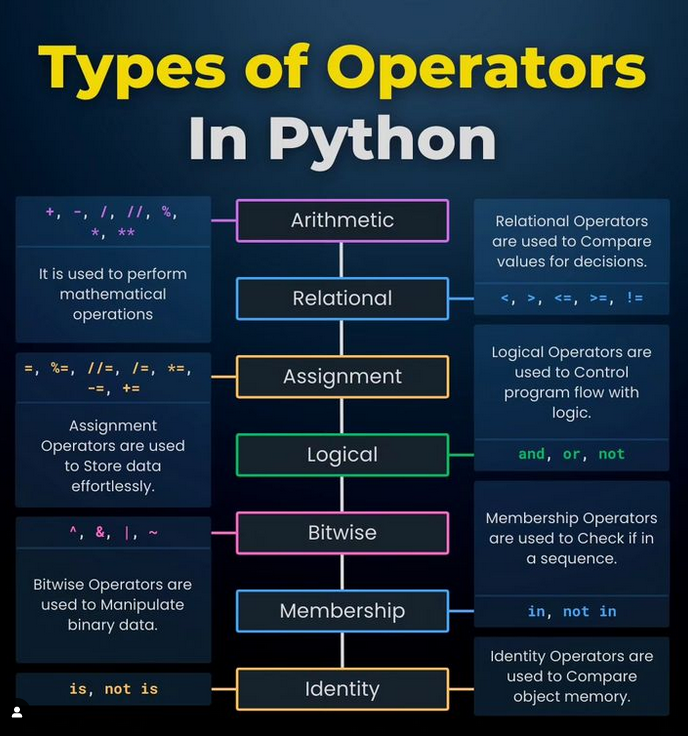
When you're learning to code in Python, building some simple projects helps solidify your skills.
And this course teaches you how to use the PyGame library to build the game of Pong.
You'll learn about smash and flash elements, paddle cloning, and more.
https://t.co/kjJnXxjhUI
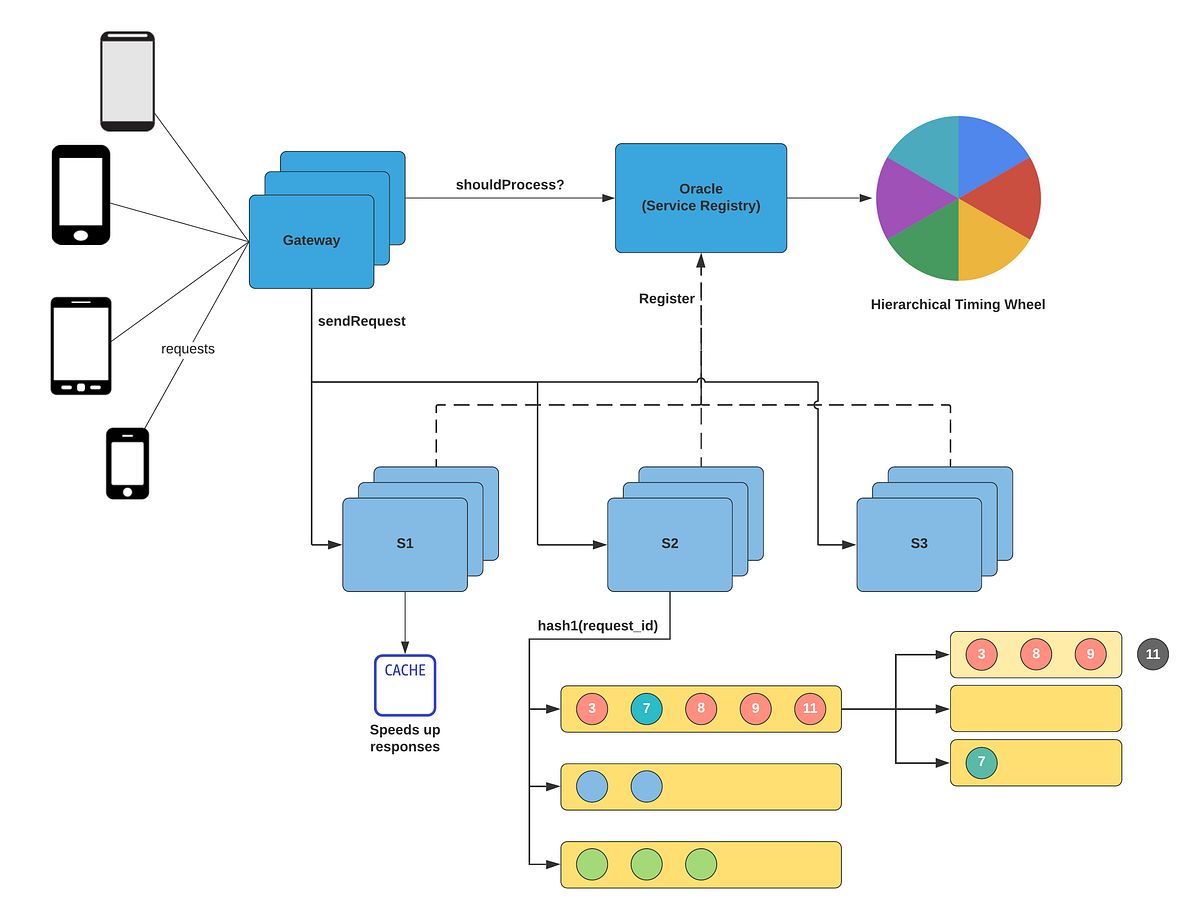
Load balancing algorithms developers should know.
Effective load balancing is crucial in system design, providing high availability and optimizing resource utilization.
Let's look at how some of the most popular load balancing algorithms work.
🔹 Static Algorithms
1) Round robin
It distributes requests sequentially between servers, ensuring equitable distribution.
Despite its simplicity, it does not account for server load, which might be a drawback when demand changes significantly.
2) Random
Implements a simple way of distributing requests regardless of server load or capability.
This form of load distribution is basic, less precise, and suitable for less complicated applications.
3) IP hash
Uses a consistent hashing method depending on the client's IP address to route requests.
This technique is one way to ensure session persistence by consistently directing requests from the same client to the same server.
4) Weighted round robin
Improves round robin by assigning requests based on server capacity, aiming to better utilize resources by allocating more requests to higher-capacity servers.
This approach seeks to optimize resource use, though actual results can vary with request complexity and system conditions.
🔹 Dynamic Algorithms
5) Least connections
Intelligently sends requests to the server with the fewest active connections, adapting to changing loads.
This technique aims to better reflect current server utilization, potentially leading to more efficient resource consumption.
6) Least response time
Targets performance by routing requests to the server with the quickest response time.
By considering both current server load and performance, this technique supports faster processing, potentially reducing response times for users.
While these are some of the most popular load-balancing strategies, there are other algorithms that also address specific needs and challenges. Choosing the right algorithm is very important to ensuring your application remains scalable, reliable, and efficient.
~~
A big thank you to our partner Postman who keeps our content free to the community.
Did you know there is a VS Code extension for Postman? Check it out: https://t.co/KhKB5OIXGA
The Linux operating system powers the majority of the world's servers.
So it's a great tool to know - and this course will teach you Linux basics.
You'll learn how to manage and troubleshoot a wide range of systems + practice the concepts with labs.
https://t.co/VTvzptpM2A
DevOps is nothing but a factory:
Docker = Shipping containers
Kubernetes = Assembly line manager
Python = Versatile worker
Go = (Sharma Ji ka Beta)Fast worker
CI/CD = Production line automation
Monitoring = Quality control
Logs = Factory reports
Infrastructure as Code = Factory blueprint
Security = Guard dogs
Version Control = Inventory system
Generative AI is now one of the most popular areas of artificial intelligence.
It's when AI draws images or writes poetry using a generative model, based on what you tell it to do.
You'll learn all about it in this 30-hour course & build projects, too.
https://t.co/ZftS4ol3Za