Last month, I made a decision:
Spend more time sharing my learnings about creating new products, launching & scaling consumer brands and setting up & running global supply chains.
So let me introduce myself and tell you my story.
I’m Justin 👋
I’m a New York transplant to Austin, TX. Have lived here for the past 3 years (since COVID).
My background is in product development, consumer goods, and manufacturing.
My first foray into tech was at a company called Quirky, where I was lucky enough to wear many hats across operations, product development, manufacturing, business operations & corp dev.
Three years in, Quirky decided to open an office in Hong Kong and the CEO asked me to go out and help set it up.
I thought it’d be a 1 month gig.
That turned into 2 years living in Asia, spending 3 days a week running around (predominantly) China, setting up & managing production for litany of consumer products.
I hired a team of 50 people in Hong Kong, traveled, met my wife there, and learned a ton.
Then? That office closed down and I had to lay off all 50 employees.
That was tough, but I was offered a role back in the NYC office as Chief of Staff to the CEO.
When Quirky went sideways (RIP), I had a stint launching new products at Buzzfeed as well as a DTC product company (Raden, also RIP).
That experience was enriching, but ultimately let me to realize there was an opportunity to create a better, more efficient way to bring new products to market.
I partnered back up with some former colleagues from Quirky to form Doris Dev.
Doris Dev brings new products to market, with muscle to support design, engineering, manufacturing and supply chain management.
We’ve worked with world-class founders & brands to help support bringing their products to market, and scaling them into 9-figure businesses.
From there, we’ve incubated some interesting ventures:
→ Canopy: Humidifiers with skincare in mind
→ Factored Quality: Tech-enabled services for quality control and compliance
I decided last month I would lean in to sharing more learnings from my experience creating & scaling new product brands & companies, so here we go.
Would love to connect in the replies or DMs and answer any questions!
LOVE when I expand my brands' friend networks.
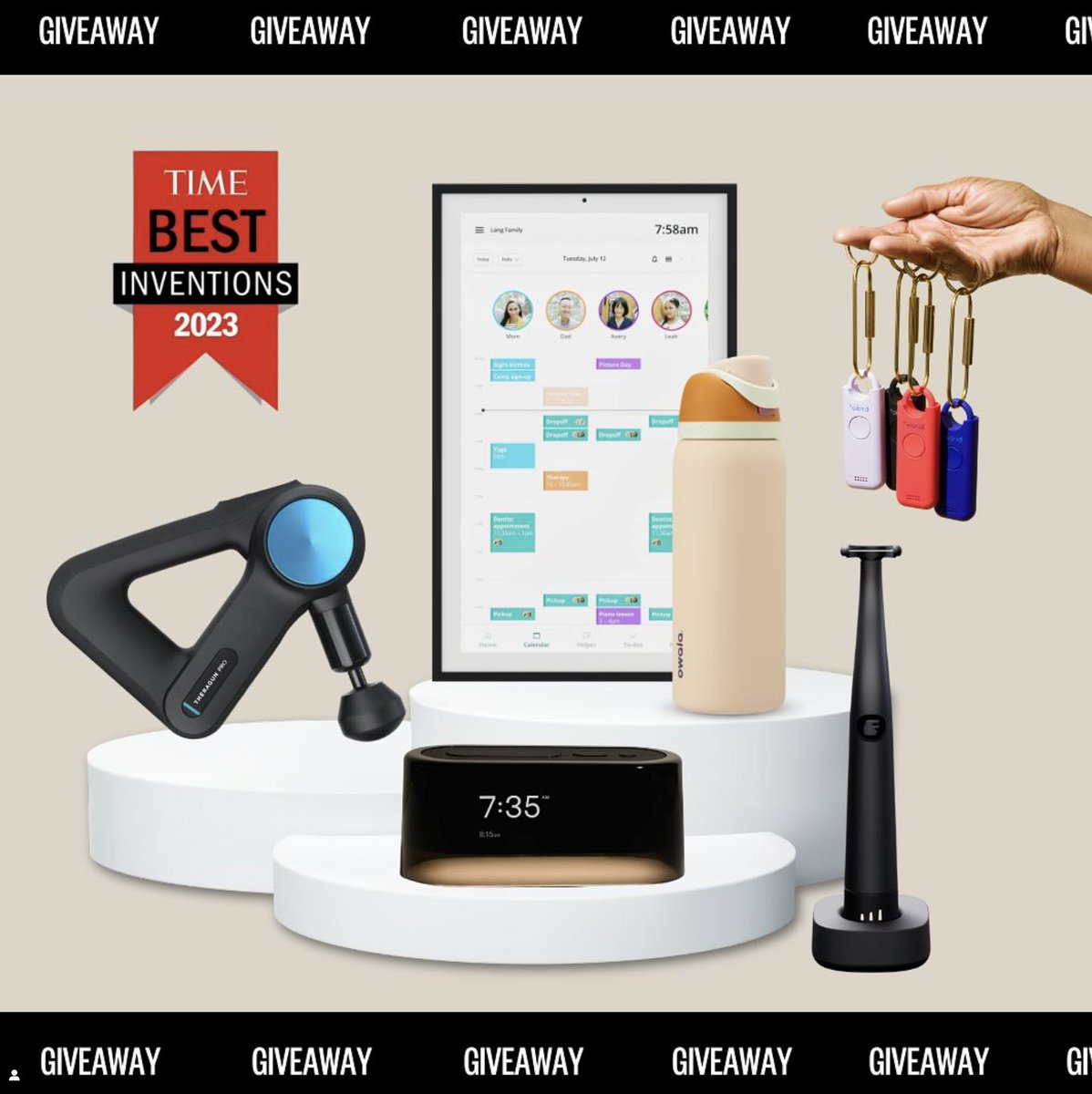
Loftie + @therabody + @owalalife + @HearthDisplay + @goflaus + Birdie = Time's Best Inventions of the Year BFFs. https://t.co/CQFp6w9HfU
Also hi @justseid your kids are hanging out together
🎙️ We were joined by @justseid of Doris Dev on The Future of Supply Chain to hear about their thoughts on the process of bringing a product from ideation to shipping, and more.
Hear the full conversation 👇
https://t.co/iWdJn3JhWD
You’d be shocked how many products are built without user feedback.
Founders: get out of your own way! Your product’s design and features need to be user-centric.
Research user needs and preferences by running surveys and talking to potential customers.
Design a clear user flow based on what you learn. Lay out the ideal way your *customers* say they want to use your product.
Test and iterate. Take feedback from your ideal customers.
Successful products go through ample testing & validation. No ifs, ands or buts about it.
At Doris Dev, we go through robust prototyping phases, including through design (staring with our 3D prints), Works-Like / Looks-Like prototyping (in target final materials), an Engineering Validation prototype (with an engaged manufacturing partner) and Design Validation prototype (with off-tool parts). Lots of surface area needed to truly test & validate the design before going into mass production.
Each phase has a different scope of prototypes made (from 1 to many), require a different amount of costs & energy upfront and get distributed & tested from different stakeholders and in different manners.
Ultimately, they all serve the same purpose: make sure you like (and know!) what you’re building at scale.
Don’t skimp on up front testing – its a lot more costly if need to make changes after production has started.
Testing a product MVP is critical in setting yourself up for success. It will unlock insights into what you should or should NOT focus on.
Here are some tips to focus on teeing up your product MVP:
→ Identify the known constraints up front
For Canopy, we knew we had a crowded market with overlooked hardware that caused mold and was hard to clean. No one really cared about their humidifiers, which were treated like disposable products getting thrown out each season. Getting people to care was the first hurdle.
→ Assess your competitive landscape
We found that most humidifiers were difficult to clean and ugly to look at. We knew we could excel by solving both of those issues well.
→ Pressure-test your initial assumptions
We partnered with credentialed experts to get their opinions on positioning. We were no longer part of an overcrowded category - we were a new product in an existing category that had never thought of humidifiers as beauty products.
Then build an MVP that is a polished draft, not a rough one. We were lucky to leverage our internal muscle at Doris Dev to build, test & iterate on product concepts that addresses those pain points.
If you’re thoughtful with your first product iteration, you’ll truly validate your idea and learn what to do next.
Our simple PR strategy secured 80+ pieces of press coverage that kicked off Canopy's growth.
We partnered with an expert PR freelancer instead of a big agency.
And to stand out, we pitched a new angle:
"Our humidifier are actually a beauty product."
In just 3 weeks, we conducted over 80 Zoom calls with media. We were laser-focused on giving them a refreshing perspective for our mundane product.
The results?
→ Way more launch traffic than we had expected
→ High conversion from editorial coverage to sales
→ A kickstart to our growth flywheel without paid advertising
Earned media is a powerful free acquisition channel for startups.
Prioritize it if your budget is limited at launch.
People assume bureaucracy & process is bad as a company grows up.
That's just not true.
When you're a scrappy startup, shipping a new product is simple.
Just rally the 3 of you to work all night. Launch the MVP before the caffeine wears off.
But growing up is painful. Now you've got 100 cooks in the kitchen.
Endless opinions, meetings, and rework. Launches take forever.
Yet the polish pays off.
All that friction meant thinking through details. Your product arrives more complete, having survived trial by fire.
Long story short: there's no right way - just tradeoffs:
Speed vs completeness.
Raw innovation vs refinement.
The path to great products twists and turns as you scale. Buckle up for the ride.
Founders have to identify whitespace AND walls.
Imagine this:
You enter a new market (e.g. skin care in the humidifier market) and notice a BIG opportunity that no competitor has solved.
Instead of just assuming that you should solve that missing problem (as most would), ask yourself:
→ “Why is this gap in the market here?”
→ “Is there a reason this problem hasn’t been solved?”
→ “Could this problem take 10x longer to solve than projected?”
→ “Who else has tried solving the problem in this way?”
You might just unveil some serious constraints (e.g. prohibitive costs or poor user experience).
Better to learn why early as opposed to wasting months or years.
It's never been easier to launch a product.
But it's never been harder to create something "premium" and differentiated.
4 key requirements:
1. Materials — high quality inside parts
2. Finish — high quality outside parts
3. Intentionality of Design — design is functional
4. Form Factor — design is beautiful
When you sweat the small details, customers will feel delighted.
But the products that win implement them all.
My best tactic for closing deals? Incentivized KPIs.
Creative deal terms that reward shared KPIs are powerful.
We use bonus structures based on hitting goals together. This helps get buy-in from partners much more quickly.
Think: Pro sports contracts with built-in performance bonuses. You get extra payouts for benchmarks like yards thrown, home runs hit, points scored.
Bonuses like this can get complicated, but the alignment alone is worth it.
Take a page from the pros. Bonus benchmarks breed commitment.
Build" by Tony Fadell is required reading for our team.
The author pioneered products like iPod and Nest.
He distills product creation into an engaging story that has shaped out entire philosophy at Doris Dev.
Because every employee reads this in onboarding, the insights stick and we have a common language around shared principles.
That's the best way to align your team.
What book is required reading at your startup?
When Juuls were blowing up, I jumped in the ring.
And it ended up blowing up in my face (but also being a great learning experience).
Here's the story:
It all started with an idea from a friend/client while we were walking the halls at CES in 2018.
His Juul kept dying, so he was lugging around a giant powerbrick to keep his Juul charged on the go.
We joked about making a “mophie” just for the Juul.
And the more people we shared it with, the more we heard the “duh - that should exist” response.
I knew there was something there.
Doris Dev spun it up from design to manufacturing in 6 months and planned to launch it.
It packed 3 full charges, stored Pods, and delivered an irresistibly satisfying slide & click magnet motion. We knew we'd created something really satisfying and unique for its time.
During GTM planning, we realized we were handicapped in how we could market the product since we couldn’t promote it through traditional channels (e-cigs were banned from Facebook and Google).
Serendipitously, an old colleague reached out who had just taken a role at Barstool Sports.
He told me they wanted to build something similar, so it just made sense to partner together.
We structured a deal to license the charger under the Barstool brand.
They already had so much attention online and the perfect Juul loving audience, so this was a no-brainer.
It looked like we were going to smash it out of the park with this product.
A few weeks out from launch, all things appeared like we were going to smash it out of the park.
Barstool created an awesome brand, the product was perfect and the audience was addicted to Juul.
And then, the hammer dropped:
"The FDA has clamped down on Juul, and the company has sent out a cease and desist to Barstool."
Our charger was INSTANTLY stuck – couldn't move, promote, or sell it through the channel we just invested heavily. Barstool wasn’t able to launch the brand or promote it in any way.
Due to our licensing deal, we had to wait two full years before we were legally able to relaunch.
And by then, Juul demand had been crushed by the heavy fists of the FDA.
So what did I learn from this experience?
1. Be hands on & understand your go-to-market plans
2. Minimize inventory risk upfront as much as possible (ie start with smallest MOQs possible for launch)
3. Always have Plan B in your back pocket
Hope you found this thread helpful!
I'm sharing everything I know about product development, positioning, and physical products.
Follow me @justseid for more.
And Like/RT the first tweet below!
When Juuls were blowing up, I jumped in the ring.
And it ended up blowing up in my face (but also being a great learning experience).
Here's the story:
When Juuls were blowing up, I jumped in the ring.
And it ended up blowing up in my face (but also being a great learning experience).
Here's the story:
So what did I learn from this experience?
1. Be hands on & understand your go-to-market plans
2. Minimize inventory risk upfront as much as possible (ie start with smallest MOQs possible for launch)
3. Always have Plan B in your back pocket