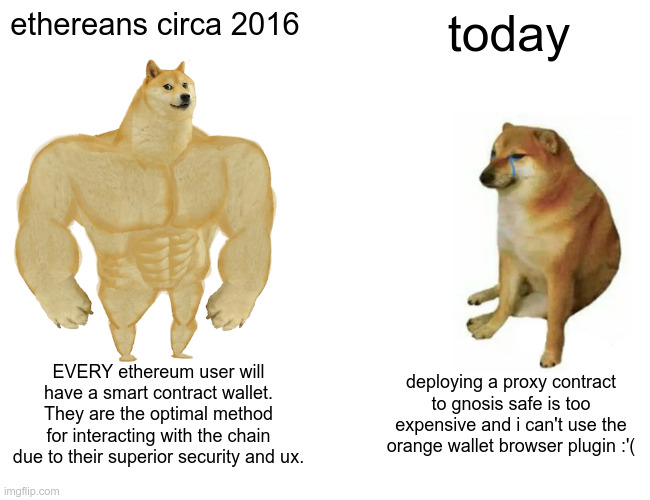
@ameensol@gregthegreek anyway the the real way to support "undercollateralized" stablecoins is to collateralize them with the productive capacity of businesses. you want to take out a $100 loan? you must accept the coin for $500 of your goods and services. this is how mutual credit works
@NourHaridy reading public audit reports is the best resource for learning how to find bugs/secure contracts. locking away the reports b/c non-devs don’t know how to evaluate them would be a shame
@SamuelShadrach4 @NourHaridy Not familiar with synthetix, but I think the difference here is you’re not getting liquidated, your stop-loss order is getting executed. As long as it stays in dola the system doesn’t need immediate liquidations? Is that right @NourHaridy ?
@makoto_inoue@ensdomains Kind of a variant of SAI w/o tokens, no?
Users lock eth into a contract and it records a debt equivalent to the USD value of the deposited eth. User can wipe debt & withdraw: locked eth - (debt*current USD/ETH rate). No liquidations, ENS essentially forgives debts temporarily.
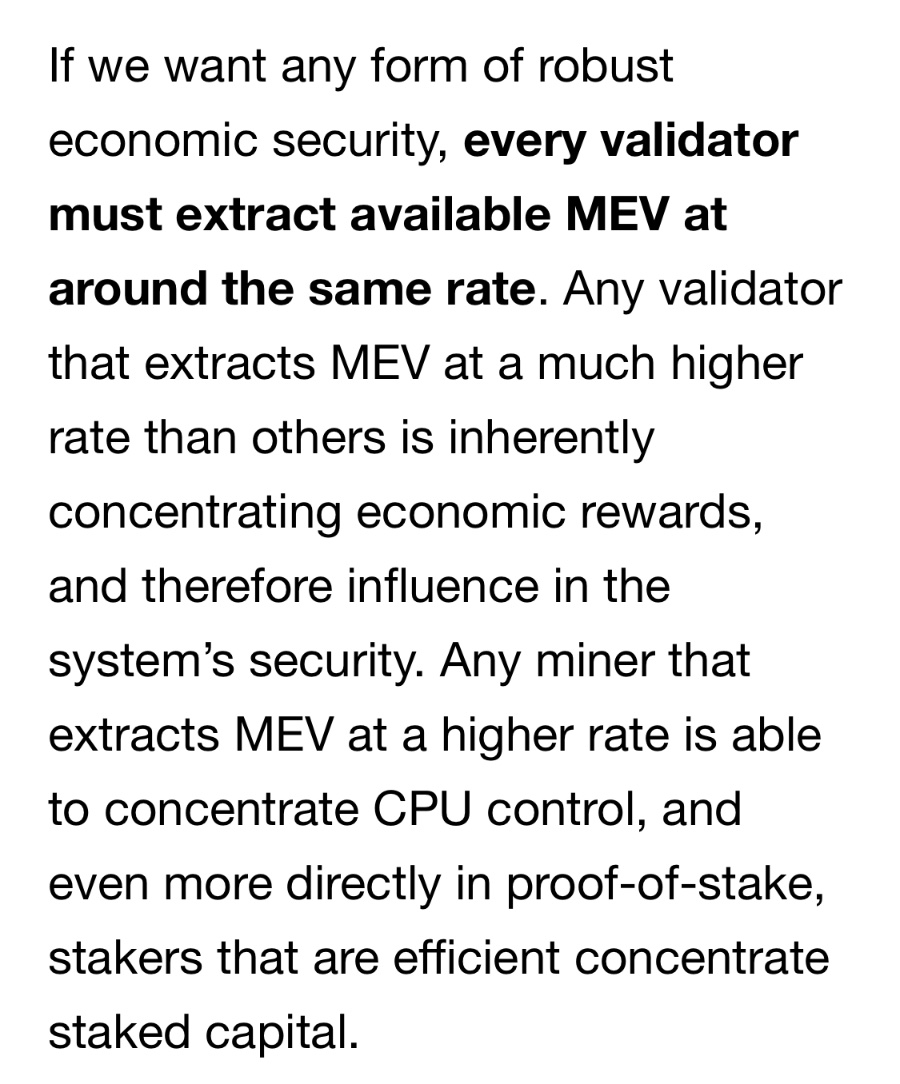
@thegostep @SamuelShadrach4 Yeah the “discouraging hacks” is more a provocative thought experiment, really interested in how mev capture can be accelerated and those fees forwarded to pay for security until some finality gadget or social consensus can finalize the block.
@SamuelShadrach4 MEV wars can be accelerated to discourage defi hacks. Write a bribe pool contract that pays out 1/10000 of the pool to the coinbase when a (permissionless) bribe fn is called. Fork MEV-Geth to accept block bundles + fork choice rule of chain w/ most ETH in the bribe pool.