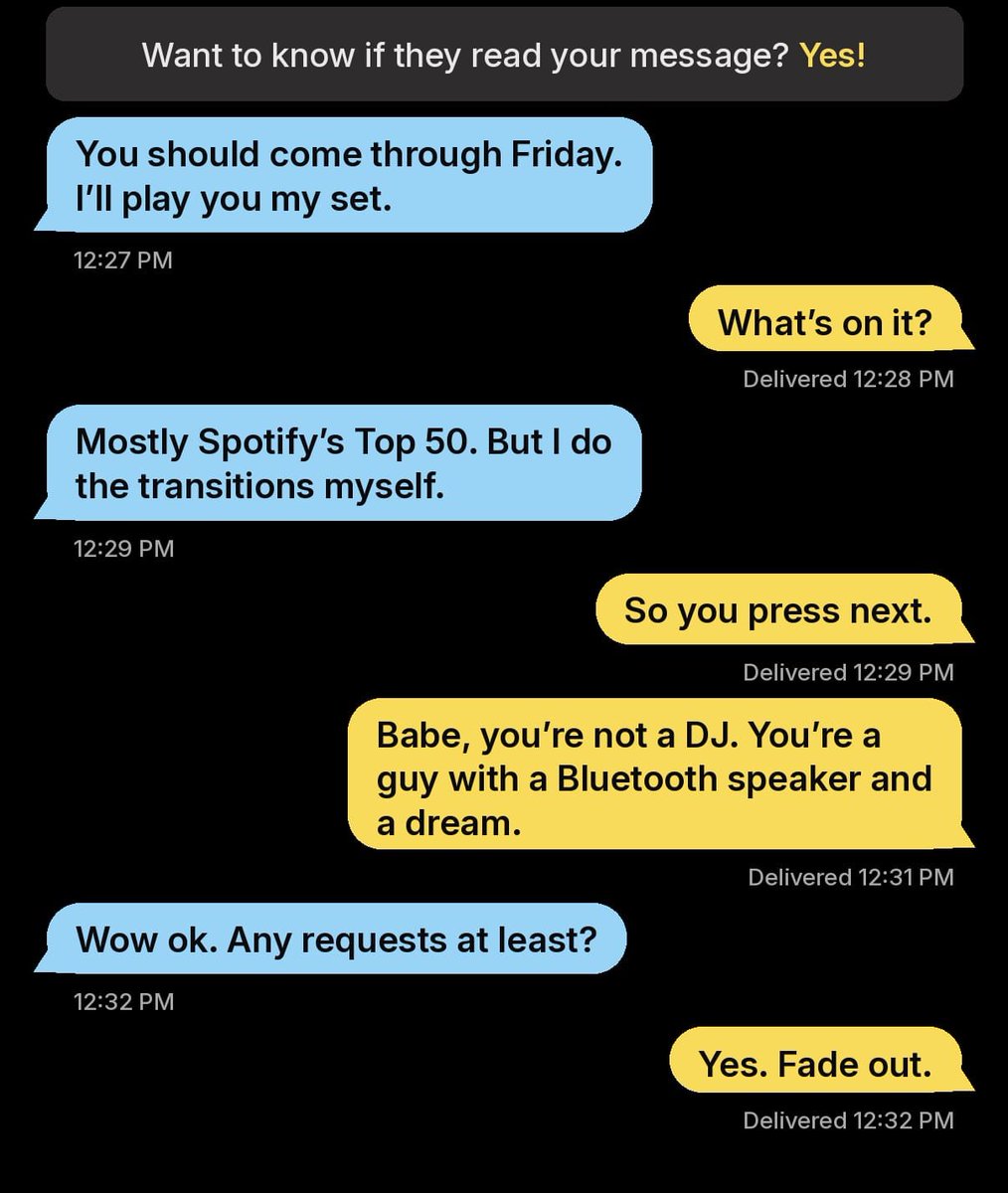
You can know someone’s coffee order, their middle name, and the way their voice changes when they’re tired, and still have no name for what you are.
The almost keeps you close enough to feel something, far enough that nothing has to be decided.
You can keep answering the soft half messages and calling it connection. Or you can stop and ask whether the version of you that needs clarity is allowed to exist here.
What have you been shrinking so the undefined can keep feeling safe?
Come SpeakWithLily
Saul looked at David and saw a boy who had no business standing in front of Goliath.
Goliath took one look at him and laughed. On that point, the king of Israel and Israel’s enemy agreed.
David remembered something neither man had seen: the Lord had already delivered him from a lion and a bear. (1 Samuel 17:33–37)
So when Goliath mocked him, David answered, “I come to you in the name of the LORD of hosts.” (1 Samuel 17:45, NKJV)
He knew whose name he carried. He didn’t need either man to tell him what he was worth.
The enemy can use a careless remark to keep you silent long after the person who said it has forgotten it.
Maybe someone laughed the last time you spoke up, and now you take good ideas into meetings and bring them home untouched.
Before the next meeting, pray for courage, write down what you want to say, and give yourself permission to say it plainly.
Your worth in Christ is already settled. You can speak even if your voice shakes.
Ryuhei Matsuda and Takeshi Kitano deliver two of the film’s most compelling performances in Nagisa Ōshima’s final feature.🌈
In his screen debut, Matsuda is quietly magnetic as Kanō Sōzaburō. He portrays the young recruit with a still, almost inscrutable presence, making the desire and disruption surrounding him feel natural rather than forced. His beauty is never merely decorative; it becomes a source of tension within the Shinsengumi.
Kitano, as Hijikata Toshizō, anchors the film with his signature controlled intensity. He watches, calculates and occasionally intervenes, conveying both rigid discipline and growing unease as the unit’s codes of loyalty and masculinity begin to unravel.
The contrast between Matsuda’s ethereal ambiguity and Kitano’s grounded stoicism is one of the film’s greatest strengths.
Together, they transform a story of forbidden same-sx attraction and institutional tension into something deeply unsettling and unforgettable.
I’m still bummed they changed this scene from the book. Harry literally takes off his own sock, chases Lucius down out of breath, and shoves the diary inside it. Lucius rips the diary out, chucks the sock at Dobby, and accidentally frees him. Way funnier and made more sense.
A stylish group gathering filled with good company, individual style, and a relaxed atmosphere. Everyone brings something different to the picture. Which style do you prefer?
my landlord left a note on my door: "whoever keeps leaving the porch light on at 3am, please stop. it's confusing the moths."
i live alone. the switch was off. the light was on anyway.
i stayed up to see who it was...
Metropolitan Detention Center has housed so many famous faces that the internet is calling it a real-life Arkham Asylum
Some high-profile names tied to the federal jail, from the worlds of politics, entertainment and headline-making criminal cases.
,Maduro former Venezuelan president, Luigi Mangione who pleaded guilty in August to federal charges in the killing of UnitedHealthcare CEO Brian Thompson, is being held there now. Others, like Sean
"Diddy" Combs, R. Kelly, Sam Bankman-Fried, Ghislaine Maxwell and Martin Shkreli, spent time there at various points during their own cases.
I was 19. I had just finished secondary school. I was staying at home with my mother. I was looking for admission. I had no money. I had no job.
My mother's friend was a rich woman. Her name was Aunty Rose. Aunty Rose used to come to our house every time. She used to bring food. She used to bring clothes. She was very close to my mother.
The last train left at 11:52 p.m.
I got to the platform at 11:49.
My phone was on 2%.
My bank balance was £6.40.
The ticket machine was broken.
I ran to the guard.
"Single to the end of the line, please."
"Twelve pounds forty," he said.
I opened my purse.
£6.40.
Exactly half.
"I'm so sorry," I said. "I'll get the next one."
"There isn't a next one," he said.
11:51 p.m.
Behind me, a man in a long grey coat said, "Let her on."
The guard didn't look up.
"Rules are rules, sir."
The man shrugged and walked away.
The whistle blew.
I stood there watching the doors close.
Then they opened again.
"Get in," the guard muttered.
I own a small construction company in Houston.
Last month, our accountant noticed that $14,000 had disappeared from one of our business accounts.
After reviewing the transactions, everything pointed to a young employee named Kevin.
I called him into my office.
“Kevin, did you transfer this money?”
He stared at the floor.
“Yes.”
I was furious.
“Do you understand what you’ve done? You’ve been stealing from the company.”
He started crying.
“Please, sir. I can explain.”
I told him there was nothing to explain. He was fired immediately.
Before security escorted him out, he turned around and said:
“You’ll understand one day.”
I thought he was just trying to avoid responsibility.
Three days later, I received a call from an elderly woman.
She introduced herself as Kevin’s mother.
“Sir, my son told me what happened. I know he made a terrible mistake, but please hear me out.”
She explained that her husband had been receiving expensive treatment, and Kevin had secretly taken the money to pay the hospital bills.
I checked the dates.
The first transfer happened two days after his father was admitted.
I felt terrible, but stealing was still stealing.
Then I asked her something.
“Why didn’t Kevin come to me for help?”
She replied:
“He did. He asked for an advance on his salary. You rejected him because you said personal problems shouldn’t affect business.”
I remembered the conversation.
I had forgotten it completely.
I haven’t rehired Kevin, but I’ve been questioning whether I handled the situation fairly.
Should compassion influence how an employer handles workplace theft, or should stealing always have consequences regardless of the reason?