Postdoc at UCSF | PhD from UW-Madison | Cryo-EM and its applications to drug discovery and neuroscience. Brunch, Sugar, Triathlons, Video Games, and Museums
Thank you to all the collaborators, co-authors, and mentors for all the help throughout this project! @JYang22638056, Dr. Josephine Mitchell, @englishlauren2, Dr. Sihui Yang, Tanner Tenpas, Professor Erik Dent, Professor Jill Wildonger, and my advisor @erwright73!
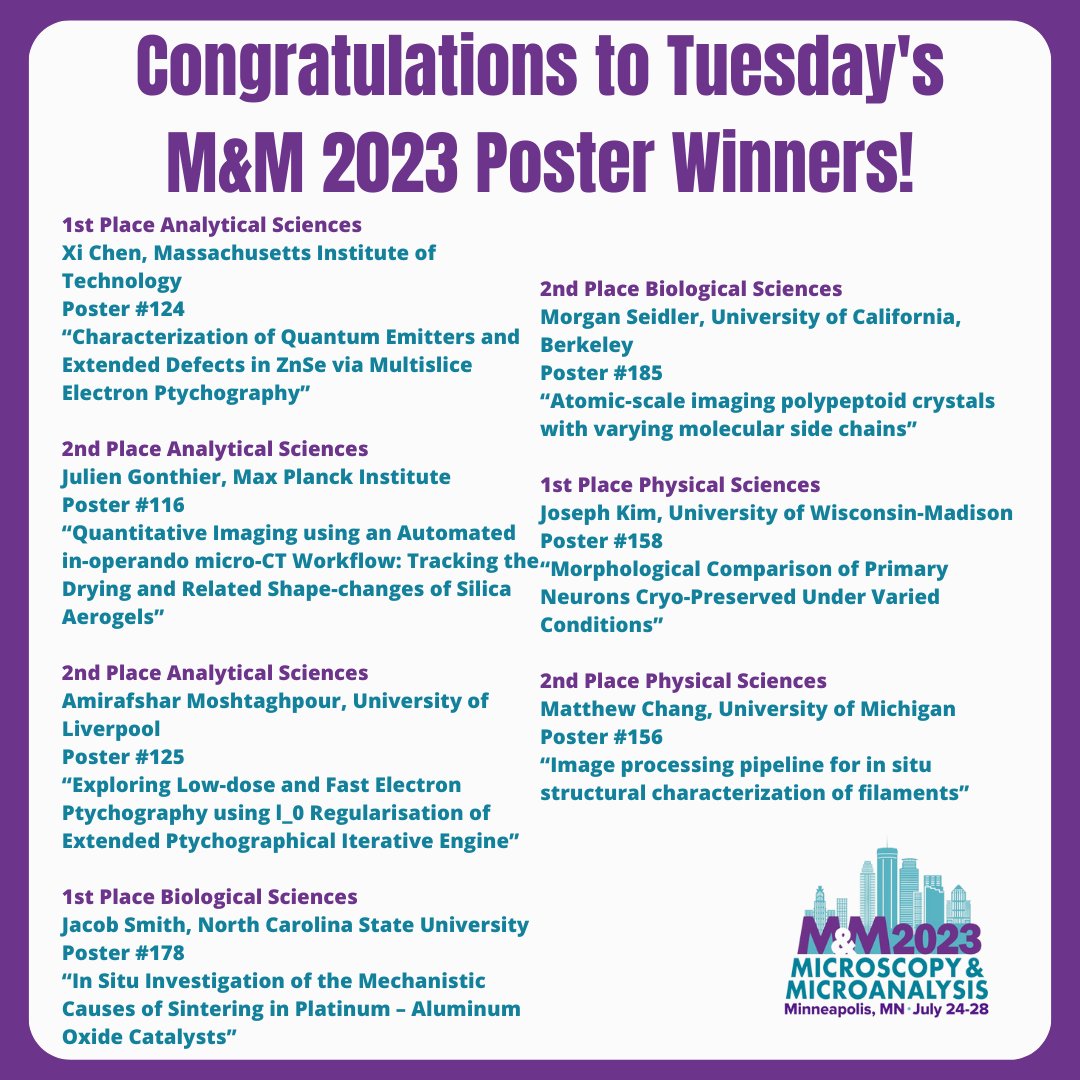
I would like to announce that my work on cryo-ET on Drosophila neurons is now published on @MAMtheJournal! #Tomography#TeamTomo
https://t.co/6dopsqjCbt
We tried so many different things to try to optimize this platform, and learned a lot of things along the way in regards to the difficulties in sample preparation for cellular cryo-ET (with special attention to neurons).
While I wasn’t able to attend the last day cause I got ill, I just wanted to say it was a blast attending my first ever SfN conference here at DC!
It was great seeing lectures where cryo-EM and cryo-ET got a shoutout, and meeting so many new people and old friends too! #SfN2023
Happy to share our review of the human telomere C-strand fill-in mechanism. Appreciate the opportunity to be involved in the process and learn a lot from @cijilim and the revision. https://t.co/pA58ENSEr0
Transferrin Receptor Targeting Chimeras (TransTACs) 🧬
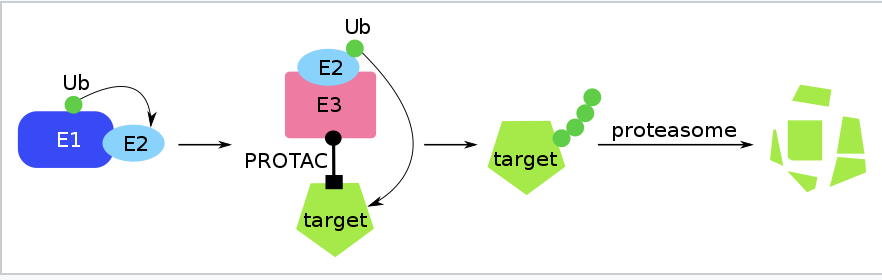
The field of targeted protein degradation is going through a renaissance. The core idea: use a bifunctional molecule to bring a protein in proximity to a degrader.
The first wave (PROTACs) primarily used E3 ligases as the degrader. They ubiquitinate the protein target, labeling it for degradation.
These have primarily been small molecules that target intracellular proteins.
What about membrane proteins?
There have been a few new protein degrader technologies designed with the goal of degrading targets that reside in the membrane—namely AbTacs and LYTACs—but the field is still evolving quickly.
A new preprint from the @xinzhoulab—the first preprint from their group—introduces a new idea:
Create a bi-specific antibody that targets a protein-of-interest (POI), and the Transferrin receptor 1 (TfR1).
Why TfR1?
1. It's up-regulated in cancer cells, which need lots of iron to proliferate. This can help with cancer targeting.
2. It has an insane recycling rate from the membrane.
By insane, I mean:
"TfR1 exhibits an average internalization rate of 500 molecules per cell per second (!!!), making it one of the fastest internalizing receptors known."
So the thinking is that this fast recycling will help to pull lots of the POI into the cell for targeted degradation.
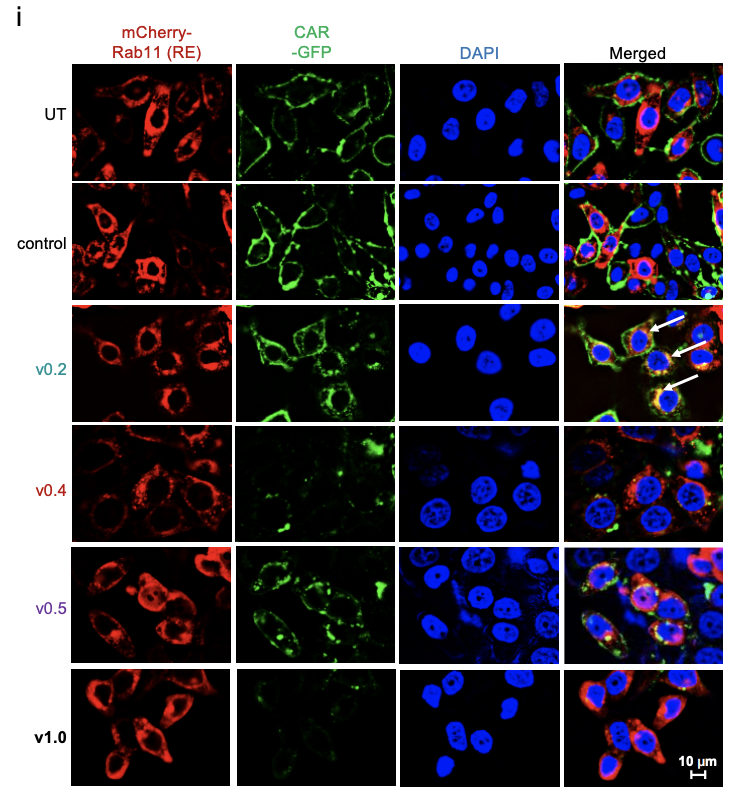
Some solid POC data for demonstrating the degradation of CAR receptors:
(Look at the lack of CAR present on the cell surface in v1.0 vs. the control.)
Very cool idea!
Now this is cool. CryoEM visualizes of an adverse drug interaction of an antiviral together with an anti arrhythmic in Cav1.1 and 1.3! Somehow I doubt this could’ve been predicted like this. https://t.co/26QIdlsSAy
🎊Check out @UWMadisonChem & @UWBiochem student @jykim35 outstanding work developing #Drosophila#neurons as a model #cryoET system! A true tour de force with cell culture, grid prep, micropatterning, etc! 🥳https://t.co/Jy6lgGWDRN
🎉 Super excited to see @UWBiochem & @UWMadBiophysics student @_Juan_C_Sanchez🥇 first-author paper! An amazing #cryoEM structural journey with 3! Caulobacter #flagella! Providing insight into flagellin packing & multi-flagellin filaments. More to come!🎉 https://t.co/DfiNYbwqG1