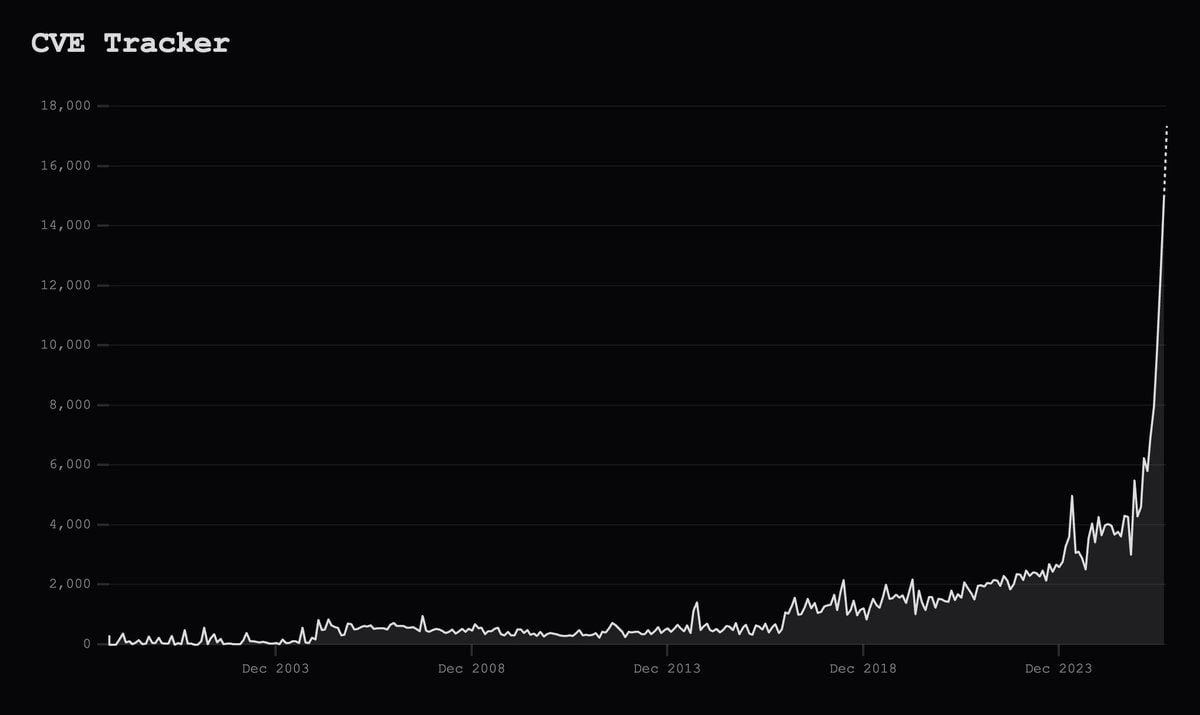
Last phrase, but not least:
> And in the era of AI disruption, stability will be highly valued
Traditional finance has a massive attack surface. Blockchains are designed to be hard to break and easy to recover.
In an AI era, that difference becomes a decisive advantage. That resilience is the real value of decentralization + CROPS.
Expanding on why I believe "ETH as store of value (SoV)" makes much more sense to focus on than "ETH as fee-burning token".
Three primary reasons:
1. ETH as fee-burning token never was as strong as it seemed
2. Optimizing for ETH as fee-burning token would demand Ethereum and ETH function in ways that are very hard to make compatible with decentralization and capture resistance.
3. Meanwhile, optimizing for ETH as SoV is aligned with Ethereum focusing on its unique strengths (decentralization and CROPS)
EIP-1559 (including its burn) is fine and good, we should keep them. But we should not feel sad if fee burn is < 10% of breakeven indefinitely; the value of ETH comes from elsewhere.
The core idea: the big thing that people appreciate about Ethereum is decentralization and CROPS. The main pragmatic benefit that these things translate into is stability. SoV is the category where that is not an unneeded extra we merely put effort into for ideological reasons, but rather a pragmatic strength from the perspective of people putting in their assets. And in the era of AI disruption, stability will be highly valued.
Imagine profanity2 with the following description:
> This project "profanity2" was forked from the original project and modified to guarantee SAFETY BY DESIGN. This means source code of this project do not require any audits, but still guarantee safe usage.
https://t.co/CGpNMGhc5K
Every Mac on macOS 27 now has a free LLM built into the Terminal.
No account. No API key. No internet. No token bill.
Setup (1 minute):
1. sudo fm license (enter your Mac password, one time)
2. fm available (checks the model is downloaded)
3. fm respond “your question”
Works on any Apple Silicon Mac, M1 included.
- Pipe files: cat notes.txt | fm respond -i “summarize this”
- Get JSON back: build a schema with fm schema object, pass it with --schema
- Local API: fm serve gives you an OpenAI-compatible endpoint on localhost
- Resume chats: sessions save to ~/.fm/sessions/
The limit is 4,096 tokens per session, and your prompt, instructions, and the answer all share it.
So skip code and math. Use it for summarizing, extracting, classifying, and rewriting.
Free, private, offline, and already on your Mac.
@ZealynxSecurity And my favorite example:
> This project "profanity2" was forked from the original project and modified to guarantee SAFETY BY DESIGN. This means source code of this project do not require any audits, but still guarantee safe usage.
https://t.co/QJTLq6ss4y
You're not ready for the hack wave that's coming.
Most security budgets bet hacking is hard and pays little. AI breaks both.
Crypto never got to make either bet: public code, real money.
Despite hacks, crypto is fundamentally the world's most secure financial infrastructure.
Crypto is fundamentally more secure than the infrastructure the world runs on. Its own hacks show why.
On-chain code fails often, small and in public, and hardens each time.
The big losses come from trust: keys, admins, signers. That's the part the rest of the world runs on.
@AsafShachaf Multisigs, audits, bounties and monitoring are security by procedure: they lower the odds. Security by construction is protocol architecture: immutability, invariants, proofs. It rules out entire bug classes. AI's creativity can't find what can't exist.
@AsafShachaf Multisigs, audits, bounties and monitoring are security by procedure: they lower the odds. Security by construction is protocol architecture: immutability, invariants, proofs. It rules out entire bug classes. AI's creativity can't find what can't exist.
@ManuAlzuru Fundamentally, yes. Could you imagine a bank down for weeks? With today's AI, that's a realistic scenario. A chain has no single system to take down.
@ZealynxSecurity I'm afraid matching cadence won't balance it.
Attackers need one bug, proven by running it. Defenders must clear all and can't prove they did.
Exploits take one tx. Fixes take triage, analysis, audit, deploy.
Formal verification is a game changer for protocol defense.
Crypto is fundamentally more secure than the infrastructure the world runs on. Its own hacks show why.
On-chain code fails often, small and in public, and hardens each time.
The big losses come from trust: keys, admins, signers. That's the part the rest of the world runs on.
oh my god this is worse than we thought
here's @Ledger $86M exploits explained
> cryptobilis was a reputable and authorized Ledger/Trezor/OneKey dealer for over 4 years
> they decided to sell the company to a Chinese guy (most likely patsy for DPRK) from northern China in MARCH 2026
> the "Chinese guy" modded the devices within the supply chain itself (physical), namely Nano X devices, to contain an implant module
> ledger validity/genuineness check CANNOT detect this because hw wasn't actually tampered with, just spied on
> quoting @MagicalTux:
" implant just monitors what's shown on the screen, will take note of the seed as it's shown to you, then transmits it to 3rd party"
> former owner chimes in on X (pic below) to say that "they were under a NDA" to not mention anything to anyone for 6 months
> they obviously didn't alert any of their partners that they were authorized to sell devices of... because NDA, duh!! its in the name!
> conveniently, funds start getting siphoned a few weeks before this magical NDA due date, and being laundered across all blockchains