@elonmusk After seeing so many positive changes you’ve driven for humanity, Elon, I thought we might see your face on the TIME cover again this year. 😄
But different AIs have different guesses… 🤖
Let’s see who gets it right! 👇
https://t.co/MFks6ABI0P
@BeckyCNN@SarahAmiri1 Using AI is valuable, but introducing it so early risks weakening children’s foundational thinking skills. At ages 5–6, they still need to develop independent problem-solving and critical reasoning before relying heavily on AI tools.
@XFreeze Robots can run, box and break records, but I haven’t seen one swim like a human yet. I’m sure Optimus will break that record too. Any plan to teach him swimming? 🏊♂️🤖
@HHShkMohd Excellent step. Your Highness, One lesson from AI applies to education too: AI should enhance human ability, not replace it. If children rely on AI from primary school, could they lose basic skills like mental maths? Should children learn to think before learning to use AI?
@HamdanMohammed Dubai Future Week could take this vision one step further: bringing the world together to explore not only the future of humanity on Earth, but our future beyond Earth.
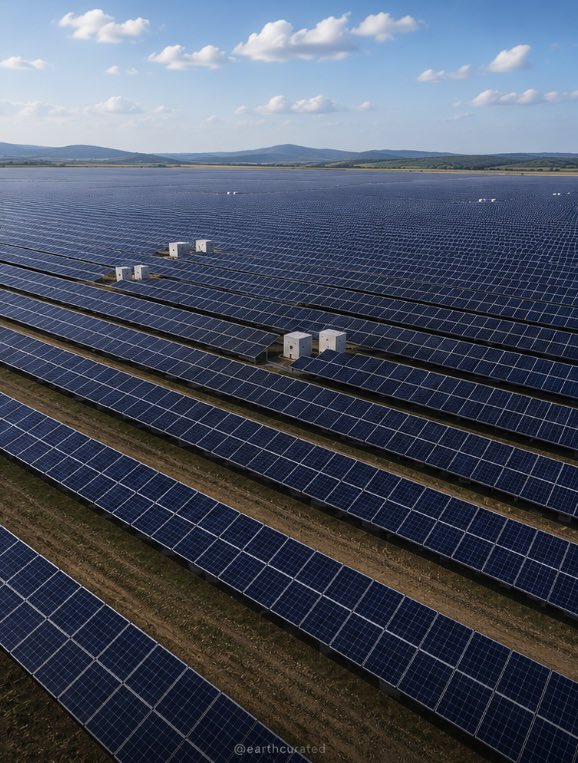
@cb_doge Solar is already being produced at scale across different parts of the world. The challenge is to connect that growing generation to where AI needs the power—with transmission, storage and infrastructure. https://t.co/OF3Vw3TaJS
@cb_doge The solution is solar energy. ☀️
The Sun provides more energy than humanity could ever consume.
Instead of letting electricity become the bottleneck for AI, we should massively accelerate solar generation and storage.
The future of AI needs the energy of the Sun.
@USMSTracker1@cb_doge That’s exactly the challenge. If a small group owns the robots and everyone else depends on an allowance, we haven’t solved the problem, we’ve simply replaced dependence on jobs with dependence on the owners of production.
@Bear_on_a_Pony@cb_doge Purpose matters, but humans shouldn’t have to work the earth simply because machines made everything else more productive. Let robots handle production while humans pursue creativity, exploration, family, learning, and building a better future.
@Chvaaraak@cb_doge@DemSocialists Exactly. If robots create abundance, the real challenge is designing a system where that abundance benefits everyone, not just those who own the robots.