On Thursday, we asked our community to stand with Nashville Zoo in protecting the animals, habitats and future of the Zoo from a proposed data center next door.
Please keep sharing and contact your local representatives ➡️ https://t.co/q2ISQnxLBK
🚨 Day 2 of 30 Heroes in 30 Days — countdown to July 4!
The Bedford Boys of Virginia. From a town of just 3,200, 37 young men of Company A, 116th Infantry landed in the first wave on Omaha Beach, D-Day. 19 died within minutes.
One shining example: 1st Lt. Jimmie W. Monteith Jr. (Medal of Honor) repeatedly exposed himself to murderous fire, rallied scattered troops, and guided tanks through a minefield under hellish artillery and machine guns. He was killed that day.
They stormed the beaches to liberate a continent & never asked for riches or glory — the only land they asked for was a place to bury their dead.
Brothers. Neighbors. Virginians. Heroes. 🇺🇸
#30HeroesIn30Days #BedfordBoys #DDay #OmahaBeach #MedalofHonor
On this day in 1944 a little town in the Blue Ridge Mountains with about 3200 people would lose 20 sons, with 19 coming on Omaha Beach during the first wave.
The “Bedford Boys” were made up primarily from Company A, 116th Infantry Regiment, 29th Infantry Division, and trained for two years in England before leading the charge for one of the greatest battles in history. Bedford would lose 23 sons in total, making it the highest per capita loss of life of any town, which led Congress in to designate Bedford as the site of the D-Day Memorial, dedicated in 2001.
I drove to 648 Grassmere Park to see it for myself.
I had no idea what was about to be built 50 yards from the @nashvillezoo.
A data center. Right against the treeline where the animals my kids grew up visiting are kept.
I’m not anti-technology…
The phone you’re reading this on is tied to one of these somewhere. We all live in this now.
But here’s the thing nobody’s telling you: a low hum doesn’t stop at a wall. It goes right through it. And the zoo’s own CEO says it’d sit 50 yards from animals they’ve spent decades trying to protect and breed.
No study. No rules. No vote. Just a rushed permit.
You don’t have to hate the future to say: not like this.
The petition’s in my bio. Takes 10 seconds.
Right now, 10 seconds is the whole fight. 🐆
Please share Clover with all your peeps in the Pacific NW. She needs our help to find her loving, forever home. May 31, 2026 https://t.co/O4t5SVSiWz via @YouTube
😍 Salty - A051570 😍
Meet Salty. He’s bee looking for love since November, and is one of our shelter’s longest residents. He needs someone to adopt or rescue him by 5/18!
Salty is:
🩵 calm and mature
🩵 sits on command
🩵lower energy
🩵independent, but friendly
Bear season is here — help us keep both you and our bears safe!
A few important reminders for your visit:
In Sequoia and Kings Canyon, American black bears are right at home in our meadows and forests - and we want to keep it that way. Preventing bears from getting human food is the most effective way to protect both visitors and wildlife.
Your Food. Your Trash. Your Responsibility.
• When camping, store all food, trash, and scented items in bear-resistant lockers.
• Keep coolers secured and never leave your backpack unattended.
• When hiking or doing other activities - keep food within arm's reach; moments of distraction can teach a bear to seek out human food.
On the trail:
• Hike in groups, make noise, and keep small children within sight.
• Stay alert and skip the headphones.
• Never approach a bear; if it is on the trail, make noise so the bear knows you are there and give it time to safely get off the trail.
If you see a bear:
• Give it space — at least 100 yards (a football field).
• If it hasn’t noticed you, leave quietly.
• If it has, stay calm, back away slowly, and if it approaches - make some noise.
Let’s keep our bears wild — and keep you safe.
Bear Aware. Stay Wild. Stay Safe.
REMINDER: Bear spray is not permitted in Sequoia and Kings Canyon. Unlike some parks, bear spray cannot be carried or used here.
To learn more about the bears in Sequoia and Kings Canyon National Parks, visit https://t.co/U5fN4vBpUG.
NPS photo
Alt text: a bear looks towards the camera as it sits in dry grass.
Charles Dickens fought his depression by walking through London at night. One October he set out at 2 in the morning and walked 30 miles, all the way to his country home in Kent. In 1860 he wrote about why it worked. It took psychology another 150 years to catch up.
Dickens called his bad spells "spectres." They came back every time he started a new novel and sometimes hung on for months. His mood would fall apart, his sleep would collapse, and the only thing that pulled him out was walking.
He explained his method in an essay called "Night Walks," published on July 21, 1860 in his weekly magazine All the Year Round. He had tried fighting his insomnia from bed and lost. So he changed the plan. The fix, he wrote, was "getting up directly after lying down, and going out, and coming home tired at sunrise." A worried mind cannot fix itself by worrying more in bed. You have to get up and move.
Most nights he walked 12 to 20 miles. A friend called it "violent walking." Dickens wrote that on these walks his wandering self had "many miles upon miles of streets in which it could, and did, have its own solitary way."
Today, walking is one of the most powerful tools doctors have against depression. In 2012 a team of researchers pulled together eight high-quality studies of walking as a depression treatment. The effect was as strong as the antidepressants doctors actually prescribe.
The biggest test came from Duke University. The SMILE study took 202 adults with serious depression and split them into four groups: supervised exercise, home exercise, the drug Zoloft, or a placebo pill. After 16 weeks, the people who exercised did just as well as the people on Zoloft. A 2024 review of 75 studies covering 8,636 patients confirmed it. Walking should be one of the first things doctors try.
The reason is the thing Dickens stumbled onto in the dark. Depression runs on rumination, the looping bad thoughts that grind people down during the worst stretches. In 2015 Stanford researchers scanned people's brains before and after a 90-minute walk in a quiet park. The walkers had less activity in a part of the brain called the subgenual prefrontal cortex. That spot, deep behind your forehead, is the brain's worry loop. After the walk, the worry loop got quieter. The walkers said they felt less stuck inside their own heads. The brain scans agreed.
A walking body shuts up a noisy mind. The street takes attention, the walking rhythm fills the head, and the dark spells lose their grip. Dickens called the streets his cure because they gave his brain somewhere else to be. The science 150 years later says he had it right. Depression hates a brain that is moving.
At 6 a.m. this morning, the gate to the North Rim swung open and staff welcomed visitors back to one of the most spectacular places in the world. We are excited to welcome everyone back for another season at the North Rim of Grand Canyon National Park!
Visitor services currently available include:
🛒 General Store open daily from 9 a.m.–4 p.m. with grab-and-go food, dry goods, bottled water (single-serve and gallon sizes), and other essential items available.
⛽ Gas station open daily with unleaded and diesel fuel available via pay-at-the-pump service.
⛺️At this time, there is no reopening date set for the North Rim Campground. More information will be shared as it becomes available. Follow current North Rim status and updates here:
https://t.co/q8Hlgi6Enq (2195)
The North Kaibab Trail has reopened. Parking at the trailhead will be limited this weekend. Overflow parking is available north of the former Grand Canyon Lodge site. The Bridle Path connecting the North Kaibab Trailhead to the Lodge parking area is also now reopened.
Reminder: No potable water is available at the North Kaibab Trailhead or anywhere else on the North Rim at this time. Please plan accordingly and bring adequate water and food for your visit.
A heartfelt THANK YOU to National Park Service staff, Grand Canyon Conservancy, the Arizona Trail Association and Aramark for the incredible teamwork and dedication that made reopening on time for the 2026 season possible. We couldn’t do it without you!
Photos:
Entrance Station: NPS/J. Baird
Entrance Sign: NPS
Group photo courtesy of Radmen Niven, @AZTourismNews
My friend @GonzotheCat1 and his mummy have done a new brilliant book with all my photos and twitters! And all the profits go to @FelineFriendsUK and @AllDogsMatter who rescued me from the bad place & found my mummy & daddy. Send Gonzo a message if you want to buy one!!
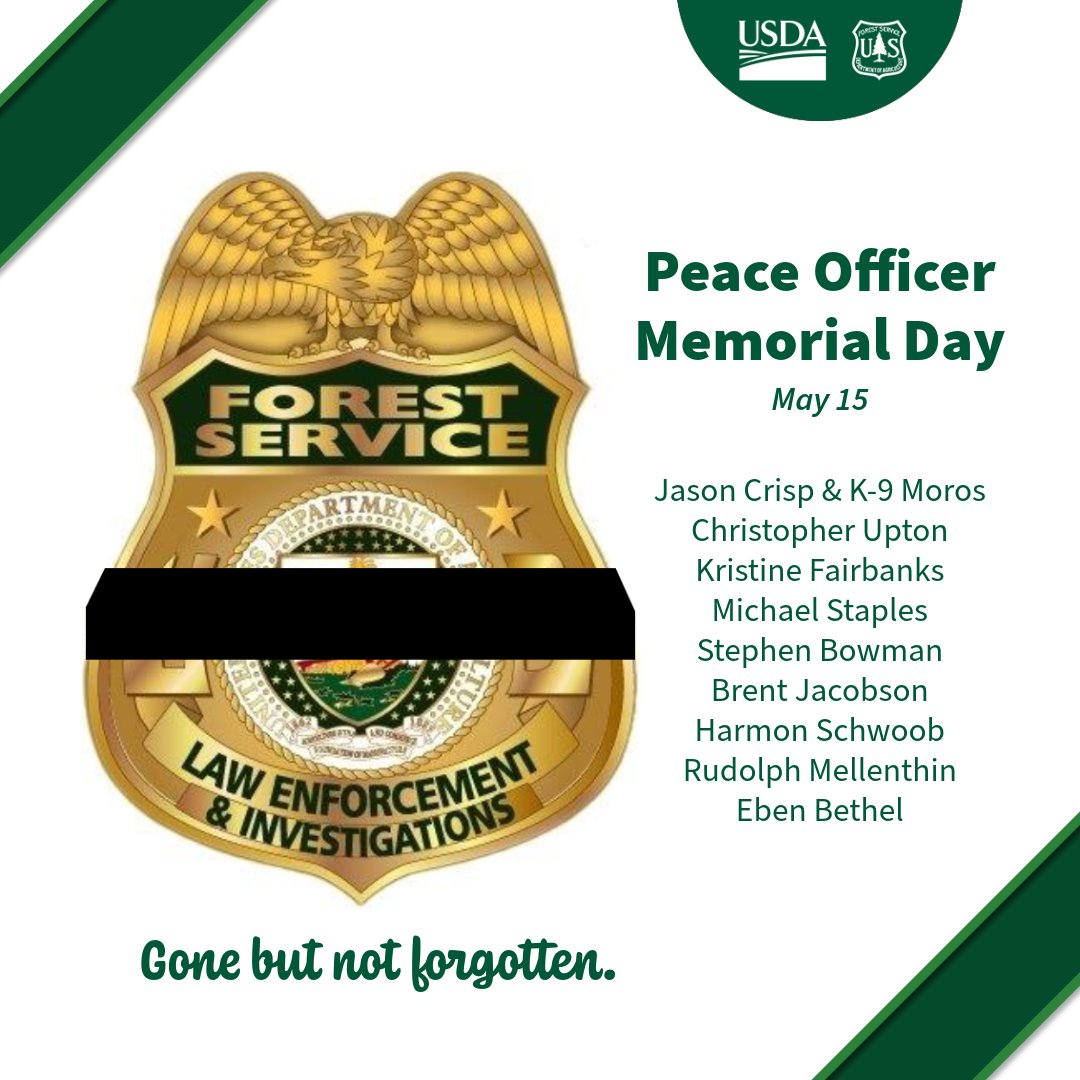
Today we honor the Forest Service officers and one K‑9 who have given their lives in the line of duty while serving the public. Each is recognized at the National Law Enforcement Officers Memorial in Washington, D.C. Learn more: https://t.co/TICCrHMi4H
"Do I need to carry bear spray even if I don't plan to hike in Yellowstone's backcountry?"
Short answer: Yes!
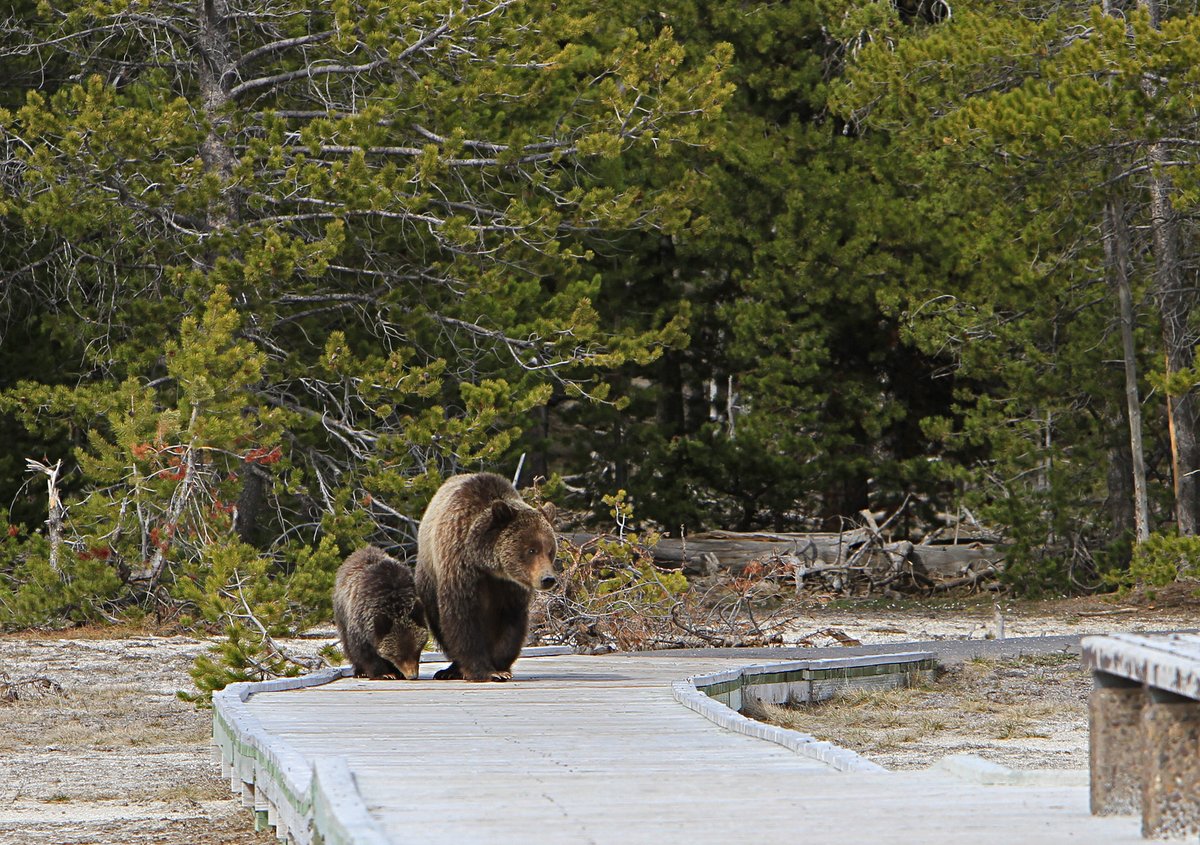
Wildlife, including bears, roam where they please. This means bears could venture through a parking lot, boardwalk, road, or trail, so it's important to be prepared no matter where you are in the park:
❗ Stay alert and aware of your surroundings.
🧍♀️🧍🧍♂️ Hike in groups of three or more, stay on established trails and boardwalks, and make noise.
🐻 Carry bear spray in a readily accessible location (not stored in your backpack) and, most importantly, make sure you know how to use it!
🛑 Maintain a distance of at least 100 yards (91 m) away from bears, wolves, and cougars and at least 25 yards (23 m) away from all other animals.
📸 Use binoculars, a telescope, or a telephoto lens to get a closer look.
📞 Report bear sightings and encounters to a park ranger immediately!
Learn more about our safety tips while venturing in the park: https://t.co/0Lxq2pM0Bp
Photo: Grizzly sow and yearling on a boardwalk near Old Faithful.