Airtable, growing 20% y/y, just sold for ~2.7x ARR for $1.3bn (down from $11.7bn in '21)
Private credit take note.
If Bending Spoons (owner of AOL, Vimeo, Evernote) is your buyer, you might want to reevaluate your valuation expectations.
I understand why Argentina is reluctant to lock in relatively high interest rates on new bonds -- its impressive fiscal performance has been helped considerably by the low interest rate it pays on its external debt (thanks to the 2020 restructuring)
But ...
1/many
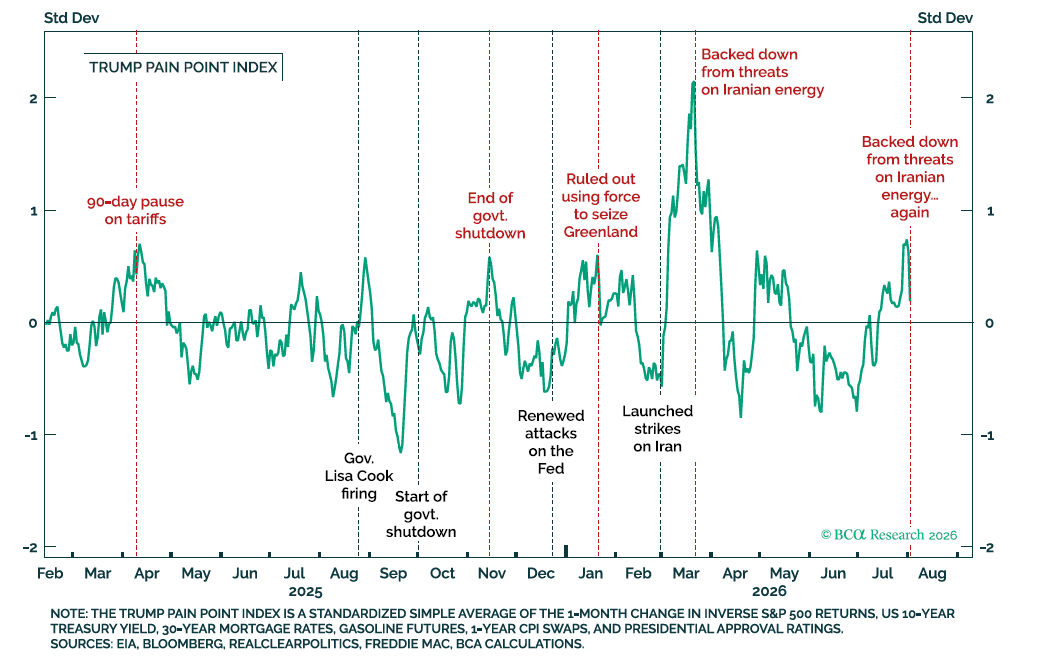
Great chart by my colleague @felixavp...
Looks like we are back to "normal" level of White House fortitude in the face of market constraints... after a breakout in March,
The last sentence is why Zito is one of the best credit investors.
Risk/reward in equity in fat-tailed scenarios can be very good.
Risk/reward in credit in fat-tailed scenarios can be awful.
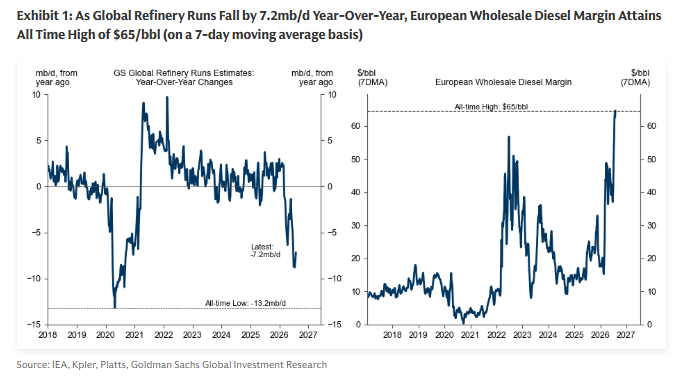
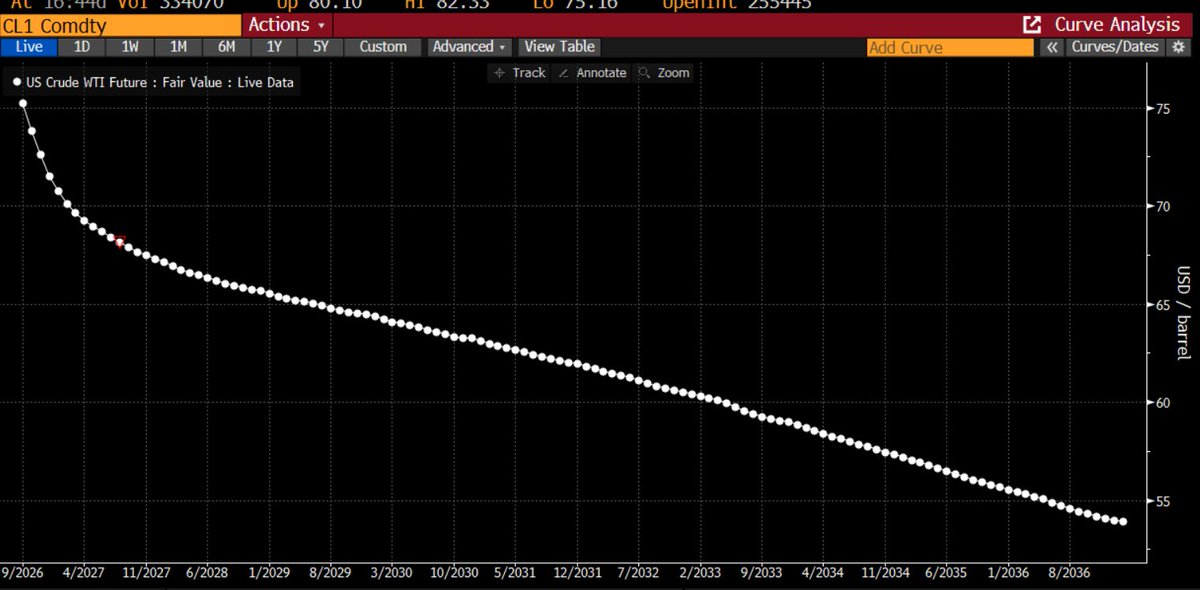
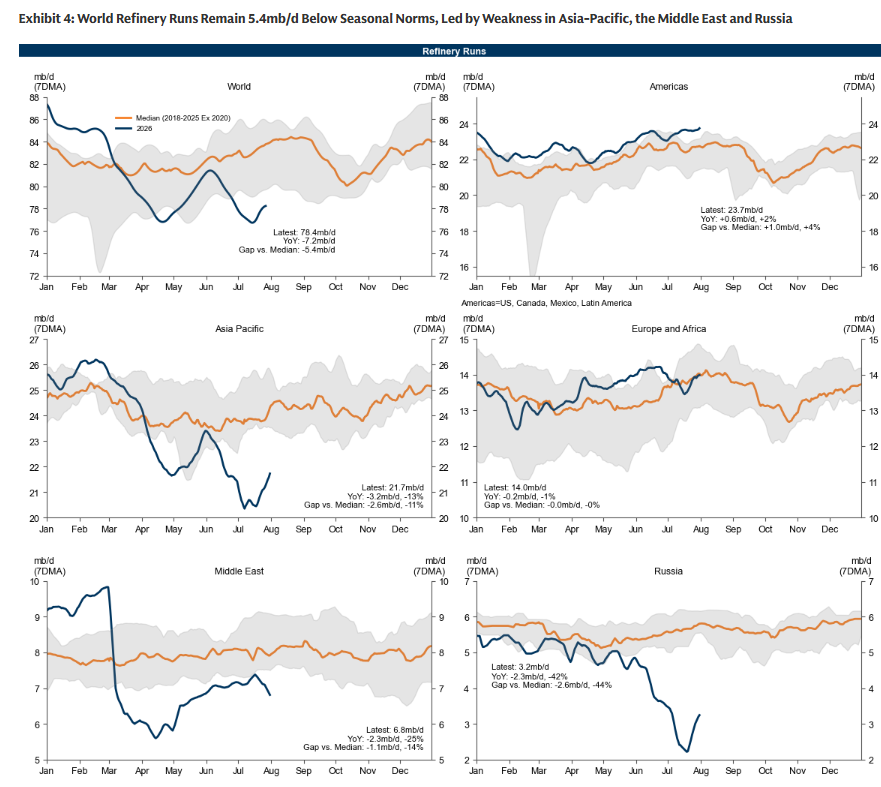
Its important to remember - even excluding China, global refinering runs are 4.5mmbpd below normal. That weakens crude and stregthen products. Even so the market is very backward. Scary
China pulling so hard on storage will end soon enough - its already balanced somewhat
Holy shit this is really bad (and honestly shocking)
Airtable raised at $11.7B in December 2021 from large VCs including Benchmark, Coatue, D1 Capital Partners and Thrive Capital
Now, Bending Spoons is acquiring Airtable for $2.25B but Airtable has $965M of cash, so the real value is $1.285B. Down 90% - bad.
Airtable had raised $1.35B of VC capital in total, more than what it sold for - very bad.
And the most surprising and important part, at ~$480M ARR growing 20%+ YoY, that’s 2.7x ARR. Assuming low-30% normalized margins (conservative), that's a 8-9x EBITDA multiple - extremely bad.
Why did they sell? Realized growth was going to disappear? Retention dropped? Too much S&M to make economics work?
Curious to see how VCs will update their marks!
This paper deserves the buzz it created. I fully expected another fearmongering piece of nonsense about private credit, but instead, it was very measured and proposed a really prudent solution for life insurers with PC exposure.
Kudos to @agranato42@PranjalDrall
US manufacturing is booming, expanding at the fastest pace since 2022 and beating expectations in many metrics for the month of July. Omar Sharif of Inflation Insights points out that the ISM production index rose by the most for any July since 1951. https://t.co/SiVnhJghQA
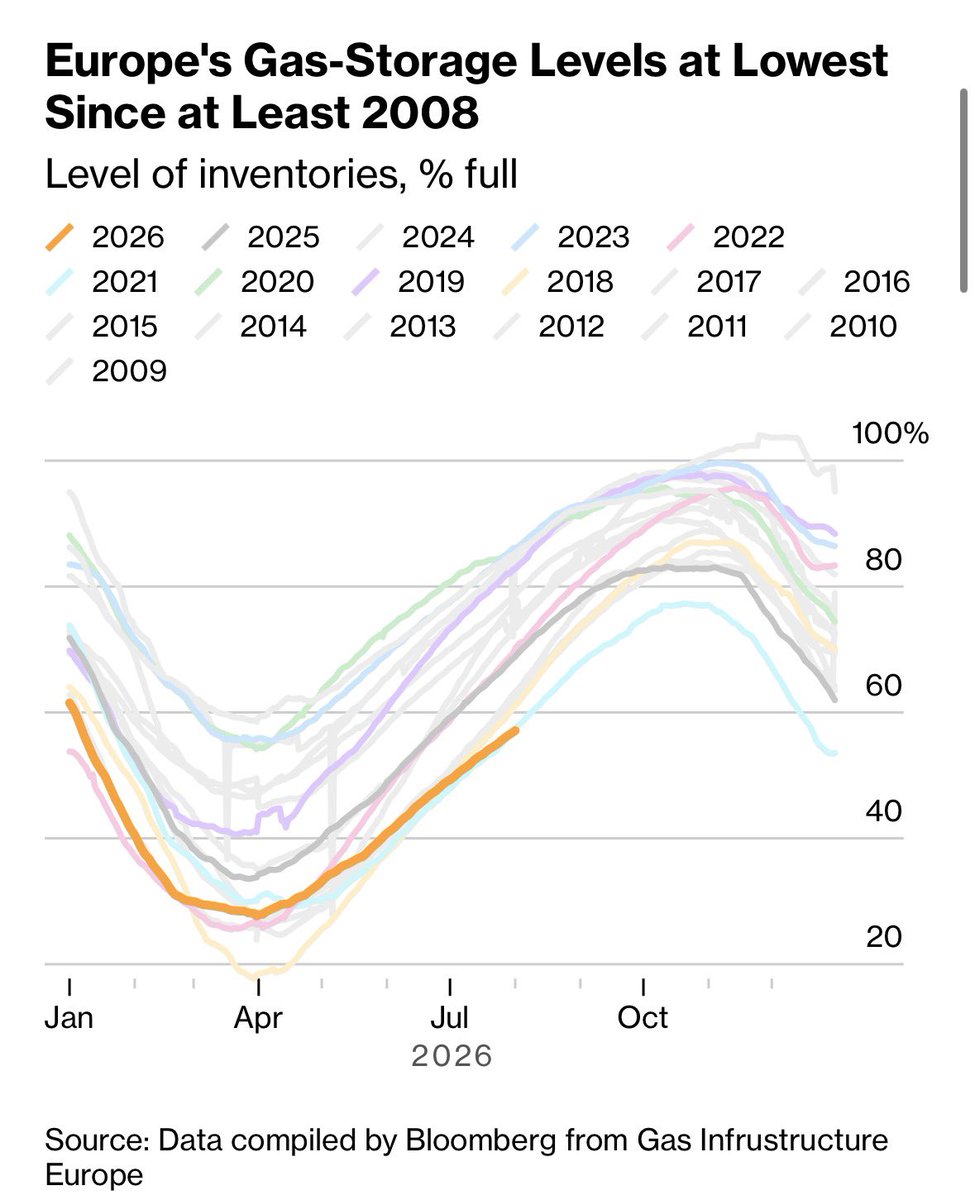
The EU is optimistic that winter LNG buying will help offset low inventories 🇪🇺🚢
⚠️ The EU’s storage facilities are only around 57% full, the lowest for this time of year in records going back to 2009
👉 EU spokesperson says filling storage by winter “technically achievable”
As expected, the initial surge of post-MOU inbound ballast (i.e., empty) tankers through Hormuz has entirely faded and the lack of ballast tanker capacity is now again the primary impediment to a recovery in fresh Gulf oil loadings.
78 of 91 hyperscaler bonds issued this year are trading at wider yields than where they priced.
Median move: 22bps wider. The long end is where the damage sits
Japan has a near 5% of GDP current account surplus. Near neutral on trade, with huge investment income that is usually automatically reinvested. A less structural surplus than might seem on the surface.
Governor Miran included the policy proposal of expanding FIMA Repo facility usage in “A User’s Guide to Reducing the Federal Reserve’s Balance Sheet”
helpful for understanding the history and monetary/fiscal implications.
COLUMN: Undeniably, the world has depleted a large chunk of its crude inventories over the last 150-plus days. But the global economy still has plenty (including in strategic reserve), and it isn't at "tank bottoms" as the oil bulls claim.
@Opinion https://t.co/Zcfgajp56J