Deploy mobile machines with human pilots to train the AI. Use brain implants to compete with the AI. The winner gets the moons of the solar system. @voxelisai
If your WFH desk setup doesn't cost more than a used Honda Civic, you aren't serious about your pipeline.
My ergonomic chair is built from the salvaged suspension of a 2019 Tesla Model S.
My primary monitor is a converted IMAX screen I bought from a bankrupt theater in Oakland.
When I drag a cell in Google Sheets, I physically have to rotate my entire torso. I burn 400 active calories a day just searching for the Slack icon.
Stop complaining about back pain and optimize your environment.
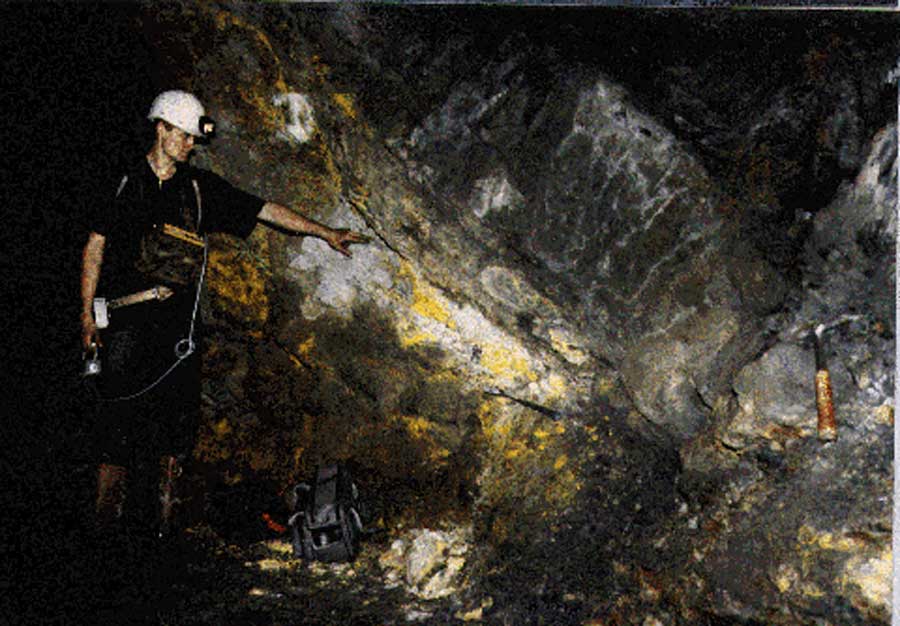
@DJSnM Consider visiting lavabeds national monument. Easy to explore lava tubes and a compelling narrative about their tactical use. Bring your own headlamp for best results. 🌟
Ukraine launches TrophyLab: we are opening access to captured Russian weapon technologies for our global partners. Every missile, drone, and vehicle seized on the battlefield is now a source of knowledge for the free world.
Through this secure platform, allied governments, labs, and defense tech manufacturers gain access to deep technical data, reports, and vulnerabilities. Users can also request physical equipment for testing, significantly shortening the development cycle for countermeasures.
What was meant to be the enemy's secret advantage is being dismantled to defend democracy. Join the platform:
🔗 https://t.co/xoeCfXsIy3
Banning under-16s from YouTube mostly means banning them from logging in, which means YouTube will treat them less like kids and more like anonymous adults. Great job, UK.
Whatever one thinks about the financial wisdom of investing in the SpaceX IPO, or its impact on Mars dreams, I am fucking thrilled for employees who have busted their asses for a quarter of a century. They deserve this, and will inject further money and momentum into new space.
Exactly
Not wanting to have kids because they’ll have their marginal per capita contribution to some negative externality of human activity intrinsically assumes your children won’t provide any value.
On net, obviously your children will do far more good for the future of humanity than harm due to a few hundred tonnes of CO2 over their lifetime or a bottles worth of water evaporating due to talking to the LLMs.
One extremely important insight is to focus on the net result of actions, not just the negative aspect.
Eg. I’d replace an acre of desert with forest in an instant, 100x the plant matter, at the expense of some cacti. On net, so obvious. If you only focus on negatives, oh my god we just killed an endangered cactus!
On June 6, 1944, the Germans knew one thing for certain: to invade France, the Allies needed a port.
So they fortified every port on the French coast. Cherbourg. Calais. Boulogne. Turned them into fortresses. Poured millions of tons of concrete into the Atlantic Wall.
The Allies simply decided to bring their own port with them.
This is the story of the Mulberry Harbours, and it might be the single most audacious engineering feat in military history.
The problem was simple and brutal. You cannot sustain an invasion army of millions of men on landing craft alone. You need docks. Cranes. Piers. The infrastructure to pour supplies ashore by the thousands of tons every single day. Without a working port, any beachhead would eventually starve and collapse.
The Germans knew this. Their entire coastal defense strategy was built on it.
What they never imagined was that the Allies would build two fully functioning deep-water harbors in Britain, dismantle them into pieces, tow them across the English Channel, and reassemble them off the beaches of Normandy.
Starting in December 1943, 37,000 workers across Britain began secretly manufacturing the components. The project was so large it strained the entire British economy. 146 massive concrete caissons called Phoenixes, each one 60 metres long and 18 metres tall. Miles of floating steel roadways. Pontoon bridges. Breakwaters. Pier heads. Enough material to build a small city.
They built dry docks in the Thames and Clyde rivers just to construct the caissons. 1.5 million yards of steel shuttering. 31,000 tons of steel. Workers had no idea what they were building or why.
When D-Day came, tugboats began towing the pieces across the Channel at just 8 kilometres per hour. Hundreds of individual components, each one a logistical nightmare to move, crossing open water in the wake of the largest invasion fleet ever assembled.
Within 12 days, two working harbours stood off the Normandy coast. Mulberry A at Omaha Beach for the Americans. Mulberry B at Arromanches for the British and Canadians.
Then, on June 19, the worst storm to hit the Normandy coast in 40 years tore through the Channel.
For three days the storm raged. When it cleared, Mulberry A at Omaha was gone. 21 of 28 caissons completely destroyed. The piers smashed. The roadways scattered. The Americans scrapped it entirely and cannibalized the wreckage to repair the British harbor.
Mulberry B at Arromanches survived, barely, because of its slightly more sheltered position.
That one surviving harbor then proceeded to supply the entire Allied liberation of Western Europe.
2.5 million men. 500,000 vehicles. 4 million tons of supplies. All landed through an artificial harbor that was designed, built, floated, towed across the Channel, and assembled in secret, in less than six months.
After the war, Nazi armaments minister Albert Speer put it plainly.
Germany had spent 13 million cubic tonnes of concrete and 1.5 million tons of steel building the Atlantic Wall to deny the Allies a port.
"A fortnight after the landings," Speer said, "this costly effort was brought to nought by an idea of simple genius."
They built their own port.
And they brought it with them.
2 billion years ago, a nuclear reactor geologically self-assembled and turned itself on.
No humans were involved. Only rock, groundwater, & natural uranium.
It ran intermittently for hundreds of thousands of years.
Here's the story of Oklo (not the company, but the place!):🧵
@CKalitin Two unusual suspects in this genre are:
The curious case of Rudolph Diesel
The alchemy of air
Both were eye opening context for German industrial capability.
@eiszett Have you read all the sources you ever cited? During my PhD we, along with dozens of other papers, cited a paper that I later found did not contain the result for which it was commonly cited. I should be banned I guess.
Everyone brags about oversubscribed rounds.
I’m more impressed by founders who barely scrape a round together through sheer force of will because what they’re building is so far outside the mainstream that almost nobody understands it yet.
Plague is one of the biggest threats to black-footed ferrets. But domestic ferrets have resistance. If we can find the genes behind it, we could edit BFFs to give them a real shot at survival.
The tools & tech we develop for de-extinction help make projects like this possible.