Cognitive Motor Neuroscience, Sensorimotor Adaptation, Hand Coordination. Grown up in the Alps, now at Michigan State U and missing that 3rd dimension...
Oh, the technocrats' hyperbole: “The importance is profound. It’s the most popular open-source project in the history of humanity” (Nvidia's CEO on NemoClaw)
Well, humanity hasn't been around for so long, and open-source projects even less. So - yeah...
The Elusive Concept of Time.
Your instincts treat time like a background meter the whole universe shares. Relativity does not take time away, it forces you to earn it operationally. Events are points. Motion is a curve through them. A clock is not a metaphor, it is a worldline with a number attached to it.
Two observers can disagree on which distant events are simultaneous, and nothing contradictory happens, because causal structure is still pinned down by light cones and invariants.
Even in weak gravity the rule shows up. A clock deeper in a gravitational potential ticks more slowly relative to one far away. Near a compact object the difference becomes hard to ignore. Add rotation and spacetime itself picks up a twist. That twist is frame dragging, not a new force, just geometry telling you that time and angle are coupled in a rotating spacetime.
In the animation
You are watching a geometry lesson disguised as a black hole scene. The fabric is a visualization of the field shaping clock-rates and the paths light can take. The ripples are driven by local proper time, so their phase visibly slows as you approach the horizon. The accretion disk is lensed through Kerr ray tracing, and its brightness is pushed by redshift and beaming so the approaching side can flare while the receding side dims. Beacon points at different radii pulse at different rates, so you can see time dilation without any labels. The bead ring is a redshift tracer, with intensity scaled by a g³ proxy so deeper emission arrives weaker and shifted.
The math breakdown
Start with what a clock actually measures.
Proper time τ is the accumulated time along an observer’s worldline.
In special relativity, the invariant interval is
ds² = c² dt² − dx² − dy² − dz²
Along a timelike path,
dτ = (1/c) √(ds²) = √( dt² − (1/c²)(dx²+dy²+dz²) )
If the observer moves with speed v, so dx²+dy²+dy²+dz² = v² dt², then
dτ = dt √(1 − v²/c²)
That is time dilation as geometry. The moving clock accumulates less τ between the same pair of events.
Now add gravity.
General relativity replaces the flat interval with a metric gᵤᵥ that depends on position:
ds² = gᵤᵥ dxᵘ dxᵛ
For a stationary clock in Schwarzschild geometry (mass M), the time component is
g_tt = −(1 − 2GM/(rc²))
If the clock sits at fixed r (no spatial motion), ds² = g_tt c² dt², so
dτ = dt √(1 − 2GM/(rc²))
Closer to the mass means a smaller factor, so the clock ticks more slowly relative to a clock far away.
That is the rule used to drive the fabric phase in the animation.
Now connect time to light.
A gravitational field shifts photon frequency. Between an emitter at rₑ and an observer at rₒ,
f_obs / f_emit = √( (1 − 2GM/(rₑ c²)) / (1 − 2GM/(rₒ c²)) )
For a far-away observer rₒ → ∞,
f_obs / f_emit = √(1 − 2GM/(rₑ c²))
Deeper emission arrives redshifted. Lower frequency. Lower energy per photon.
In the render, the disk intensity uses a Kerr-derived redshift factor g (clipped for stability). The bead ring uses a simple radiative proxy I_obs ∝ g³ I_emit to make that effect visible.
Finally, why rotation looks like a twist.
A rotating black hole is Kerr geometry. The key structural change is a nonzero g_tφ term, which couples time to angle. That coupling is frame dragging in equations. Near the hole, being stationary is not the same notion everywhere, because the local inertial frames are being pulled around the spin axis.
So the moral stays clean.
Time is not a universal substance flowing everywhere at one rate. It is what clocks accumulate along worldlines. Light cones constrain what can influence what. Invariants are what everyone agrees on. The rest is operational detail that only feels universal because our daily corner of the universe is slow and mild.
#GeneralRelativity #Gravity #FrameDragging #BlackHoles #Spacetime
@AdrianoAguzzi I have a list of 'forbidden words' in my lab, and the undergraduates are always like 'what the heck'? Once I explain the words, they go 'ohhh, I didn't think about that'.
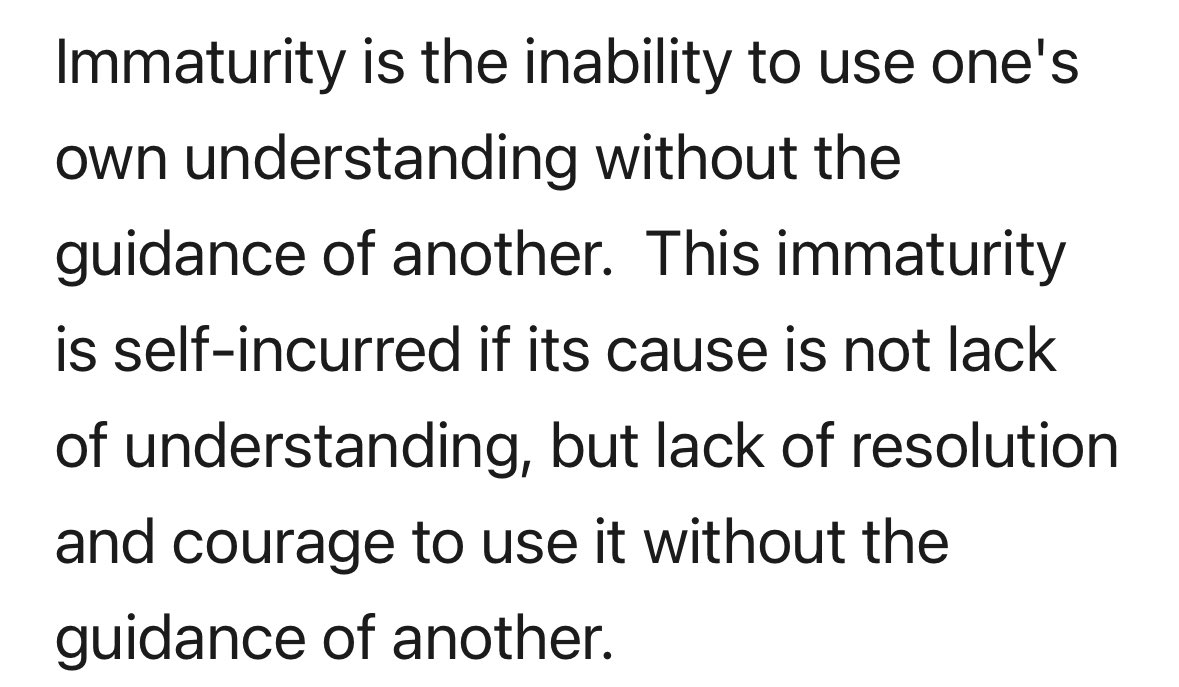
Student use of AI makes me think about what Kant says about immaturity in his essay on enlightenment, and how easy and convenient it is to remain immature forever.