Dear Maj. Gen. (Rtd) @mugishamuntu,
I recently watched you on TikTok telling that sharp satirical story of a man who hated his neighbour. When God appeared to him and asked him to name his heart’s desire, God added that whatever the man asked for would be given twice to the neighbour he hated. The man thought carefully, then asked to lose sight in one eye — knowing very well that his neighbour would lose sight in both.
It was painful, funny, and intelligent in the way good satire often is. You made people laugh, but the laughter carried a serious warning: hatred can make a man accept his own loss, as long as the person he resents suffers more. As I laughed, admiring your wit, I remembered another man from our own folklore: Ishekatabazi of Ntungamo.
There is an old tale about this cunning man. Ishekatabazi had spent two weeks in Karagwe, Tanzania, visiting a friend. But when he returned to the village and people asked where he had been, he did not tell them the truth. He claimed he had been at Kamukuzi, staying at the palace of the Omugabe of Nkore. And from that borrowed authority, he delivered his warning: an anthrax outbreak was coming, and it would kill the cows. The only way to save them, he said, was to cut out their tongues.
The villagers did not believe him at first. They knew him and suspected a trick. So, before dawn, Ishekatabazi drew blood from one of his healthy cows, as elders sometimes did when harvesting blood for food, smeared it around the mouths of his own cattle, and waited. By morning, his neighbours saw what looked like proof. Fear did the rest. One by one, they followed his advice and cut out the tongues of their cows.
By midday, all the cows in the village — except Ishekatabazi’s — were dead. And so, the story says, Ishekatabazi became the richest man in a ruined village.
That is where many people laugh and end the story. They call him clever. They admire the trick. They celebrate the man who outsmarted everyone else. But when I place Ishekatabazi next to the man in your story, the laughter becomes uncomfortable.
The man who asked to lose one eye was not wise; he was consumed by envy. Ishekatabazi was not wise either; he was consumed by the need to dominate others, even if domination meant destroying the village that sustained him. His neighbours had lost their cows, but the village had also lost milk, bride wealth, food security, savings, dignity, and trust. The local economy had shrunk. The people who might have bought his milk were now poorer. The community that might have traded with him was now wounded. The neighbours who might have trusted him now had reason to fear him.
So what exactly had he won? He had become the richest man in a village he had made poorer. That is not wisdom. It is short-sightedness dressed up as intelligence.
And this is where the story becomes deeply political. Fear has always been a tempting instrument for weak leadership because it works quickly. It can silence questions, scatter rivals, divide communities, and make people appear obedient. But fear is a poor foundation for nation-building. It produces compliance, not confidence. It produces silence, not trust. It produces subjects, not citizens.
A leader who governs by fear may imagine he has secured power. A leader who keeps communities suspicious of one another may imagine he has mastered control. A leader who turns tribe against tribe, neighbour against neighbour, party against party, and citizen against citizen may even appear clever for a season. But he is only becoming Ishekatabazi. He is killing the cows of his own village.
People who are afraid do not plan boldly. They do not innovate freely. They do not collaborate honestly. They hide their thoughts, protect themselves, flatter power, and wait for danger to pass. A society ruled by fear may look stable from a distance, but underneath, its productive capacity is being drained. Trust dies first. Then initiative. Then institutions. Then the economy itself.
That is why fear is such a short-sighted tool of leadership. It may protect a leader from immediate challenge, but it weakens the people whose strength he ultimately depends on. He may remain with the last herd standing, but he will be standing in a ruined economy, surrounded by resentment, mistrust, and quiet withdrawal. He may control the people, but he will have weakened the nation.
That is why your story stayed with me. The man who chose to lose one eye and Ishekatabazi who ruined his village are cousins in the same moral family. Both remind us that hatred, envy, fear, and cunning can look like strategy, but only to the short-sighted.
True leadership cannot be built on the poverty and fear of one’s own people. It cannot survive by shrinking the economy, dividing communities, humiliating rivals, or making citizens afraid of one another. A leader who creates poverty and strife among his own people is not strengthening himself; he is weakening the very ground on which he stands.
I'm a proud Pan-African who rides with every African team at the World Cup. But Morocco hasn’t convinced me yet since Vinícius Júnior equalized. I haven't seen what distinguishes African; power energy, and wisdom.
In communication, natural and freestyle beats force and seriousness. I tell you the frequency voices of 'trigger messages' never keep the tempo but the message that comes in gently often lands deeper than one that shouts.
Attended Mass today at Nyamitanga Archdiocese and joined in contributing toward the new office block. The hymns and sermon were a beautiful reminder that faith unites us more than anything else.
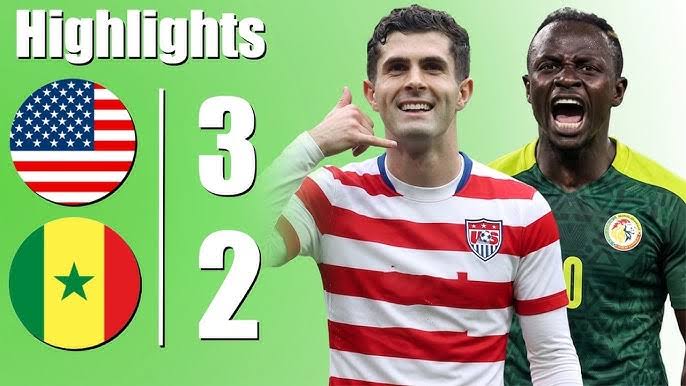
Abdoulaye Seck deserves better than the insults after last night’s poor performance against the USA. Senegalese must know that Israel-Iran conflict x-tised by air raids & much time in the underground bunkers has gravely affected players preparations. Not an excuse just context
Is this the kind of football @FootballSenegal will be playing at @FIFAWorldCup? Africa should be worried. A defenseless back! Swallow your pride & call @MalangSarr ASAP. A team of this caliber smashed by @realDonaldTrump's men! It's horrible. Thanks for the attn to this matter
This young man is a gem. Not long ago, he lifted AFCON with Senegal. The final’s whistle controversy is now history. Today, he won the Champions League with @PSG_English after they beat @Arsenal 4-3 on penalties. What remains now is the World Cup. He's Ibrahim Mbaye
Back in Rwenshanku, Bubare, Kashari, Mbarara after many year. Paid a courtesy visit to my swenkazi (aunt) and her husband the welcome was overwhelming. And that #eshabwe (ghee sauce) with #karo? Pure class. Reminds of me of my mother's dish & meals. Some tastes never leave you.
@WSJ This totally portrays Iran as just an 'easygoer' or noise maker. You can't shoot an animal in your own yard and then voluntarily hand it over to the stranger
The laboratory is a cornerstone of healthcare without it, public health is at risk. In today's chat, together with my lab specialist we forewent the jargon and kept the vibe real and relatable. Invisible listeners had to appreciate the role of investigation before treatment