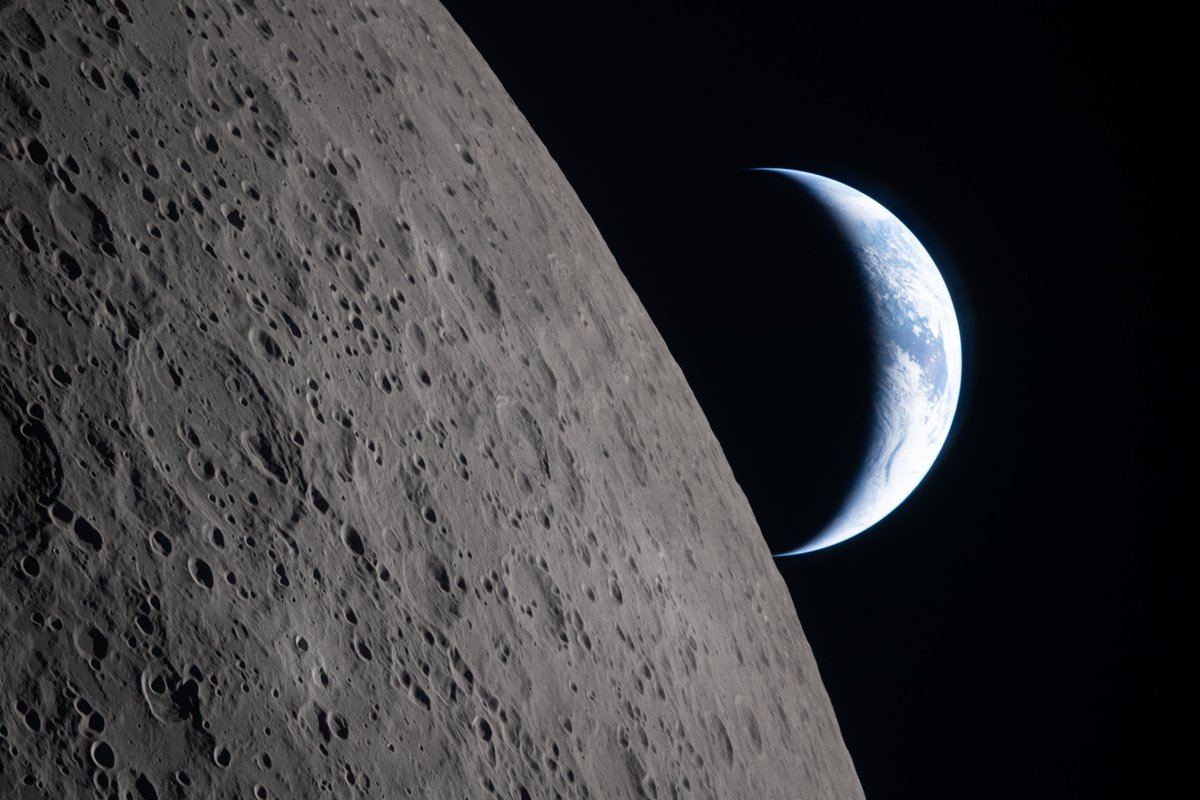
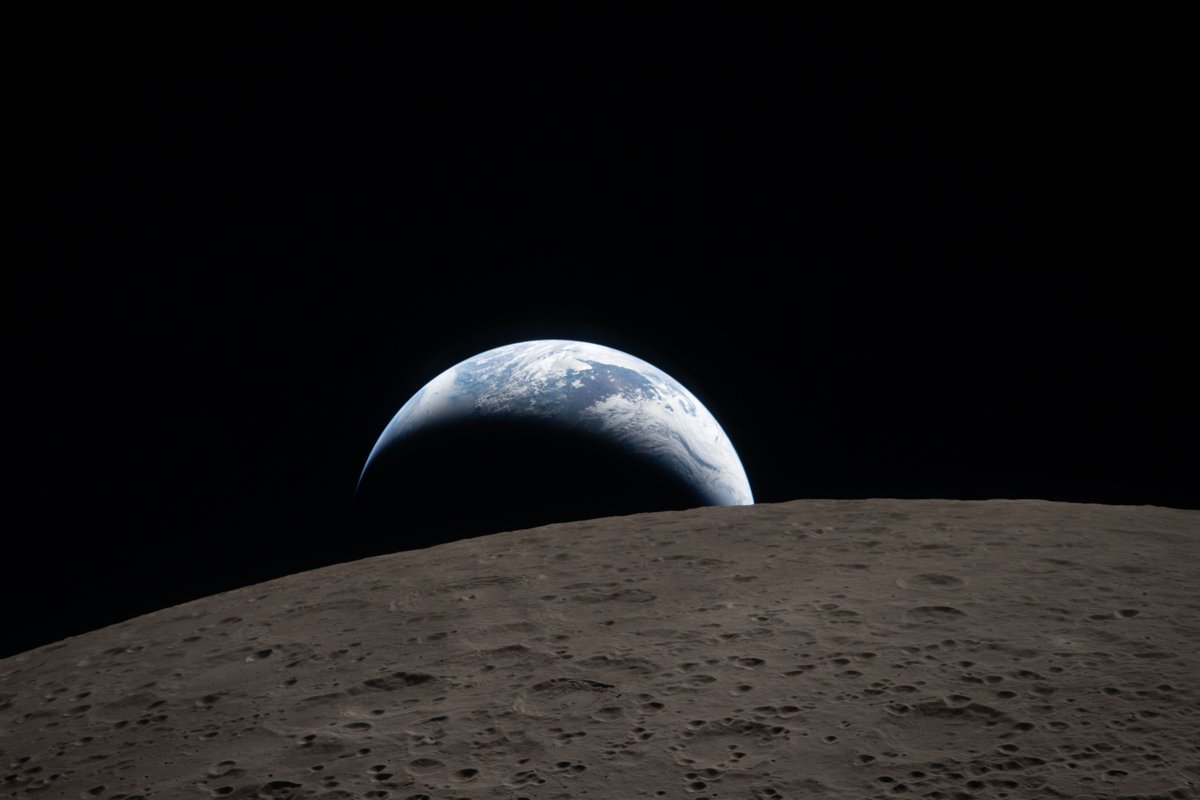
Hello, Moon. It’s great to be back.
Here’s a taste of what the Artemis II astronauts photographed during their flight around the Moon. Check out more photos from the mission: https://t.co/rzM1P0QbOl
What is a designer to do in these AI-centric times? Lean in and collaborate with #claudecode on a new portfolio I guess.
Always good for this old dog to learn some new tricks.
As AI capabilities continue to advance, most product people’s best defense over the next few years will be to go back to the basics of how to think. We love talking about thinking as a uniquely human quality—rightly so—but almost everyone I meet is certain that they think very clearly, analytically, and creatively. Yet, in practice, we rarely think to the full extent of our innate capability.
A good first step, if this resonates with you, is to get yourself to bear the discomfort of thinking deeply. This discomfort arises because deep thinking consumes significant energy, forces us to confront our biases and ego, and, for most people, feels less satisfying than ‘just doing something quickly’.
While at this point some readers might be thinking, ‘Okay, but give me something more advanced—something I can use today’, I’ll note that in practice the vast majority of people cannot get themselves past this first step and yet are eager to hear more advanced tips & tactics. And with that, we’re back to square one—because avoiding the discomfort of looking inward is exactly what drives people to chase shortcuts in everything they do.
Imagine hiring a designer that refuses to (or can't) design a social media ad or billboard if you needed one because "it's not their job."
If my team asked me to make a social media graphic, I'm in. If they ask me to make a billboard, I'm in.
Be a designer that can.
Corporate Design Homeopathy: The act of watering down design to the point is has almost zero effect, and then complaining about the design teams lack of efficacy.
"How can design grow its influence?"
As a designer, I asked this question to my CPO manager once. I thought it was a proactive, gumption-filled question. Like "look at me, trying to think big about my discipline!"
My manager gave me a tired look. “Just do what’s best for the company,” he said.
What a non-answer! I thought at the time, indignant. He was giving me some kind of fortune cookie platitude instead of concrete steps! I needed a playbook!
Was he even hearing my question?
But no, dear reader. It was I who wasn’t hearing his answer.
"Just do what’s best for the company." Its simplicity disguises the clarity of the playbook.
This is how I translate what he was saying now: "Stop being caged by your role and start looking at the bigger picture."
So let's back up and look at the big picture of how to think about your career:
1. Only you can know what *you* stand for and believe to be best.
2. Reasonable people will disagree on what’s best. Reasonable designers will too.
3. The greatest freedom you have is in choosing how to spend your time and energy.
4. Choose well and align yourself with a purpose you care about, and an environment where your talents can make an impact towards that purpose.
5. If you choose to be part of a team, then it’s your job to do whatever is in your power to help that team succeed.
6. Part of your unique superpowers come from your role or the discipline you study.
7. But you are also far more than your role; do not let it constrain you.
8. You do not need permission to "think like the CEO" and come to an opinion about what’s best for the the team
9. You will need to fight for what you believe is best. (Remember -- reasonable people can disagree). But do this for the good of the team, not for yourself, not for your role or discipline.
10. What’s best for the organization is creating something people value in a way that is sustainable and aligns with the owners’ expectations.
11. Beyond what you choose to do with your rare and precious time, there is much we cannot control. Let that be.
12. Remember: you are far more powerful than you think you are.
Q. "How many UX Designers does it take to screw in a lightbulb?"
A. "First we need to be sure that a lightbulb is the correct solution, so I suggest a research project to understand the role of light in society."
Power cuts possible tomorrow? Who knew #NZ power supply was this fragile? Yet pumped hydro scheme was dumped by incoming govt. No doubt we’ll be told we need more fossil fuel generation rather than sustainable solutions. Fresh thinking needed. https://t.co/7op5pHqimI