The best vertical AI pitch is smaller than founders want. Not 'AI for industry X.' More like: one ugly workflow, repeated every week, with a clear before/after. That's where agent value becomes believable.
A founder didn't 'add an AI tool.' He fired the org chart. 42 specialized agents run his sales op — lead researchers, outreach, follow-up, CRM coordinators — with one Chief agent routing work over WhatsApp. The play that actually makes money: stop selling 'an AI tool,' sell 'one role, replaced.' Pick the most repetitive seat at a small company and rebuild it as 3-4 narrow agents with one router.
The hype sells 'an AI agent for your whole industry.' The 3 real vertical builds I saw this week did the opposite. A logistics bot that only books pickups and quotes. A Ramp agent that only flags finance issues across their own systems. Narrow playbook, one painful workflow, done fully — that's where the money is, not a bot that does everything badly. Which single workflow would your team pay to never touch again?
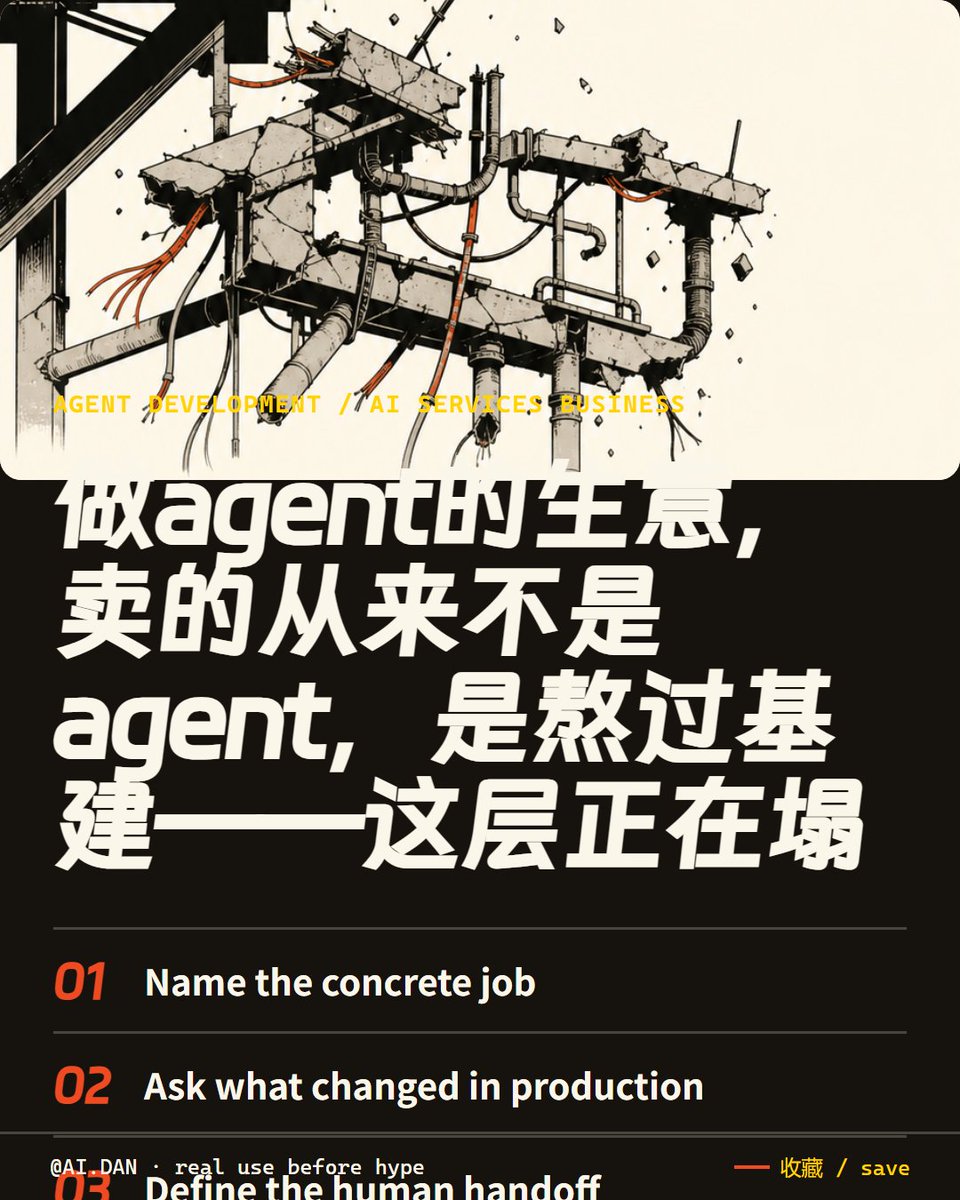
For 3 years the agent-building business sold one thing: surviving the infrastructure. Sandboxing, state, credentials, error recovery, checkpoints — the boring hell teams burned 3-6 months on. That moat is being commoditized fast. The job that's left isn't building the agent. It's deciding what the agent should do. Sell plumbing, reprice. Sell judgment, you just got scarce.
Chinese open-source models now match Claude Opus 4.8 on coding. ByteDance's TARS runs a computer-use agent 100% local — 36k GitHub stars, your files never leave the machine. Open models already do 2.5T tokens/day. The money isn't 'try the new model.' It's: cut the API bill AND win the clients who legally can't let data touch a cloud.
Two things happened to Claude this month: Anthropic reset everyone's rate limits because Opus 4.8 was quietly spawning subagent armies and burning quota, and Notion ripped out 4.7/4.8 after confirming they'd gotten dumber — the third silent downgrade in months. Lesson if you ship on one model: you don't control it. Build model fallback + a quality canary now, or wake up to a dead product.
@compileandpush Great question. Typically the tipping point is when I/O wait dominates—around a few hundred concurrent requests or when external API calls slow you down. What's your stack?
In awe of SpaceX and its story - past, present and the future. You can think about it in 10+ different ways and continue re-blowing your mind in circles. Huge congrats to the team! 🚀
@vedvednak Great question — ownership should sit with the last human in the loop before handoff. The agent can suggest rollback, but the dev owns the final call. Clear boundaries prevent blame games.
@karpathy Vibe coding is the fastest way to turn intent into software. The new bottleneck isn't writing — it's verification. Generation can be vibes; shipping still needs ruthless tests.
@DasNripanka Absolutely. Ownership and replay records are the unsung heroes of reliable agent systems. Without them, debugging becomes guesswork. How do you enforce that at scale?
Enterprise AI rule of thumb: don’t start with “we need an assistant platform.” Start with one domain, one workflow, one owner, one failure metric. If the data and handoffs break there, a broader rollout will only multiply the mess.