🇦🇹 A September 23, 2026 update confirms Austria Raiffeisen Bank paved the way for 18 million European clients to access crypto.
Expanding access through Austrian banking rails injects fresh retail fiat liquidity into core spot assets like BTC and ETH. Higher international volume indirectly strengthens order book depth for US OTC desks and primary exchanges. This global integration provides a stable underlying spot demand cushion for the broader market.
Market structure data points toward enhanced liquidity resilience benefiting US spot ETF holders.
Canada’s top six banks are actively testing a 24/7 blockchain payment system powered by tokenized deposits.
This is more than institutional adoption; it is a fundamental infrastructure upgrade. Legacy banking rails are acknowledging their inability to match instant settlement demands.
Moving deposits onto distributed ledgers accelerates real world asset tokenization and sets a benchmark US financial institutions cannot ignore.
Canada’s top six banks :
1. Royal Bank of Canada (RBC)
2. Toronto-Dominion Bank (TD Bank Group)
3. Bank of Montreal (BMO)
4. Canadian Imperial Bank of Commerce (CIBC)
5. Bank of Nova Scotia (Scotiabank)
6. National Bank of Canada
Trump signs trilateral agreement with the PM of Denmark and the PM of Greenland, expanding U.S. military presence in Greenland.
The data center will be located at GreenLand very soon.
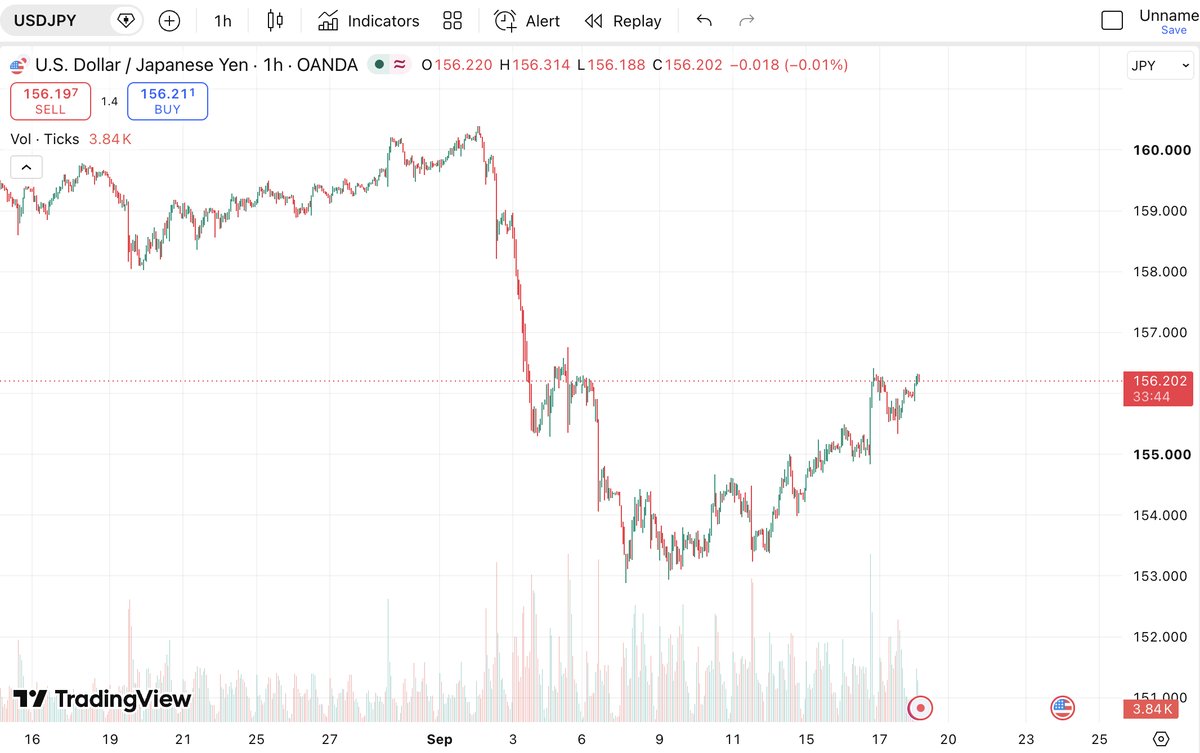
🇯🇵🇨🇭 BOJ’s 25 bps hike: The end of cheap Yen era & The shift toward Swiss Franc (CHF) funding!
While USD/JPY rebounds toward 156.20 on the 1H timeframe, the Bank of Japan’s 25 bps rate increase officially marks the structural end of Japan’s ultra-cheap money era!
The End of Uncapped JPY Leverage:
With BOJ raising policy rates, the world's largest zero-cost funding pool is closing down. Higher JPY borrowing costs force institutional traders to shrink legacy JPY-denominated leverage.
Capital Rotation to the Swiss Franc (CHF Carry Trade):
As JPY yields rise, the Swiss National Bank (SNB) maintains its policy rate at 0.0%, making CHF the lowest-yielding G10 currency. Institutional carry traders are actively pivoting toward CHF as the primary alternative funding vehicle.
BOJ’s 25 bps rate hike seals the end of cheap Japanese Yen liquidity. While speculative capital is shifting toward Swiss Franc borrowing to preserve yield spreads, global leverage capacity is structural shrinking!
📊 Source: Bank of Japan / Swiss National Bank / OANDA / TradingView
CoinEx shuts down after 9 years: Regulatory consolidation & a textbook responsible exit!
Crypto exchange CoinEx (launched Dec 2017) has announced it will cease operations effective September 15, 2026, with spot trading ending Sept 29 and withdrawals supported until Dec 22.
Regulatory Cost Squeeze:
Surging compliance costs under stricter global regulatory standards, combined with declining volumes and liquidity, are compressing margins for mid-tier offshore exchanges, forcing structural market consolidation toward fully licensed institutional venues.
Model Orderly Exit (100%+ Proof of Reserves):
Avoiding systemic contagion, CoinEx confirms 100%+ asset backing for all user balances and an official buyout of CET tokens at 0.005 USDT. The core ViaBTC mining pool remains unaffected and fully operational.
CoinEx's orderly shutdown marks a mature industry transition. As regulatory barriers rise, liquidity naturally consolidates into top-tier, compliant platforms, removing weak links without triggering a systemic solvency panic.
📊 Source: CoinEx Official Announcement (09/15/2026)
#CoinEx
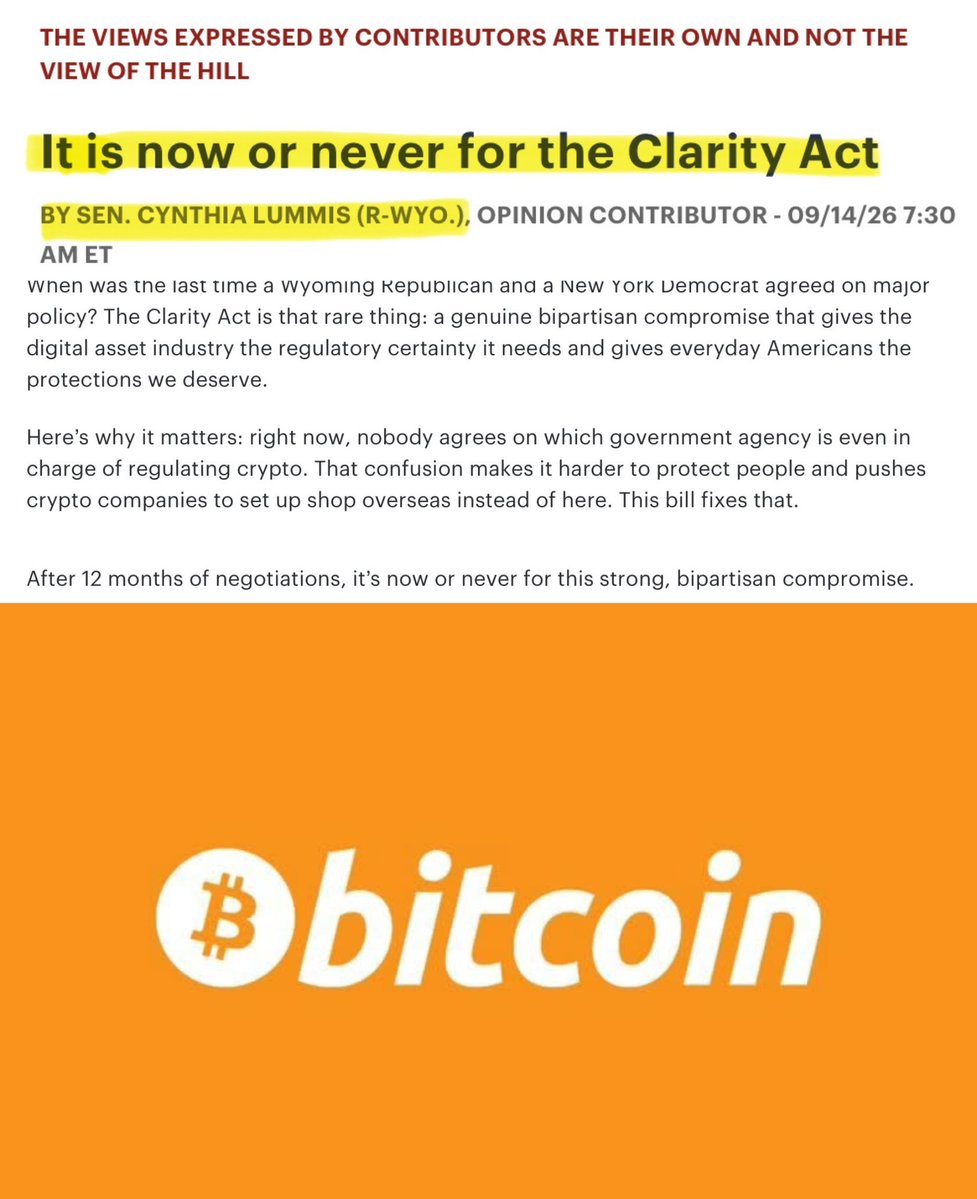
🇺🇸 Senator Lummis issues "Now or never" rally cry for the Clarity Act on eve of Senate vote!
In an op-ed published on The Hill on Sept 14, Senator Cynthia Lummis (R-Wyo.) framed the Clarity Act as a historic, bipartisan turning point following 12 months of intense negotiations.
What is the underlying legislative mechanism at play?
Rare Bipartisan Consensus:
The bill bridges Wyoming Republicans and New York Democrats, establishing unified statutory rules for the digital asset industry while securing essential consumer protections.
Eliminating Regulatory Ambiguity:
By resolving jurisdiction overlaps between the SEC and CFTC, the legislation eliminates the friction driving crypto innovators overseas, anchoring digital market infrastructure domestically.
Unlocking Institutional Capital:
Clear statutory guardrails protect everyday retail investors while removing the long standing regulatory risk premium that kept institutional capital on the sidelines.
Lummis' "Now or Never" warning underlines the high stakes of the upcoming vote. Establishing statutory clarity for digital assets represents a permanent structural upgrade for US capital market infrastructure.
Will Capitol Hill deliver the 60-vote threshold to advance the bill?
📊 Source: Opinion by Sen. Cynthia Lummis on The Hill (09/14/2026)
🇻🇳🚗 Tesla officially enters Vietnam: A strategic move into Southeast Asia's fastest growing EV market.
Reuters reports that Tesla Motors Vietnam LLC was incorporated on September 11, 2026, headquartered in Ho Chi Minh City with 77.6B VND ($3.1M) in initial charter capital.
Direct Market Penetration:
Vietnam represents one of ASEAN's most rapid EV transition curves. Establishing a local legal entity allows Tesla to build out direct distribution, service hubs, and proprietary Supercharger infrastructure, eliminating gray market import markups.
Competition Shock:
Tesla's direct presence creates immediate competitive pricing and technology pressure on incumbent VinFast as well as expanding Chinese EV players (BYD, Geely), benefiting domestic consumer adoption rates.
Supply Chain & Infrastructure Footprint:
While initial capital reflects a commercial setup, the move lays the ground for long-term supply chain sourcing and clean energy ecosystem expansion across the region.
Tesla's entry is more than a sales expansion, it validates Southeast Asia as a critical growth engine for global clean tech transition.
Which model do you expect Tesla to launch first in Vietnam: Model 3 or Model Y?
📊 Source: Reuters / National Business Registration Portal
@elonmusk
🚨 YEN CARRY TRADE UNWIND COULD BE DELAYED
🇯🇵 BOJ is expected to hike rates this week.
But the odds of a Fed rate hike are also at 87% now.
The yen carry trade depends on the interest gap between Japan and the US.
If BOJ continues with hikes and the Fed pauses, the rate gap will shrink.
This'll make it less profitable for investors to borrow yen and invest in global assets.
But right now, the opposite is expected to happen.
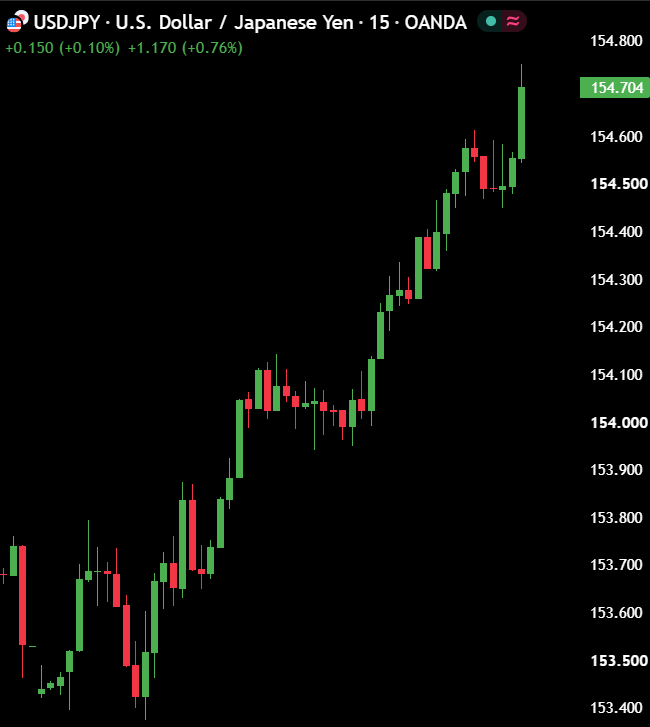
And that's precisely why USD/JPY is back above 154.7
Does that mean an unwind won't happen?
It could still happen but under one condition.
If BOJ hints at more aggressive hiking, while the Fed calls for a rate pause in the future, investors will start selling USD in anticipation of a stronger future yen.
That scenario could unwind the yen carry trade just like we saw in 2024.
🛢️ WTI Crude Oil breaks $103/barrel: The energy shock freezing global monetary easing!
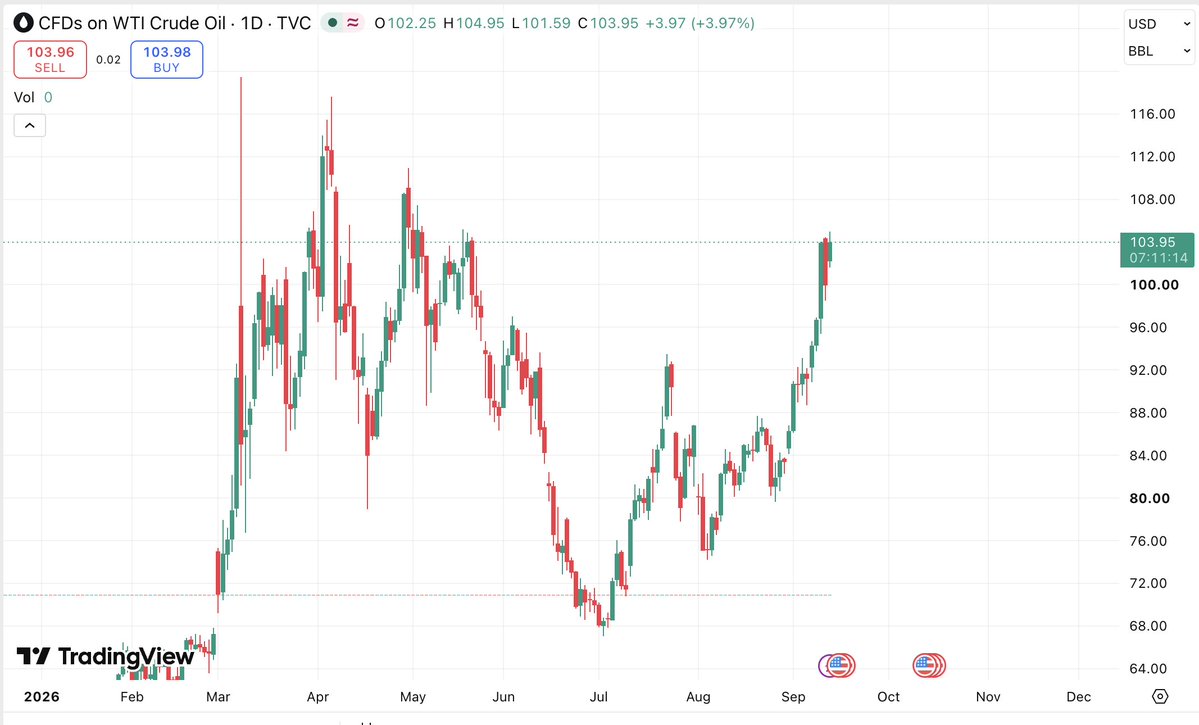
The 1D TradingView chart confirms WTI Crude executing a massive parabolic extension to $103.95/barrel (+3.97%), erasing summer losses and retesting structural cycle highs.
What is the underlying macro transmission mechanism?
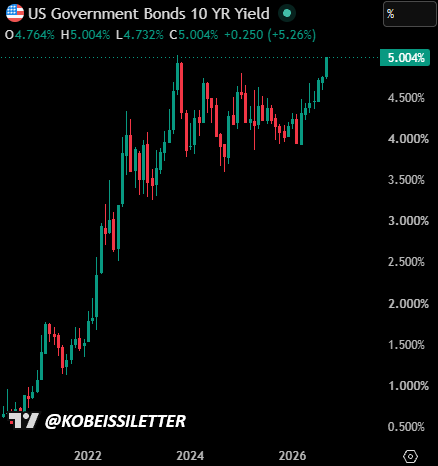
Crude oil sustained above $103/barrel transmits directly into global supply chains, triggering a classical Cost-Push Inflation Shock. Resurgent energy input costs eliminate central bank flexibility, effectively ending the Fed's rate-cutting narrative and driving real bond yields (US10Y) higher. This macro environment heightens systemic Stagflation risks, severely compressing corporate profit margins.
Triple digit oil functions as a direct drain on macro liquidity.
I don’t just follow the news. I look for what’s underneath it.
Macro. Crypto. Rates. Liquidity. Policy. Markets.
I read the headlines, data, official prints, and narratives from across the market.
Then I put them through my own lens.
Different angles. Independent thinking.
No hype. No forced narratives.
Just my take on what happened, why it matters, and what others may be missing.
If you want the headline, there are plenty of places to find it.
If you want a different way to look at it, you’re in the right place.
"With this museum and a new monument in Washington, D.C., America will never, ever forget what they did and what they risk and how much they risked, what they've meant to their families and what they've meant to our country." - President Donald J. Trump 🇺🇸
Diesel jumped again at the pump.
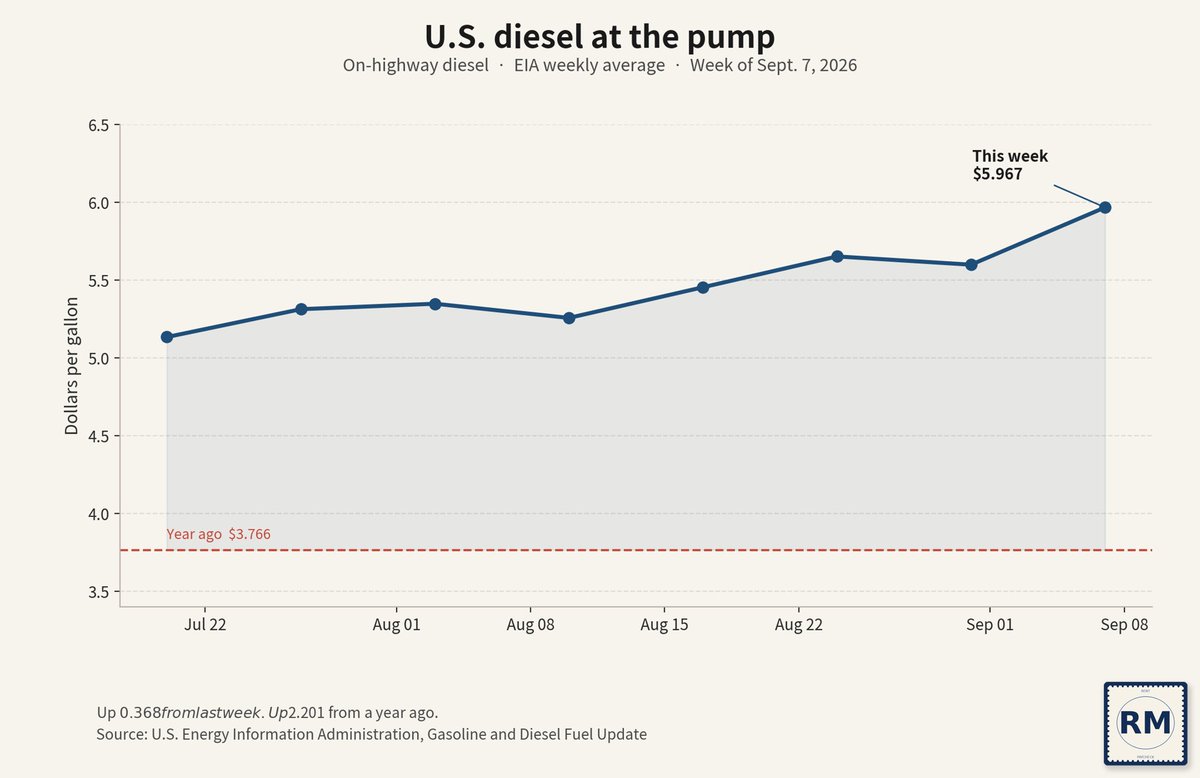
The Energy Information Administration put U.S. on-highway diesel at $5.967 a gallon for the week of September 7. That is up 37 cents from the week before and $2.20 from a year ago.
A contractor filling a 20-gallon pickup paid about $7 more than last week for the same tank. The grocery truck pays that extra too, before the carton hits the shelf.
The raise at the pump showed up this week. The store ticket can follow later.
This is the pump price, not the CPI grocery index. It also is not next week's print. EIA updates again on September 15.
Source: U.S. Energy Information Administration
Your hourly pay rose. Prices rose faster.
The Bureau of Labor Statistics says average hourly earnings went up 0.3 percent from July to August. Consumer prices went up 0.4 percent. After prices, one hour of work bought 0.1 percent less.
Think of a Friday paycheck. The dollar line can tick up a few cents. The grocery total can tick up more, so the same hour covers a little less of the cart.
The raise showed up on paper. The store took it first.
This is not a pay cut on the stub. Weekly pay after prices rose 0.2 percent because people worked a slightly longer week.
Source: U.S. Bureau of Labor Statistics, Real Earnings, August 2026
🇺🇸 US Ground Beef hits a record $7.16/lb as cattle herds drop to 50-year lows!
Here is the 3 step breakdown of how a cattle supply shock hits everyday American lives:
1️⃣ The Backyard BBQ & Grocery Run:
Ground beef is the staple of the American diet. When prices hit $7.16/lb, making basic burgers for a weekend family cookout or taco night at home suddenly gets surprisingly expensive. Shopping carts at Walmart and Kroger are seeing meat substituted for cheaper chicken or pork.
2️⃣ The Fast Food Drive-Thru:
Fast-food joints (McDonald's, Wendy's, Five Guys) are feeling the squeeze. Since beef is their core cost, your favorite $5 value meal or basic cheeseburger combo keeps creeping closer to $10–12, making quick lunch breaks a heavier burden on working families.
3️⃣ The Sticky Reality:
Importing cheap beef from Brazil can't fix a physical shortage of American cows. Raising new cattle herds takes years, meaning $7+ beef isn't a temporary spike. It's staying on grocery receipts straight through the midterms, keeping food pressure high
🇺🇸 Major Wall Street banks predict another Fed rate hike this September.
Here is the 3 step chain reaction for the average American household:
1️⃣ The Borrowing Cost Step:
When Wall Street giants like BofA, Goldman, and JP Morgan expect +25 to +75 bps rate hikes, variable interest rates instantly shoot up, making your credit cards, auto loans, and mortgage applications even more expensive.
2️⃣ The Household Wallet Step:
A family planning to buy a home or refinance a car faces significantly higher monthly payments. Instead of spending extra money on dining out or shopping, paychecks are squeezed to cover rising interest costs.
3️⃣ The Market & Business Step:
Higher rates cool down business expansion and hiring. With capital getting tighter and borrowing costs staying high, investors pivot to defensive strategies, slowing down momentum across Stocks and Crypto.
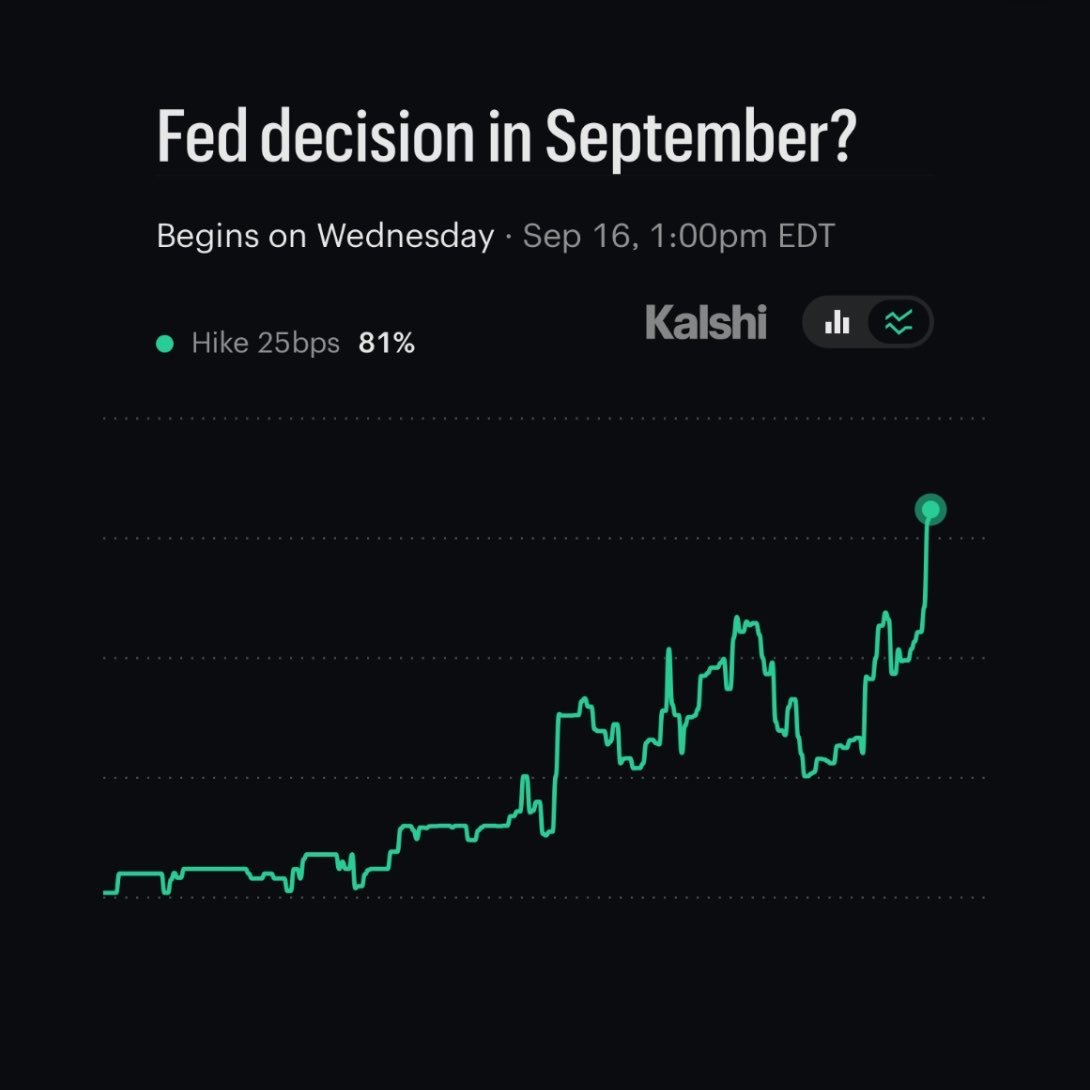
🇺🇸 Markets on Kalshi now price in an 81% chance of a 25bps Fed rate HIKE this September 16th.
Here is the 3-step breakdown of what another rate hike means for everyday Americans:
1️⃣ The Credit Card & Loan Step:
If you carry a credit card balance, your interest rate jumps almost instantly. Planning to refinance your car or buy a house? That 25bps hike pushes monthly mortgage payments even higher, shutting more families out of the housing market.
2️⃣ The Family Budget Step:
When borrowing gets more expensive, families stop using credit cards for non essentials. Vacations get canceled, restaurant visits get cut back, and major purchases like new appliances or electronics are put on hold.
3️⃣ The Market & Jobs Step:
Higher borrowing costs make it harder for businesses to expand or hire. With liquidity tightening, money moves out of riskier assets, putting downside pressure across Stocks and Crypto
Source : Kalshi