INSTEAD OF WATCHING AN HOUR OF NETFLIX TONIGHT.
This 1 hour Stanford lecture by Joel Peterson will teach you more about negotiation and getting what you want than most people learn in years.
Bookmark it and give it an hour, no matter what.
En 2007, el profesor de Stanford Joel Peterson impartió una clase de 1 hora sobre cómo negociar y obtener lo que quieres.
Sus 3 ideas:
→ Nunca muestres necesidad
→ La confianza vence a la manipulación
→ Piensa en términos de relaciones
12 lecciones para negociar mejor:
«Cuanto más inculta es una persona, más dinero necesita para pasar los fines de semana, porque como no fabrica nada, no produce nada, todo lo tiene que comprar. Mientras que una persona con un cierto nivel de cultura, con la conversación, un libro o una música puede pasar el tiempo de una manera enriquecedora. La riqueza que nos dan los libros es una riqueza real más duradera y limpia que las que se tienen».
Fernando Savater
Agreeable people can't get paid more. Try being disagreeable.
Jordan Peterson: “You don’t ask for more money. You make the case that you need to be paid more.”
“Agreeable people are good in teams. They’re very likely to give other people credit.”
That’s their strength.
They collaborate well.
They avoid unnecessary friction.
They make teams smoother.
But that same trait becomes expensive in negotiation.
Because agreeable people are often bad at putting forward their own interests.
And careers do not only reward value.
They reward people who can argue for their value.
Peterson’s point is simple:
If you want to be paid more, being useful is not enough.
You have to make a strong case for why your compensation should change.
That means walking in with:
Here’s what I do.
Here’s the value I create.
Here’s why it matters.
And here are my options if that value is not recognized.
Not as a threat.
As leverage.
That is where many people fail.
They think asking for a raise is about being appreciated.
It’s not.
It’s about showing your utility clearly enough that saying no becomes harder.
Peterson also points out that many people, especially women, may underestimate their value going into these conversations.
If you already focus more on your flaws than your strengths, and you’re naturally agreeable, you negotiate from weakness before the conversation even starts.
So you soften your ask.
You downplay your impact.
You wait too long.
You accept less.
Meanwhile, someone less capable but more assertive gets rewarded faster.
That’s the brutal reality.
The solution is not becoming aggressive.
It’s becoming firm.
Not rude.
Not combative.
Just clear, prepared, and willing to create a little discomfort.
Because if you are always protecting the relationship at the cost of your own value, you will stay underpaid for a long time.
Lessons I'm taking away from this clip:
1. Being valuable is not enough if you cannot communicate your value clearly.
This is the biggest takeaway for me. A lot of smart, hardworking people assume their work will speak for itself, but in business that is often not how it works. People are busy. Managers are juggling priorities. Companies respond to clarity, not silent effort. So the real skill is not just doing good work. It is learning how to explain your contribution in a way that makes your value undeniable. If you can’t articulate the business case for paying you more, you’re leaving too much room for other people to define your worth for you.
2. Negotiation gets easier when you stop treating it like a favor and start treating it like positioning.
I think this is where many people get stuck. They walk into these conversations hoping to be appreciated instead of prepared to make a case. That mindset alone weakens your posture. A raise conversation should not sound like “I was hoping…” It should sound like “Here is the impact I’ve created, here is the value tied to it, and here is why this needs to be reflected.” That shift matters. The market rewards people who understand leverage, alternatives, and timing. Not just effort.
3. A lot of under-earning is really under-claiming.
Many people, especially those who are conflict-avoidant, do not get paid less because they are less capable. They get paid less because they minimize themselves in rooms that require conviction. They soften their wins, downplay their utility, and wait too long for someone else to notice. But career growth often belongs to the people who can hold two things at once: humility in how they work, and firmness in how they position their value. That balance is what changes income over time.
Семейную ипотеку сравнили с крестьянским выкупом земли 1861 года
Тогда крестьяне вносили 20% от стоимости, а остальное выплачивали государству десятилетиями под 6% годовых. Эксперты отмечают, что за 165 лет схема в России почти не изменилась.
Gabriel García Márquez decia:
Si usted ya llegó a los sesenta, deje de contar las monedas y empiece a contar los momentos.
Porque mientras usted sigue ahorrando “por si acaso”, los “por si acaso” andan afilando el colmillo, esperando su cansancio para disfrutar lo que usted no se permitió.
Ya trabajó, ya crió, ya sufrió.
Ahora es su turno de mirar el amanecer con calma, de comprarse lo que siempre postergó, de tomarse el café más caro sin culpa y con sonrisa.
No se meta en negocios locos ni se deje convencer por el hijo “emprendedor” que siempre tiene una “gran idea” y ninguna factura pagada.
Y por favor: no viva con sus hijos. Visítelos, abrácelos, pero conserve su puerta y su paz.
No cargue con los problemas de nadie. Los nietos son para reír, no para criar; los hijos, para amar, no para mantener.
A esta edad, cuide su cuerpo, pero más su ánimo. No hable tanto de las enfermedades ni de las pastillas; hable de viajes, de canciones, de recuerdos bonitos.
Y si alguien le dice que “ya no sirve para nada”, sonría con elegancia… y piense que esa persona todavía no entiende lo que es llegar lejos sin deberle nada a nadie.
Ría, viva y deje que el resto se amargue por gusto.
Usted ya ganó: sigue aquí, en pie, con historia y con estilo.
¡Y eso es realmente un privilegio!
When you're in your 20s, you don't care what people think.
When you're in your 30s, you start caring too much.
When you're in your 40s, you realize the great truth.
No one was ever thinking about you at all.
Brian Tracy spent 45 minutes explaining why most people stay stuck:
"Human beings will keep doing what they've always done. They will get into a rut which we call a comfort zone."
"They will keep on with habits that are not serving their best interest. Keep doing things that no longer make them happy."
"Year after year."
There's another story. The elephant.
A baby elephant is tied to a small stake in the ground. It pulls and pulls. Can't break free. Eventually stops trying.
Years later, the elephant is massive. Could easily snap the rope. But it doesn't even try.
"That little thing can't hold you. All you have to do is pop loose."
"The elephant says: no, no, I've been stuck here for years."
All of our limitations exist within our own minds.
Here's what stops people from breaking free.
Fear.
"We're afraid it might not work. We're afraid we might fail. We're afraid of criticism and embarrassment."
"We're afraid of what they might say."
"Do you know nobody's ever been able to define who 'they' are? But it's 'they' out there. The great almighty 'they' that's got us terrified."
Here's the truth about "they."
"When you're in your 20s, you don't care what people think."
"When you're in your 30s, you're very sensitive to what people think."
"Then you get into your 40s. And in your 40s you realize the great truth."
"No one was ever thinking about you at all."
On natural ability:
A teacher asks a little boy: "Do you play a musical instrument?"
He says: "I don't know. I haven't tried yet."
Ask an adult the same question.
"Nope. Can't. Never could. Tone deaf."
"Do you know that every child has perfect pitch up to the age of five? Every child has the ability to play classical music."
"Most of us believe: I can't. I don't have it."
"Our natural tendency is to sell ourselves short. To think of the reasons why we can't before we think of the reasons why we can."
On work ethic:
"You work 40 hours for survival. Everything over that each week is for success."
"In 25 years of searching, I've never found a single successful person who works 40 hours a week."
"The number of successful people in America working 40 hours a week or less is somewhere between zero and none."
"There aren't any. Anywhere. Maybe they're in the Smithsonian."
Ted Williams was the best hitter in America. Highest paid. Best batting average.
End of a doubleheader. Everyone had gone home. The park was empty.
The maintenance man found a batter alone with an automatic ball machine. Still slugging.
"You're Ted Williams. What are you doing here? All the other ballplayers are back at the hotel having parties."
"I'm practicing."
"But you're the best hitter in America. You don't need to be out here."
"Why do you think that is?"
On failure:
Thomas Watson, founder of IBM, was asked by a young man: "How can I be successful faster?"
"Simple. Double your rate of failure."
"There's a law of probabilities. The more you fail, the more likely you are to succeed."
"Has anybody here ever failed? Did failure hurt you? No. Failure makes you strong."
"There's an old saying: the North Wind made the Vikings. The cold they had to row against made them the most formidable fighting force in the world."
"It's failure that makes us strong. But it's the fear of failure that kills us."
On becoming unstoppable:
"The most important quality you can develop is to be unstoppable."
"And you know how you become unstoppable? By simply saying it to yourself."
"Whatever you say to yourself and believe over and over again, you start to believe as reality."
"The statistics show that 95% of the goals you set for yourself, you will achieve if you refuse to quit."
On persistence:
"There are two parts of courage."
"The first is the ability to act in the face of uncertainty. The willingness to take risks."
"The second is persistence. The willingness to hang in there."
"There is a period between when you begin and when you get some result. In that period, most people break and run."
"But when you persist, your self-esteem goes up. Each time you force yourself to stay in there, you like yourself more."
"Persistence is self-discipline in action. And self-discipline is the foundation quality of a great personality."
"Do what you should do when you should do it. Whether you feel like it or not."
"If you develop the habit of persistence, you get to the point where nothing will stop you."
"You become unstoppable."
This 45 minute video will teach you more about success, discipline, and why most people stay stuck than every self-help book combined.
Bookmark & give it 45 minutes this weekend, no matter what.
35 yaşına geldiğinizde, artık çocukça oyunlara vaktiniz kalmaz. Hayatın gerçek yüzüyle tanışırsınız.
Eğer bu yaşa geldiyseniz veya gelmeden öğrenmek istiyorsanız şu 10 kuralı zihninize kazıyın:
1. Sessiz Olun
Soğuk kanlı olun demiyorum ama her planınızı, her derdinizi anlatmayın. Sırrınız, gücünüzdür. İnsanlar sadece bilmeleri gerektiği kadarını bilsin.
2. Drama Yerine Huzur
Gereksiz tartışmalar, dedikodular ve kavgalar... Bunlar enerji vampiridir. Sessizlik, aptallarla tartışmaktan daha asildir. Huzurunuzu kimseye kurban etmeyin.
3. Rekabet Etmeyin, İşbirliği Yapın
Sizden daha zeki birini bulursanız onu kıskanmayın, onunla çalışın. Egonuz sizi fakirleştirir, işbirliği sizi zenginleştirir.
"En zeki ben olmalıyım" diyen kaybeder.
4. Aile Her Şeydir
İş arkadaşlarınız cenazenize gelmeyebilir ama aileniz o tabutu taşıyacak olandır.
Kariyer için ailenizi ihmal etmeyin. Geldiğiniz yeri unutursanız, gideceğiniz yerde kaybolursunuz.
5. İşinize Aşık Olmayın
Mevcut işiniz sizi sevmiyor. Sadece hayallerinizi öldürecek kadar maaş ödüyor. Sadakatiniz şirkete değil, kendi vizyonunuza olsun.
6. Toplumun Sesini Kısın
"Evlen, çocuk yap, ev al, borca gir..." Toplumun "başarı" tanımı, sizi sisteme köle yapmak içindir. Kendi kurallarınızı kendiniz koyun.
1. Dostlukta Kalite > Miktar
Sizi kıskanan, yargılayan 10 "arkadaş" yerine;
Başarınızı kutlayan, sizi yukarı çeken 1 "dost" yeterlidir.
Çevreniz, geleceğinizdir. Çürük elmaları sepetten atın.
7. Anne Babanızı Affedin
Onlar da insandı. Hata yaptılar.
Onları suçlamayı bıraktığınız gün, gerçekten büyüdüğünüz gündür. Geçmişin yükünü sırtınızdan atın.
8. "Doğru Zaman" Yoktur
Mükemmel anı beklerseniz, ölene kadar beklersiniz.
Şartlar asla %100 uygun olmayacak. Şimdi başlayın. Hatalar yolda düzeltilir.
9. Kurtarıcı Gelmeyecek
Kimse gelip sizi kurtarmayacak. Hayatınız %100 sizin sorumluluğunuzda. Maaşınıza zamı, eşinizden ilgiyi veya devletten yardımı beklemeyin.
Kendi kahramanınız olun.
10. Çemberinizi Daraltın
Yakın çevreniz sadece şunlara odaklanmalı:
• Para kazanmak (Başarı)
• Aile kurmak (Sevgi)
• Sağlıklı olmak (Yaşam)
Gerisi gürültüdür.
Bu dersleri erken öğrenmek bir hediyedir.
Easiest ways to get rich:
1. Sell men lust
2. Sell women beauty
3. Sell parents peace
4. Sell kids dreams
5. Sell the rich safety
6. Sell the broke hope
Same game. Different packaging.
> be a 34-year-old guy
> deposit $100 on Polymarket
> ask Claude to write a bot
> bot buy YES + NO for under $1 combined
> It runs 24/7 and detects every movement
> he makes $260,000 a month
What’s stopping you from doing the same?
Идеальное шоу для выгоревших вышло на Netflix — передача о садоводстве «This is a gardening show», которую ведёт Зак Галифианакис, звезда «Мальчишника в Вегасе».
Подача максимально простая, без занудства и душных инструкций: в шоу Зак будет осваивать премудрости садоводства в комедийной манере, а заодно делиться тонкостями с аудиторией.
У миллениалов новый антистресс.
Si murieras mañana, nadie podría acceder a tus:
- Cuentas bancarias
- Carteras de criptomonedas
- Almacenamiento en la nube
- Administrador de contraseñas
Tu vida digital muere contigo.
Aquí tienes la configuración de 30 minutos que evita esto ↓↓↓
Some extremely profound words of wisdom from Alan Watts.
"One day you'll realize you've already lived through some of the best days of your life and you didn't even know it at the time."
"You were too busy chasing what's next, busy worrying about what's missing. Thinking happiness was something you'd arrive at one day."
"But while you were waiting you were laughing with people who won't always be around. You were making memories in places you'll one day drive past and feel something you can't explain. You were standing in moments that didn't feel like the good old days until they were gone."
"So stop waiting for life to start. You're already living it."
Knowledge is having the right answers.
Intelligence is asking the right questions.
Wisdom is knowing when to ask the right questions.
—Professor Richard Feynman
Everything keeping you alive right now exists inside a shield thinner than the skin on an apple.
Earth's atmosphere isn't one big blanket. It's five distinct layers, stacked on top of each other, and every single one is pulling its weight.
Troposphere — This is your layer. Weather happens here. Clouds form here. Every breath you've ever taken came from this razor-thin slice closest to the ground.
Stratosphere — Home to the ozone layer, quietly absorbing the sun's most dangerous ultraviolet radiation so it never reaches your skin. An invisible bodyguard you never think about.
Mesosphere — The graveyard of space rocks. Meteors slam into this layer and burn to nothing before they ever get close to the surface. You've watched them die — you just called them shooting stars.
Thermosphere — Where the northern lights put on their show and some spacecraft carve their orbits. Temperatures here can spike to thousands of degrees, yet it would feel freezing because the air is almost nonexistent.
Exosphere — The final frontier. Earth's atmosphere doesn't end with a hard line — it just fades, thinning out molecule by molecule until there's nothing left but the vacuum of space.
Five layers. Each one essential. Remove any single one and life on this planet collapses.
We're not just living on Earth — we're living inside it, wrapped in a cocoon so thin most people never stop to consider how little stands between us and the void.
The Best Movie From Every Year I’ve Been Alive
1988: Die Hard
1989: Indiana Jones and the Last Crusade
1990: Goodfellas
1991: Terminator 2: Judgment Day
1992: Reservoir Dogs
1993: Schindler's List
1994: Pulp Fiction
1995: The Usual Suspects
1996: Trainspotting
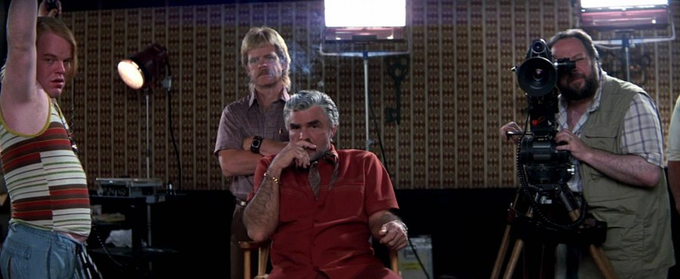
1997: Boogie Nights
1998: The Big Lebowski
1999: Fight Club
2000: Gladiator
2001: Donnie Darko
2002: Bowling for Columbine
2003: City of God
2004: Eternal Sunshine of the Spotless Mind
2005: Batman Begins
2006: The Departed
2007: No Country for Old Men
2008: The Dark Knight
2009: Inglourious Basterds
2010: A Prophet
2011: Drive
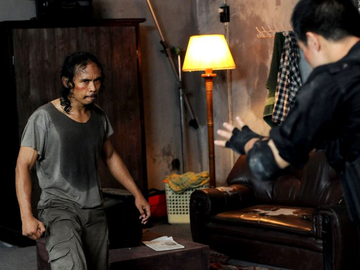
2012: The Raid
2013: Django Unchained
2014: The Wolf of Wall Street
2015: Mad Max: Fury Road
2016: Sing Street
2017: Patriots Day
2018: A Quiet Place
2019: John Wick: Chapter 3 - Parabellum
2020: Tenet
2021: Boss Level
2022: The Northman
2023: Oppenheimer
2024: Poor Things
2025: One Battle After Another
2026: Marty Supreme
Jimmy Carr said something that should reframe how you think about the next twenty years of AI.
Carr: “Life has never been objectively better and subjectively worse. Because the nature of humanity is our desires are mimetic.”
One line. And it explains everything about what’s coming.
Carr: “No one had a hot shower until 50 years ago. So when you stand in a hot shower, just for a moment, just go, ‘Well, no one that you admire from a hundred years ago had this simple pleasure in life.’”
A Roman emperor couldn’t access what you use every morning without thinking.
Newton defined the laws of light. Never flipped a switch.
Lincoln ran a country by candlelight.
Einstein never made a video call.
The average middle-class life today would be incomprehensible to the richest person alive in 1900.
And nobody feels wealthy.
Carr: “There’s been a hundred billion people ever. We are in the top, top percentile in terms of the luck that we have had.”
The child survival rates. The medicine. The food supply.
The sheer volume of comfort surrounding every ordinary Tuesday.
By every measurable standard, this is the best time to be alive in the history of the species.
It doesn’t feel like it. It never will.
That’s not a flaw in the world. That’s the wiring.
Every gain gets absorbed into a new baseline.
What felt extraordinary last year feels ordinary now. What felt like luxury becomes expectation.
The goalpost moves without your permission. Every single time.
This is the part nobody is factoring into the AI conversation.
AI is already compressing the cost of intelligence toward zero.
Within a decade, medical diagnosis that once cost thousands will be instant and free.
Legal guidance that required a retainer will be available to anyone with a phone.
Education that demanded six figures will be personalized and free.
The abundance will be real.
And most people won’t feel it.
The generation that grows up with AI tutors won’t marvel at the technology. They’ll complain about the interface.
The generation that gets instant medical screening won’t appreciate the miracle. They’ll be frustrated it takes ten seconds instead of two.
Abundance doesn’t produce gratitude. It produces a new floor.
And from that new floor, people will find new things to want they couldn’t have imagined before.
You don’t build the next thing because you’re content. You build it because the current thing already feels normal.
Mimetic desire is the engine of civilization and the thief of satisfaction.
Simultaneously.
AI will give the species more than it has ever had.
The species will absorb it, recalibrate, and reach for more.
That’s not a failure of the technology. That’s the loop that built everything we already take for granted.
The question was never whether abundance would arrive.
It was always whether the hardware would let us feel it.
3. El comportamiento familiar revela el comportamiento futuro.
La forma en que una persona trata a tu familia dice mucho sobre el tipo de pareja que se convertirá. Una madre sabia observa cómo la mujer habla con los mayores, cómo reacciona ante los consejos y si trae paz o fricción a la habitación.
El desrespeto temprano hacia la familia rara vez se limita a la familia. Por lo general, se extiende al matrimonio más adelante.
Alguien que no puede honrar a las personas que te criaron tendrá dificultades para honrar el vínculo en el que está entrando. Ese patrón se hace obvio para ojos experimentados.