How can you turn your retirement savings into income that supports the life you want?
New Vanguard research offers a decision-oriented framework designed to help investors achieve their desired lifestyle in retirement. https://t.co/jJp1sb4y96
#VanguardInsights
My book is here! 📕
So happy and excited to share this with you all.
‘Good News,Bad News’ is the story of my many years in TV journalism in India. It looks at how the values of TV news changed - in a changing country.
I do hope you enjoy reading it! 🌺
https://t.co/BGNXf1Ia6C
@supriyasahuias Kudos to you and your team for all the initiatives as Additional Chief Secretary for Environment,Climate Change and Forests department. Best wishes in your new role.
(Read this loudly in a news anchor’s tone)
BREAKING ALERT! You WON'T BELIEVE These 5 SHOCKING Ways Social Media is COMPLETELY TWISTING Your Food & Nutrition Reality. And folks, that’s just the tip of the iceberg 😱
Sanjay Mehta lives in Mumbai. His 90-year-old father lives in Delhi. Two attendants now care for him round the clock.
NRI children are turning to such elder care firms in growing numbers too. How to pick one you can trust:
@RijuMET reports in this week's @ET_Wealth Wealth cover story.
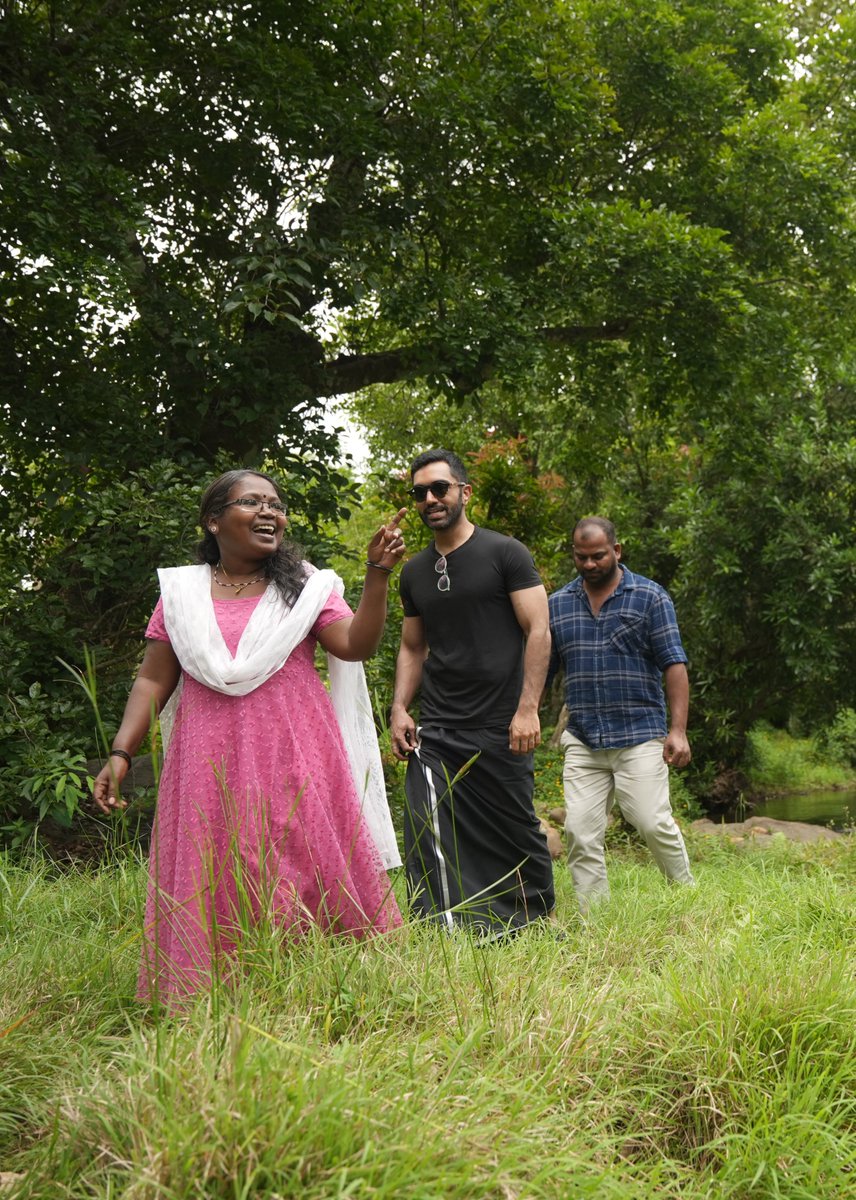
What if your next stay came with the sounds of the forest, trekking trails at your doorstep and the Anamalai Tiger Reserve on the horizon ! 😊
Welcome to Camp Sethumadai in Coimbatore, where five comfortable tents, private washrooms, good food and plenty of wilderness await you. But what makes this place truly special is that it is fully operated by the local tribal community, creating livelihoods while offering visitors a deeper connection with the landscape and the people who know it best. Operated by @trektamilnadu@tnforestdept . More details: https://t.co/qlHD68pm8Q
1. As controversy over Diljit Dosanjh-starrer ‘Satluj’ escalates, #CutTheClutter traces the story of Jaswant Singh Khalra, the activist kidnapped and murdered by cops. The episode also tells the story of the bloodiest years in Punjab & the state’s fight against terror.
2. Khalra was kidnapped on 5-6 September 1995. At that time, he was running a campaign to collect municipal cremation records of unidentified bodies, trying to establish patterns of illegal killings & secret cremations. The data was collected from municipal crematoria in Amritsar, Majitha & Tarn Taran.
3. The number they added up was 2,059 such cremations. This was multiplied by the number of prominent crematoria in the state & the number arrived at was 25,000. NHRC was finally given a list of 2,097, & they could establish that 109 of these had died in police custody.
4. Now, where had this situation arisen from, because nothing happens in a vacuum. In 1995, this was at the tail end of terrorism/militancy/insurgency, whatever you want to call it, in Punjab. Its nasty peak was 1990-91 — the gun ruled & ordinary life disappeared after sunset. Fear had frozen Punjab. There was no govt, no institutions. Only 2 things functioned — police & terrorists.
5. And, terrorism was not simply about killings; the idea was to control society, much like the Taliban later. So, the national anthem was banned, music was banned, the Hindi language was banned, skirts, trousers & dresses were banned &, of course, they wanted to change school curricula. Journalists weren’t spared either.
6. There are countless stories of brutal killings. For example, of Nirmal Kanta, the principal of a govt school in Rajpura. Or, of activist Manjeet Singh Babbu. Or of AK Talib, the station director AIR. Or, of course, of Gen. AS Vaidya.
Watch #CutTheClutter, Episode 1860: Row over Diljit Dosanjh’s Satluj, Khalra, and the bloodied years that took Punjab there

https://t.co/axH0aJnyMt
The regulator introduced portability in health insurance to protect customers. The market turned it into a sales tool. I analysed retention data to uncover why customer experience isn't the biggest driver of churn and why sales incentives, internal migration and patchy disclosures deserve far more scrutiny. https://t.co/JAUtAMALeb
ICYMI: on Wayanad and its tribal communities. Their languages, music, politics, and culture as well as the loss of their traditions, physical spaces, and identity. Bindu Irulam and Manikuttan Paniyan are truly remarkable. Watch:
https://t.co/c7cniqM90x
#worldcup Top ranking teams facing tough test against minnows resulting in few upsets as well, justifies the bigger format of FIFA. Inconsistency in VAR / Referees decisions has been a blot. No doubt, with advanced technology referees are facing the heat !!!
This week on Worldview #240: Japan PM Takaichi visit, Modi heads to Indonesia, Australia,New Zealand. What's driving the eastern outreach and with US dropping Indo from Pacom, does India need a new Indo-Pacific policy?
https://t.co/GRKvGHKw0B
Excerpt:
The Emperor Has No Clothes: Why the AI Infrastructure Buildout Math Doesn't Work
I have to give IBM CEO Arvind Krishna credit. He's saying what many of us in this industry have been thinking but haven't been willing to say out loud. The math just doesn't add up.
Here's what I'm seeing that's deeply troubling. We're in the middle of another mass hallucination. Just like the dot-com bubble, just like blockchain, just like the metaverse — everyone is convinced that building massive data centers will automatically create massive wealth.
But here's the thing about building infrastructure. You actually have to sell what's inside it.
Let's talk numbers. The planned data center buildout over the next 5-10 years is staggering. We're talking about commitments in the hundreds of gigawatts globally. The capital expenditure commitments are in the trillions. Yet when you look at the actual demand signals, not the projections, not the potential, but the actual consumption patterns, there's a massive gap. These AI companies are betting everything on demand that simply doesn't exist at the scale they're planning for.
Let me be direct. AI services are expensive. Enterprise adoption is slow. Consumer AI is still finding its footing. And the compute requirements being promised by the hyperscalers require a level of demand that would represent a fundamental shift in how businesses consume technology. That's a big ask.
I've seen this pattern before. The overbuilding. The belief that if you build it, they will come. The groupthink that turns critical analysis into heresy. The result is always the same. Companies are going to touch the stove. We're going to see massive write-downs. We're going to see pivots, shutdowns, and strategic reviews. We're going to see companies that spent years and billions trying to be the AI infrastructure leader become case studies in how not to read a market.
The IBM CEO is right. The math doesn't work. And unlike 1999, we don't have the excuse of we didn't know. We know exactly what's happening. We just don't want to believe it because the alternative, being a skeptic while everyone else is piling in, feels like career suicide. It's not. The ones who survive the next decade will be the ones who built for reality, not fantasy.
Wake up. The emperor has no clothes.
As reported by Futurism, Krishna laid out striking calculations: a 1 gigawatt data center costs roughly $80 billion today. If one company commits 20-30 gigawatts, that's $1.5 trillion in capital expenditure. The total commitments across the industry for chasing AGI are approximately 100 gigawatts, equaling $8 trillion. To break even, you'd need $800 billion in profit just to cover the interest. That's not investment. That's hoping.
https://t.co/4DAnF5OPfa
This weekend on In Focus, historian Romila Thapar discusses her memoir and the impact of Hindutva on Indian democracy today with @samzsays
https://t.co/HmFog8iDH3