I think the film confused the visual display of power with the psychological dynamic the book established. Dumbledore remained remarkably composed during the duel, and the film certainly showed that he was capable of matching Voldemort, but it didn't give enough weight to what facing Dumbledore meant to Voldemort. In the book, Voldemort's fear wasn't simply about losing a fight; it stemmed from the fact that Dumbledore understood him, recognised the limits of his power and was one of the few people Voldemort couldn't intimidate or manipulate. That distinction was what made their confrontation so significant in the first place.
The film turned much of that encounter into a spectacular magical showdown, and while it was visually impressive, it diluted the psychological tension that made the book's version so compelling. Voldemort's aggression didn't necessarily contradict his fear, but the film could have done far more to communicate the unease beneath that aggression. Dumbledore didn't need to make Voldemort cower for the audience to understand the dynamic; the scene simply needed to make his presence feel consequential in a way no other opponent's could. The book achieved that, whereas the film largely left the audience watching a duel instead of feeling the significance of the one man Voldemort feared.
@confusedtayo It’s interesting how his size was actually tied to his heritage, but his personality was the complete opposite of what people expected from someone with giant blood.
Anyone who has read the books knows that Hagrid’s size is much more than just an exaggerated character design.
The explanation is rooted in one of the more interesting aspects of wizarding biology his mother was a full blooded giantess, while his father was a human wizard.
In Harry Potter and the Philosopher’s Stone, Rowling introduces Hagrid as an almost impossibly enormous man,Harry observes that he is almost twice as tall as an ordinary man and at least five times as wide.
His hands are described as being the size of dustbin lids, while his feet, inside his enormous leather boots, resemble baby dolphins even before we learn anything about his ancestry, the description makes it obvious that Hagrid is physically unlike anyone else at Hogwarts.
However, the real explanation comes in Goblet of Fire, when Rita Skeeter exposes his half giant heritage in the Daily Prophet. Hagrid eventually explains to Harry, Ron and Hermione that his mother was a giantess called Fridwulfa, while his father was a human wizard. His mother abandoned the family when Hagrid was only three, leaving his father to raise him.
Here’s where things become particularly interesting according to the wizarding world’s established lore, full blooded giants can grow to approximately twenty to twenty five feet tall,Hagrid, despite having only one giant parent, is still enormous by human standards.
His half giant ancestry doesn’t simply explain his height,it also accounts for his extraordinary physical strength and resistance to certain magical attacks.
In Order of the Phoenix,Hermione even explains that giants are exceptionally difficult to Stun because their bodies are incredibly tough.
We see something similar with Hagrid himself when Professor Umbridge’s Ministry appointed Aurors attempt to remove him from Hogwarts, several Stunning Spells are fired at him, yet he withstands them long enough to escape,his giant heritage gives him a physical resilience that ordinary wizards simply don’t possess.
The interesting comparison is Grawp, Hagrid’s younger half brother, who is a full blooded giant when Hagrid brings him back from the mountains, we see just how enormous a full giant actually is. Grawp makes Hagrid look considerably smaller, despite Hagrid already being gigantic compared with ordinary humans.
That contrast gives us a much better visual understanding of the difference between Hagrid’s mixed ancestry and full giant physiology.
The films communicate this reasonably well through Robbie Coltrane’s portrayal, particularly in scenes where Hagrid stands beside Harry, Ron and Hermione.
The filmmakers also use perspective, oversized props, camera positioning and specially constructed sets to emphasise his enormous proportions,However,the books give us more of the biological and historical context behind his appearance.
There’s also a fascinating detail involving Madame Maxime,In Goblet of Fire, Hagrid recognises that she is another half giant and excitedly assumes they’ve finally found someone with whom he shares something important.
She immediately denies it, insisting that she merely has big bones,her reaction reveals just how much prejudice people of giant ancestry experience in wizarding society,Hagrid has spent much of his life hiding a part of himself because he knows how the wizarding world perceives giants.
That brings us to something I find particularly interesting about his character,Hagrid physically resembles the very creatures that wizarding society fears, yet he is arguably one of the kindest and most compassionate characters in the entire series.
His enormous appearance often makes people underestimate his gentleness, while his affection for dangerous magical creatures comes partly from his ability to sympathise with beings that others immediately judge by their appearance.
Harry actually attended a Muggle primary school before Hogwarts, and something people often forget is that he went to the same school as Dudley.
His school was called St Grogory’s Primary School, and his childhood there wasn’t exactly pleasant. Dudley and his gang constantly bullied him, while the other children were often too frightened of Dudley to associate with him. Harry was usually left on his own, wearing Dudley’s old clothes because the Dursleys couldn’t even be bothered to buy him proper ones.
And even before he knew he was a wizard, strange things were already happening around him. He once ended up on the school kitchen roof while trying to escape Dudley’s gang, and on another occasion, he accidentally turned one of his teacher’s wigs blue. At the time, nobody could explain how Harry kept causing these unusual incidents.
There’s also a detail about his education that makes the timing of his Hogwarts letter even more interesting. Harry was supposed to attend Stonewall High for secondary school, while Dudley was going to Smeltings. But just before that next stage of his education began, his Hogwarts letter arrived and completely changed the direction of his life.
And Harry wasn’t the only wizard who experienced Muggle schooling. Wizarding children could attend Muggle primary schools before Hogwarts, while others were educated at home. The Weasley children, for example, were taught by Molly before going to Hogwarts.
So Harry did experience ordinary schooling before becoming a Hogwarts student. It’s just that his years at St Grogory’s were mostly filled with loneliness, bullying and unexplained magical accidents. Hogwarts was the first place where he finally found people who accepted him.
Why didn’t Voldemort die like Dumbledore and Cedric?
Their lifeless bodies remained after death, but Voldemort literally disintegrated after Harry’s final spell.
The books never explained this. So why did the movie make Voldemort disappear like that?
The perfect revenge: Voldemort murdered Harry’s parents and spent years trying to kill him, only for Harry to become the reason Voldemort ultimately died by his own Killing Curse. And in the movie, he literally disintegrated after it. Harry avenged his parents without even having to kill him himself.
The perfect revenge: Voldemort murdered Harry’s parents and spent years trying to kill him, only for Harry to become the reason Voldemort ultimately died by his own Killing Curse. And in the movie, he literally disintegrated after it. Harry avenged his parents without even having to kill him himself.
One of the strangest decisions in Harry Potter happens before Harry even knows he’s a wizard.
After Voldemort attacked Godric’s Hollow, Hagrid was sent to retrieve Harry. He eventually delivered the baby to Privet Drive, where Dumbledore had already decided Harry would be raised by his aunt Petunia and her family.
And honestly, when you look back at Harry’s childhood, that decision becomes difficult to ignore.
The Dursleys didn’t simply fail to spoil Harry. They deliberately made him feel like an outsider in his own home. Dudley got birthday presents, attention and praise, while Harry was given Dudley’s old clothes and eventually forced to sleep in a cupboard under the stairs. Petunia knew exactly who Harry was and where he came from, yet she spent years treating him as though his existence was an embarrassment.
What makes it more interesting is that Dumbledore wasn’t some distant stranger who knew nothing about the situation. He had personally left Harry there. He knew Petunia had rejected the magical world. He knew about Lily. And by the time Harry was old enough to understand what was happening around him, Dumbledore had already spent years making decisions about his life from a distance.
There’s also something fascinating about Harry’s relationship with the Dursleys compared with the way the wizarding world remembered him. Outside that house, Harry was famous. People spoke about him with admiration. Some had literally built an entire legend around the scar on his forehead.
But inside Privet Drive?
He was the boy who wasn’t allowed to ask questions.
That contrast is one of the most brilliant parts of Harry’s character. He didn’t grow up believing he was destined for greatness. He grew up believing he was ordinary, unwanted and somehow less important than Dudley. So when Hogwarts finally opened its doors to him, Harry wasn’t just discovering magic. He was discovering that the version of himself he had been taught to believe in might have been completely wrong.
And that’s why I think Dumbledore leaving him with the Dursleys is worth debating far more than simply calling it a plot necessity.
Was Harry’s childhood at Privet Drive an unfortunate consequence of Dumbledore’s decision, or did Dumbledore underestimate just how badly the Dursleys would treat him?
Anyone else ever wondered how Hagrid was actually that ridiculously huge?
Like, we know he was half-Giant, but the man was basically walking around Hogwarts looking like the wizarding world’s version of King Kong.
So what’s your theory ,was Hagrid naturally that massive because of his Giant blood, or is there more to his size that the books never fully explained?
Tonks is easily excitable and loved entertaining Hermione and Ginny with her Metamorphosis abilities. One day, she found a picture of Harry in Sirius' room to turn herself into, and ran downstairs to show Remus and Sirius. And it wasn't until Tonks watched their hearts break that she realized Harry's eyes were the wrong color.
THE NEW YORK FIGHT IN INFINITY WAR WAS WAY MORE INTENSE THAN PEOPLE GIVE IT CREDIT FOR.
When Ebony Maw and Cull Obsidian arrived in New York to take the Time Stone from Doctor Strange, Tony Stark, Wong, Strange, and Peter Parker had to stop them before they could get what they came for. Strange and Wong used their magic, Tony brought out his Mark 50 nanotech suit, and Peter swung into the fight. But the real problem was Ebony Maw. He could lift and throw objects without touching them, and he eventually overpowered Strange and took him aboard his ship.
What makes this fight even better is how everyone had to adapt. Tony couldn’t simply blast his way through every problem, Strange’s magic wasn’t enough to stop Maw, and Peter had to jump into a situation way bigger than him. When the ship started leaving Earth with Strange on board, Peter followed it into space to save him.
Be honest, was this one of the best fights in the MCU, or did Ebony Maw make the heroes look too weak?
Why didn't Doctor Strange just immediately hand over the Time Stone the second Thanos showed up on Titan?
Think about it. Strange looked into 14,000,605 possible futures. He saw exactly one path to victory. And in that single winning timeline, he absolutely had to surrender the stone to Thanos.
The Mad Titan needed to complete the Gauntlet, erase half the universe, and then the Avengers could pull off their Time Heist to undo everything.
So, if Strange knew he had to give it up anyway, why the massive throwdown? Why let everyone get absolutely wrecked by Thanos first?
According to one theory, that brutal beatdown wasn't about winning. It was about buying time for a completely different hero.
The entire victory didn't hinge on anyone defeating Thanos on Titan. The real linchpin? Scott Lang. Yeah, Ant-Man.
Strange's winning scenario had one non-negotiable requirement. Scott absolutely had to be inside the Quantum Realm at the precise instant Thanos completed the Gauntlet.
Scott getting stuck down there in the subatomic world was the spark that would eventually give the Avengers their time-travel breakthrough.
No Scott in the Quantum Realm during the Decimation. No Time Heist. No reversal. Game over.
And yeah, Strange's entire master plan to save the universe depended on a random rat walking across a control panel five years later. The Sorcerer Supreme really put all his chips on rodent luck.
But here's where the timing gets insane.
After Strange handed over the Time Stone on Titan, Thanos still had to teleport to Wakanda using the Space Stone, tear the Mind Stone out of Vision's forehead and complete the Gauntlet.
The whole battle on Titan was one giant stall. Strange wasn't trying to defeat Thanos. He was running out the clock.
Every punch thrown, every spell cast, every second Tony and Peter kept fighting was carefully calculated.
Strange needed to delay Thanos just long enough for Scott to finish his business on Earth and enter that Quantum Tunnel.
Strange had to keep Thanos occupied for the exact amount of time it would take Scott to enter the van and activate the quantum device.
Doctor Strange wasn't fighting to win the battle on Titan. He was fighting to make sure the Avengers could win five years later.
“You have these, I’ll buy my own,” Harry tells Ginny.
But wait, how could Harry offer Ginny his books when they’re in different years at Hogwarts? Ginny is a year below him, so wouldn’t they need different textbooks?
Was this a genuine writing oversight, or is there an explanation I’m missing?
Anyone else ever wondered how Hagrid was actually that ridiculously huge?
Like, we know he was half-Giant, but the man was basically walking around Hogwarts looking like the wizarding world’s version of King Kong.
So what’s your theory ,was Hagrid naturally that massive because of his Giant blood, or is there more to his size that the books never fully explained?
One of the strangest decisions in Harry Potter happens before Harry even knows he’s a wizard.
After Voldemort attacked Godric’s Hollow, Hagrid was sent to retrieve Harry. He eventually delivered the baby to Privet Drive, where Dumbledore had already decided Harry would be raised by his aunt Petunia and her family.
And honestly, when you look back at Harry’s childhood, that decision becomes difficult to ignore.
The Dursleys didn’t simply fail to spoil Harry. They deliberately made him feel like an outsider in his own home. Dudley got birthday presents, attention and praise, while Harry was given Dudley’s old clothes and eventually forced to sleep in a cupboard under the stairs. Petunia knew exactly who Harry was and where he came from, yet she spent years treating him as though his existence was an embarrassment.
What makes it more interesting is that Dumbledore wasn’t some distant stranger who knew nothing about the situation. He had personally left Harry there. He knew Petunia had rejected the magical world. He knew about Lily. And by the time Harry was old enough to understand what was happening around him, Dumbledore had already spent years making decisions about his life from a distance.
There’s also something fascinating about Harry’s relationship with the Dursleys compared with the way the wizarding world remembered him. Outside that house, Harry was famous. People spoke about him with admiration. Some had literally built an entire legend around the scar on his forehead.
But inside Privet Drive?
He was the boy who wasn’t allowed to ask questions.
That contrast is one of the most brilliant parts of Harry’s character. He didn’t grow up believing he was destined for greatness. He grew up believing he was ordinary, unwanted and somehow less important than Dudley. So when Hogwarts finally opened its doors to him, Harry wasn’t just discovering magic. He was discovering that the version of himself he had been taught to believe in might have been completely wrong.
And that’s why I think Dumbledore leaving him with the Dursleys is worth debating far more than simply calling it a plot necessity.
Was Harry’s childhood at Privet Drive an unfortunate consequence of Dumbledore’s decision, or did Dumbledore underestimate just how badly the Dursleys would treat him?
The film actually stayed surprisingly close to the book here. The Dumbledore vs. Voldemort duel in the Ministry was one of those scenes where the movie captured most of the important moments from the original almost beat for beat. In the book, Dumbledore enchanted the golden statues to protect Harry and restrain Bellatrix, Voldemort attacked with Killing Curses, and Dumbledore countered without trying to kill him. Voldemort even created a silver shield to block one of Dumbledore’s attacks, while Dumbledore conjured a rope of fire that Voldemort transformed into a serpent. Fawkes then swooped in and took a Killing Curse for Dumbledore before being reborn as a tiny phoenix, and Dumbledore finally trapped Voldemort inside the water from the fountain.
The biggest difference was how the fight felt. The book was told through Harry’s perspective, so readers didn’t get the same extended cinematic choreography the film gave them. Harry was essentially watching two extraordinarily powerful wizards perform magic far beyond anything he had experienced before. The movie expanded that into a much more visually explosive battle, but the key moments were still there in the book. What made the book version especially powerful was that Dumbledore deliberately fought differently from Voldemort — he repeatedly refused to use lethal magic, while Voldemort was trying to kill him. Dumbledore’s control during the duel was therefore just as impressive as the spells themselves.
if Harry was raised by Muggles, how did everyone in the wizarding world already recognize his scar?
Everyone knew about Harry’s scar before he even knew he was a wizard.why the biggest secret in Godric’s Hollow became public legend.
I was listening to book 1 yesterday and it was going through Harry's first time in Diagon Alley and they the train to Hogwarts. It struck me how everyone *immediately* identified him by his "famous" lightning scar.
So how do they even know about it? As far as we know only 3 or 4 people saw Harry in the aftermath of Voldemort's attack.
* Dumbledore - It seems *extremely* unlikely that Dumbledore would publicly announce something like Harry's scar. Dumbledore explicitly wants Harry to remain hidden and unaware of his fame. I just don't see him telling everyone about this easily identifiable feature.
* McGonagall - Same as Dumbledore, I just don't see her saying anything.
* Hagrid - He seems the most likely candidate. He's well known to have loose lips after you get a few drinks in him. The problem is there is never any kind of public acknowledgement that Hagrid was the one that saved Harry from the house. Harry is crazy famous to the point where he is immediately recognized but no one mentions Hagrid's role even once throughout the series? It certainly seems like he's kept his part secret.
* Miss Figg - It's possible she said something. We know Dumbledore asked her to keep an eye on Harry. Her role was clearly to be kept a secret though so again it doesn't seem like she'd say anything.
Is there someone else that I'm missing who would have seen Harry that night?
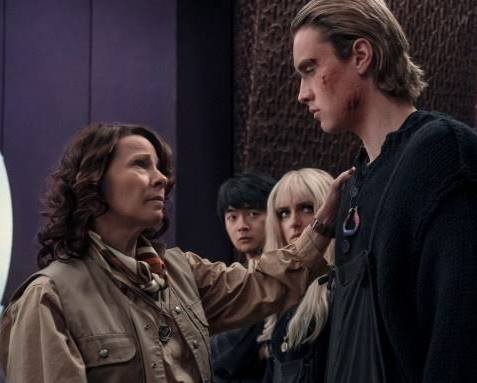
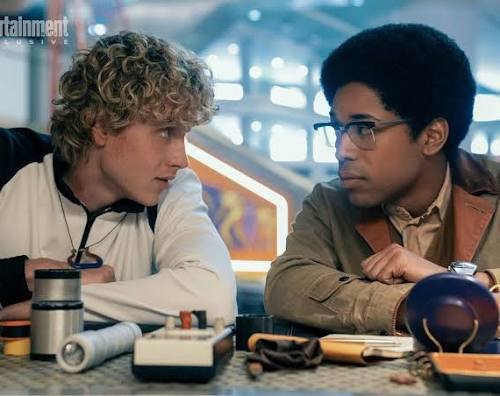
Every younger version of a returning character in Sunrise on the Reaping killed it, but one performance stood just a touch above the rest and once you hear the cadence side by side, it’s honestly unreal.
Breaking down how the younger castings stack up:
• Effie Trinket: Spot-on with the "chins-up" smiles, though expected given great casting and how naturally theatrical and over-the-top Effie already is to mimic.
• Caesar Flickerman: Kieran Culkin wasn't just doing a straight impression of adult Caesar he made the character his own and nailed the on-stage echo, since we mostly see Caesar in performance mode in the main films (definitely worth a whole breakdown of its own).
• Wiress & Mags: Young Wiress captured that autistic-coded awkwardness in conversation really well, while Mags brought warmth—and since Mags never speaks in the original movies, there's more room to shape her there.
• Young Plutarch: Runner-up felt right and matched how spot-on the casting already was.
• Kelvin Harrison Jr. as young Beetee: Completely blew the roof off. He even got to probe Jeffrey Wright about the character about a week before filming, and it shows in every detail. Like Wiress, Beetee is heavily autistic-coded with a super specific, non-universal cadence not a stock accent, since speech patterns and word/sentence emphasis or mispronunciations vary wildly on the spectrum (even in everyday speech and comments). Beetee carries authority without ever raising his voice speaking in a breathy whisper usually tied to doubt or insecurity, yet projecting total certainty, with disjointed emphasis and unexpected pauses before continuing. In the clips ("A little brute force is always helpful", spotting the shimmering force field from the flickering holograms and lights, realizing someone might be watching), it feels like you could lay Jeffrey Wright’s voice straight over him and nobody would blink.
Did you already have Kelvin Harrison Jr.’s Beetee in mind, or did another younger casting catch your eye first?
Voldemort's 12 Best Death Eaters, Ranked.
No. 12: Selwyn
No. 11: Augustus Rookwood
No. 10: Walden Macnair
No. 9: Alecto Carrow
No. 8: Amycus Carrow
No. 7: Barty Crouch Jr.
No. 6: Lucius Malfoy
No. 5: Peter Pettigrew
No. 4: Bellatrix Lestrange
No. 3: Corban Yaxley
No. 2: Fenrir Greyback
No. 1: Severus Snape
Do you agree with this ranking, or would you change anything?