A friend who beat an alcohol addiction told me that the hardest thing to being sober was the perpetuity of the grind. He thought that being sober would be a climax, the final defeat of a yearning. Yet all he got as a reward, for the constant maintenance, was not drinking.
Med students, listen up! Today let me explain how to analyze a Liver Function Test (LFT) step by step.
Stop looking at isolated HIGH or LOW flags on a lab report. You need to look at the patterns. Here is how you actually read an LFT panel like a CONSULTANT 👇 (1/10)
ANDROID USERS, READ THIS!
Your phone says "Storage Full."
So you delete photos. Delete videos. Uninstall apps. Yet the storage barely moves.
That's because the real culprits aren't your photos or apps. it's the hidden junk Android quietly stores in the background
Here's how I cleaned my phone yesterday and recovered 35GB without deleting a single photo, video, app, or chat I actually use.
Here's exactly how I did it:
👇🏼👇🏼
The airline lost my bag for 72 hours.
They handed me a $50 “courtesy” voucher at the baggage desk and smiled like they’d done me a favor.
I kept the voucher. Then I opened my laptop and used a 1999 international treaty they never mention at check-in.
Total recovered: $1,650.
Here are the three legal weapons most passengers never know they have.
Winston Churchill fought his depression with bricks. He'd lay them for hours at his country home in Kent. He joined the bricklayers' union. And in 1921 he wrote about why it worked. It took psychology another 75 years to catch up.
He called his depression the "Black Dog." It followed him for decades. His method for fighting it back was as basic as it sounds: laying brick after brick, hour after hour.
Churchill spelled out his theory in a long essay for The Strand Magazine. People who think for a living, he wrote, can't fix a tired brain just by resting it. They have to use a different part of themselves. The part that moves the eyes and the hands. Woodworking, chemistry, bookbinding, bricklaying, painting. Anything that drags the body into a problem the mind can't solve by itself.
Modern psychology now calls this behavioral activation. It's one of the most-studied depression treatments out there. Depression sets a behavior trap. You feel bad, so you stop doing things, and doing less means less to feel good about. Feeling worse makes you do even less. The loop tightens until you can't breathe inside it.
Behavioral activation breaks the loop from the action side. You schedule the activity first, even when every part of you doesn't want to. Doing it produces small rewards: a wall gets straighter, a painting fills in, a messy room gets clean. Those small rewards slowly rewire the brain. Action comes first, and the feeling follows.
Researchers at the University of Washington put this to the test in 2006. They studied 241 adults with major depression and compared three treatments: behavioral activation, regular talk therapy, and antidepressants. For the people who were most severely depressed, behavioral activation matched the drugs. It beat the talk therapy. A 2014 review of more than 1,500 patients across 26 trials backed up the result.
Physical work like bricklaying does something extra on top of this. It crowds out rumination, the looping bad thoughts that grind people down during the worst stretches of depression. Bricklaying needs both hands and gives feedback brick by brick: each one is straight or crooked. After an hour you can see exactly how much wall you built. No room left for the mental chewing.
The line George Mack used in his post, "depression hates a moving target," is good poetry. The science behind it is sharper. Depression hates a brain that has somewhere else to be.
My father's best friend was a man called Uncle Bayo who disappeared from our lives without explanation. I was 12 the last time I saw him. He came to our flat in Gbagada, argued with my father in the bedroom for an hour, and walked out without saying goodbye to me. My father never spoke his name again. Neither did my mother. Uncle Bayo became a silence with a shape.
Twenty-six years passed. I was in Philadelphia for a conference. A networking dinner at a hotel downtown. Across the room, a man about my father's age caught my eye and held it too long. He approached me during dessert and said my surname like it was a question he already knew the answer to.
We sat in the hotel lobby until 2am. He told me the story my father never did. They had started a construction company together in the early 90s. It had failed because of a contract dispute with a senator. The senator had paid only half the money and refused the rest. The debt had crushed them. Uncle Bayo had blamed my father for trusting the senator. My father had blamed Uncle Bayo for not reading the fine print. The friendship had shattered. Two men who had been closer than brothers had become strangers over something neither of them could control.
Uncle Bayo had moved to America after the falling out. He had built a new life, a new business, a small contracting firm in West Philly. He had married a Ghanaian woman and had two daughters. He had never returned to Nigeria. He had never called my father. He had assumed the silence was mutual.
I asked why he approached me now. He said he recognised my face because I looked like my father at 30. He said he had been waiting for decades to see that face again, to explain something that was never about betrayal. He said the argument had been about shame, not money. Both men had felt they failed each other. Neither had known how to say it.
I called my father from the hotel room. It was 3am in Lagos. He answered on the second ring, voice thick with sleep and alarm. I told him who I was sitting with. The line went quiet. Then my father did something I had never heard him do. He cried. Not softly. The kind of crying that comes from a place words cannot reach.
Uncle Bayo flew to Lagos 3 months later. They met at the same flat in Gbagada. They sat in the same living room where the argument had happened. They didn't re-litigate the past. They just sat together, two old men with white hair and matching hypertension medication, and let the silence heal.
My father died last year. Uncle Bayo spoke at the funeral. He said the greatest thief in life is not money or failure. It is the belief that there is always more time.
Call them. The debt is not theirs. It is yours.
If there was one article you want to read as a clinician?
Read this
Via @jenna_taglienti - an absolutely stunning write in @JAMA_current
"Medicine can have extraordinary meaning. But it cannot substitute for being present in your own life. The world may need us as physicians.
But the people who love us need us as ourselves.
And that is the role no one else can fill."
Brilliant - and much love to you
'Time is Finite"
https://t.co/qPJkmtwxUe
Every time you accepted a salary, chose a price, or walked into a negotiation, the other person was running GAME THEORY in their head.
You were guessing.
This 1-hour Yale lecture by Professor Ben Polak will permanently change how you read people and make decisions.
Most MBAs pay $150k to learn this. Yale posted it for free:
My manager stopped asking me for updates on my biggest project. I told myself I had finally earned absolute trust. Six months later, I understood what they were actually telling me:
Why Soviet Math Students Were Strong
People often ask:
Why were Soviet and Eastern European students so strong in mathematics? Why do Eastern European students dominate math olympics?
Part of the answer lies in the textbooks.
For more than a century, generations of students studied from Kiselev’s Arithmetic — a remarkable book known for combining:
• mathematical rigor
• crystal-clear explanations
• carefully structured problems
The book stayed in print for 125+ years and sold over 100 million copies, becoming a cornerstone of math education in Russia, the USSR, and China.
Yet there was no proper English translation.
I have now translated this legendary book into English.
If you want to see how mathematics used to be taught when clarity and logic mattered, take a look:
https://t.co/J6k9XEdYTY
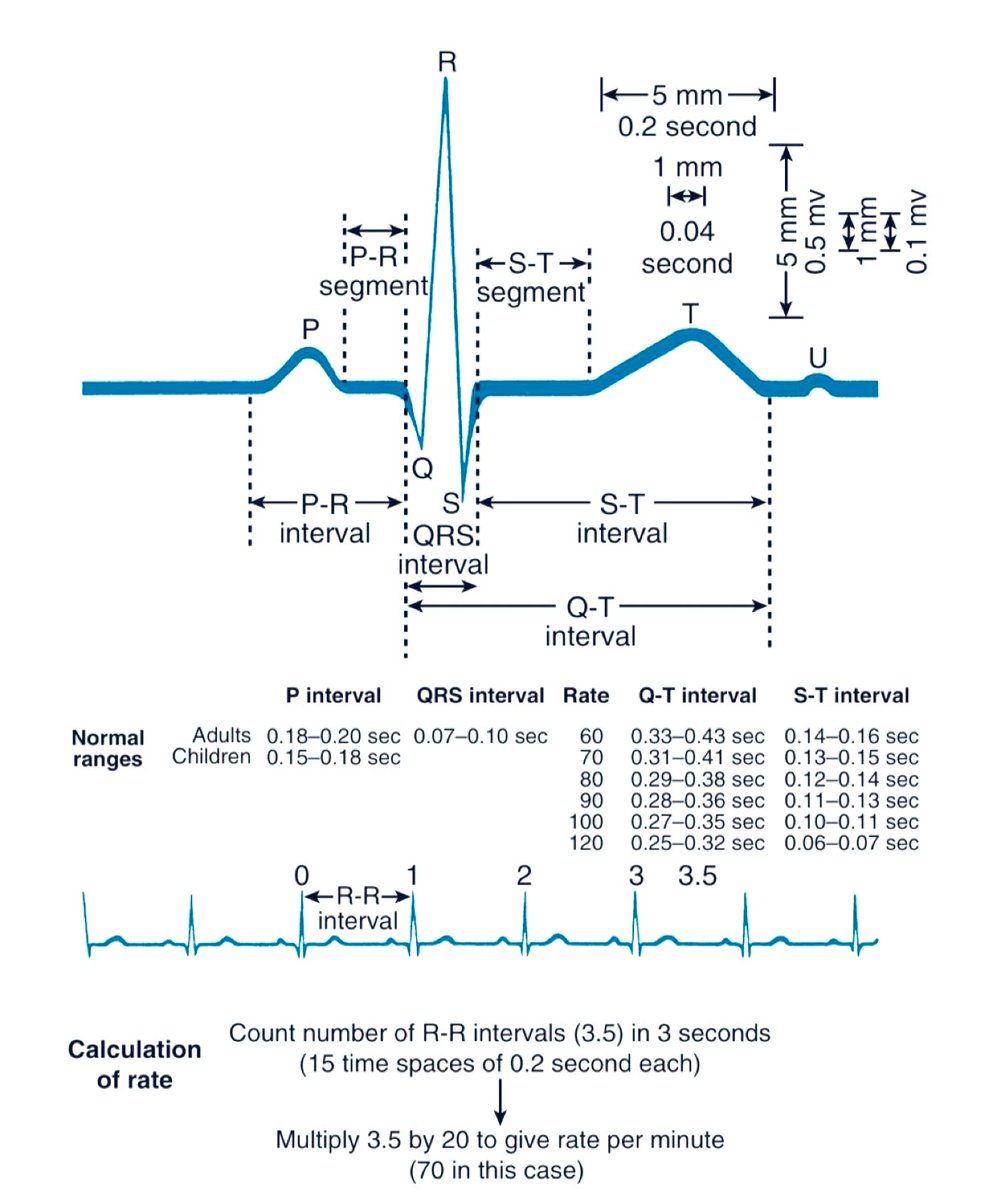
Interpreting an #ECG can seem overwhelming at first, but with a structured approach, it becomes far more manageable.
In this thread, I’ll walk you through how to analyze an ECG like a professional, step by step.
Let’s begin.🧵
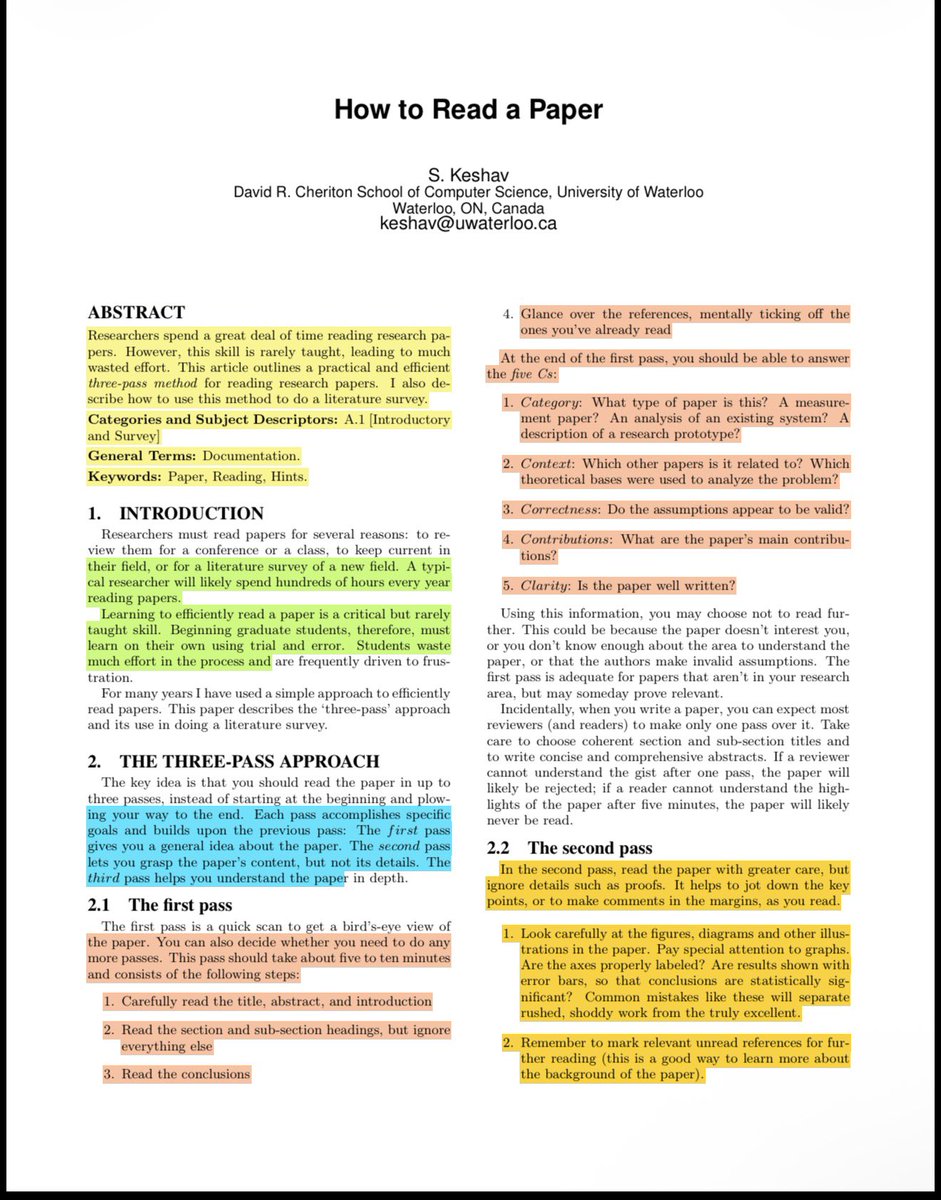
90% of students “read” research papers and still can’t explain them….This is the method I use anytime I lead a Journal Club.
I can tell in 30 seconds if you actually understood a research paper….
Most people don’t….
They “read” it…
Then they can’t explain the question, the method, or the point.
Here’s the reading method researchers are trained to use:
The Three-Pass Method.
⸻
★ PASS 1 (5–10 minutes)
Get the map, not the details
Read only:
→ Title
→ Abstract + intro
→ Section headings
→ Conclusion
→ References (quick glance)
By the end, you should be able to say:
↳ What kind of paper is this
↳ What problem is it solving
↳ What are the main contributions
↳ Do the assumptions seem reasonable
↳ Is it worth your time
If the answer is “no,” stop here.
That’s not quitting. That’s focus.
⸻
★ PASS 2 (up to 1 hour)
Understand the argument
Now read with a pen.
Your job is to track:
→ What claim are they making
→ What evidence supports it
→ What figures/graphs prove it
Study the visuals like your reputation depends on it:
↳ Are axes labeled
↳ Are error bars shown
↳ Do the results actually justify the conclusion
At the end of pass 2, you should be able to explain the paper out loud to a friend.
No notes.
If you can’t, you don’t own it yet.
⸻
★ PASS 3 (the “real researcher” pass)
Rebuild the paper in your head
This is the move that separates “I read it” from “I understand it.”
Try to recreate the work mentally:
→ Why this method and not another
→ What assumptions are hiding in plain sight
→ What would break if one assumption fails
→ What would you change if you ran the study
By the end, you should be able to reconstruct the whole paper from memory, including strengths and weak spots.
⸻
💬 What trips you up the most when reading papers?
♻️ Repost if you know someone drowning in PDFs.