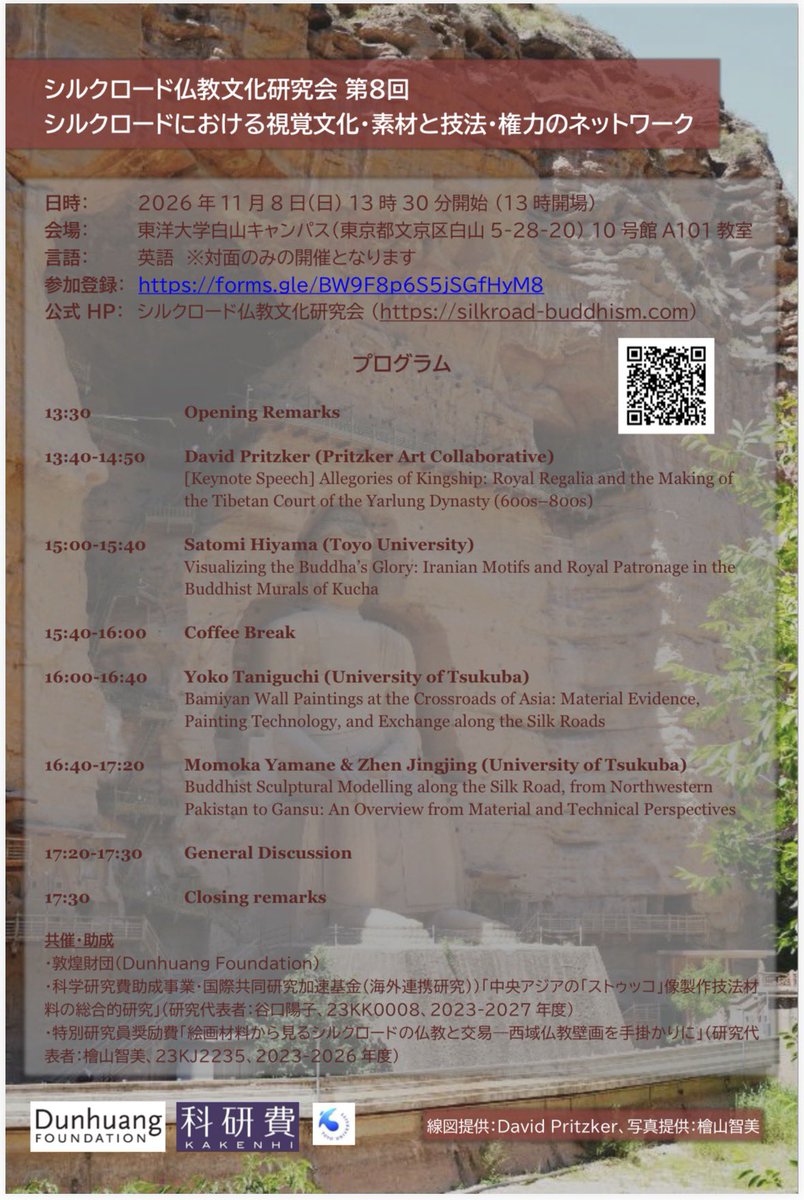
2026年11月8日(日)に、東洋大学白山キャンパスにて第8回シルクロード仏教文化研究会「シルクロードにおける視覚文化・素材と技法・権力のネットワーク(Visual Cultures, Material Practices, and Networks of Power across the Silk Roads)」を開催します。英語での国際ワークショップとなります。
The meeting of A. Einstein and Rabindranath Tagore was a remarkable encounter between two of the most influential thinkers of the 20th century. They discussed various topics related to physics, philosophy, religion, art, and human nature. Their conversation revealed the differences and similarities between their worldviews, as well as their mutual respect and admiration.
Einstein and Tagore met through a common friend, Dr. Mendel, who was a Jewish physician and a fan of Tagore's poetry. Tagore visited Einstein at his residence at Caputh in the suburbs of Berlin on July 14, 1930, and Einstein returned the call and visited Tagore at the Mendel home. Both conversations were recorded.
One of the main themes of their dialogue was the nature of reality and truth. Einstein believed that there was a reality independent of human perception, and that truth was objective and universal. He cited the example of the Pythagorean theorem, which he claimed was true regardless of the existence of man. Tagore, on the other hand, argued that truth was essentially human, and that it was realized through our emotions and activities. He said that the world was a human world, and that science and religion were both expressions of human truth. Another topic they discussed was the concept of beauty. Einstein asked Tagore if beauty was independent of man, and if the Apollo of Belvedere would no longer be beautiful if there were no human beings. Tagore replied that beauty was not independent of man, but rather a harmony between man and the universe. He said that when our universe was in harmony with man, we knew it as truth and felt it as beauty.
They also talked about their personal tastes in music. Einstein confessed that he did not appreciate Indian music, because he could not follow its rhythm and melody. He said that he preferred music that had clear structure and logic, such as Mozart's. Tagore explained that Indian music was based on improvisation and emotion, rather than on fixed rules and forms. He said that Indian music expressed the infinite personality of man, which comprehended the universe.
📷 photographed by photographer Martin Vos, ca. 1930