hello there the jacobian conjecture is false thanx to my close friend akhil for asking about it and my other close friend fable for working during the world cup final
((1+xy)^3 z + y^2 (1+xy) (4+3xy), y + 3 x (1+xy)^2 z + 3 x y^2 (4+3xy), 2 x - 3 x^2 y - x^3 z): \C^3\to \C^3, has jacobian determinant -2, and sends (0, 0, -1/4), (1, -3/2, 13/2), and (-1, 3/2, 13/2) to (-1/4, 0, 0)
JUST IN: Kuwait just cut oil production. Not because Iran bombed a single Kuwaiti oil well. Not because sanctions were imposed. Not because OPEC ordered a reduction.
Because the tanks are full and there is nowhere to put the oil.
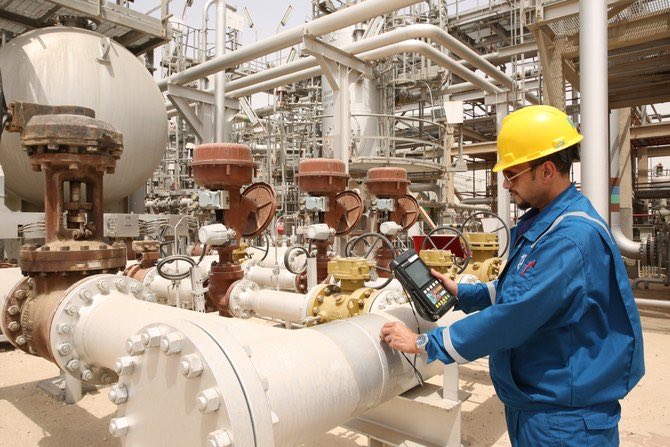
Kuwait produced 2.8 million barrels per day before February 28. Every day since, that oil has flowed from the wells into onshore storage tanks. Every day since, zero tankers have loaded at Kuwaiti export terminals because the Strait of Hormuz is closed to commercial shipping. JPMorgan estimated an 18 day storage runway. Today is day 18. The tanks are full. The math completed itself.
Kuwait declared force majeure and began curtailing production.
Iraq cut 1.5 million barrels per day last week for the same reason. The same storage arithmetic is now counting down in Saudi Arabia, the UAE, and Qatar. JPMorgan warned that if Hormuz remains closed, total Gulf production shut ins could reach nearly 5 million barrels per day within weeks. That is roughly 5 percent of global supply removed not by military action against production infrastructure but by the physical impossibility of storing oil that cannot be shipped.
This is the most important distinction in the entire energy crisis and it is being lost in headlines about prices.
Iran did not attack Kuwait’s oil fields. Iran did not bomb Kuwait’s refineries. Iran did not mine Kuwait’s export terminals. The IRGC fired missiles at Kuwait’s military bases and the US embassy, but zero confirmed strikes hit any oil production or export facility. Kuwait’s production cut is entirely caused by the downstream blockage: no insurance means no ships, no ships means no exports, no exports means full tanks, full tanks means wells shut in.
Seven letters from seven insurance companies in London closed the Strait of Hormuz. Those seven letters just shut down Kuwait’s oil production eighteen days later.
The second order consequence is the one nobody is pricing. When oil wells are shut in under reservoir pressure, the formation can suffer permanent damage. Asphaltene precipitation, fines migration, clay swelling, and pressure depletion can reduce long term recovery rates by 10 to 30 percent even after wells reopen. The Society of Petroleum Engineers has documented this across decades of forced shut ins. The 1991 Gulf War shut ins in Kuwait caused 15 to 25 percent recovery loss in some fields.
Mitigation exists. Chemical inhibitors, slow shut in procedures, and post restart treatments can limit damage. But those protocols require planning time that an insurance driven closure did not provide. Kuwait had 18 days of warning. Whether that was enough to protect thousands of wells producing 2.8 million barrels per day is the question that determines whether this cut is temporary or partially permanent.
The market is pricing a supply disruption. The reservoir physics may be pricing a supply destruction. The difference between those two words, disruption and destruction, is 10 to 30 percent of Kuwait’s long term production capacity.
The tanks are full. The wells are closing. And the damage clock is running on something no ceasefire can reverse.
https://t.co/ULBgEzZ3A8
AI-generated enzymes that outperform both nature and laboratory evolution
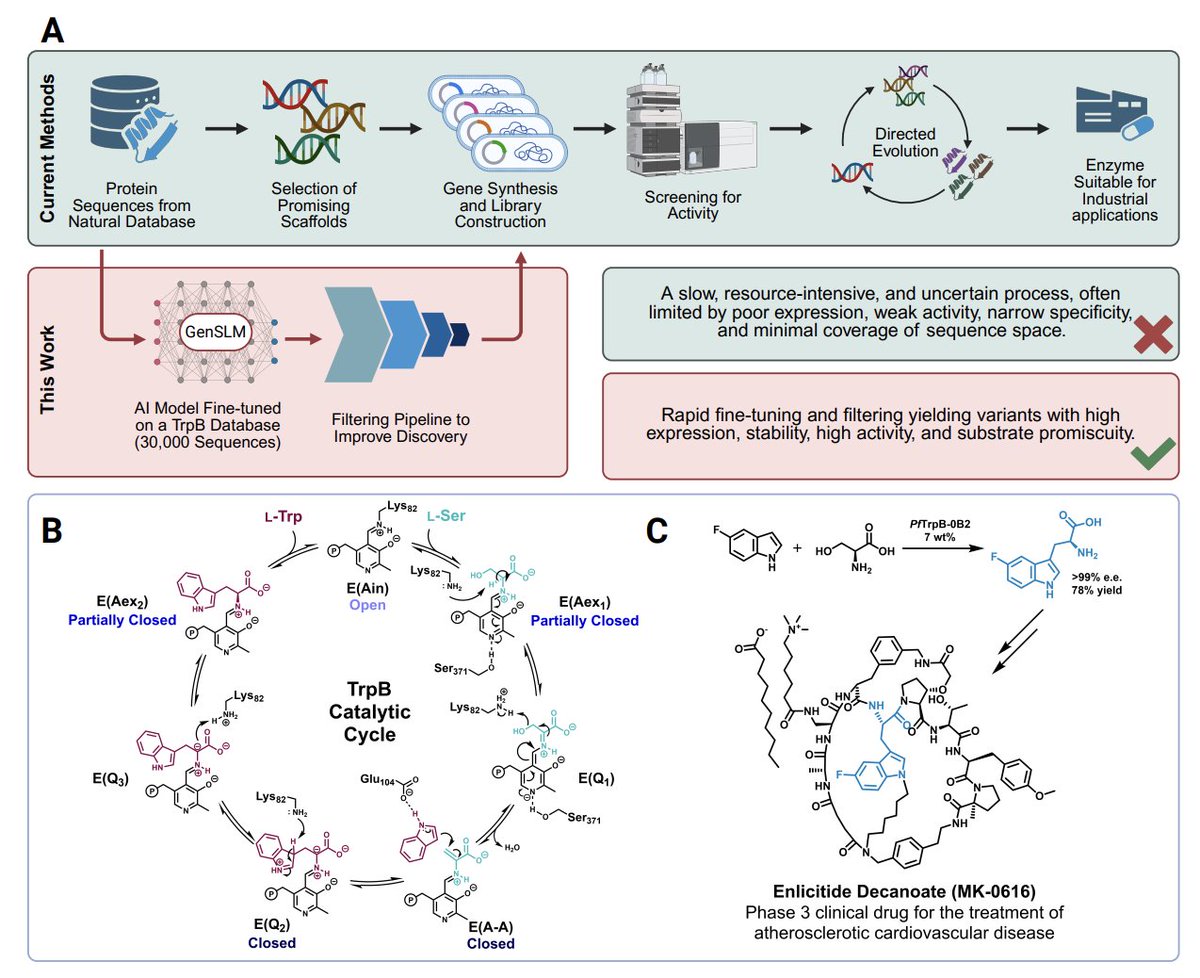
Enzymes are the catalysts that make green chemistry possible—but finding a good starting point for optimization remains one of the biggest bottlenecks in biocatalyst development. You can screen thousands of natural enzymes hoping one accepts your target substrate, or you can evolve an existing enzyme through many rounds of mutagenesis and selection. Both paths are slow and uncertain.
Théophile Lambert, Frances Arnold, and coauthors take a different approach. They fine-tune GenSLM—a protein language model that uniquely operates at the codon (DNA) level rather than amino acid level—on 30,000 tryptophan synthase β-subunit (TrpB) sequences. After filtering candidates using ESMFold for structural confidence and selecting 105 for synthesis, they find something remarkable: many AI-generated TrpBs not only express well in E. coli and show high catalytic activity, but exhibit broader substrate promiscuity than any natural TrpB tested.
One variant, called 230, stands out. It accepts every non-canonical substrate in the panel—including challenging transformations like 4-nitroindole, naphthol, and L-threonine—where natural enzymes show little or no activity. It matches or exceeds yields from laboratory-evolved variants that required extensive directed evolution campaigns. On 5-fluoroindole (used industrially to make enlicitide decanoate, a phase 3 cardiovascular drug), 230 achieves 99% yield, rivaling the engineered PfTrpB-0B2 that Merck currently uses.
When the authors compare 230 to its closest natural homolog (80.5% sequence identity), the contrast is stark: despite nearly identical active sites and predicted structures, the natural enzyme lacks both the high-temperature activity and the broad substrate scope. The enhanced versatility isn't inherited from nature—it emerges from the generative process itself.
The implication is significant: generative AI can now produce enzyme libraries that combine expression, stability, and promiscuity in ways that neither natural diversity nor traditional engineering reliably delivers, potentially compressing months of biocatalyst discovery into weeks.
Paper: https://t.co/9Ymallr7ZQ
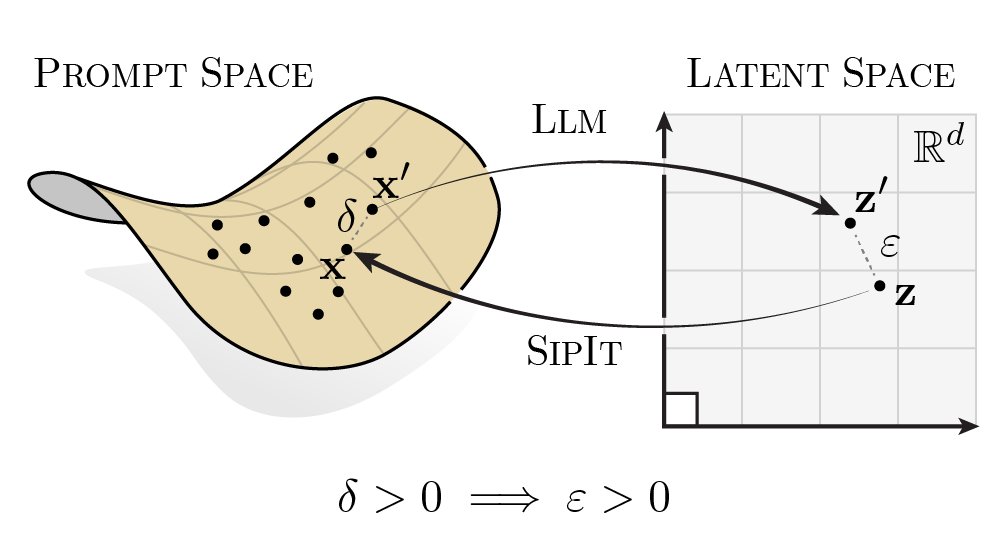
LLMs are injective and invertible.
In our new paper, we show that different prompts always map to different embeddings, and this property can be used to recover input tokens from individual embeddings in latent space.
(1/6)
What’s the number one factor that makes PhD students happier?
𝐈𝐭’𝐬 𝐠𝐨𝐨𝐝 𝐬𝐮𝐩𝐞𝐫𝐯𝐢𝐬𝐢𝐨𝐧. 👇
That’s what stood out to me in Nature’s latest global PhD survey. Students who met with their supervisors for at least one hour a week were significantly more satisfied with their PhD experience.
Not just because of research progress, but because they felt supported as people, not just as research machines.
⭐In countries like Brazil and Australia, where students reported the highest satisfaction, supervision was more collaborative and grounded in mutual respect.
⭐In India, most PhD students spend at least an hour weekly with their supervisor.
⭐But in the UK and Germany, over 60% of students see their supervisor less than one hour per week.
It’s not surprising then that one of the most common pieces of advice from PhD students was:
"𝐅𝐢𝐧𝐝 𝐭𝐡𝐞 𝐫𝐢𝐠𝐡𝐭 𝐬𝐮𝐩𝐞𝐫𝐯𝐢𝐬𝐨𝐫 𝐨𝐫 𝐦𝐞𝐧𝐭𝐨𝐫."
𝐀 𝐟𝐞𝐰 𝐭𝐡𝐨𝐮𝐠𝐡𝐭𝐬 𝐟𝐨𝐫 𝐚𝐧𝐲𝐨𝐧𝐞 𝐬𝐮𝐩𝐞𝐫𝐯𝐢𝐬𝐢𝐧𝐠 𝐨𝐫 𝐩𝐥𝐚𝐧𝐧𝐢𝐧𝐠 𝐭𝐨:
👍 An hour a week is more powerful than you think.
👍You don’t need to have all the answers, just show up consistently.
👍Even short check-ins can prevent small frustrations from becoming major problems.
𝐀 𝐟𝐞𝐰 𝐭𝐡𝐨𝐮𝐠𝐡𝐭𝐬 𝐟𝐨𝐫 𝐚𝐧𝐲𝐨𝐧𝐞 𝐜𝐮𝐫𝐫𝐞𝐧𝐭𝐥𝐲 𝐝𝐨𝐢𝐧𝐠 𝐚 𝐏𝐡𝐃:
👍You deserve to be supported, not just supervised.
👍You are not asking for too much by wanting mentorship.
👍Your supervisor matters more than your research topic. Choose wisely, if you still can.
Good supervision shouldn't be a luxury.
It should be the foundation!
And in the long run, it benefits everyone, including the students, the research, and the entire academic ecosystem.
Have you had a supervisor who made a difference during your PhD?
Would love to hear what helped you feel supported.
I hope this helps.
Btw...
Be sure to check out our podcast on YouTube, where we share...
✅ Helpful advice for in and outside of academia
✅ Useful info about AI tools in academia
✅ + advice to make your research life less of a struggle
👉 You can find us on YouTube as The Struggling Scientists
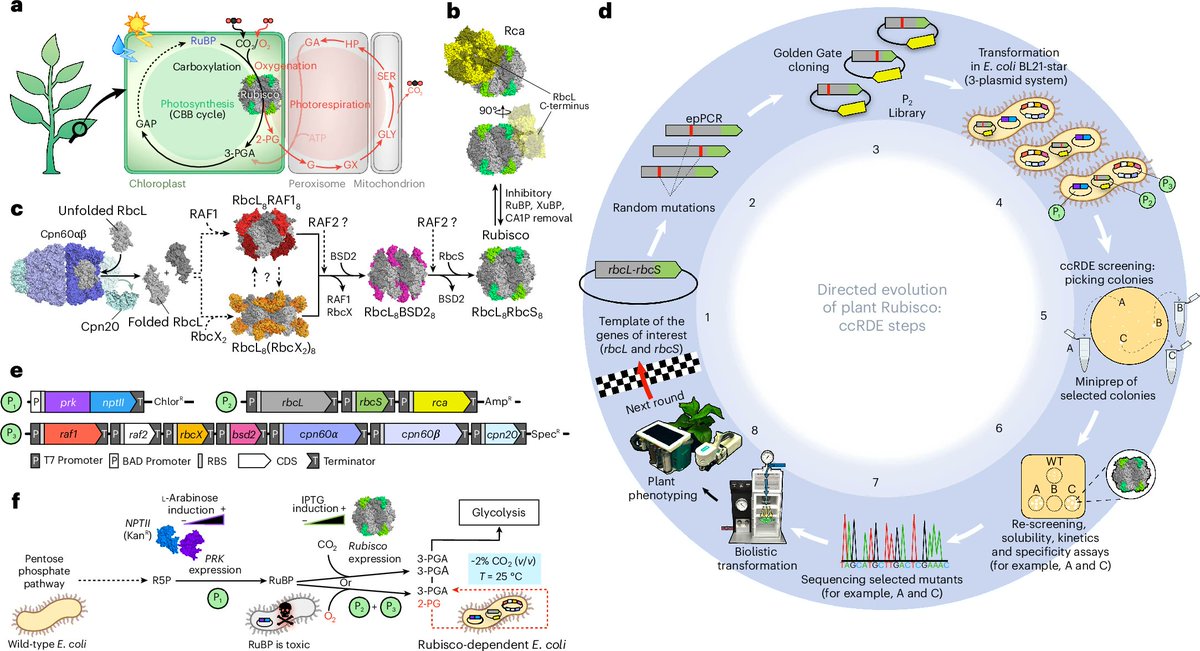
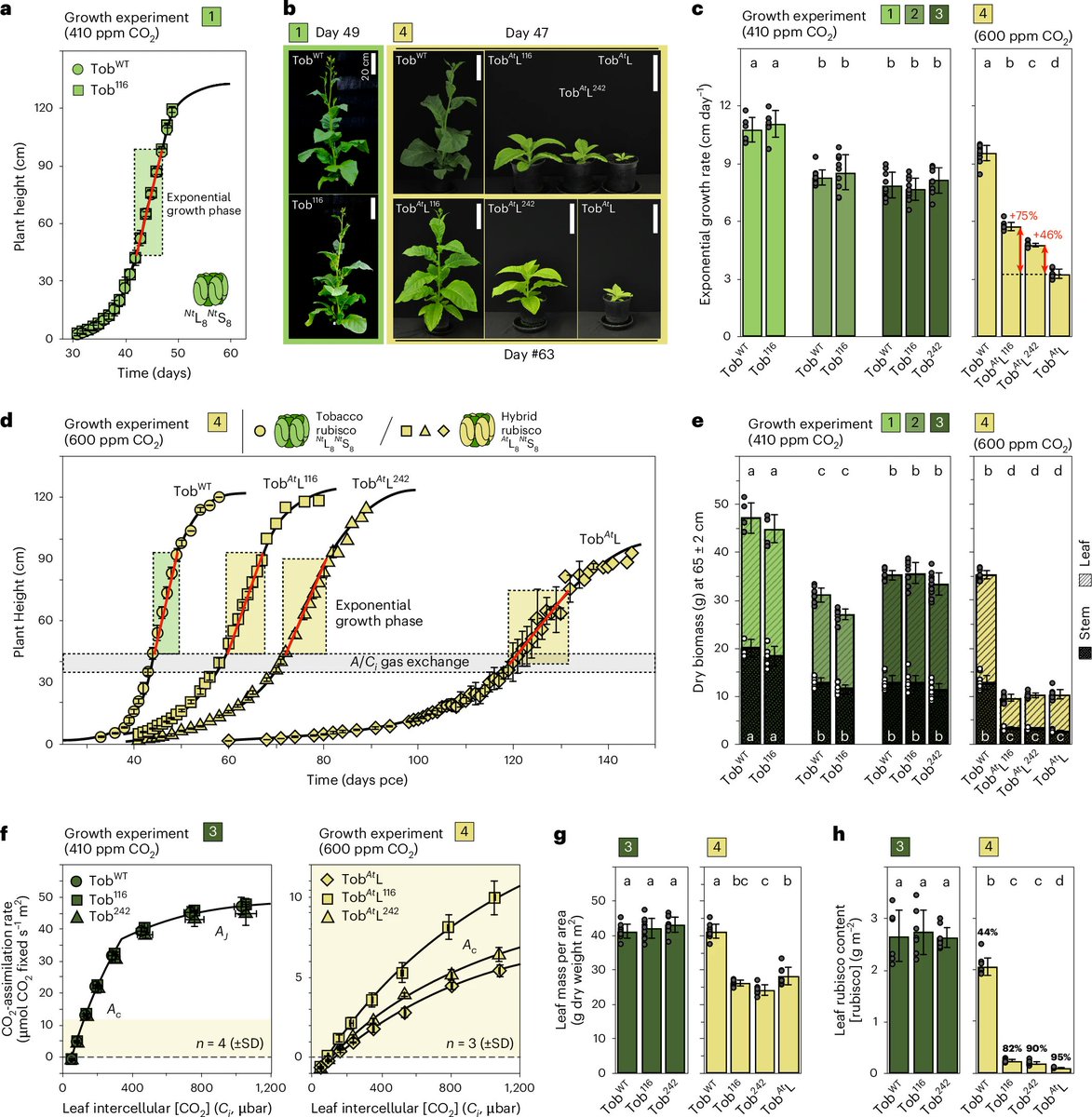
Rubisco is (arguably) the most abundant protein on Earth. (LPP surely comes close, right?) It’s an enzyme that fixes CO₂ into sugars during photosynthesis.
Unfortunately, as most people learn in school, Rubisco is inefficient. Sometimes it confuses O₂ for CO₂ and wastes energy. Plants make up for this in raw concentration; up to half the soluble protein in a leaf is Rubisco.
People have been trying to engineer better Rubiscos for many decades, but it's not easy because the proteins are big, do not fold easily (they need chaperone proteins to help out), are made from 16 subunits in land plants.
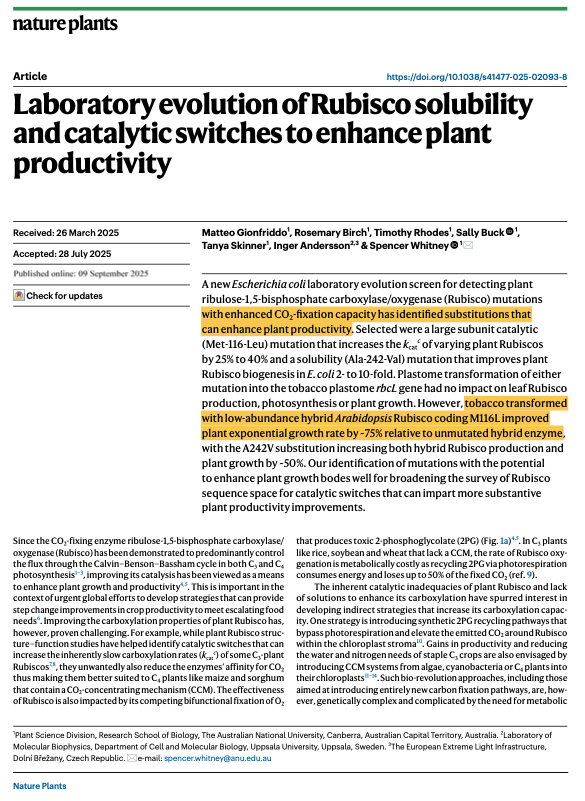
But there's a new paper in Nature Plants that looks really interesting. The TL;DR is that a group in Australia figured out how to express plant Rubiscos (and all SEVEN of their folding chaperones) using a set of 3 plasmids inside of E. coli cells. This enabled them to do "directed evolution" of Rubisco in bacterial cells, and quickly find Rubisco mutants that have higher enzymatic efficiency or that fold better.
In addition to the 3 plasmids, the researchers also coaxed E. coli to make ribulose-1,5-biphosphate, or RuBP, which is the 5-carbon sugar that Rubisco smashes into carbon dioxide to make molecules of 3-PGA for central metabolism.
Now, the clever bit is that you RANDOMLY MUTATE the three plasmids encoding the Rubisco to make millions of variants. Then, you transform those mutated plasmids into E. coli. If the E. coli do NOT make a functional Rubisco, RuBP levels build up and kill the cell; the molecule becomes toxic. But if the E. coli DO make a functional Rubisco, then they keep the RuBP levels in check and live just fine.
Using this "screening assay," the researchers found 46 fast-growing colonies of E. coli. Two of those colonies encoded really useful mutations. One mutation (M116L) makes Rubisco about 25–40% faster. The other (A242V) makes it fold and assemble much more efficiently.
They put this mutation into a "hybrid Arabidopsis–tobacco Rubisco," put that into tobacco plants, and measured growth. The plants with M116L grew 75% faster than wildtype.
No guarantees this will scale to more useful crops, like wheat and corn and soybeans etc. But it seems like a nice in vitro assay for faster prototyping!
https://t.co/lOCFyWajXl
I've long been taking this idea of using Bayesian optimization in mixture-type applications. Happy to see this one published in Nature communication.
reading a deepseek paper and stumbled upon a very beautiful formula where they unify SFT and MOST RL TYPES (DPO, PPO, GRPO, etc.) into ONE FORMULA*
*that requires additional reward functions to be defined.
But the fundamental insight - that all these training methods can be framed as gradient ascent on observed logprobs - is beautiful.
Anthropic CEO says all coding jobs would be automated by 2027. That’s indeed scary as he is measured with his words unlike like Scam Altman.
He also says AI requires lot more PhDs with Physics/math than DSA codejeets. Guess I have two years to buy lots of agricultural land.
I think the Deepseek moment is not really the Sputnik moment, but more like the Google moment.
If anyone was around in ~2004, you'll know what I mean, but more on that later.
I think everyone is over-rotated on this because Deepseek came out of China. Let me try to un-rotate you.
Deepseek could have come out of some lab in the US Midwest. Like say some CS lab couldn't afford the latest nVidia chips and had to use older hardware, but they had a great algo and systems department, and they found a bunch of optimizations and trained a model for a few million dollars and lo, the model is roughly on par with o1. Look everyone, we found a new training method and we optimized a bunch of algorithms!
Everyone is like OH WOW and starts trying the same thing. Great week for AI advancement! No need for US markets to lose a trillion in market cap.
The tech world (and apparently Wall Street) is massively over-rotated on this because it came out of CHINA.
I get it. After everyone has been sensitized over the H1BLM uproar, we are conditioned to think of OMG Immigrants China as some kind of Alien Other. As though the Alien-Other Chinese Researchers are doing something special that's out of reach and now China The Empire is somehow uniquely in possession of Super Efficient AI Power and the US companies can't compete. The subtext of "A New Fearsome Power Now Under The Command of the CCP" is what's driving the current sentiment, and it's not really valid.
Like, no. These are guys basically working on the same problems we are in the US, and not only that, they wrote a paper about it and open-sourced their model! It is not actually some sort of tectonic geopolitical shift, it is just Some Nerds Over There saying "Hey we figured out some cool shit, here's how we did it, maybe you would like to check it out?"
Sputnik showed that the Soviets could do something the US couldn't ("a new fearsome power"). They didn't subsequently publish all the technical details and half the blueprints. They only showed that it could be done.
With Deepseek, if I recall correctly, a lab in Berkeley read their paper and duplicated the claimed results on a small scale within a day.
That's why I say it's like the Google moment in 2004. Google filed its S-1 in 2004, and revealed to the world that they had built the largest supercomputer cluster by using distributed algorithms to network together commodity computers at the best performance-per-dollar point on the cost curve.
This was in contrast to every other tech company, who at that time just bought what were essentially larger and larger mainframes, always at the most expensive leading edge of the cost curve. (To the young people reading this, this will sound incredible to you)
I worked at PayPal at the time, and in order to keep pace with the rising transaction volume, the company was forced to buy bigger and bigger database servers from Oracle. We were totally Oracle's bitch. At one point when we ran into scalability issues, the Oracle reps told us we were their biggest installation so they had no other reference point on how to help us overcome our scalability issues. We literally resorted to flipping random config switches and rebooting it.
(This heavily influenced me when I was a young manager later at Facebook. I deliberately torpedoed an Oracle salesman's pitch to try and get us to switch from open source MySQL databases to an Oracle contract: of course we had scalability problems, but at least when we had them, we could open up the hood and figure out how to fix it ... assuming we had good enough engineers, and we did. When it's closed-source infra, you're at the mercy of the vendor's support engineers)
Back to Google - in their S-1, they described how they were able to leapfrog the scalability limits of mainframes and had been (for years!) running a far more massive networked supercomputer comprised of thousands of commodity machines at the optimal performance-per-dollar price point - i.e. not the more expensive leading edge - all knit together by fault-tolerant distributed algorithms written in-house.
Some time later, Google published their MapReduce and BigTable papers, describing the algorithms they'd used to manage and control this massively more cost-effective and powerful supercomputer.
Deepseek is MUCH more like the Google moment, because Google essentially described what it did and told everyone else how they could do it too. In Google's case, a fair bit of time elapsed between when they revealed to the world what they were doing and when they published a papers showing everyone how to do it. Deepseek, in contrast, published their paper alongside the model release.
Now, I've also written about how I think this is also a demonstration of Deepseek's trajectory, but that's also no different from Google in ~2004 revealing what it was capable of. Competitors will still need to gear up and DO the thing, but they've moved the field forward. But it's not like Sputnik where the Soviets have developed technology unreachable to the US, it's more like Google saying, "Hey, we did this cool thing, here's how we did it."
There is no reason to think nVidia and OAI and Meta and Microsoft and Google et al are dead. Sure, Deepseek is a new and formidable upstart, but doesn't that happen every week in the world of AI? I am sure that Sam and Zuck, backed by the power of Satya, can figure something out. Everyone is going to duplicate this feat in a few months and everything just got cheaper. The only real consequence is that AI utopia/doom is now closer than ever.
====
Bonus: This is also a little similar the Ethereum PoS moment, when AI finally has a counterpoint to the environmentalists who say AI uses so much electricity. We just brought down the cost of inference by 97%!
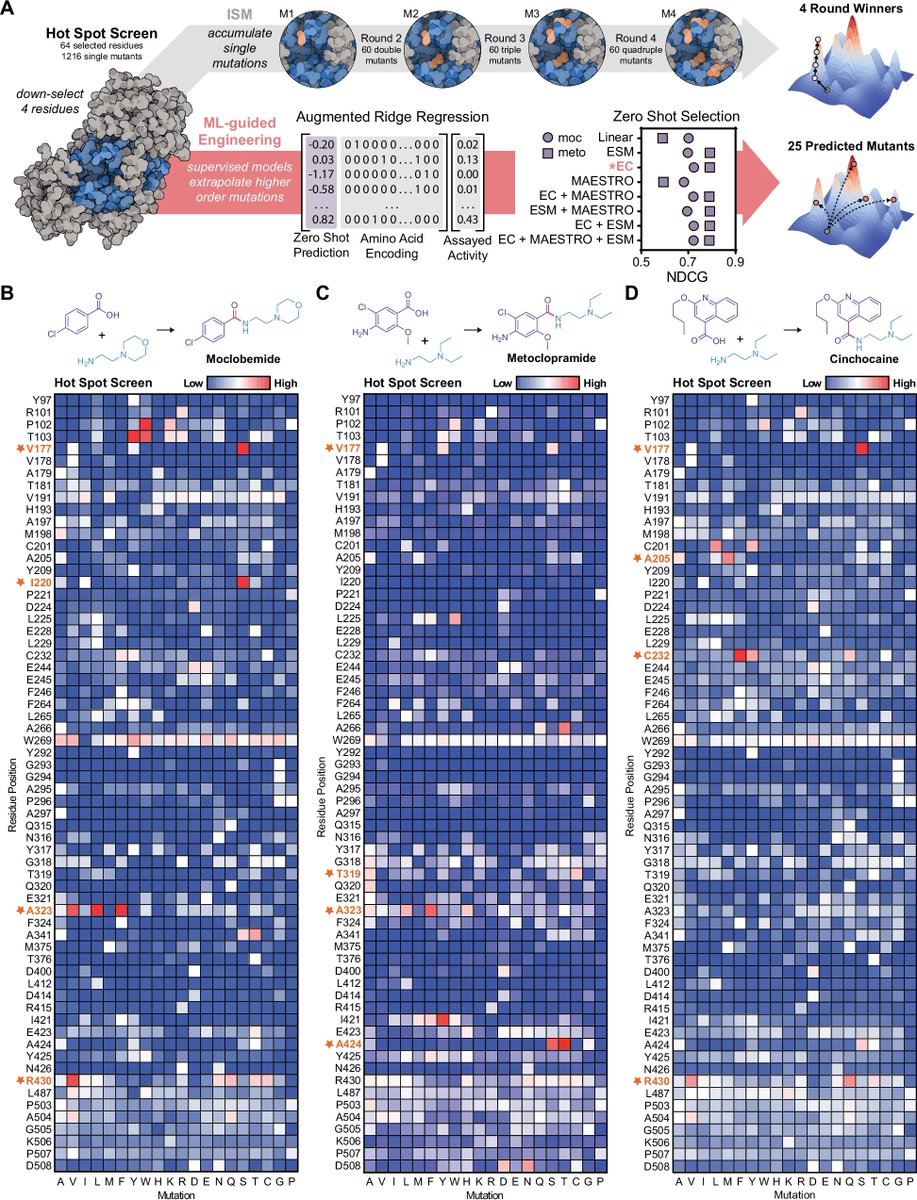
ML + cell-free systems to engineer enzymes quickly.
The authors tested enzyme variants in ~11k cell-free reactions, using the data to build a regression model to make better amide synthetases.
Result: 1.6- to 42-fold higher activity. We'll be seeing many more papers like this.
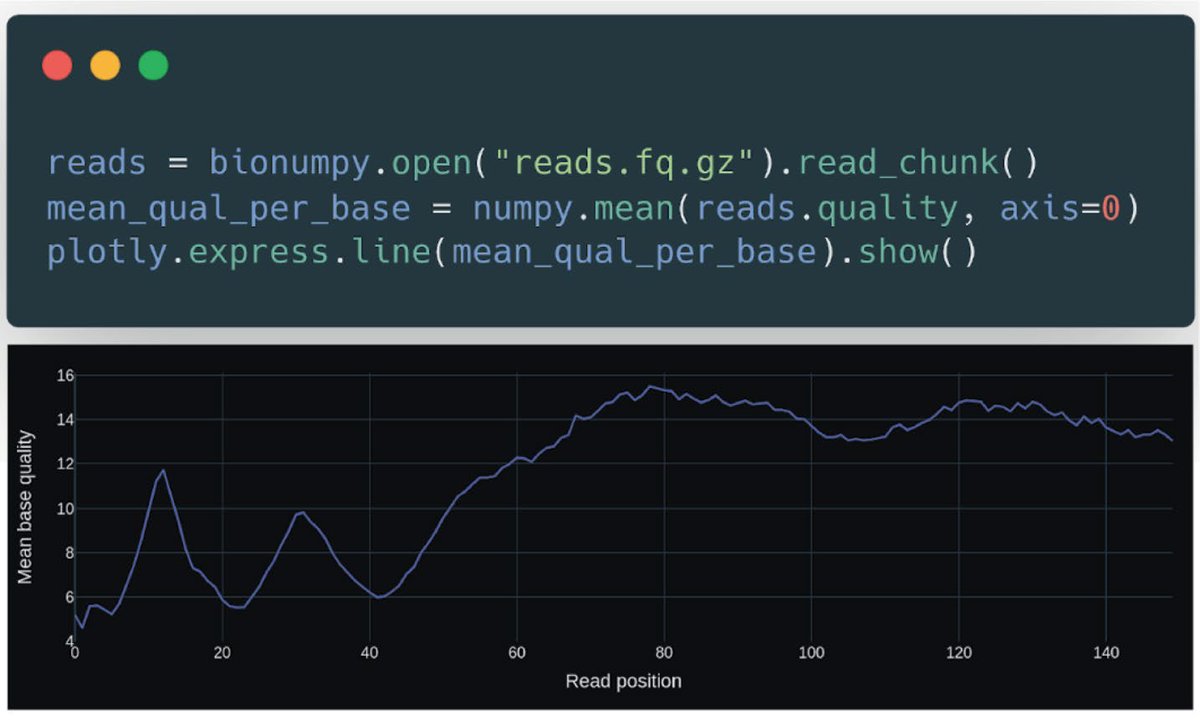
BioNumPy: array programming for biology @naturemethods
• BioNumPy revolutionizes biological data analysis by integrating the power of NumPy-like arrays, making Python even more accessible to bioinformaticians.
• It enables direct handling of biological formats (like FASTQ, FASTA, BAM) with an intuitive API, streamlining data processing without the need for low-level languages.
• With BioNumPy, complex biological datasets, including DNA sequences, are efficiently encoded in memory, allowing seamless use of NumPy functions.
• BioNumPy matches or outperforms existing tools and even competes with C/C++ implementations in terms of speed, making it both fast and easy to use.
• One standout feature: bioinformatics pipelines can be created with fewer lines of code and without the need for custom UNIX commands.
• The tool supports machine learning on biological sequences, demonstrated by reproducing a major benchmark study in a simplified manner.
• BioNumPy’s open-source design encourages community contributions, with potential for rapid growth in supported features and analysis types.
@SandveGeir@KanduriC@milenapavl@IvarGrytten@knutdrand
💻Code: https://t.co/ag2RJMeFZ8
📜Paper: https://t.co/vfzMscz4P2
Tuning Insulin Receptor Signaling Using De Novo Designed Agonists
🚀 New preprint from David Baker!🚀
1. Researchers designed de novo insulin receptor (IR) agonists that outperform natural insulin in terms of potency, lowering glucose levels more effectively and for longer durations. These agonists can also activate disease-causing IR mutants that do not respond to insulin.
2. The designed agonists induce distinct IR conformational changes that lead to different downstream signaling pathways, providing a novel way to modulate IR activity. This could offer therapeutic benefits, particularly for patients with severe insulin resistance syndromes.
3. These agonists were created by fusing binders for two insulin-binding domains of the IR, with varying levels of conformational flexibility. This allowed the team to control the extent of receptor activation and signaling, tuning the biological outcomes.
4. Unlike insulin, which has limitations in manufacturing and storage, the designed agonists are hyperstable and easy to produce, making them ideal candidates for large-scale production and potential therapeutic use.
5. In mouse models, the designed agonists were shown to reduce blood glucose levels more effectively than insulin, with effects lasting for up to six hours, whereas insulin’s effects diminish much sooner.
@EunheeChoi12@XiaochenBai@PreethamVi@UWproteindesign
📜Paper: https://t.co/rvWXHdoPJr
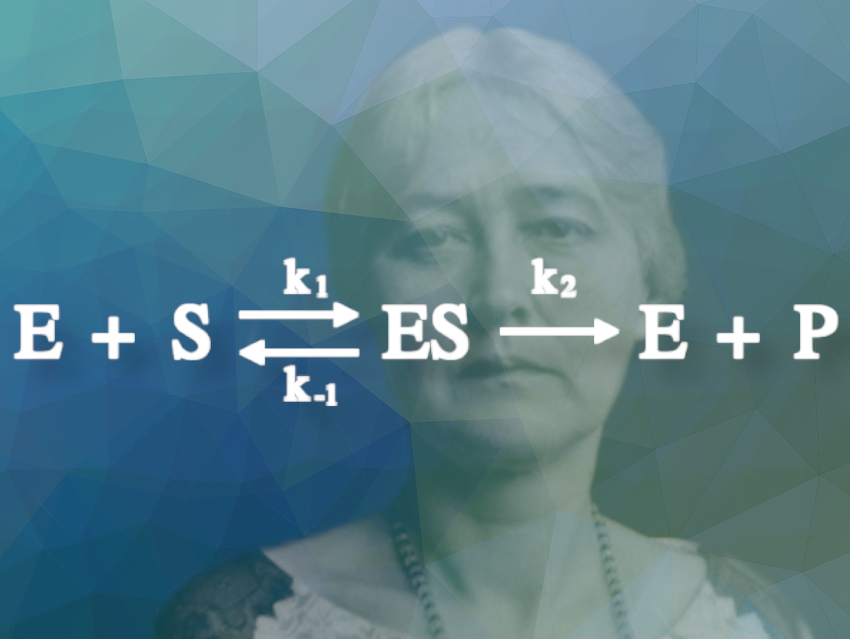
Maud Menten, born #onthisday in 1879, was one of the 1st women in Canada to graduate from medical school
Together with Leonor Michaelis, and based on work by Victor Henri, she developed a theory of enzyme kinetics that is still known today as Henri-Michaelis-Menten kinetics
🚨 Now online with free access!
"Autonomous reaction Pareto-front mapping with a self-driving catalysis laboratory" by Milad Abolhasani & co-workers
A modular flow chemistry platform with reactor benchmarking for reaction and ligand investigations!
https://t.co/t1mIOHCYOR