A researcher on Human Microbiome and Biotherapeutics. A Nanoporian. Cataloguing microbiome compositions of healthy/disease state of Africans and fermented foods
@SarahLebeer@Isala_UAntwerp@ISAPPscience@FelisGiovanna@ElisaSalvetti1 The average GC content of G. vaginalis 41.8%, while Bifidobacterium species 60.2%. The cell wall of G vaginalis is too thin exhibiting Gram variability in contrast to the cell wall of Bifidobacterium species.
@SarahLebeer@Isala_UAntwerp@ISAPPscience@FelisGiovanna@ElisaSalvetti1 Genera found in Bifidobacteriaceae family: Bifidobacterium, Aeriscardovia, Alloscardovia, Bombiscardovia, Gardnerella, Neoscardovia, Parascardovia, Pseudoscardovia, and
Scardovia. Unlikely that Gardnerella vaginalis specie will be classified otherwise in GTDB
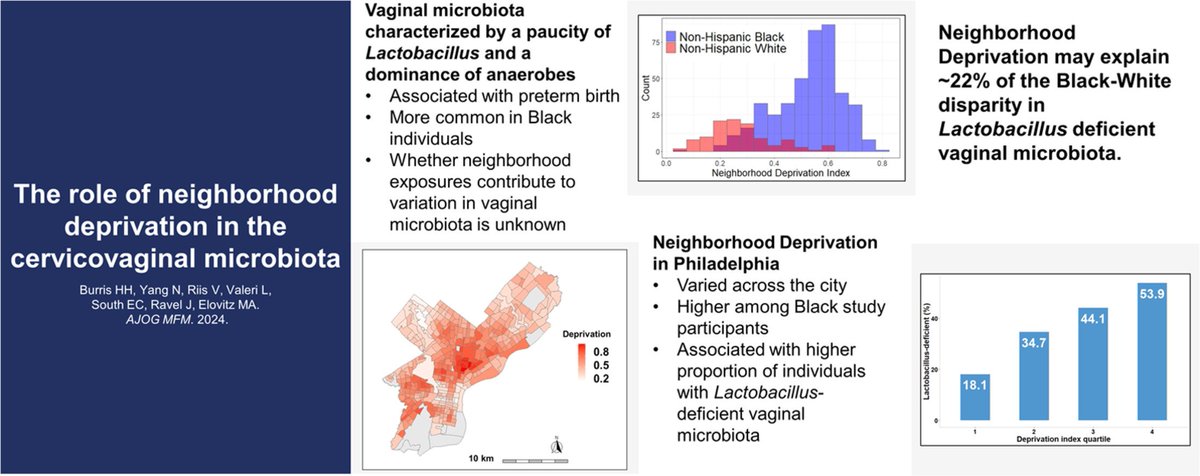
Nice to observe that microbiome researchers @ISAPPscience are beginning to dig deep into the confounding factors leading to disparities between "Black" and "White" microbiome differences @ Ravel Jacques https://t.co/QRiZ4NhUkd
Check out our latest podcast episode! Prof. Kingsley Anukam PhD was an invited guest at our 2023 ISAPP meeting, and now joins the podcast to talk about his work on lactobacilli at diverse sites on the human body.
Listen here👂🏽
https://t.co/xhl54CFX3a
If I were you, I will share a complimentary copy with colleagues who make request just for research purposes, teaching and feedback. The law is on your side.
With gratitude to @SarahLebeer ,@ISAPPscience. @unizikofficial for giving me opportunity to attend the Isapp meeting. There's need to have perspectives from underrepresented communities as microbiome/probiotics research evolves.
Great points raised by @kanukam at #isapp2023 - is ‘race’ relevant to human microbiome/probiotics research? Don’t include race or ethnicity without acknowledging confounding factors. Also key awareness aspect of our @Isala_UAntwerp sisterhood projects
Great points raised by @kanukam at #isapp2023 - is ‘race’ relevant to human microbiome/probiotics research? Don’t include race or ethnicity without acknowledging confounding factors. Also key awareness aspect of our @Isala_UAntwerp sisterhood projects
https://t.co/1WvCa7NzNJ has released Best Microbiology Scientists ranking for 2023. Proud that most Probiotic researchers @SarahLebeer@ISAPPscience made the list https://t.co/b1dNeMcwAn https://t.co/RQtK8KMEoc https://t.co/nKhlJ9au7C https://t.co/qk7aobQwuS
1st African Microbiome Day: Showcasing microbiome research in Africa - Full Workshop. Presented the gut microbiome of lean and overweight women from South-East Nigeria. https://t.co/h5DvRQahIJ @ISAPPscience@H3ABioNet@unizikofficial@SarahLebeer
This paper is a proof of principle and lends credence to our study on topical application of live lactobacilli to control body malodor https://t.co/0dMp9NQu1R @bykriscampbell@ISAPPscience
Even though lactobacilli are found in low abundance on the skin, they might be pivotal in the skin ecosystem.
Here, 3 strains of lactobacilli -- selected based on genes / functions -- reduced inflammation, crowded out staphylococci, & treated acne.
https://t.co/twmapUJNAW
The publication is "paywalled" @MicrobioSoc “Open communication is a fundamental property of science and it makes scientific progress possible. Paywalled access prevents this,” Elbakyan adds. “That is a threat, and not Sci-Hub.” @ISAPPscience@Nature
Deeeeep breath. Some bacteria have new phylum names and it's going to be confusing for a while!
🧵A thread of resources for getting up to speed on the changes...
https://t.co/Ah39exLz1p
Our paper in Frontiers found that couples share common vaginal and seminal fluid microbiome. L.gasseri and L jensenii are critical for + IVF clinical outcomes. https://t.co/DomEZXcdhC @ISAPPscience@SarahLebeer @reid_probiotics