A Kenyan court has suspended the implementation of the US$2.5 billion health “aid” deal signed with the US government last week over serious data privacy concerns.
This deal is terrible not only for Kenya but for the entire African continent because it hands over sensitive health and genomic data to a foreign government without proper safeguards, and it exposes millions of Africans to potential surveillance and data exploitation. It is sad that the Kenyan government did so little thinking before signing such a treacherous and dangerous agreement.
On 4 December 2025, Kenya and the United States signed a five-year Health Cooperation Framework in Washington. The agreement, worth up to US$1.6 billion, directs new funding toward HIV, malaria, maternal health and disease surveillance. Many have celebrated it as a major investment in Kenya’s overstretched health sector.
Yet across Africa, the deal has triggered serious concern because of provisions that grant long-term access to Kenya’s biological samples, genomic data (all the information contained in an organism’s DNA) and surveillance information. That issue, more than the money itself, has now become the centre of the debate.
The questions arise from clauses that reportedly sought multi-decade rights over Kenyan pathogen samples and related data. Even in revised form, the agreement’s language remains vague enough to raise fears of long-term commitments that outlive the funding cycle.
These concerns are sharpened by the continent’s past experiences. In 2007, Indonesia challenged the global health system after discovering that its shared H5N1 samples were being used to develop vaccines it could not afford.
In 2021, South Africa and Botswana were punished with travel bans immediately after openly sharing genomic data on the Omicron variant (a highly mutated strain of the virus that causes COVID-19).
During the West African Ebola crisis, biological samples left the continent without any assurance that affected countries would benefit from the discoveries or intellectual property that emerged later. These precedents cast a long shadow over today’s negotiations and deal between Kenya and America.
What is happening in Kenya fits into a much larger global contest. Biological samples, genomic data and pathogen information have become strategic assets, capable of driving the next generation of vaccines, diagnostics, therapeutics and artificial intelligence models in health.
This has drawn intense interest from major powers. China, through BGI (one of the world’s biggest genomics and biotechnology companies), has invested in genomic laboratories across Africa. European institutions are building deeper data partnerships, while private technology and pharmaceutical companies see immense value in Africa’s large and genetically diverse populations.
Kenya is therefore not negotiating a quiet bilateral agreement. It is operating at the centre of a geopolitical struggle over who will shape the future of biotechnology.
For Africa, the implications go beyond Kenya. The African Union’s New Health Security and Sovereignty Agenda aims to strengthen public health institutions, govern data responsibly and expand local manufacturing so that the continent can produce 60 percent of its vaccines by 2040. So any agreement that gives external partners preferential access to Africa’s biological resources undermines that vision.
It also risks weakening domestic research institutions. In Kenya’s case, the Kenya Medical Research Institute could find itself competing with foreign partners who enjoy privileged access to samples or who set the direction of research. And because these deals are rarely subjected to parliamentary scrutiny, decisions with profound long-term implications for Kenya’s biological sovereignty will be made without public oversight.
The stakes become even higher when considering the rest of the continent. Kenya has stronger negotiating capacity than many African states. If Nairobi accepts terms that compromise long-term sovereignty, poorer and more vulnerable nations will feel compelled to follow suit, especially when offered short-term financial support.
This could create a pattern in which African health priorities are increasingly shaped by external actors rather than by national and continental interests.
Africa must now recognise that fragmented national bargaining over biological resources is no longer sustainable. The African Union and Africa CDC need to establish enforceable continental rules that protect sovereignty while enabling fair and transparent partnerships.
This requires a coherent framework governing pathogen access and benefit sharing, clear rules on technology transfer and intellectual property, mandatory disclosure of all bilateral health agreements that involve samples or data, and stronger domestic laws to ensure that biological material cannot leave the continent without guaranteed African rights over resulting discoveries.
Without such protections, Africa risks becoming a perpetual exporter of raw biological inputs for technologies developed and commercialised elsewhere.
The U.S.–Kenya pact unquestionably brings resources that can strengthen health services and save lives. But it also exposes the next major frontier of African sovereignty, control over the continent’s biological and genomic wealth.
The question emerging from this deal is no longer simply about funding. It is about whether Africa will gain or lose power in the health technologies of the future.
If Africa does not set the rules now, others will, and the continent’s biological destiny will be determined far from African decision-makers.
‼️🚨BREAKING NEWS‼️
#EnforcedDisappearances#Tanzania
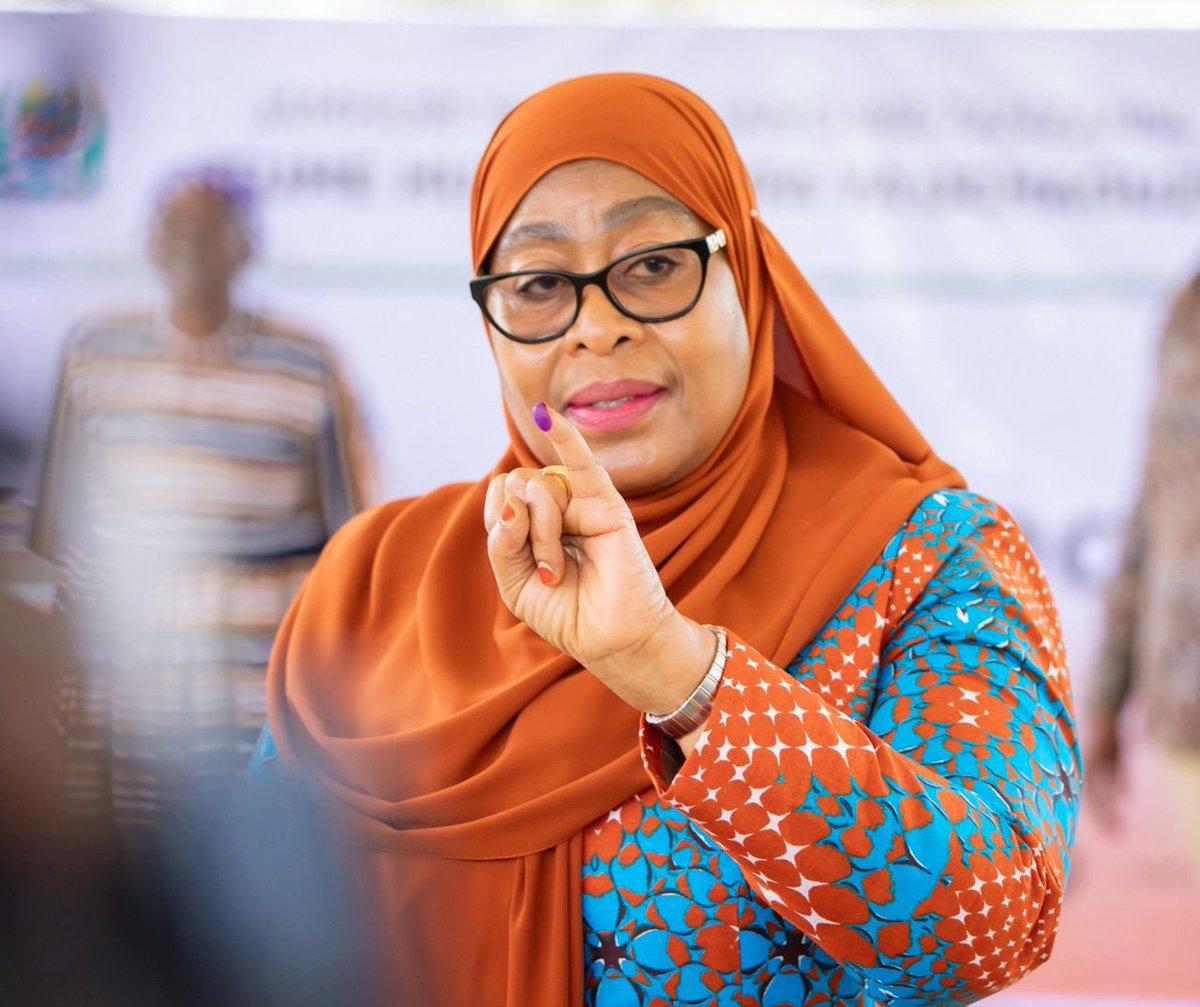
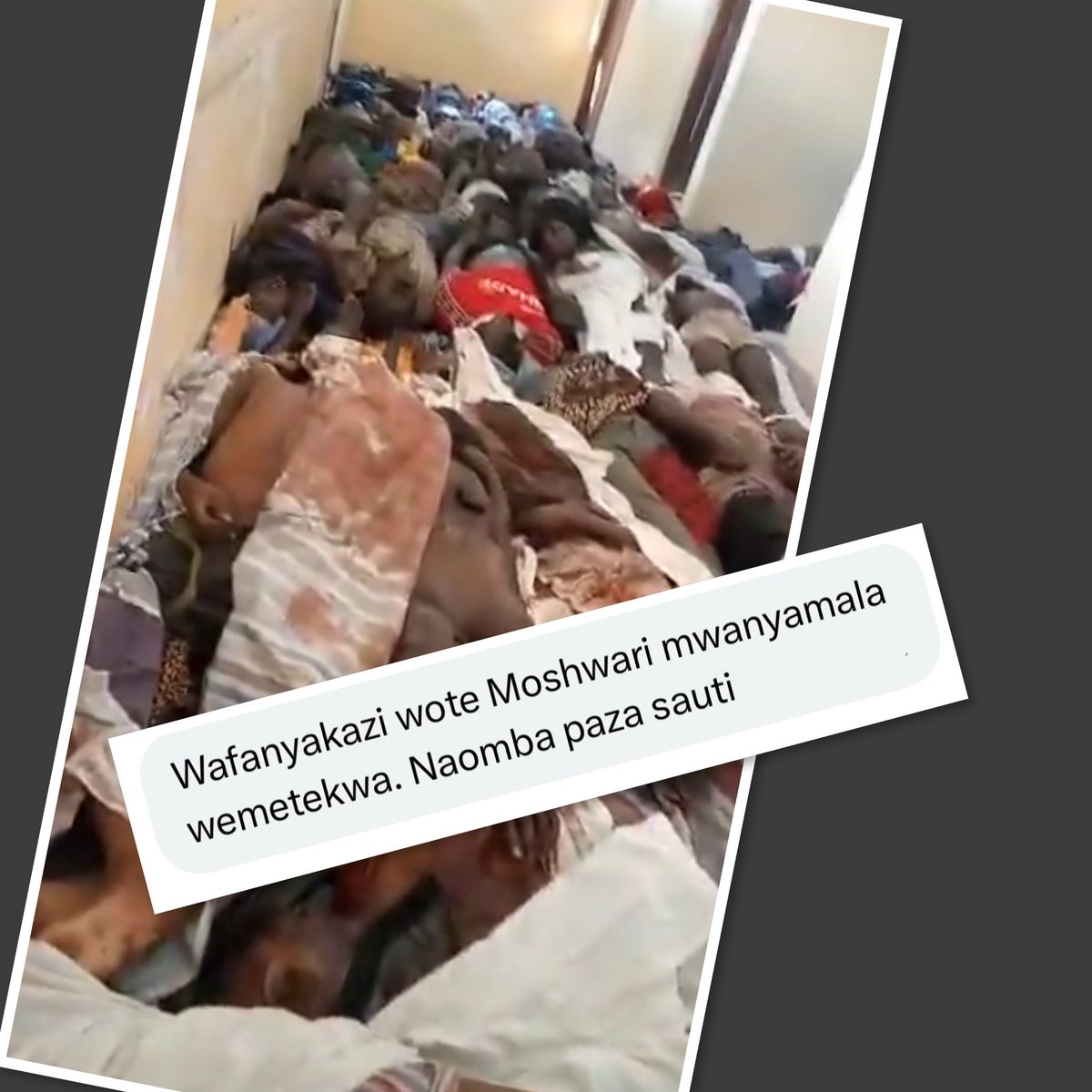
Murderous cabal of @SuluhuSamia has abducted medical staff of Mwananyamala mortuary and they are been held and tortured by the death squad to cover up the massacre!
@commonwealthsec@SGCommonwealth@LAZARUSCHAKWERA what the hell? The mediating team is sleeping soundly in a five star hotel while courageous health workers are torturef in order to cover up the massacre!? @UnitedNationsTZ@volker_turk @OHCHR_EARO @WGEID@antonioguterres@UN@AmnestyEARO@HRF@hrw@SFRCdems@SenateForeign@StateDRL@FCDOGovUK
We urgently need an internatuonal team on the ground and halt any financing of this illegitimate violent govt
#SamiaMustGo #TanzaniaMassacre
Hivi @jwtztaarifa mnataka tuamini kuwa tuna jeshi na tuko salama kwa haki hii?
Na nyie @association_mat hebu ingilieni kati! Tangazeni mgomo wasipoachiwa wenzenu! Na mgomo huu uanze mara moja! Hawa wahuni kwani wote wakiumwa na familia zao si zinakuja kwenu kutibiwa? Hakikisheni wanaelewa kuwa hawaishi in a bubble! Msiruhusu huu ufedhuli!
Utekaji komesheni @tanpol 🚮
The IMF can be sued. IMF is suable.
IMF cannot use corrupt crooks in government to trap Kenyans in debt.
Any debt that was borrowed out of the budget, without parliamentary approval and without passing through the Consolidated Fund,
Must not be paid by Kenyans.
We are not here to suffer servicing the lavish lifestyles of crooks in government.
#RutoMustGoNow #DrainTheSwamp
𝗨𝗡 𝗿𝗶𝗴𝗵𝘁𝘀 𝗰𝗵𝗶𝗲𝗳 𝗱𝗲𝗺𝗮𝗻𝗱𝘀 𝗽𝗿𝗼𝗯𝗲 𝗶𝗻𝘁𝗼 𝗧𝗮𝗻𝘇𝗮𝗻𝗶𝗮 𝗲𝗹𝗲𝗰𝘁𝗶𝗼𝗻 𝗸𝗶𝗹𝗹𝗶𝗻𝗴𝘀
November 11, 2025
Geneva
United Nations High Commissioner for Human Rights Volker Türk today urged investigations into the killings and other violations committed in the context of the 29 October elections in Tanzania.
This comes as reports emerged that bodies may have been taken by security forces to undisclosed locations, with many families unable to bury their loved ones.
Information obtained by the UN Human Rights Office from different sources in Tanzania suggests hundreds of protesters and other people were killed and an unknown number injured or detained.
The UN has been unable to independently verify the casualty figures owing to the volatile security situation and the Internet shutdown which followed the vote.
"Reports of families desperately searching everywhere for their loved ones, visiting one police station after another and one hospital after another are harrowing. I strongly urge the Tanzanian authorities to provide information about the fate and whereabouts of all those missing, and to hand over the bodies of those killed to their loved ones so that they can be given dignified burials," said Türk (pictured).
"There are also disturbing reports that security forces have been seen removing bodies from streets and hospitals and taking them to undisclosed locations in an apparent attempt to conceal evidence."
The UN High Commissioner for Human Rights urged the Tanzanian authorities to investigate these grave allegations of human rights violations, fully and transparently, and to hold those responsible to account.
He called once again for the unconditional release of all opposition figures arrested before the general election, including opposition Chadema party leader Tundu Lissu, and all other individuals who have been arbitrarily detained since election day.
It is reported that more than 150 people have been arrested since the vote, with the legal basis unclear. Many of them, including youths, have allegedly been charged with treason.
"It is essential that all those arrested or detained on criminal charges are promptly presented before a judicial officer, and can effectively contest the lawfulness of their detention. All those detained must be afforded the full range of due process rights guaranteed under international human rights law," said Türk.
#BREAKING: UN DEMANDS INVESTIGATION INTO KILLINGS LINKED TO TANZANIA’S OCTOBER 29 ELECTIONS
UN Human Rights office has called on Tanzanian authorities to investigate reports of killings and disappearances following the October 29 elections.
According to the statement released on Tuesday, 11 November 2025, UN sources allege that hundreds of protesters and civilians were killed following Tanzania’s October 29 elections, with many more injured or detained.
The UN Human Rights Office Chief, Volker Türk, says they received information from various sources inside Tanzania, but has been unable to independently verify the figures due to volatile security conditions and an Internet shutdown that followed the vote.
Türk described families searching for missing loved ones as “harrowing” and urged the government to disclose the whereabouts of the missing and return bodies for burial.
He also condemned reports of security forces allegedly removing bodies to undisclosed locations in an apparent effort to conceal evidence.
⚡🇧🇼🇹🇿Former Botswana President Ian Khama describes Tanzanian Samia Suluhu as ILLEGITIMATE PRESIDENT.
“The recent election in Tanzania and from what transpired, the killings around the election… I for once do not recognise the person who was inaugurated as the President of Tanzania. She is an illegitimate president.”
“It is totally unacceptable when an African leader, in order to stay in power, will resort to killing his or her own people. In order to stay in power, they will rig an election, as if they are God’s gift to their country."
"When you have a country with millions of people, for any leader to think they are the only ones who can be president is pathetic.”
Hey @SADC_News@_AfricanUnion
Kindly note that the crackdown in #Tanzania has continued including the cover up and executions
The fact that you want to continue as usual is making you accessory to a massacre - this is the time to act!
When the People of #Tanzania free the country soon from this fascist regime, we will remember the silence and acquiescence of our friends and neighbors
Do the right thing now before the crisis heightens!
The problem is y’all think I exaggerate yet I have been right from day One and warned y’all!
“African solutions for African problems” is looking more like “cover the a$$ of another African mass murderer” 🚮
We shall never forget!
#SaveTanzania #TanzaniaMassacre
Amnesty International has issued a statement declaring that more than 3,000 people have been kiIIed in Tanzania.
ICC should conduct an investigation, very urgently.
The horrific reports of human massacres emerging from credible sources in Tanzania are deeply shocking and heartbreaking.
Development partners who have been compiling figures from individual hospital reports now estimate that around 6,000 Tanzanians or more were slaughtered by Madam Dictator.
They report that Muhimbili National Hospital alone received around 800 bodies, a figure that underscores the sheer scale of this murderous tragedy.
There is now growing pressure on the International Criminal Court to open investigations into the massacre, which would mark the first step towards accountability for these horrific crimes.
The magnitude of the unfolding tragedy and the urgent need for regional and international attention are immediate.
The true scale of what happened has been concealed by the deliberate shutdown of the internet and the banning of Twitter, effectively silencing victims and restricting the flow of critical information.
The African Union, #AU, says in its report that Tanzania's🇹🇿 election "did not comply with AU principles, normative frameworks, and other international obligations and standards for democratic elections."
i. The environment surrounding the elections—before, during, and immediately after—was not conducive to peaceful conduct and acceptance of electoral outcomes.
ii. Certain voters were allowed to vote without their identities being checked on the voter register. These voters were also given multiple ballots to vote in full view of observers.
iii. In some other stations, ballot counts did not tally.
iv. There were some ballot stuffing at several polling stations, where voters were issued multiple ballots to vote, compromising election integrity.
v. During the counting, AU observers were asked to leave polling stations before the process concluded. In other cases, they were allowed only for five minutes at each polling station.
v.i There were several polling stations where only the presidential ballot box was set up. Not manned by political party agents, only having INEC officials.
vii. A total internet shutdown during the mid-stage of the elections compromised election integrity.
Preliminary statement of the Electoral Commissions Forum of SADC countries (ECF-SADC) on the general election of Tanzania is again scathing and correctly harsh.
The issues identified in the Preliminary Statement include several serious concerns that question the credibility, transparency, and fairness of the polls.
Here are the key negative findings:
1. Incomplete and Superficial Electoral Reforms.
•Opposition parties complained that reforms were only partially implemented, as no constitutional amendments were made to back them up.
•There is no legal avenue to challenge presidential election results, which the report calls a denial of electoral justice .
•The addition of the word Independent to INEC’s name was described as symbolic, with no substantive independence guaranteed, since the appointments of INEC and ZEC members were still made under old laws.
2. Lack of Independence and Neutrality
•Continued use of government officials in electoral administration raised doubts about neutrality and credibility, especially after disputed 2024 local elections.
•Stakeholders viewed INEC’s relationship with the ruling establishment as too close for confidence in impartiality .
3. Restrictions and Limited Transparency
•Observer independence was restricted: INEC required observer missions to submit preliminary statements for approval before public release, which undermined independent observation.
•Observer teams faced limited access to stakeholders and data restrictions, compromising observation quality and independence.
•Internet shutdowns on polling day and a nationwide curfew were imposed without notification, which disrupted communication, curtailed observation, and halted monitoring in affected areas like Dar es Salaam and Dodoma .
•Media visibility was low, especially on the mainland, limiting public transparency of the process.
4. Operational and Administrative Failures
•Polling agents from opposition parties were often not sworn in or accredited due to “administrative delays,” reducing representation.
•Inconsistencies in voting and counting procedures were observed—some polling stations had differing rules on ballot secrecy and closing processes.
•Some polling agents did not understand their roles, and polling staff training gaps were evident.
•Observers were barred from fully witnessing the counting process in Zanzibar (limited to five minutes).
5. Digital and Information Suppression
•Access to social media platforms (X/Twitter, Jamii Forums) remained restricted, hampering digital campaigning and freedom of expression.
•Widespread misinformation and disinformation were noted, with INEC and ZEC having no adequate mechanisms to combat them.
6. Security and Political Tension
•The report mentioned protests and disruptions in Dar es Salaam and other areas.
•The unannounced curfew from 18:00 to 6:00 and internet blackout created an intimidating environment and compromised election transparency .
7. Legal and Institutional Weaknesses
•The absence of clear legal procedures for resolving presidential election disputes remains a major gap.
•Unresolved court cases, including the disqualification of the ACT-Wazalendo presidential candidate, were flagged as potentially compromising the election’s legitimacy.
8. Unequal Political Playing Field
•INEC’s logistical support to candidates (vehicles, fuel cards) was seen as positive but did not address deeper resource imbalances between the ruling party and opposition.
•In mainland polling stations, there was a disproportionate presence of one political party, creating the perception of bias.
Summary of Core Themes
•Partial and cosmetic reforms.
•Weak institutional independence.
•Limited transparency and observer freedom.
•Internet blackout and curfew.
•Administrative bias and training deficiencies.
•Restriction of opposition and digital rights.
•Lack of legal recourse for presidential disputes.
Tanzania’s main opposition party on Wednesday accused police of disposing of the bodies of hundreds of demonstrators killed in a crackdown following a disputed election that incumbent President Samia Suluhu Hassan won by a landslide. https://t.co/i4vFMdRqf8
Protests in Cape Town, South Africa calling for the arrest and prosecution of Despot Samia for committing a massacre in Tanzania. #TanzaniaMassacre#SamiaMustGo
Kenya's 2007 post-election violence dragged on for two months, claiming over 1,200 lives. Yet, under Samia Suluhu Hassan, more than 1500 people have been killed in just 3 days. Calling for the ICC is too lenient...we need something far harsher and more severe to hold her accountable.