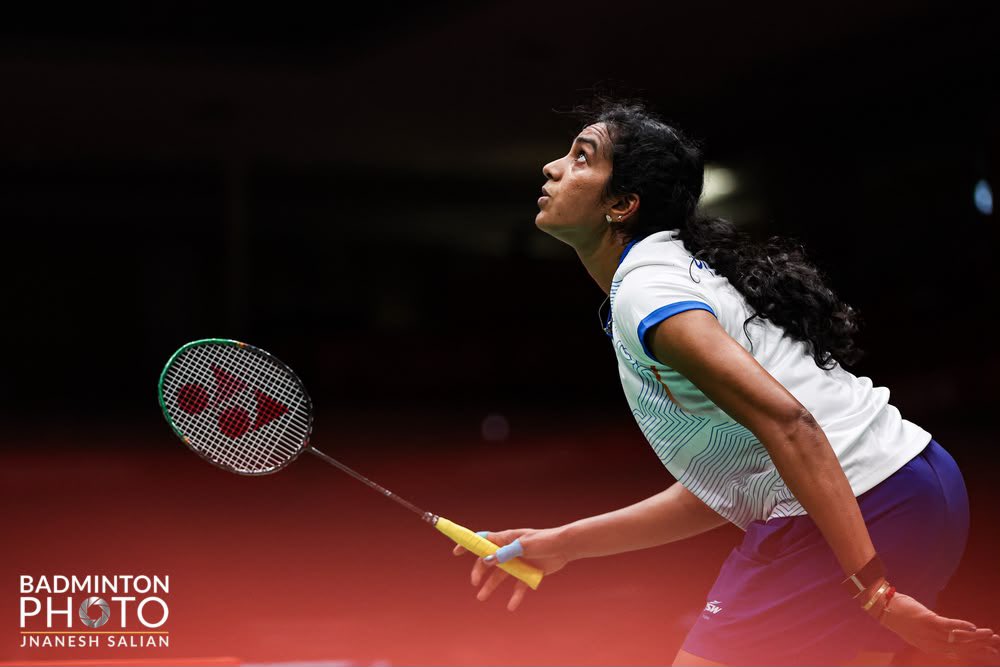
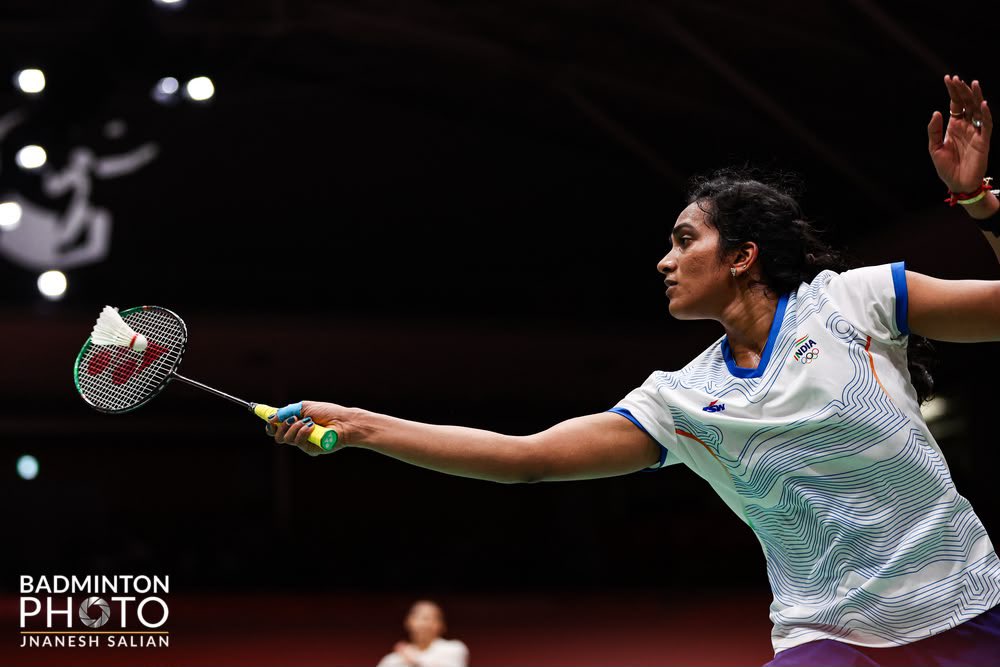
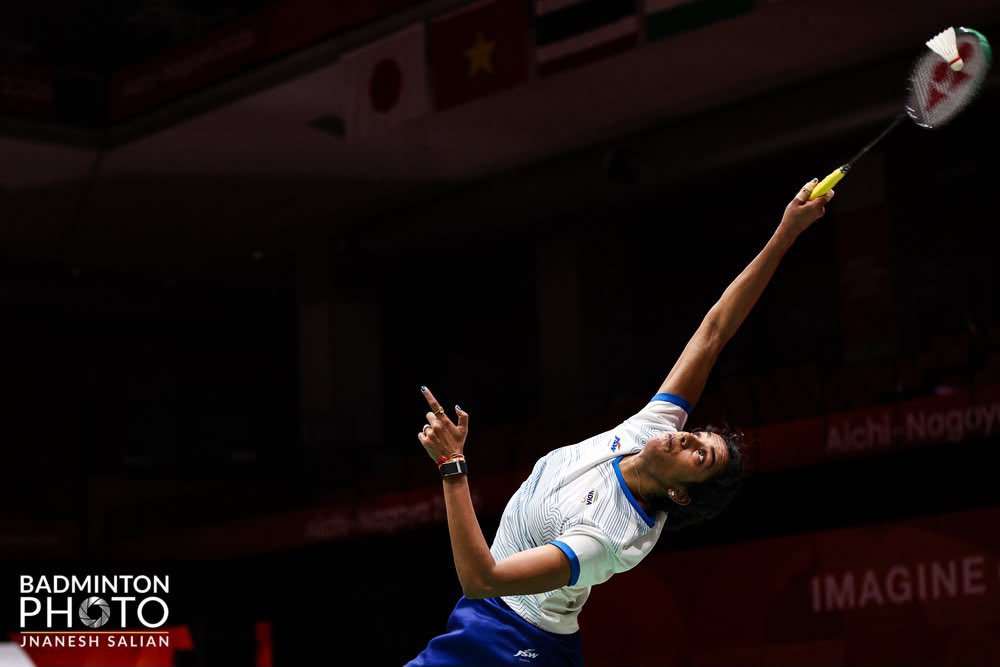
I needed a little time to put this into words. My Asian Games campaign is over, and I’m hurting. Three points from closing out that quarterfinal. I keep coming back to those three points. Like in China, long, demanding rallies at the most critical moments turned the match. I had my chance. Letting it slip hurts.
Three matches in 18 hours. Back at 3 a.m., out again at 8:30 a.m. It took a toll. But after a camp that gave me every reason to believe, I wanted so much more. My team and I are already working on closing out those moments. We will fix it.
I’m hurting, but that’s okay. I’m glad it still means enough to hurt this much. I still want this. I still bring all of myself to that court. That feeling keeps me going.
There’s room for pride, too. From my first Asian Games in 2014 to my fourth now, twelve years of giving everything for India. I want to let myself feel that. One painful result cannot define a journey that means so much.
To everyone who stayed up, cheered and believed: I wanted those last three points for us, too. Thank you for standing beside me. I’ll go again. 🇮🇳
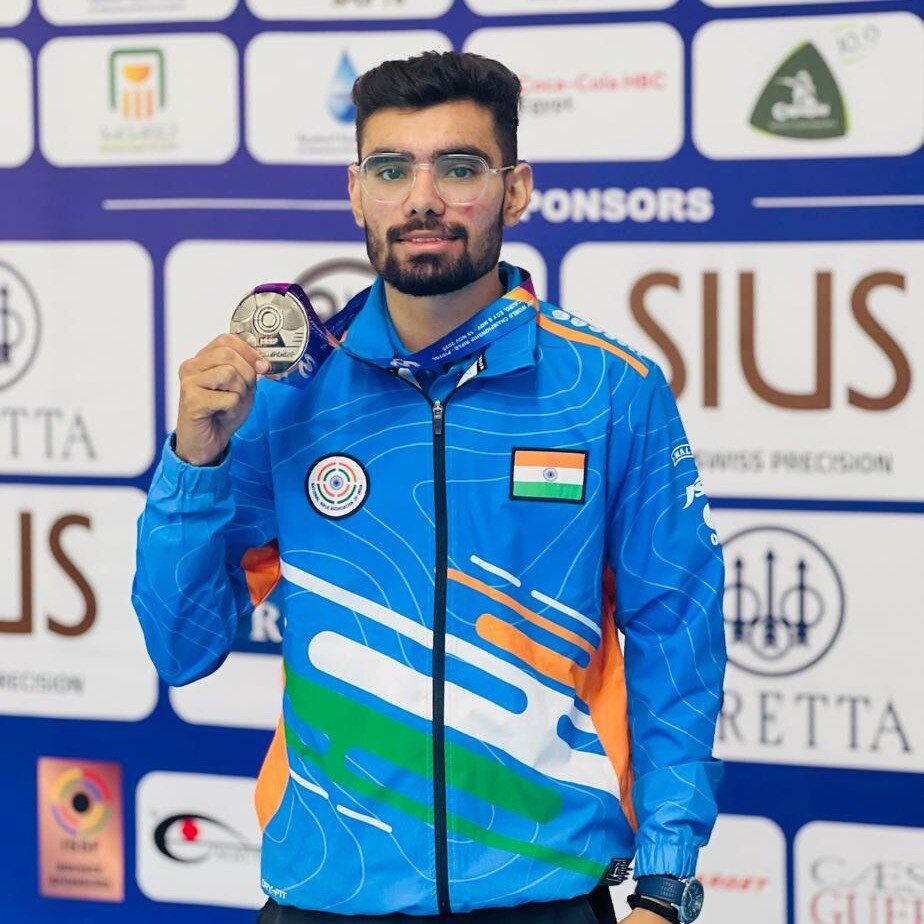
10M AIR PISTOL QUALIFICATION LIVE
Kamaljeet - 7th ( Very slim chances)
Aakash - 9th ( Won’t Qualify ❌)
Kedarling - Yet to start ( Part of Relay 2)
Team Rank - 3rd
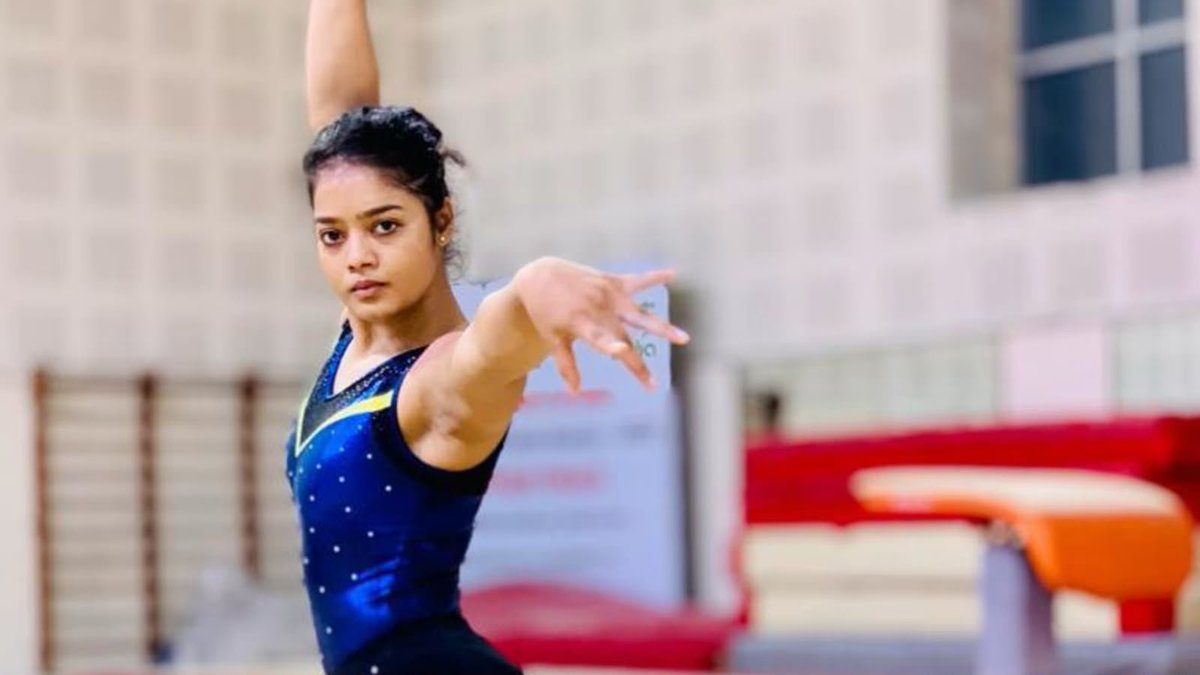
Pranati Nayak, India’s lone gymnast at the Asian Games has now entered the vault finals. Despite being right-handed, the 31-year old does all her every day stuff with her left hand at home, right from filling bottles, drinking water to everything else! She uses her right hand only during training and lets it rest otherwise, in order to avoid any chance of injury!
#AsianGames2026
In response to the deteriorating security situation, 🇨🇭 has three objectives: strengthen resilience, improve protection and enhance defence capabilities. The Federal Council has adopted Switzerland’s Security Policy Strategy 2026. https://t.co/VzEujnJzNr @vbs_ddps
BREAKING: American Airlines, United Airlines and Southwest Airlines are now cancelling certain flights, scaling back flight capacity and adjusting schedules due to the sharp surge in fuel costs, with American Airlines saying the latest jump in fuel prices alone is adding about $1 billion to its fourth-quarter costs, per Reuters.
Southwest has already cut its planned 2026 capacity growth roughly in half and could trim further, with its CFO saying that if fuel is "higher for longer," cutting capacity is the "natural response." United said yesterday it will cancel December flights and could cut into the first quarter and 2027, with its CFO saying "we are not flying to maximize market share."
US jet fuel is now at $4.70 a gallon, up 108% since the war began.
Well said!
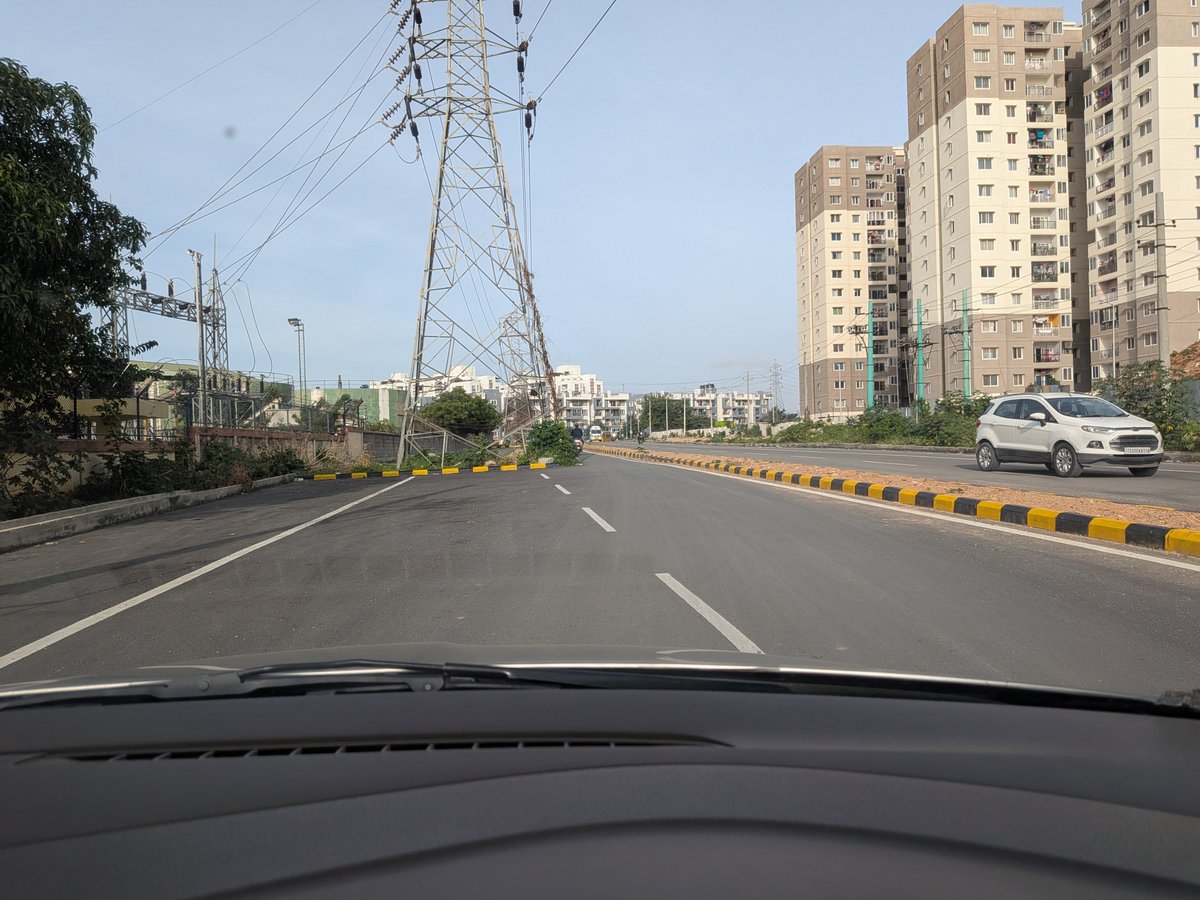
Btw, Bangalore is the first city in the world to get electricity, transmitted over a long distance
While the rest of the world was debating on whether it could be done or not and if it should be AC or DC...
Our engineers went ahead, picked AC, solved all the structures & heating problems with pulling lines over long distances, and transmitted it over 150 kms in one shot! :)
We usually only acknowledge the "inventors" of various technologies and tend to forget all the tech people who actually pick up the technology, figure out how to use it, and make it work!
Happy Engineers' Day to all my fellow engineers!
Today, we celebrate the birth anniversary of Bharat Ratna Sir Mokshagundam Visvesvaraya - one of India's greatest engineers, nation-builders, and visionaries.
Long before "innovation" became a buzzword, the Kingdom of Mysore was demonstrating what engineering-led governance could achieve. Under enlightened rulers like Krishnaraja Wadiyar IV, and with Sir Mokshagundam Visvesvaraya as the guiding force, Mysore became India's laboratory of modern engineering and industry.
A few reminders of that legacy:
Bengaluru became the first city in India to be electrified through hydroelectric power from Shivanasamudra.
Minto Ophthalmic Hospital in Bengaluru emerged as India's first dedicated specialty eye hospital and one of Asia's oldest ophthalmic institutions.
The Indian Institute of Science (IISc) was made possible through the vision and generous patronage of the Mysore Kingdom alongside Jamsetji Tata.
HAL was established in Bengaluru in 1940 with the support of the Mysore government—its origins belong to Mysore's industrial vision, not to the Nehru era.
Sir Mokshagundam Visvesvaraya believed that engineering was not merely about building bridges, dams, or factories. It was about building a nation - through planning, discipline, science, and public service. From the Krishna Raja Sagara Dam to flood protection systems and industrial development, his work still shapes millions of lives.
As engineers, we inherit that tradition: to solve problems, create value, and leave the country stronger than we found it.
Here's wishing every engineer civil, mechanical, electrical, electronics, chemical, aerospace, software, and every other branch - a very Happy Engineers' Day.
May we build with the same integrity, precision, and vision that Sir M. Visvesvaraya stood for. 🇮🇳
For those who haven't watched Shakti (1982), it might be difficult to understand why this is one of the all-timer emotional scenes.
There's context to it. You're looking at a contentious father-son relationship seeded from a traumatic childhood incident involving the son. Now, years later, at his mother's funeral, the son feels momentary empathy for his father but the lifelong anger and grudge he has held against him, doesn't let go, even at this tender moment. It's an emotional mess for the son. The father can sense that.
All, conveyed without a single spoken word. This is what you get when you have two tall actors, two legendary writers and a great director, at the height of their powers.
That we watch this in silence & merely outrage on social media, with the government of India not pushing (visibly at least) the Jehadi govt of Bangladesh, says a lot about us as a nation, civilisation and people sadly !
Every Indian should know this one, and here is why.
Five students from IIT Madras just got a patent granted by the toughest patent office in the world. :)
Now here is what they actually invented.
See, satellites look at Earth two ways.
The first is a normal camera, just a very good one.
Sharp, full colour, easy to read. The catch is it needs sunlight and clear sky. Clouds block it. Night blocks it. Smoke blocks it.
Over India during the monsoon, it is basically blind for months.
The second is radar.
It fires radio waves at the ground and reads the echo. Radio waves pass straight through cloud, smoke and darkness, so radar works at 3 am in heavy rain.
But the picture it gives you is grey and strange. It shows shape and texture, not colour. Reading it takes a lot of training.
So one gives you a beautiful image you often cannot capture. The other gives you an image you can always capture but struggle to understand.
The fix obviously is to combine them.
People tried for years and it did not work well, for a simple reason.
The two images came from different satellites. The camera photographed a field at 10 in the morning from one angle. The radar satellite scanned it at 4 in the afternoon from a different angle. Lay one over the other and nothing lines up.
Different time, different position, different view. You are not looking at the same moment.
GalaxEye's patent covers a way to put both sensors on one satellite and make them fire together. Same instant, same patch of ground, same angle.
The invention is the architecture that keeps the two locked in.
The same technology was already patented in India. Now the US has recognised it too. The company says this makes it the first Indian startup to hold a US patent for satellite imaging technology.
Obviously there are plenty of applications for that technology like defence radars to see through camouflage and tree cover.
In farming, the technology will allow us to watch crops during monsoon, exactly when normal satellites cannot see.
Interestingly, the idea came from a real problem. Suyash Singh was assessing wildfire damage in California using satellite data.
The camera images were useless because of the smoke. The radar images were available but were hard to interpret.
Now you understand why the solution is simply genius. :)
GalaxEye was founded in 2021 by five IIT Madras alumni. Suyash Singh, Denil Chawda, Kishan Thakkar, Pranit Mehta and Rakshit Bhatt.
They met while building Team Avishkar Hyperloop.
In 2019 that team was the only Asian entry to reach the finals of SpaceX's global hyperloop competition. They built India's first self propelled hyperloop pod.
Then they decided to build satellites instead. Incubated at IIT Madras, based in Bengaluru, backed by Mela Ventures, Speciale Invest, ideaForge and Rainmatter.
On 3 May this year they launched Mission Drishti on a Falcon 9. The world's first OptoSAR satellite. At around 190 kg it was India's largest privately built Earth observation satellite at the time.
So, five people who were students seven years ago had an original idea, patented it in India, built the hardware, flew it on a Falcon 9 and then got the invention recognised by the US patent office.
Amazing! 🇮🇳
India has moved from Production Linked Punishment to Production Linked Incentives.
There was a time when companies would be penalised for producing beyond prescribed limits! That mindset of the Licence Raj discouraged enterprise, production and job creation.
Today, the approach is completely different. We incentivise production, encourage ambition and trust our entrepreneurs.
India has moved from controlling enterprise to enabling it.
Lt Gen Sagat Singh is one of India’s greatest war generals.🪖🎖
Bold vision. Innovative leadership. Still the stuff of legend.
Do watch this video to learn more.
Sharing some pictures from his memorial felicitation last year. 👇
𝐂𝐮𝐞 𝐭𝐡𝐞 𝐭𝐡𝐞𝐦𝐞. 🎬
This map doesn’t open on the Seven Kingdoms. It opens on a rising India. 🇮🇳
Every bridge over a river, every tunnel through a mountain, every road to the last village feels like the opening credits of a nation building its future.
𝐍𝐨 𝐈𝐫𝐨𝐧 𝐓𝐡𝐫𝐨𝐧𝐞 𝐡𝐞𝐫𝐞. 𝐎𝐧𝐥𝐲 𝐚 𝐒𝐞𝐯𝐚 𝐓𝐞𝐞𝐫𝐭𝐡, 𝐰𝐡𝐞𝐫𝐞 𝐩𝐨𝐰𝐞𝐫 𝐦𝐞𝐚𝐧𝐬 𝐬𝐞𝐫𝐯𝐢𝐜𝐞 𝐚𝐧𝐝 𝐭𝐡𝐞 𝐭𝐡𝐫𝐨𝐧𝐞 𝐛𝐞𝐥𝐨𝐧𝐠𝐬 𝐭𝐨 𝐁𝐡𝐚𝐫𝐚𝐭. 🇮🇳
#NewIndia #ViksitBharat #IndiaIndependenceDay
When India accidentally wiped out its vultures, half a million people died in five years.
The bird doing zoomies in this video runs the most extreme digestive system in the animal kingdom. Vulture stomach acid sits near pH 1, strong enough to destroy anthrax, rabies, and botulism in the carcasses they eat. A flock strips a cow to bone in about 45 minutes.
India had 50 million of them. Free sanitation at national scale, in a country where religious custom means most cattle die natural deaths and every dead cow becomes a carcass someone has to deal with.
Then the patent on diclofenac expired in 1994. Farmers started using the cheap painkiller on livestock. Trace amounts left in a carcass cause kidney failure in vultures. Within a decade, 50 million birds fell to a few thousand. The fastest collapse of any bird species since the passenger pigeon.
The carcasses didn't disappear. Feral dogs took the vultures' place and brought rabies with them. Rotting remains leached into waterways. In districts where vultures once thrived, human death rates rose more than 4 percent. Economists at Chicago and Warwick put the toll at 100,000 extra deaths a year and $69 billion in annual damages.
So yes, the goofy bird sprinting down the walkway is adorable. It's also a disease firewall that evolution spent millions of years building and one generic painkiller nearly erased in ten.