Finally she makes her offer.
“My villa in Lonavala.”
“When?”
“This weekend.”
After a pause, Aarav nods.
“All right.”
The drive is peaceful.
Clouds hug the hills.
The air smells of fresh rain.
They park near the top and walk hand in hand along a narrow trail near the fort.
“It is beautiful,” Naina whispers.
“So peaceful.”
She leans toward him and kisses him.
Aarav does not react.
A few moments later he stops.
“My shoelace is loose.”
“You are always slowing down,” she jokes as she continues walking.
Several steps later she turns around.
Aarav is standing perfectly still.
His smile has disappeared.
His eyes look strangely familiar.
Then he slowly raises his hand and adjusts his hair.
“Yes,” he says quietly. “I still use a hair patch.”
Naina feels her heart stop.
He takes out his phone and starts a video call.
The screen lights up.
It is Zoya.
Aarav looks directly into Naina’s terrified eyes.
“Siya… Would you like to see Zoya for one last time?
2/2
THE LAST LILY
Year: 2050.
Everyone in Mumbai’s elite circles knows Naina Kapoor.
She is forty five, elegant, wealthy, beautiful and impossible to ignore. She lives in a glass penthouse overlooking the sea with her twenty year old daughter, Zoya, who studies at one of the country’s most expensive colleges.
Naina got divorced some years ago. The settlement made her extraordinarily rich. She never works, yet money flows freely.
Her weekends belong to champagne, designer clothes, luxury cars and endless parties.
She also owns a beautiful villa in Lonavala. Her friends joke that no one is invited there twice.
“Life is too short for permanent people,” she often laughs.
Every few months there is a new man beside her.
One Friday evening her penthouse glitters with lights.
Music echoes through the rooms. Crystal glasses clink. Expensive wine flows without pause.
“Naina, you never age,” laughs Rhea.
“I do not have time to grow old,” Naina replies, lifting her glass.
Vikram, one of her regular party friends, offers her a small silver box.
“The usual?”
She smiles.
“You know me too well.”
She casually slips a tiny pill into her mouth before finishing another glass of wine.
Nobody appears surprised.
Across the room Zoya quietly enters the party area”
“Mom.”
Naina barely looks.
“Oh… you are back.”
“You promised we would have dinner.”
“Tomorrow.”
“You said that yesterday.”
“I am busy.”
Zoya sighs.
“You have had three parties this week.”
“They are important.”
“They are important to you.”
Without waiting for an answer, Zoya walks to her room.
Rhea watches silently.
“Your daughter is very sensible.”
Naina shrugs.
“She worries too much.”
Around midnight another guest whispers to a newcomer.
“She seems wonderful.”
Another woman answers quietly,
“She has a past. Trust me, you are better off never knowing it.”
Naina overhears them.
She smiles without emotion.
“Everyone has a story.”
Weeks later she attends a luxury fashion launch.
There she notices a young man speaking with photographers.
Confident.
Handsome. Rugged. Charming
His name is Aarav.
He is twenty five, comes from a wealthy family and hopes to become a famous model.
Naina introduces herself.
“I have seen you before,” she says.
“So have I,” Aarav replies politely looking deep into her eyes.
“You should call me sometime.”
“I will think about it.”
He walks away.
For the first time in years someone ignores her.
That interests her even more.
She somehow obtains his number.
The messages begin.
Naina: Coffee?
No reply.
Two days later…
Naina: You are difficult.
Aarav: Busy.
Gradually the conversations become longer.
He remains polite but distant.
Then one evening he finally agrees to meet.
The restaurant overlooks the Arabian Sea.
Aarav arrives carrying a single White Lily.
“For you.”
Naina stares at the flower.
“How do you know lilies are my favorite?”
“I guessed.”
She smiles wider than she has in years.
When the waiter arrives Aarav orders a rare French wine.
Naina laughs in disbelief.
“That is exactly what I drink.”
“Really?”
“Our tastes are identical.”
Aarav simply smiles.
“You hardly talk,” she says.
“I prefer listening.”
She mistakes his silence for mystery.
Over the next few weeks they meet often.
She speaks endlessly about luxury holidays, expensive watches, famous people, and her glamorous life.
“I do not repeat clothes,” she proudly says one evening.
Aarav nods.
“You enjoy attention.”
“Who does not?”
“You seem afraid of silence.”
She laughs.
“Silence reminds people of themselves.”
1/2
Indian worker Vipin Kumar has been awarded honorary citizenship by the city of Craiova, Romania, after he jumped into an icy lake and saved the life of a 5-year-old girl. 🇮🇳🇷🇴
For nearly 30 minutes, he held the child above freezing water until rescuers arrived.
This is the side of Indians the world rarely sees in headlines: courage, sacrifice, compassion and humanity.
Yet stories like this seldom receive the attention that anti-India narratives do. No coverage from Western media outlets.
As India's envoy noted, Vipin's actions embodied the spirit of Vasudhaiva Kutumbakam "The World is One Family." ❤️
Utility State
A State preserved inside a dominant power’s strategic calculus, with its utility value overriding its conduct.
A thread on how the US sustains, insulates & legitimises Pakistan, its Utility State of over 50 years.
@FuturisIndia
1/
https://t.co/uv7JvqH2w7
1/13
🇮🇳 CBSE OSM “Scam” = Manufactured Outrage
Rahul Gandhi & Kejriwal grabbed a 17-year-old blogger and turned routine procurement paperwork into a “corruption conspiracy.”
I read the tender, the bid documents, the penalty clauses and the evaluation records.
Time to destroy this narrative. 🧵
At a stopover in Hongkong, the second leg of the flight to New Zealand got cancelled due to a technical failure. Some of the Indian passengers crowded around the airline desk. And soon the arguments for preferential treatment poured in.
A very stylish woman, from Delhi, said, "I flew Premium Economy so you must give me priority and if possible upgrade me free to business class."
She was offered Economy Class. Her ticket to NZ was a back breaking 36-hour detour via Fiji-Melbourne. She will take forever to reach NZ.
Another guy said, "I have a business meeting in Auckland so it is very important for me to get there quickly."
He got Economy Class and a detour via Rarotonga or something. That's a 33 hour trip.
The very patient and polite Hongkong guy at the desk then offered me something similar with a 30+ hour detour via Fiji. I said, "Look, I'm really tired. I don't mind waiting in Hongkong but please put me on a direct flight to NZ."
He said, "Okay, please wait. I'll call you soon."
After an hour or two, after the other passengers with "urgent" requirements had been sent off to their gates, the guy comes to me and said, "Your flight will be at 10 am tomorrow. In the meantime you can stay at the airport hotel. Here's your hotel and 3 meal vouchers. The hotel is just 100 metres away."
I thanked him and walked to the hotel. My room wasn't a room - it was like a luxurious apartment, with a separate lounge, massage room, bedroom and direct pool access, plus too many other facilities to list here. I opened my hotel booking app and looked for the rates. It was Rs 68,000 per night. The year was 2017.
Always be at your best behaviour overseas. You are your country's ambassador.
In the heavy, rain-drenched monsoon of 1898, inside a cramped, suffocating laboratory in Calcutta, a young Indian scientist was hunching over a brass microscope, peerlessly dissecting the stomach wall of an Anopheles mosquito. The history books loudly claim that Ronald Ross single-handedly unlocked the global mystery of malaria transmission, a feat that won him the 1902 Nobel Prize but history completely deleted the name of the lone Bengali partner who actually executed the dangerous fieldwork, navigated the native languages & mapped out the killer’s lifecycle.
At the turn of the 20th century, Malaria was an absolute, undisputed global slaughterer. It was hollowing out the British Empire's forces, decimating entire tropical coastlines & killing millions of citizens annually. The Western world knew the disease existed, but they had absolutely no idea how it traveled. The leading theory was that it was contracted by breathing in "foul marsh air" (hence mal-aria).
Ronald Ross, a British military doctor stationed in India, was trying to prove a radical counter-theory: that mosquitoes were carrying the parasite. But Ross hit an absolute wall. He was culturally isolated, could not effectively communicate with the local populations to trace outbreak maps & desperately lacked the precision-dissection skills needed to harvest wild mosquito vectors w/o destroying the microscopic evidence.
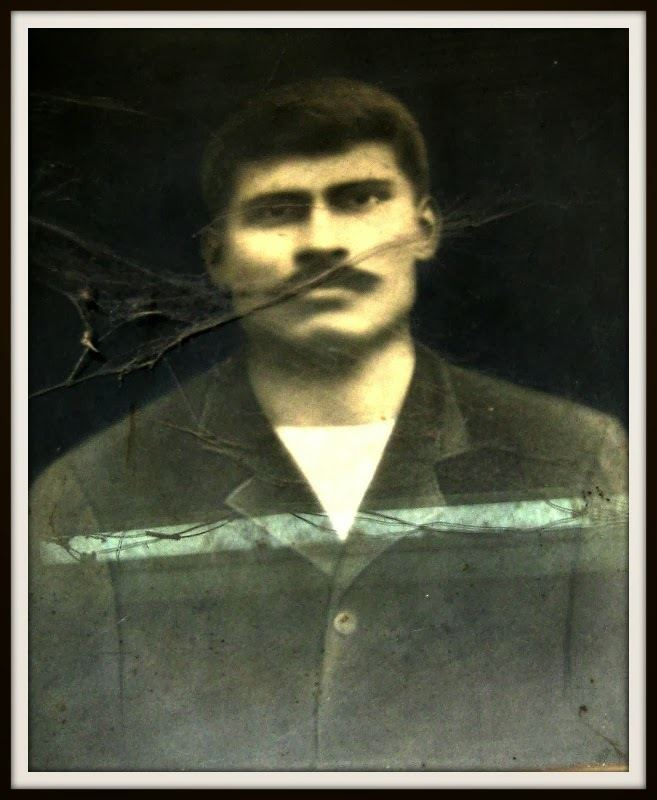
Enter Kishori Mohan Bandyopadhyay. Born in 1877 into a modest family of educators, Kishori Mohan graduated in science from Presidency College with flying colors. Driven by a fierce, silent desire to save his country from the pestilence, he joined Ross in 1898 as his primary research partner & lab assistant.
Kishori Mohan was the true mechanical engine of the operation. While Ross conceptualized, Kishori Mohan took to the mud-slicked, malaria-infested paths of Bengal. Armed with nothing but glass tubes & raw courage, he manually trapped live mosquito specimens from contaminated drains, swamps & stagnant ponds. Back in the lab, it was Kishori Mohan’s steady, artistic hands that mastered the hyper-delicate art of dissecting the insect’s microscopic midgut under primitive lenses.
In a breathtaking breakthrough, he successfully isolated the malarial oocysts maturing inside the stomach wall of the Anopheles mosquito. He proved the transmission cycle. He handed the British establishment the definitive proof that changed global public health forever.
When the 1902 Nobel Prize in Physiology/Medicine was announced, Ronald Ross was awarded the singular glory, becoming an international icon. Kishori Mohan’s name was completely omitted from the global prize registry. While the British Viceroy, Lord Curzon, sheepishly acknowledged the oversight by awarding him King Edward VII's Gold Medal in 1903, the global historical ledger effectively wiped Kishori Mohan from the canvas.
Undeterred by the institutional betrayal, he spent the rest of his life building the Anti-Malaria Cooperative Society, manually clearing drains & distributing mosquito nets to poor villages. Today, his descendants have scattered across generations, completely unaware that the blood of the man who literally helped map out the defense against the world’s deadliest parasite flows in their veins.
The grand halls of Stockholm still echo with the names of the imperial pioneers who claimed the treasures of science & the medals they wore have turned into cold museum exhibits, yet every single time a modern physician prescribes a life-saving antimalarial tablet, the silent ghost of Kishori Mohan Bandyopadhyay still guides the prescription, proving that while an empire can steal the medal, they can never pocket the blood, the sweat & the soil that actually conquered the plague.
It must have been around 2003–04. We were at a beach resort in Langkawi, Malaysia.
Most mornings, my husband, our young son, and I preferred a leisurely breakfast on our deck, but that day we had booked a six-seater speedboat for snorkelling at a nearby island, so we headed to the resort’s breakfast area instead of waiting for room service.
Years of travel teach you small tells. In a resort breakfast area, you can often identify the Europeans, particularly the British and Australians, not by accent, but by their plates: generously, almost anxiously loaded, as if the concept of ‘all you can eat’ might be revoked without notice.
One particular man, in shorts and flip-flops, his plate already piled high with fruit, bakery items and cereals, seemed in a tearing hurry.
My husband stepped aside, making an exaggeratedly polite gesture - please, go ahead.
The man did. Without a glance, without a word of thanks, he moved ahead and loaded his plate even further.
Back at our table, my husband simply rolled his eyes.
At the jetty, as we boarded the speedboat, we found ourselves face to face with the same man and his partner.
And then it began. My first and only experience of passive-aggressive racism.
It started small. As the boat lurched and I slid along the bench, I let out an ‘oops!’
After that, every time the boat swayed, jolted, or a splash of water hit us, he echoed it back. Mocking, exaggerated, and unmistakably deliberate.
Then came the insinuation. Had we opened their bag when they returned to the boat a few minutes after us post-snorkelling? The absurdity of it was almost surreal.
The boat driver, a big, burly Malay who had barely spoken till then, intervened quietly but firmly. Neither he nor we had touched their belongings.
By the time we reached the anchoring point late afternoon, the couple disembarked with little more than a dismissive wave to the driver.
As we got off, he turned to us, apologised on their behalf, and offered us a complimentary tour the next day.
We took it.
That morning was full of fun and relaxed and it helped wash away much of the sourness from the day before.
So yes, there are all sorts.
We Indians, for our part, are not without our own excesses.
We are noisy, often conducting phone calls in permanently activated long-distance mode. We share food enthusiastically, across aromas and consistencies.
Our children develop a special public whine precisely when denied something they have been told not to eat.
And there is almost always an obliging uncle, aunt, or didi ready to plead their case. Entirely human, but also very public.
Every nationality comes with its own idiosyncrasies and oddities. Taken together, they form the texture of travel.
And travel, after all, is also about choice. How you plan it, where you place yourself, and what you seek from it. You can lean into the mix or curate your distance.
When it turns embarrassing, as it sometimes does, you can simply step aside. Observe, disengage, move on.
You don’t have to claim ownership of everything that looks like you.
Passive aggressive racism is so irksome precisely because it's hard to respond to without it seeming like an over reaction. There was this experience I had in a small one horse town outside Sydney where I had gone to buy a sweater. The shopkeeper kept making jibes 1/3
Vasai was called as Bacaim during Portuguese era, belonged to what was called Provincia De Norte( Northern Province), an agriculturally rich region with crops of rice, betel nut, sugarcane. It was a major trading center from long. Around 1530, Bacaim was burnt down by the Portuguese army captain António da Silveira, forcing the ruler of Thane, to surrender the islands of Mahim and Bombain.
However Bacaim was still under the rule of the Gujarat sultan Bahadur Shah. With Diu being strategically important, they attacked Bacaim then under the Governor Malik Ayaz, and managed to capture it rather easily.
Bahadur Shah was forced to sue for peace, and on 23 December 1534, he signed the Treaty of Bassein with the Portuguese, ceding Bacaim, along with Salsette, Mahim, Worli, Mazgaon, Sion and Vadgaon.
Nuno Da Cunha appointed his own brother in law Garcia De Sa, as the first Governor there in 1536 and the foundation for the fort was laid in 1538. Under Portuguese ruler Bassein( Vasai) became a major center for the Portuguese in the Konkan, as they established themselves.
The fort had around 10 bastions named Cavallerio, Nossa Senhora dos Remedios, Reis Magos Santiago, São Gonçalo, Madre de Deos, São Joaõ, Elefante, Saõ Pedro, São Paulo and São Sebastião. Of these São Sebastião was the most important, also called the Porta Pia or “Pious Door”, the main entrance. It had two main gateways Porta do Mar facing the seaside, and another was Porta da Terra. 90 pieces of artillery and 70 mortars along with 21 gun boats each carrying 16 to 18 guns defended the fort.
With the arrival of St. Xavier in 1548, rampant conversions to Christiaity also occurred. However Bassein was struck by a series of disasters, first it was hit by a deadly cyclone in 1618, that devastated the city. In 1674 Arab pirates raided it, indulging in large scale massacre, looting. Also with the British, getting Bombay, Bassein lost it’s importance.
The Portuguese rulers were notoriously intolerant, with forcible conversion to Christianity, discrimination against Hindus. Bassein was one of the places that bore the brunt of the Portuguese Inquisition on the West Coast.
The religious intolerance of the Portuguese rulers, the atrocities during the Inquisition, the forcible conversions to Christianity, alienated most of the people in Bassein, who invited the Marathas to attack and take possession leading to battle of Vasai, that saw the Marathas securing this fort.
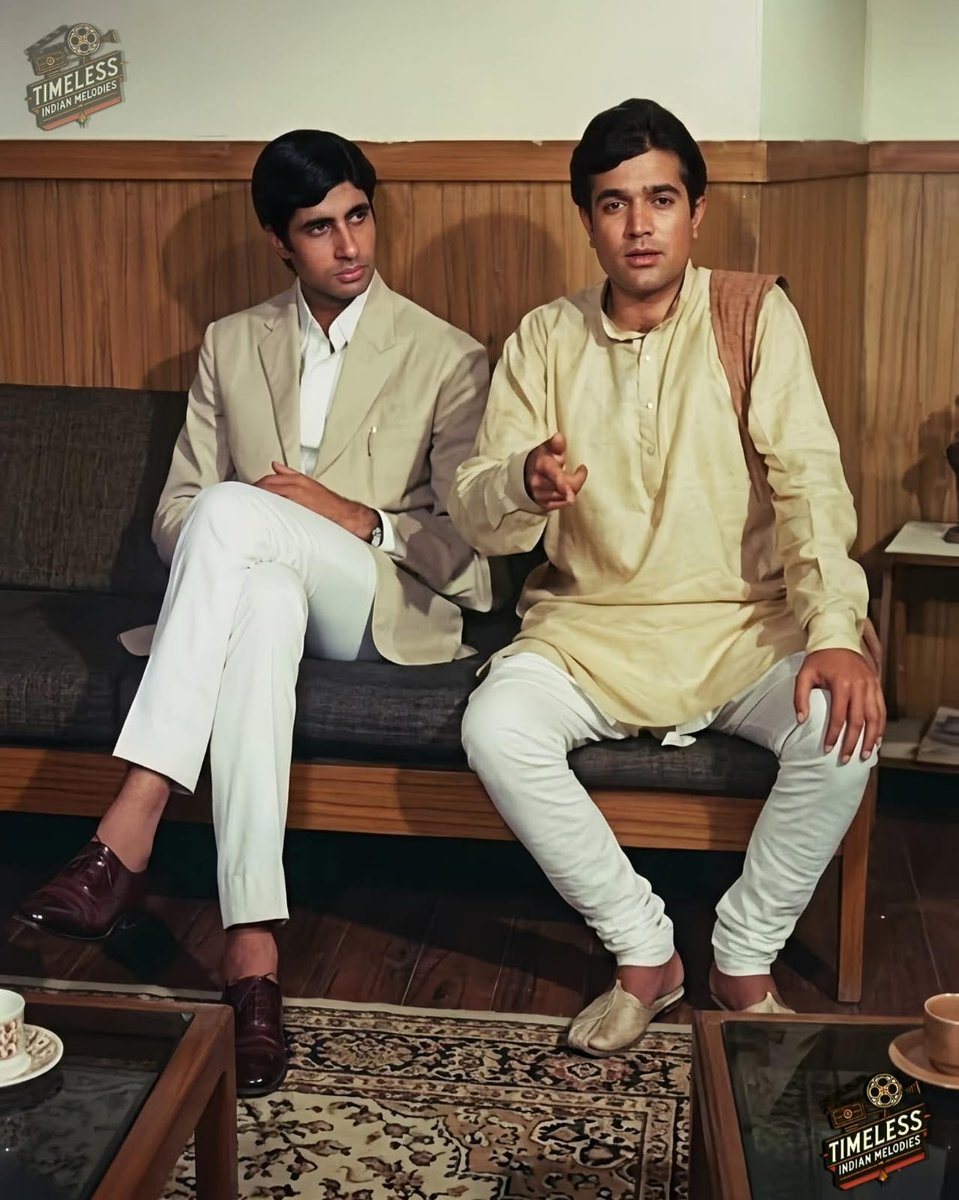
The movie "Anand" hurts differently once you grow older.
As children, you notice Rajesh Khanna’s charm.
That smile. That warmth. That impossible ability to make even illness look full of life.
Then adulthood arrives and suddenly Babu Moshai starts making sense too.
Amitabh Bachchan’s silence in that film is extraordinary. He spends half the movie watching Anand live loudly while quietly preparing himself for loss. And somewhere between them, Hrishikesh Mukherjee creates one of Hindi cinema’s gentlest heartbreaks.
“Babumoshai… zindagi badi honi chahiye, lambi nahin.”
That dialogue survived generations for a reason.
Notice how simple the film looks today.
No manipulative background score screaming for tears. No dramatic hospital glamour. Just conversations, humanity and the unbearable knowledge that some people enter life briefly only to leave permanent emotional damage behind.
Even the ending feels strangely quiet.
Like somebody important just left the room… but their voice is still floating around somewhere.
Rcvd from WA (courtesy FB page Timeless Indian Melodies)
@SanjayMuthal
“We invested in Gillette because of its 100 years of dominance in Razors and blades business.”
“Also, every night, hair grows on billions of men’s faces and twice as many on women’s legs. But I try not to think too much about women’s legs at night.” 😂
- Warren Buffett. 2006
Most of these guys must have been in their father’s imagination when Sachin played the Desert storm innings in Sharjah. He still commands such craze :)
You will appreciate what life has to offer much better if you ever made a 36+ hr journey in 2nd class sleeper across India in peak summers.
If by any chance you fall asleep, the seat sticks to your skin. You are forever short of water, the window is like a 21 inch hair dryer. You wish to splash your face with water for some respite, the water in the sink is boiling. The only respite is the guys moving around with buckets with icy water, with an assortment of cold drink bottle submerged in it, sold at the rate of an arm & a leg. You settle for a chilled Frooti. It tastes so godly that you write about it on Twitter 20 years later :)
remember this funny incident from IPL 2021, when Dinesh Kartik tried to stump Shikar Dhawan and said he's out ,Dhawan literally fell on ground like a kid 😭😭
both of them and even commentators couldn't control their laugh those were golden days of IPL 😂❤️ https://t.co/7MRdoW9na1
Did you know that the U.S. defaulted on its sovereign obligations in 1971 when it unilaterally reneged on dollar-gold convertibility.
Russia defaulted in 1998 and 2022.
Argentina: 9 times since independence.
Pakistan: required IMF bailouts 23 times.
Greece defaulted in 2012.
And India? Zero defaults. Not even in 1991!
Yet Western investors classify India as "emerging risk" and call U.S. Treasuries the "risk-free rate."
This isn't risk analysis. This is cognitive bias a la Daniel Kahneman's book "Thinking, Fast and Slow". Humans systematically overweight culturally proximate information while underweighting statistical patterns that don't fit our mental models.
Western strategic planners trust Western partners not because the data supports it, but because the cultural markers feel familiar.
Three facts that challenge everything about how we assess partnership risk:
FACT 1: Across 5,000 years of recorded history, India has rarely waged wars of territorial conquest. Not in 3000 BCE when the Indus Valley Civilization had technological superiority. Not in 1000 CE when Indian mathematics and metallurgy exceeded Europe by centuries. Not in 2026 when it possesses nuclear weapons and the world's 4th-largest military. Not in 2047 when it projects to be a top-two economy.
Compare: China (annexed Tibet 1950, 14 territorial disputes, South China Sea expansion). Russia (Georgia 2008, Crimea 2014, Ukraine 2022). Europe (500 years of colonial conquest across three continents). U.S. (military interventions in 20+ countries since 1945).
This pattern is observable strategic behavior anchored in the Arthashastra, Kautilya's 2,300-year-old treatise arguing that short-term territorial expansion undermines the systemic conditions for sustained prosperity. The concept of "mandala" (circle of states) recognizes that each power's long-term interest depends on system equilibrium.
FACT 2: India has never defaulted on debt, treaties, or security guarantees since independence in 1947. The most revealing test: 1991 balance of payments crisis. Reserves fell to $1.2 billion = just three weeks of imports. Default appeared certain. Instead, India implemented painful reforms, honored every obligation. India didn't use political costs as an excuse to default. Commitments were kept.
This behavior isn't accidental. It's anchored in the Sanskrit concept of ṛṇānubandhaḥ, that obligations are metaphysically binding across time. The Mahabharata established 2,000 years ago that rulers who break commitments violate cosmic order and create systemic instability.
Philosophy became institutional architecture: investment-grade credit through multiple crises, $600B forex reserves (6th globally), zero defaults on government securities across 77 years.
FACT 3: During COVID-19, India exported 300 million vaccine doses to 110 countries while its own vaccination was incomplete. 96 countries received doses free through "Vaccine Maitri."
Meanwhile: U.S. ordered 1.2 billion doses for 330 million people (4x population). EU ordered 4.6 billion for 450 million (10x population). Canada ordered 400 million for 38 million people (10x population).
Western nations didn't begin international distribution until domestic targets were substantially met.
The distinction? India's Economic Survey 2020-21 quoted Sanskrit: "āpad�� hi prāṇa rakṣā hi dharmasya prathama aṅkuraḥ" (in calamity, protecting life is the first duty). Not Indian life. Life in general.
This aligns with Vasudhaiva Kutumbakam (the world as one family), not as rhetoric but as policy. India supplies 60% of global vaccines and 20% of generic medicines normally, maintained production during its own constraints, built digital public infrastructure (UPI processes more transactions than all nations combined) and offers it open-source to developing countries.
WHY THIS MATTERS NOW:
Every CFO, sovereign wealth fund, and policymaker is asking: "Who can we depend on for the next 50 years?"
Ukraine shattered the illusion that economic integration prevents aggression. COVID exposed single-source dependencies. Taiwan reveals semiconductor concentration risk.
The global economy is re-optimizing from efficiency to trust.
But here's where Kahneman's research becomes critical: most strategic planners are making decisions using "System 1" thinking (fast, intuitive, pattern-matching based on cultural familiarity) rather than "System 2" thinking (slow, analytical, data-driven assessment of long-horizon behavioral patterns).
The result? Systematic mispricing of partnership risk.
Strategic planners face a choice:
- China: manufacturing efficiency + demonstrated willingness to weaponize interdependence (sanctions on South Korea over THAAD, Australia over COVID inquiry, Lithuania over Taiwan, Belt & Road debt traps in 60+ countries)
- Russia: resource access + repeated weaponization (invaded Ukraine despite economic integration, cut gas to freeze European cities)
- U.S.: innovation + extraterritorial enforcement (billions in fines on European banks for transactions legal in Europe, CLOUD Act overrides local privacy laws, "America First" tariffs hit Canada, Mexico, EU alongside rivals)
- India: 5,000-year track record of territorial restraint + zero defaults + systemic thinking during crises +
challenges (infrastructure gaps, bureaucratic complexity, uneven state capacity).
The question isn't perfection. It is: which risk profile aligns with 50-year partnership objectives when analyzed through System 2 rather than System 1 thinking?
THE UNCOMFORTABLE TRUTH:
If India's pattern suggests lower long-duration risk, why is trust in India still "emerging"?
Kahneman would predict exactly this outcome. Three cognitive biases at work:
1. **Availability bias:** We assess risk based on vivid, recent, culturally proximate information. NATO expansion incorporated Poland, Czech Republic, Hungary rapidly because they registered as "European." India's democracy, rule of law, English-language business environment gets discounted because cultural markers differ.
2. **Confirmation bias:** Western institutions have decades of frameworks built around current partnerships. New data contradicting established models gets filtered out rather than integrated.
3. **Status quo bias:** Existing relationships are comfortable. The U.S.-Europe alliance, U.S.-Japan partnership, Five Eyes intelligence sharing operate with established protocols. Structural change requires crisis-level disruption to overcome inertia.
The crisis arrived.
For boards evaluating long-term partnerships—semiconductors, pharmaceuticals, digital infrastructure, maritime security, critical minerals—India presents a risk profile worth systematic, System 2 analysis.
Because of demonstrated behavior across sufficient time horizons to be statistically meaningful.
In an era of fragmentation, weaponized interdependence, and trust deficits, historical patterns become predictive indicators.
Kahneman spent decades showing that intuitive judgments systematically diverge from statistical reality. Strategic partnership assessment is no exception.
The question is: Are we assessing risk based on data, or based on what feels familiar?
In the 21st century, power matters. But trust may matter more.
And trust should be measured by track record, not by cultural proximity.
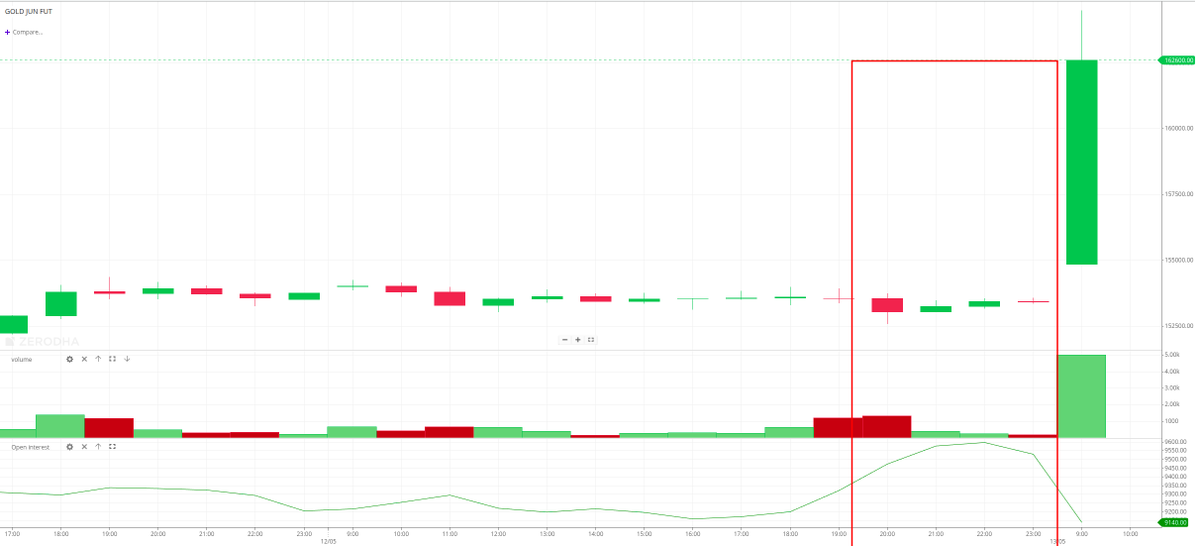
The news about import duties on gold and silver going up to 15% came late last night. The interesting thing: neither open interest, prices, nor volume in Gold and Silver showed any unusual moves in the hours leading up to the announcement.
If this had happened in the United States, I’m fairly sure some of the people close to the decision-making process would have found a way to trade it, either through regulated futures markets, other derivative contracts, or prediction markets like Polymarket and Kalshi.
We’ve seen versions of this with crude. And during the Iran conflict, too, there were all these reports and allegations about people around the government trading through futures, contracts, and prediction markets before or around important announcements.
It’s kind of insane how casually people in power seem to monetize privileged information. At some point, this stops looking like “market participation” and starts looking like blatant insider trading with better branding.
Just another reason why Indian markets, despite all their flaws, are far more tightly controlled in these grey zones than many Western markets.
I almost got lynched in Pune once. Why?
It was a hot day. I saw a thirsty person on the road. I wanted to help. So I offered to buy him a mango-flavored cold drink by asking, "Maaza lega?"
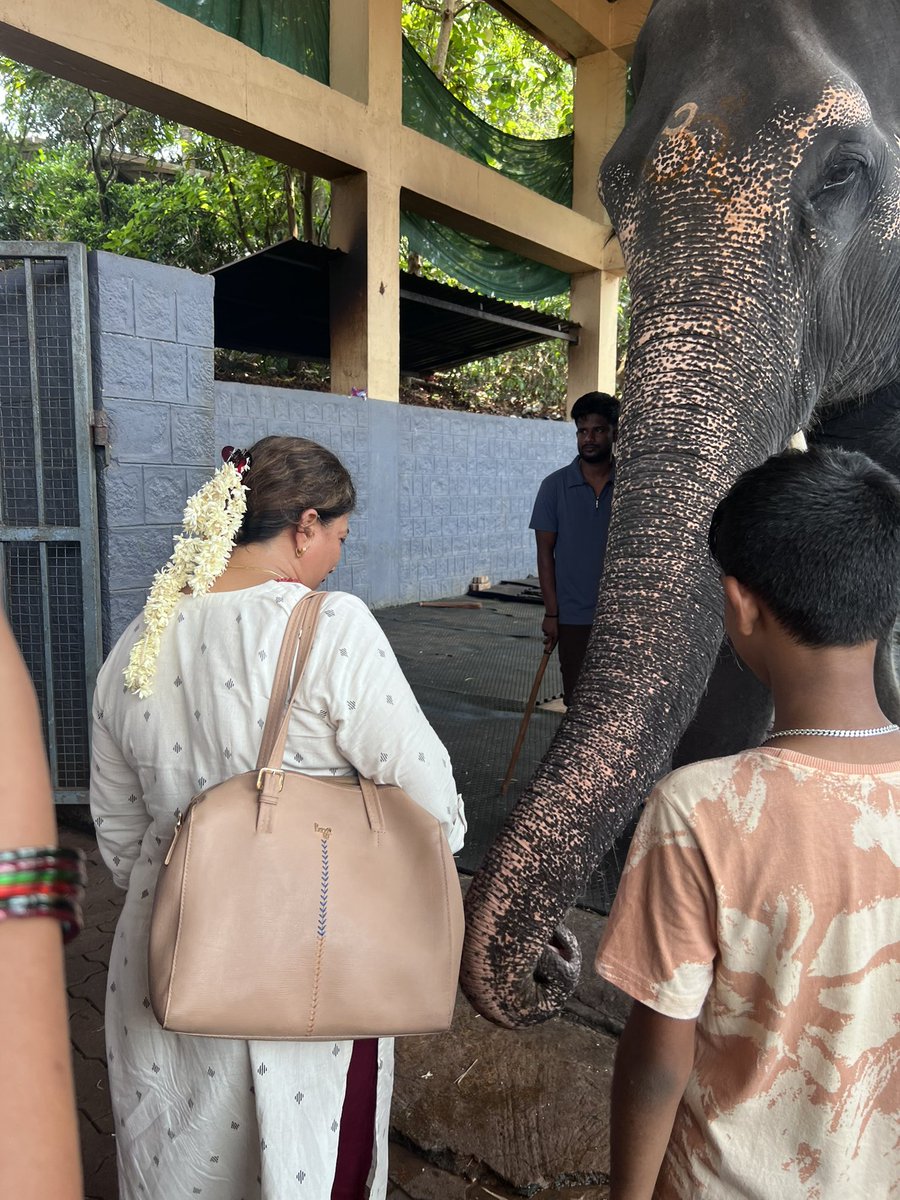
Kateel Durga Parmeshwari Temple in Mangaluru . Today it was really crowded . Probably bcoz it’s wedding season and a Friday .
Everyday Annaprasad ( breakfast / lunch and Dinner ) is served to hundreds of devotees . However , no one must’ve heard of it . Zero Advertising.
Three temples we visited today and every temple they asked us to wait for Annaprasad .
Finally , we got to take blessings of Elephant Maharaj . Else , we always went in the mornings and that is the time he goes for a walk
I started watching the movie "Thaai Kizhavi" on Hotstar the other day, which is set in the heart of Tamil Nadu, I encountered a very unfamiliar name for a character.
The character's name was "Pennycuick"
Now in a land where language is an emotional topic where people sever relations, friendships and even give their lives for Tamil, a Scottish first name for a Tamil guy seems a little out of place.
Some may even call it a blasphemy.
How an odd Scottish Surname, whose origins lay in the town town of Penicuick near Edinburgh, became a symbol of pride and honour, 8000 kms away on the other side of the globe in Southern Tamil Nadu, is an amazing story.
It is a story that also tells you the real meaning and purpose of life. It makes you understand that all the worldly things like power, prestige, position and money that we crave for, is just a mirage that we are chasing.
The real glory lies someplace else.
And it starts with one man. John Pennycuick (1841 - 1911)
John Pennycuick was born in Pune in the year 1841, as the fourth son of Brigadier John Pennycuick, a soldier in the British army.
However at the age of 8, a great tragedy befell him and his family.
In 1849, in the second Anglo Sikh War, his father and his elder brother Alexander, were killed in action fighting the Sikhs in the battle of Chillianwala.
When a kid sees his father and brother killed by the natives they are supposed the rule, the normal course of action is to grow up into a into a rabid Indian hating racist white man, who would have spent the rest of his life cursing India.
But John Pennycuick was a better man than that. He wanted to do something that would leave a legacy behind him.
And luckily for Tamil Nadu, he did.
If you have ever seen a physical map of India, you will see a contiguous mountain range that separates Tamil Nadu and Kerala.
These are called the Western Ghats.
Now the Western Ghats, despite all their beauty and splendor, have one small problem.
If you had been attentive in your sixth standard geography class, you would have known that Kerala receives most of its rain from what we call the South West Monsoon winds, which flow in from the Arabian sea.
Most of the lush, beautiful, God's own country poster type greenery, is because of the abundant rainfall provided by these winds.
Unfortunately, despite being in close proximity to Kerala, Tamil Nadu gets almost zero benefit from them because of these imposing ghats
The problem is acute especially in the districts of Theni, Madurai, Dindigul and Ramnad.
In Geography, we call it the Rain Shadow region.
In the mid 19th Century, the British recognized this problem.
They understood that their rapidly growing cities of Cumbum, Theni, Madurai, Ramnad etc, could not be supplied by the miniscule waters of the Vaigai River. They needed to do something drastic, to avoid a catastrophe.
Their solution was the River Periyar in today's Kerala.
They thought, if they could divert that river with a dam and a tunnel, and make those waters flow into the River Vaigai, the entire area from Theni to Ramnad could be transformed from an arid wasteland to an agricultural heaven.
They even finalized a site at the confluence of the River Mullai and Periyar. They called it, the Mullaiperiyar dam.
Unfortunately, this was not a computer game where two clicks and one prompt could build a structure that would divert the water.
This was real life.
And in the 1800s, real life was infinitely more difficult what it is today.
The first proposal for this dam came from the Maharaja of Ramnad in 1789. Realizing the cost of the dam would be greater than the total value of his kingdom, he gave up
Then the British tried their luck in 1850. But when the first teams saw the malarial swamp and the pestilential land that they had to live in, they turned around faster than Pakistanis in front of an Indian army battalion.
Between 1860 to 1882, four different proposals were sent for the construction of this dam, but each time it was rejected citing impracticality, affordability, lunacy and sometimes, all the three.
Then came a Certain John Pennycuick.
Serving as an officer in the Public Works department, in 1887 he landed in this desolate area to take charge of building the dam.
First problem he faced was the access to the site. The entire dam needed 80,000 tons of limestone and motorable roads, cranes and automobiles were at least 40 years away.
So he built a ropeway and then used bullock carts to transfer the limestone to the dam site.
Then there was the issue of diseases, especially Malaria.
He stumbled across a local arrack that ostensibly prevented it.
Pennycuick issued them to all the labourers working on the dam. They were high, happy and malaria free.
Slowly, the dam started taking shape.
But then the biggest issue was the River Periyar itself.
It realized that someone was trying to control it. So it started rebelling. It blew away all the coffer dams that were trying to restrain it.
And when this flooding happened once to often, the British guys decided that it was time to cut their losses and run. They stopped funding for the Mullaiperiyar dam.
But Pennycuick was not the one to stop at trifling issues like stopping of funds.
He sold his wife's jewelry and personally funded the rest of the dam.
And finally in 1895, the dam and the tunnel needed for diversion, was ready.
Through the 173 feet dam, 3000 ft above sea level, and a 1.5 km tunnel cut thru the mountains of western ghats, 3000 cusecs of water finally flowed into Vaigai.
The water problem of Theni, Madurai and Ramnad, was finally solved.
Today the Mullaiperiyar dam, irrigates more than 2 lakh acres of farmland. More than 50 lakh people directly depend on it, either for agriculture or drinking water.
The districts of Theni, Madurai, Dindigul, Sivaganga and Ramnad, have transformed from arid regions with frequent draughts to agricultural hotspots.
In the last 125 years it has benefitted. directly or indirectly. more than 100 million people. It has made Theni, Madurai and Ramnad the cities that they are today.
One dam, built by the vision and perseverance of one man, 131 years later, is still benefitting generation after generation
John Pennycuick could have taken the easier path in life. He could have gone back to Britain and lived a lavish comfortable life. He could have hated us Indians for killing his father and brother. He could have been a bitter man for the rest of his life.
But he didn't.
He decided to do benefit the land that he didn't even belong to. He wanted to alleviate the lives of people who were not even from his actual country. He wanted to bring succour and happiness to a lot that probably hated him.
He built the dam despite knowing he would neither be recognized for it, nor benefit from it financially.
He helped very same set of people who were responsible for the deaths of his father and brother.
What he did, transcended race, religion, caste and identity. It towers above stuff like region and language
Today Pennycuick isn't just a name in Theni district. It is a matter or pride and honour. Their bus stand is named the John Pennycuick bus stand. People, as shown in the movie, are named Pennycuick.
There have been thousands of rich men in Theni and Madurai after Pennycuick. There have been hundreds of leaders, politicians and officers who have trod on that land.
But none inspire the following and regard that Pennycuick has, 115 years after his death.
John Pennycuick proves to all of us, that you can earn money, buy cars, build houses, go to Universities abroad and float thermacol sheets on rivers, but respect and legacy, is the ultimate currency.
Because in 2026, you don't remember the MP / MLA of Madurai / Theni. You don't remember their Ivy league degrees. You don't remember their family legacy. You don't remember their mansions and money.
They are all forgotten in the sands of time.
But you have and will always remember, John Pennycuick.
P:S: Today, we talk about North India / South India, Hindi / Tamil etc. Sometimes I wonder what would Pennycuick from heaven feel about all of this.
P:P:S: Once when someone asked why Pennycuick was doing this idiotic stuff, he said ""I am going to be only once in this earthly world, hence I need to do some good deeds here. This deed should not be prorogue nor ignored since I am not going to be here again"