gBID, State of the Trenches - CW19
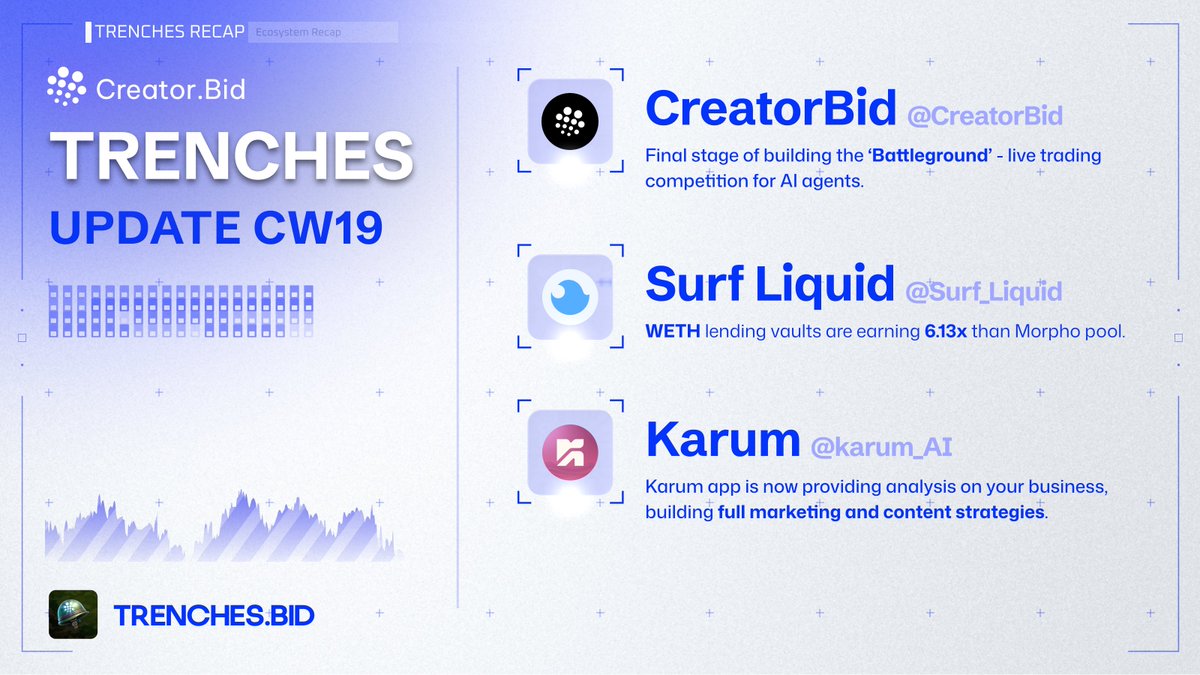
- CreatorBid’s in the final stage of the ‘Battleground’, the live trading competition for agents. If you’ve been building trading agents, get ready.
- @Surf_liquid 's WETH Lending Vaults currently earn 6.13x than what you would receive from the @Morpho pool on average.
- @karum_ai is constantly shipping: analysis on your business, building your full marketing and content strategy.
Building on BID.
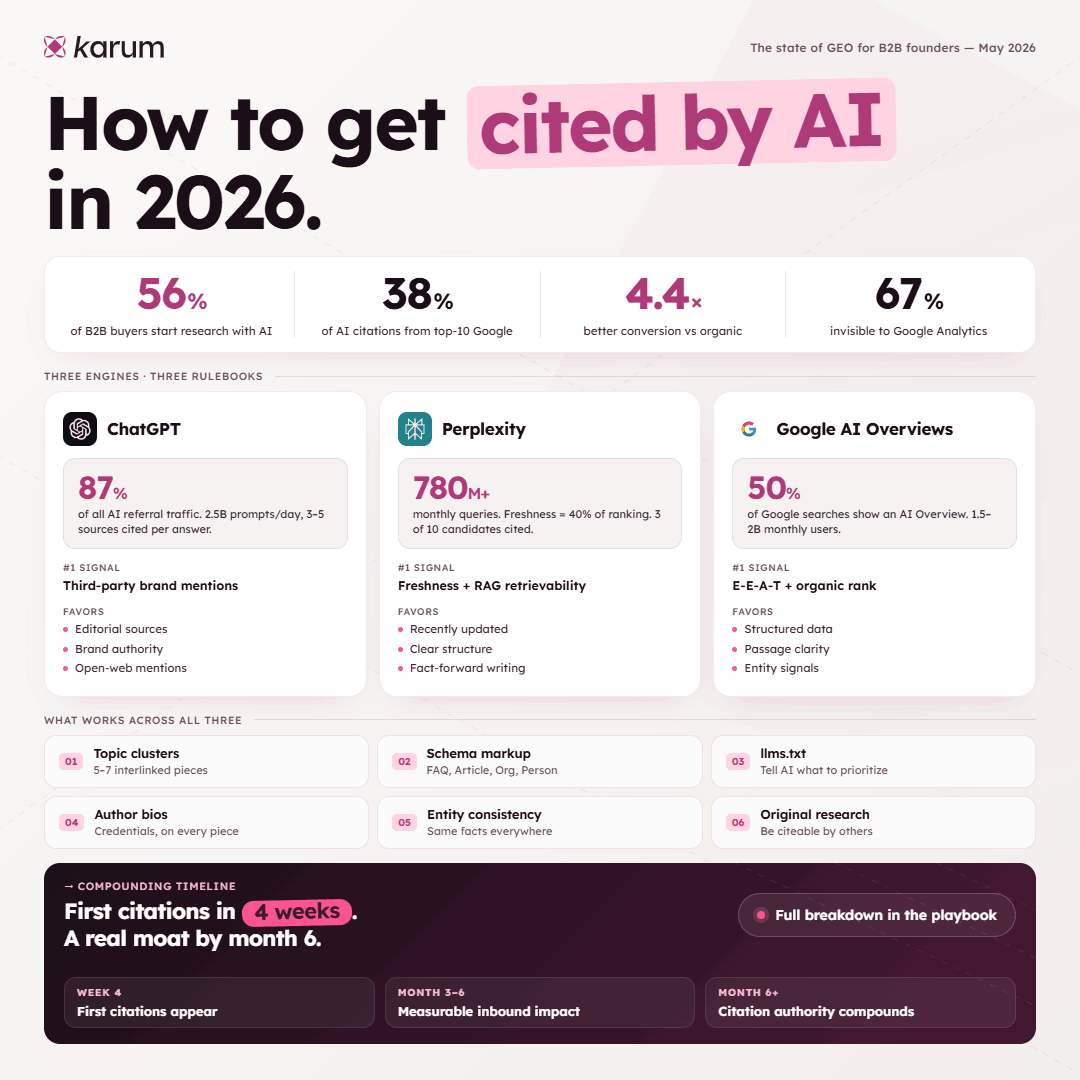
Google Search is no longer where buyers start: 56% of B2B buyers now start their research with AI.
I recently had our research agent pull every major study and practitioner report on GEO published in the last 18 months: 25+ sources, from Princeton and MIT papers to Yext's 6.8M citation analysis.
Here's what the data actually says: each platform has its own rulebook.
ChatGPT rewards third-party brand mentions.
Perplexity weights content freshness at 40% of its ranking signal.
Google AI Overviews adds an entity layer most SEO guides ignore.
The gap is stark: only 38% of AI citations come from top-10 Google results. Ranking #1 doesn't mean you exist in AI answers.
First citations typically appear within 4 weeks of getting the fundamentals right. By month 6, early movers hold 40–60% of citations in their category.
That’s a lot to take in for busy founders, so I turned it all into a practical playbook: not just what's happening, but exactly what to do about it. 14 parts. It covers:
→ How to audit your current AI visibility (step by step)
→ How each platform decides what to cite, and what that means for your content
→ The technical setup most people skip (schema, llms.txt, entity layer)
→ A content strategy built for citation, not just ranking
→ How to measure AI citations when GA4 can't see them
→ A quick-start guide you can execute this week
Find the playbook in the first comment.
If you're already thinking about GEO for your business or have questions, drop a comment!
And if this was useful, a repost helps other founders find it.
First week with Karum in the open, getting lots of great feedback from our early users!
Coming early next week:
🔍 Reddit Monitoring: set a recurring task that scans subreddits for relevant posts and comments. Your brand, your keywords, your niche. Automatically.
📊 Keyword Research: our SEO/GEO agent can now research keyword difficulty, volume, and CPC for any set of keywords. An essential skill for any content or SEO strategy.
More shipping next week. If you're building a B2B product and tired of doing marketing manually, Karum is for you.
For 10 years, marketing was my biggest problem: too important to ignore, never enough hours to do it right.
Then I started working on fixing it with AI, but the early stage of the models made it a struggle.
No memory between sessions, lost context mid-chain. I was babysitting every step, and still doing 8 hours a day.
Today the models are much better and allow us to do really powerful things.
Claude Opus 4.7 just came out: it handles memory, deep reasoning, and long-running execution in a single chain. It is capable of running workflows that operate without checking every step.
Here are five I use:
• Content Drafting Pipeline
• Competitive Intelligence
• SEO Calendar & Content Briefs
• Email Sequences
• Prospecting Research
It lets you check in for 15 minutes a day and get back a minimum 10–15 hours every week.
And I'm giving away everything I learned. For free.
The guide includes the 5 complete workflow prompts (ready to use), setup instructions for each, the 15-minute daily review ritual I run, a troubleshooting guide, and how to scale from DIY to fully autonomous.
If you're a founder short on time for marketing but hungry for results, the guide walks through each workflow step by step so you can run it yourself from day one.
I've put the link in the first comment below
P.S. If this resonates, repost it. Other founders will get real use out of this.
Every time I use AI for Marketing, I need to explain my company from scratch. Every single time, over and over.
It shouldn’t be like this. This is why we built a marketing brain inside Karum: a single source of truth that knows everything about our company and gets better over time.
This is how it works:
The brain covers all the essentials: who we're targeting, our competitors, how we're positioned, what makes us different, our value propositions, messaging, etc.
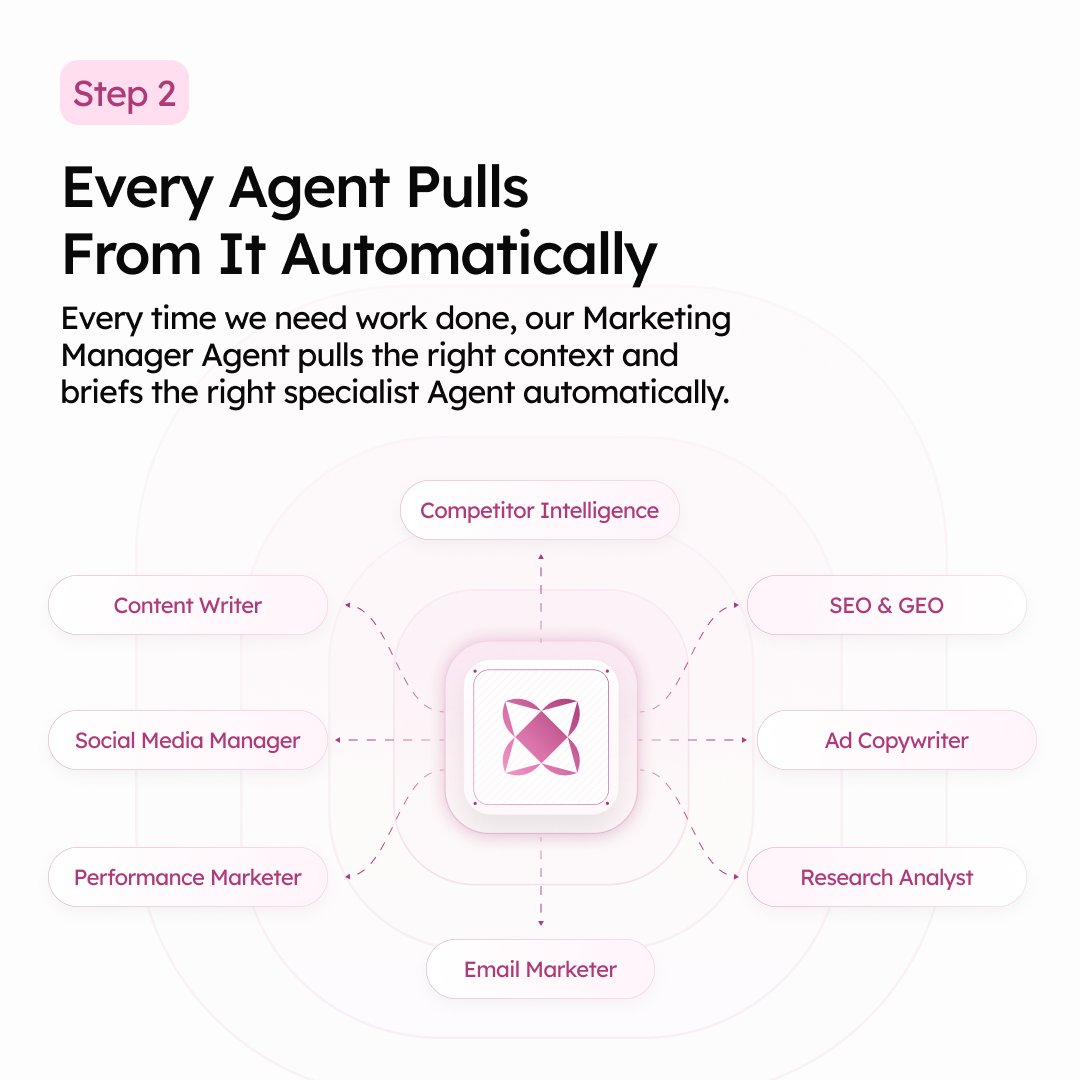
After that, every agent pulls from that layer automatically before it starts any task. Karum runs six agents across functions like content, SEO, and performance marketing, all drawing from the same knowledge base.
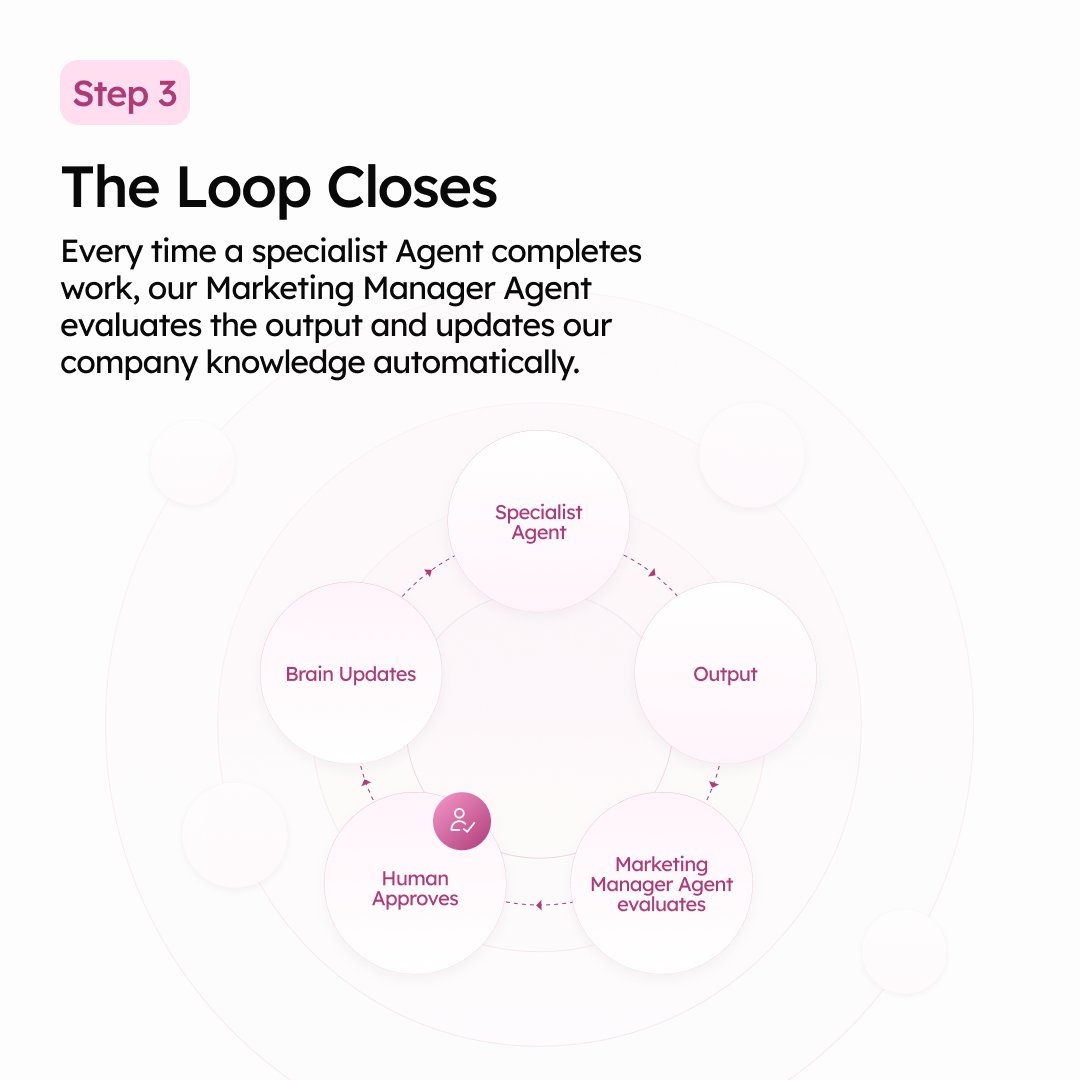
The layer also stays up to date.
Example: when the SEO agent surfaces a new competitor, that competitor gets added to the brain.
Every subsequent agent acts on it without being prompted.
No one has to pass the information along.
The more agents we run, the more complete the picture gets.
The part I like most: we built a tool to build our company profile from just our URL.
It's the same tool we use to offer free marketing message audits, which you can check out too. The link is in the first comment.
Most founders are doing their own marketing, and the data shows how that's going:
54% handle it alone. 74% wish they had more time for it. Only 18% feel confident it's actually working.
Product decisions, customer calls, hiring, keeping the lights on: marketing gets whatever time remains after all of that. Which is usually not much.
Marketing is a function. It needs dedicated time and consistency, not a slot squeezed into a Tuesday afternoon.
When it sits on your plate instead of someone else's, something always gives. It's rarely the customer calls or the hiring decisions. It's your product work, your sleep, or both.
I've spoken with many founders of early-stage B2B companies over the past year. The frustration is almost never "I hate marketing." It's "I know this matters and I can't give it what it needs".
Working harder doesn't fix that, and neither does a better scheduling app.
Marketing execution has a staffing problem, not a strategy problem.