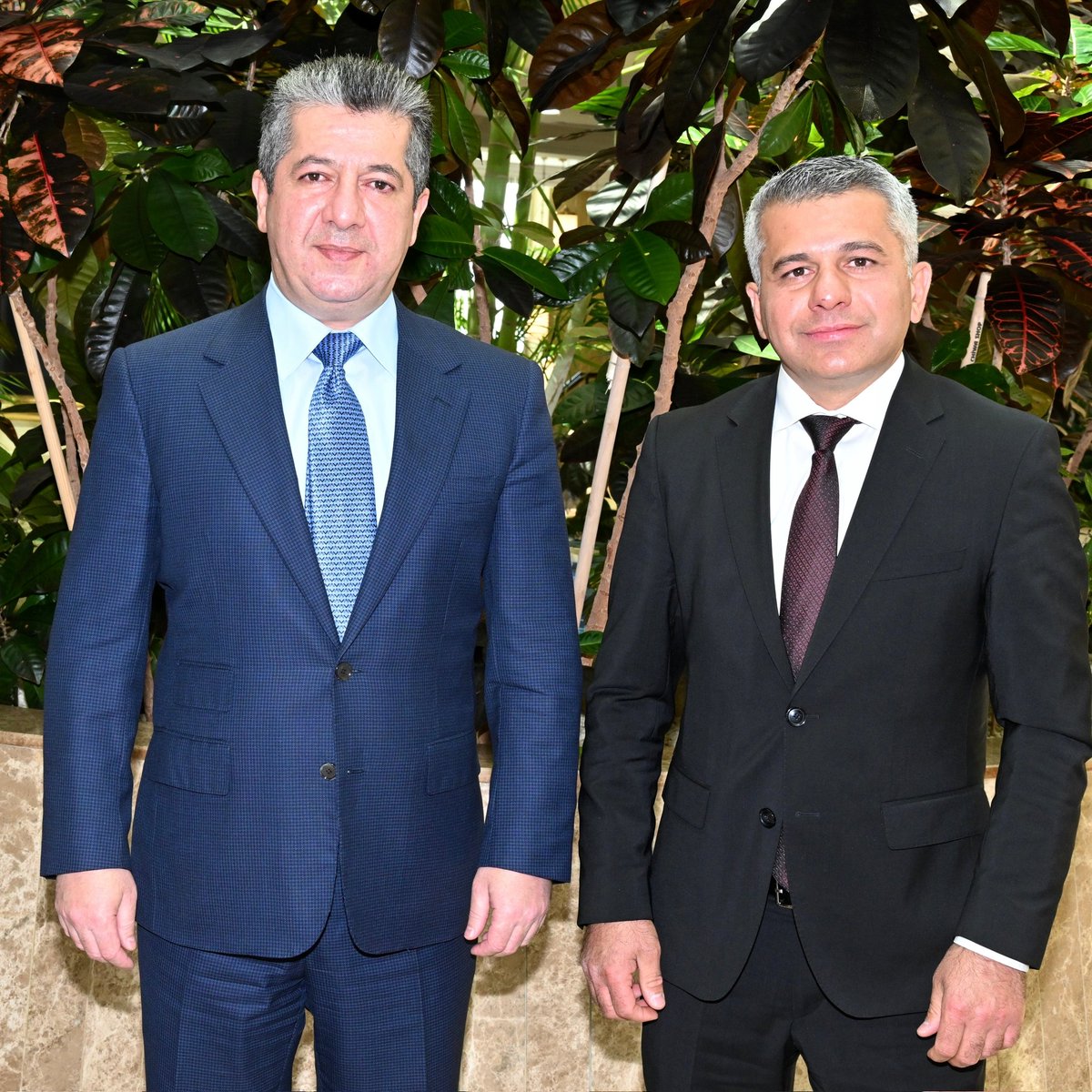
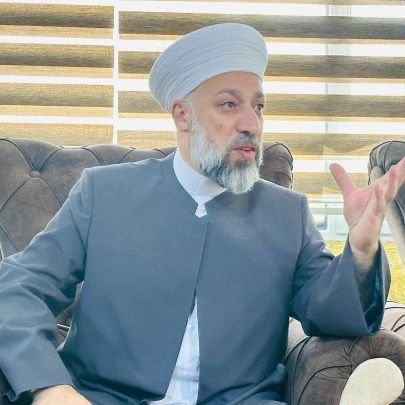
Had the honor of meeting H.E. Masrour Barzani (@masrourbarzani), Prime Minister of @Kurdistan. Took the opportunity to update the PM on a wide range of bilateral KRG-US related topics. Grateful to the PM for putting his trust in me along with his support to serve our people.
Iraqi Foreign Minister Fuad Hussein warned on Saturday that Iraq faces financial catastrophe if the Iran war continues, with oil exports falling from nearly 100 million barrels in February to below ten million in April. Baghdad has raised its money-printing ceiling to 125 trillion dinars to cover the shortfall.
https://t.co/HPPs7cR061
As his usual, @omar_nidawi writes a smart analysis for @StimsonCenter ME program: What Would Militia Disarmament in #Iraq Actually Mean and Can It Be Achieved? https://t.co/Miln2jPY9Z
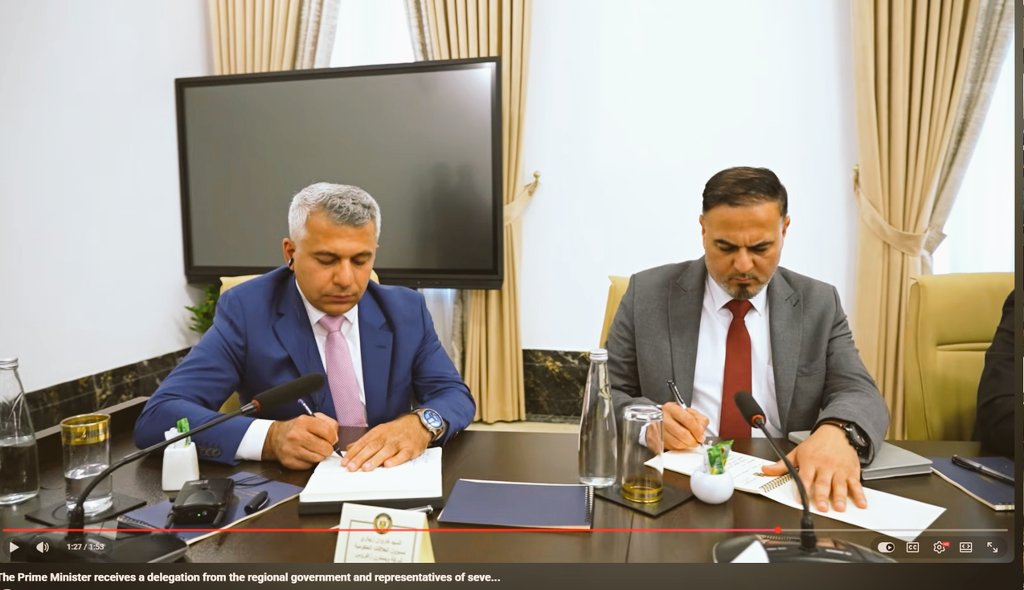
A full & eventful day in Baghdad meeting with the new Iraqi Prime Minister @AliFalihAlzaidy, Foreign Minister @Fuad_Husseein, and Minister of Oil @iqministryofoil along with the official KRG delegation
to discuss ways to resume and increase oil production. More to come...
The decision by Muqtada al-Sadr to dissolve the Saraya al-Salam (Peace Brigades) group and integrate it into state institutions is being viewed as a strategic turning point and a significant step toward ending armed activity outside state authority.
https://t.co/SVOfiDDrOa
KRG Offers Runaki Electricity Model to Baghdad for National Energy Reform
Dr. Omed Sabah said the KRG has offered to share the Kurdistan Region's "Runaki" electricity model with Baghdad, with Iraqi officials welcoming the initiative. Talks also focused on salaries, oil exports, security guarantees for energy sites, customs coordination, and retiree entitlements.
Read More: https://t.co/3fFkJeeJsd
Prime Minister @masrourbarzani will lead a significant delegation to Baghdad for G2G talks next week.
We will offer the KRG’s unique experience with the 24-hour Runaki programme to the new federal government, including technical assistance and access to our technology to accelerate Prime Minister Al-Zaidi’s ambitions for electricity sector reform.
Prime Minister @masrourbarzani will also follow up on security assurances to allow oil and gas companies in the Kurdistan Region to resume production and exports, potentially doubling Iraq’s export capacity to over 500K bpd.
Companies cannot be expected to resume operations amid the threat of drones in the skies.
A timely visit.
The 2007 Draft Oil and Gas Law outlines the foundational principles for establishing a Federal Council to govern Iraq's energy sector and distribute management powers between central and regional authorities. However, the comprehensive framework has never been formally enacted due to a 19-year political deadlock over revenue-sharing and the legislative control of lucrative oil fields.
Read more: https://t.co/igMq9vWs04
Iraq's oil revenue collapsed further in April, coming in at just over $1 billion, down from nearly $7 billion in February, the last full month before the Strait of Hormuz closure upended the country's export capacity.
Iraq has been among the most severely affected countries in the region. With alternative export routes still limited in scale, the monthly financing shortfall stands at roughly $4 billion in March and widened to approximately $5 billion in April, even after accounting for non-oil revenues. That gap covers only the core state payroll - salaries, pensions and welfare transfers - before any investment spending is considered.
Iraq's foreign exchange reserves (whcih stood at roughly $97 billion in mid-February) are large enough to absorb this in nominal terms for some time. The more immediate risk is one of sustained erosion: with the Strait of Hormuz still closed and alternative routes taking months or even years to build to meaningful scale, Iraq is drawing down roughly $4 to $5 billion per month against its reserve base. The danger is not immediate insolvency but the pressure that sustained reserve drawdown places on the dinar, inflation expectations, and broader economic confidence well before the reserves are exhausted.
More details: https://t.co/69LNeQ04ps
A major tourism and environmental project is set to be developed in the Kurdistan Region’s capital, with officials unveiling plans for the "Senk National Park,” a large-scale eco-tourism and cultural destination spanning 6,000 dunams in the highlands of Senk near Henara village in Erbil province.
https://t.co/N6MniVbsFy
KRG Accelerates Procedures for Establishing 'Nîşitîman' Bank
In the push for regional modernization, the most critical infrastructure isn't made of concrete, but of code and compliance. By accelerating the launch of Nîşitîman Bank, the KRG is attempting a decisive pivot from a legacy of cash toward a transparent, digitized financial future.
Read More: https://t.co/0cnKePk4vR
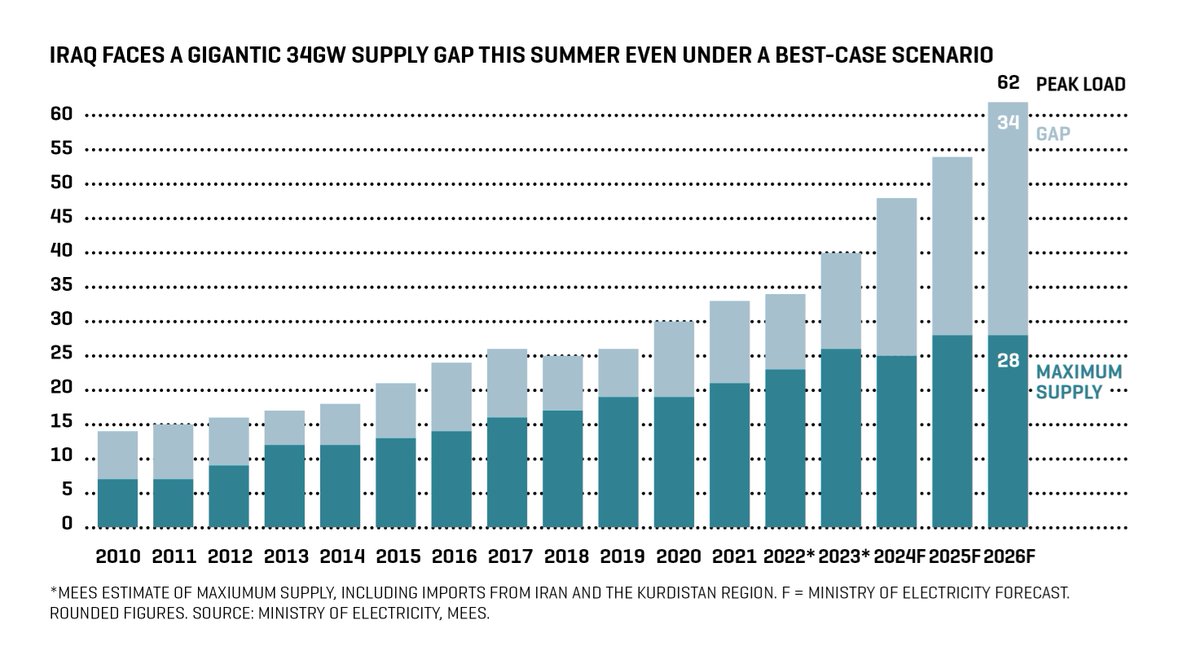
Iraq's new prime minister will come to offer facing unprecedented electricity sector challenges, with the Hormuz crisis exacerbating deep-rooted structural issues. Read the full analysis in MEES: https://t.co/FWXoCLAD3u
Iraq’s new PM will need to appease 3 centers of power with diametrically opposed visions re militias. Tehran wants them elevated; Washington wants them eliminated; Baghdad wants them accommodated. Is this Mission Improbable? Read my latest 👇 https://t.co/epDAwA1Lu7
A Trump-Iran pattern?
• Wed: Iran wants a deal. They called us
• Thu: We are looking at proposals
• Fri: We might be close. Very close
• Sat.: Iran knows what to do
• Sun: OBLITERATION. TOTAL. COMPLETE. They have 24 hrs.
• Mon. : The storm is coming
• Tue.: I’m giving it more time
[Return to Wed. ♻️]
My new article "Iraq Electricity System: Fundamentals, Failures, and Reform" provides a whole-systems analysis for the Iraqi electricity system. https://t.co/PMBaOxWFjL
A dispute over the judiciary and Kurdish-language signage in Hasakah has stalled parts of the January 29 agreement between Damascus and the SDF, exposing wider tensions over authority, identity, and local institutions in Rojava. ✍️ Abbas Abbas
https://t.co/g99cqnoihc