Dr. Kastner interviewed with Voice of America's (VOA) Learning English on how our brains processes clutter. VOA's Learning English provides news and information in a language that is accessible to English learners. Read the article here! https://t.co/O85z04qsbu
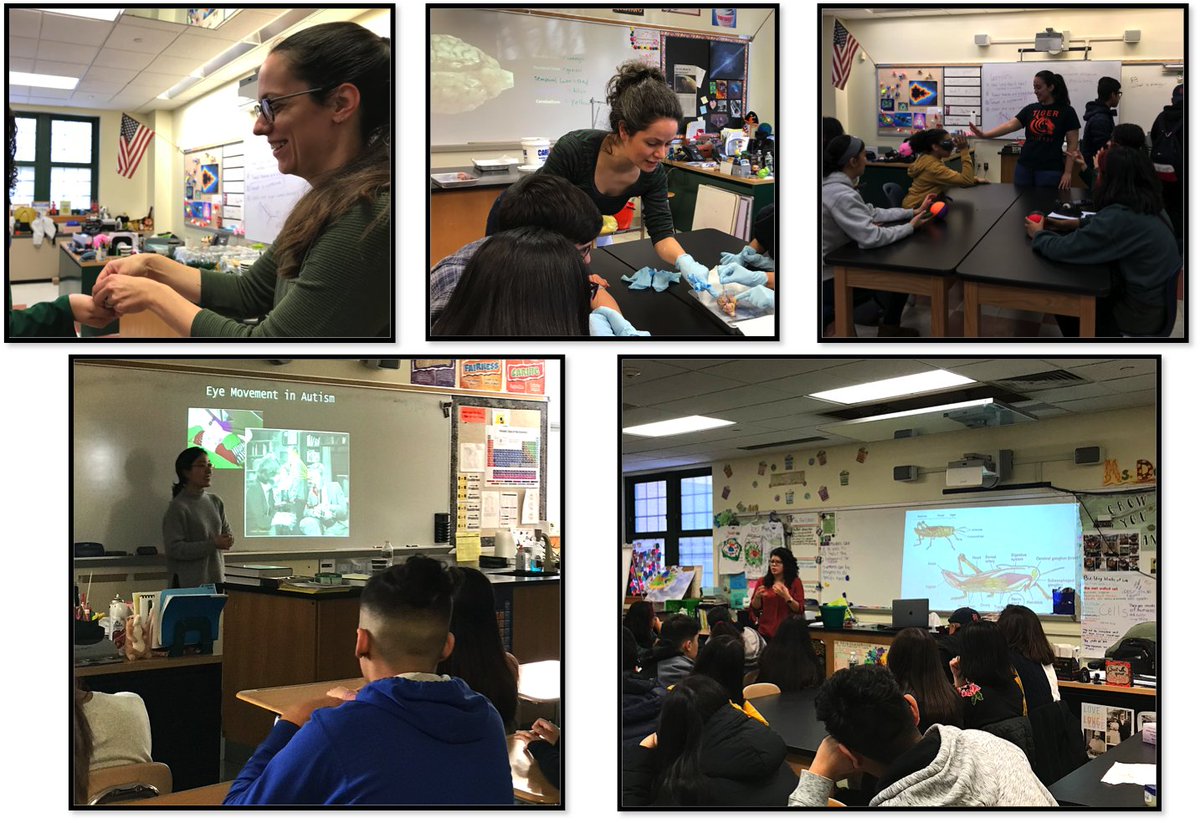
Members of NAPL visited Jose Marti STEM Academy to teach its students about Neuroscience! The students participated in demonstrations on brain anatomy, recording neural data from a cricket, visual and gustatory perception distortion, and eye-tracking. We had a great time!
Dr. Sabine Kastner received this year's Award for Education in Neuroscience. Among her contributions is the creation of Frontiers for Young Minds, an open-access scientific journal for and edited by children, along with Dr. Robert Knight. Read more here: https://t.co/d74ChqQzXH
#MeetOurTeam Na Yeon Kim is a graduate student studying the development of visuospatial attention in school children. Na Yeon's experiments often utilize her childhood obsessions, such as Pokémons, which now help her reveal some fascinating changes happening in children's brains.
Elsevier's campaign 'Inspiring women in Neuroscience' explores the role of women in science, the career paths of inspiring women in the field, and their advice for aspiring women scientists. Read Dr. Sabine Kastner's interview for the campaign here: https://t.co/apR7CvsvvG
#MeetOurTeam “How do you define real?...real is simply electrical signals interpreted by your brain“- But Morpheus, how does the brain interpret those electrical signals? Manoj Eradath is a Post-doctoral fellow who works on part of that enigma by exploring attention and memory.
Check out “A biased competition theory for the developmental cognitive neuroscience of visuo-spatial attention”, a review article from our lab describing a framework on the development of attention function. Read more here: https://t.co/kEg0xlyfwY
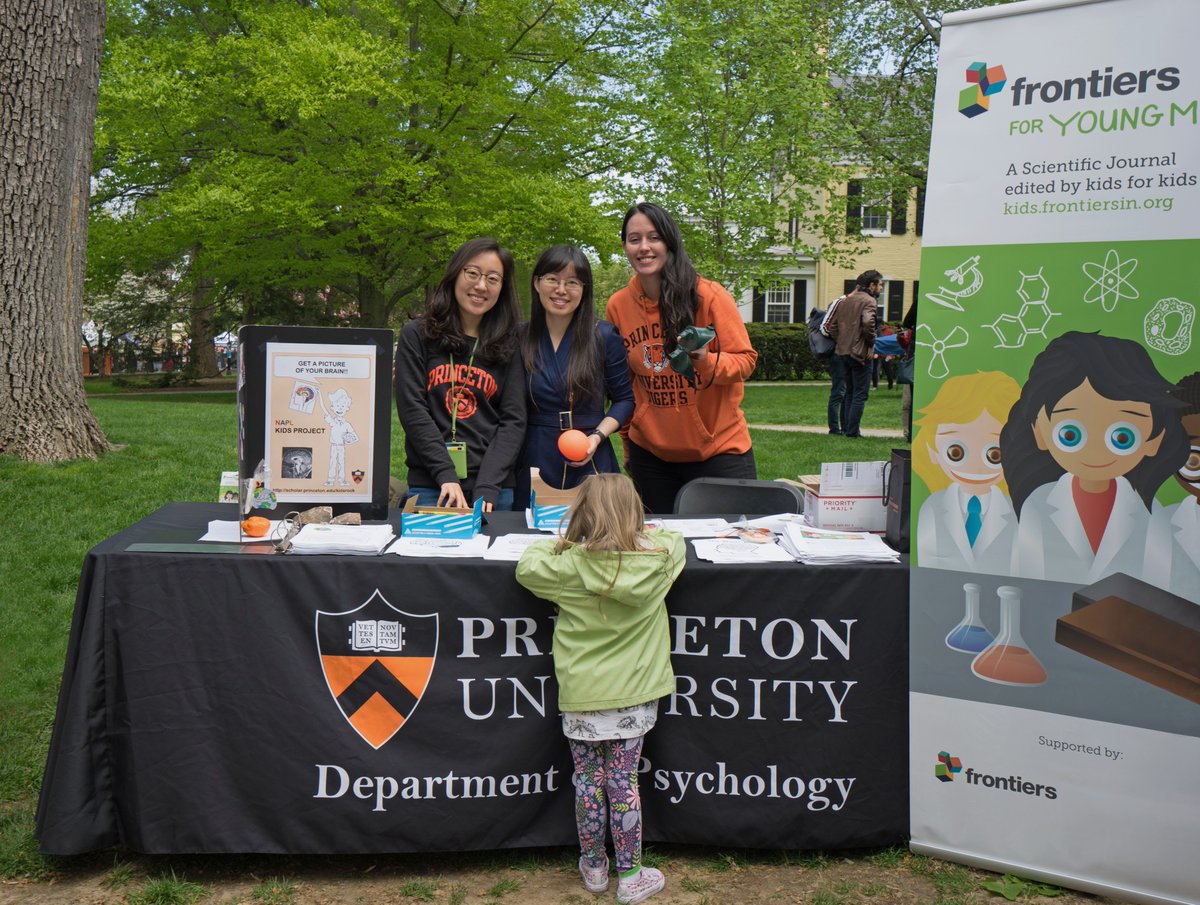
We had a great time at the annual Communiversity ArtsFest. Families learned about the current projects in our lab, enjoyed demos using perception distortion goggles, and tried a variety of brain mazes. Thank you to all those that came by our table!
The annual Communiversity ArtsFest will be held this Sunday from 1:00-6:00pm. Come find our table in front of Princeton's Nassau Hall to participate in fun demos and to learn more about the Kids Project!
#MeetOurTeam Ian Fiebelkorn @FiebelkornIan is an Associate Research Scholar who investigates the neural basis of sensory and motor processes of environmental sampling. Fun fact: Ian met his wife in college while performing in "A Funny Thing Happened on the Way to the Forum."
Our new article is out at Nature Communications: https://t.co/nK4M3yaNdR. The pulvinar in the thalamus coordinates the frontoparietal network, but only during rhythmically occurring periods of engagement at a cued location.
@MrRibbits@NatureComms@PrincetonNeuro @PsychPrinceton
"Temporal Dynamics and Response Modulation across the Human Visual System in a Spatial Attention Task: An ECoG Study", explores the temporal dynamics of attentional processing across the human visual system. Read more here: https://t.co/lNm3e1gnfK
Recently published in @NatureComms, "Organizing principles of pulvino-cortical functional coupling in humans" explores the fine-grained organization of pulvino-cortical interactions in humans using fMRI. Read more here: https://t.co/7u3uSdFf8P
Sabine Kastner, Editor of Progress in Neurobiology, is making exciting changes by introducing open peer review, new article formats (including original research) & bringing early career investigators into the publication process. Read her Editorial here: https://t.co/dv9jAXUofU
https://t.co/RD1uSbSLQc
NAPL will be at the Society for Neuroscience Conference this year! Dr. Sabine Kastner will be giving a lecture on the Neural Dynamics of the Primate Attention Network. Members of our lab will also be giving poster presentations on their own research!
Researchers at the Princeton NAPL Kids Project are conducting Brain Imaging Studies in children to investigate the development of attention, as well as reading and math abilities as we grow up! More information on how to participate can be found at https://t.co/d2HAaJGl6F! :)
A rhythmic reweighting of interactions between the pulvinar (thalamus) and cortex defines functional dissociations in the macaque attention network. Pulvinar specifically regulates cortex during periods of engagement. Preprint is now posted:
https://t.co/KkNTfx3okB