Program Lead #cepi. Posting my personal opinion about health, life and anything else but always my professional experience about #vaccines#vaccineswork
In West Africa, where seasonal Lassa fever outbreaks occur every year, clinicians have spent year after year treating hundreds of patients with Lassa fever, with limited capacity to conduct clinical research towards finding better treatment and prevention tools for this disease.
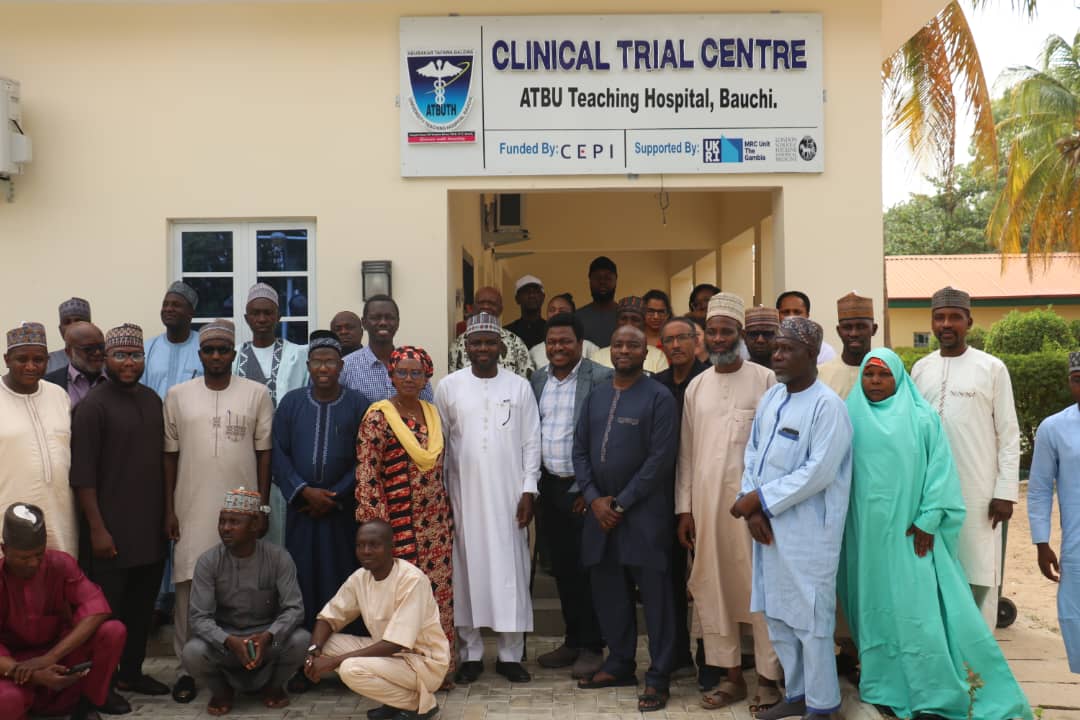
CEPI’s Research Preparedness Program is helping close this gap by strengthening clinical trial infrastructure, systems and skills at frontline sites across West Africa - transforming them into trial sites capable of generating vital clinical trial evidence before and during outbreaks.
Across five sites in Nigeria, that shift is already underway:
🔵 New and upgraded clinical trial facilities
🔵 Trained teams ready to activate quickly
🔵 Sites now able to run clinical trials, with some already getting started
Establishing this clinical trial capability now means that in the event of a Disease X outbreak, rather than starting from scratch, the trial sites could potentially pivot to support emergency evidence generation needed to advance vaccines through approval, in support of CEPI’s 100 Days Mission.
In our latest Innovations for Impact story, we spoke to two site leads, Dr Yusuf Bara Jibrin and Professor Benedict Azuogu, about what this transformation looks like on the ground ⬇️
https://t.co/aQYEltfkUv
A virus carries no passport and can’t be deterred by weapons. Yet we spend trillions on arms while underfunding the health systems that protect us all.
Health security IS security.
The world needs better global leadership.
Heartbreaking video. But filled with awe & gratitude for colleagues like Dr Richard Kojan (who’s also known for his work managing Lassa fever cases!) and many others working in challenging circumstances.
Are you applying to CEPI’s urgent Call for Proposals to accelerate the development of Bundibugyo virus vaccine candidates?
Join our upcoming webinar and live Q&A session.
This session is designed to support prospective applicants by addressing key questions on the scope of the call, application requirements, and submission process.
The webinar will include a brief overview of the Call for Proposals—covering its objectives, priority areas, and eligible activities for funding—followed by an opportunity to ask questions and seek clarification to support proposal preparation.
Attendees are encouraged to submit questions in advance using the link below.
Date & Time: 4 June 2026, 15:00 (London)
Register: https://t.co/M5HebZnCl9
NEW: An Oxford-developed vaccine candidate targeting the Bundibugyo strain of Ebola has received backing from CEPI, accelerating efforts to respond to the epidemic in the Democratic Republic of the Congo and Uganda.
More info ➡️ https://t.co/cPNNWJFwEN
🔉 CEPI is urgently accelerating the development of three investigational vaccine candidates towards clinical trials in response to the deeply concerning Bundibugyo ebolavirus epidemic.
More in the press release: https://t.co/9Me8RVv3CH
A vaccine can only succeed where strong systems, community trust, & frontline preparedness already exist.
In this #NHWPost, @u@unclejaggz explores how the ENABLE study in Bauchi is helping prepare Nigeria for the future rollout of a Lassa fever vaccine.
Read: https://t.co/qWnCElVZ8L
#EndLassaFever
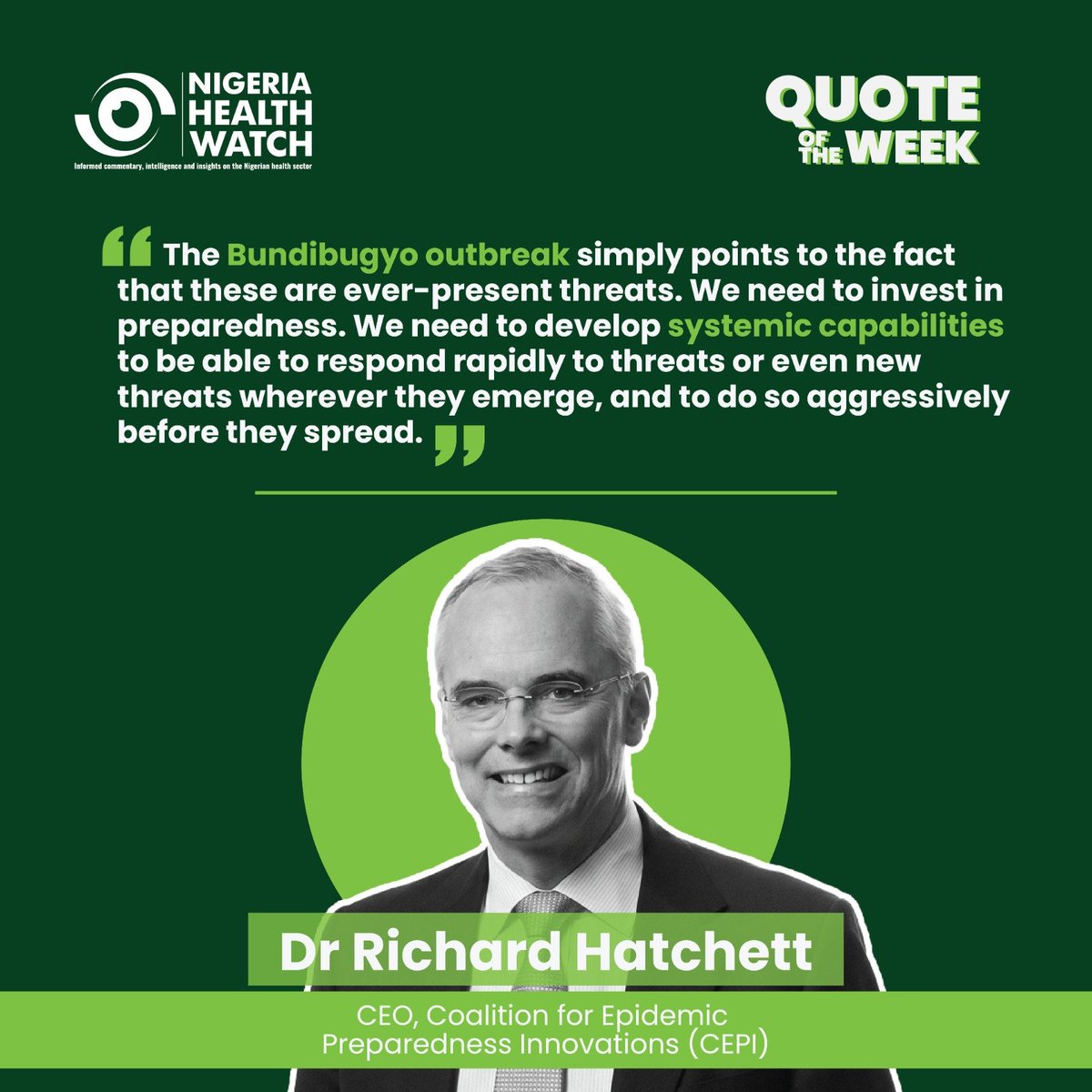
#NHWQUOTEOFTHEWEEK
Recent public health emergencies have shown that outbreaks can spread quickly when detection, response, and preparedness systems are weak.
Investing in preparedness, surveillance, and resilient health systems remains one of the most effective ways to detect threats early and protect lives across borders.
#Ebola #Bundibugyo
What has #Lassafever taught West Africa about building stronger regional health security systems?
Join @OoasWaho at #GHS2026 for a breakfast session exploring lessons from Lassa fever vaccine development, preparedness, regional coordination & more.
Reg: https://t.co/HRgJqOPaXN
The current #Ebola outbreak is exposing the consequences of global health funding cuts.
🇺🇸 U.S. assistance to DRC reportedly fell from $1.4 BILLION in 2024 to just $21 MILLION in 2026.
At the same time:
🧪 labs lost capacity
👩🏽⚕️ health workers were laid off
🚑 surveillance + preparedness programs were dismantled
Now there are ~ 1000 suspected cases and hundreds of deaths.
You cannot cut the systems that detect and stop outbreaks early — then act shocked when they spiral. Pathogens exploit weak systems.
Unser LBI SOAP macht derzeit eine Umfrage über Risikowahrnehmung und Vertrauen in die Wissenschaft beim Thema Andes Hantavirus. Zielgruppen sind Allgemeinbevölkerung sowie Lehrpersonen insbesondere.
Bitte mitmachen!
https://t.co/viVLAfv2be
The current #Ebola outbreak in #DRC did not happen in a vacuum. Major cuts to programs supported by @USAID — have weakened surveillance, laboratory systems, healthcare staffing, infection prevention, and outbreak response capacity.
When funding disappears, outbreaks are detected later, response teams are smaller, supply chains break down, and trust in health systems erodes. The cost of dismantling global health capacity is measured in lives.
Outbreak preparedness is not charity. It is global health security.
Given all the rumors flying around about the current #Ebola outbreak, important to stick to the facts.
Look at the newly published Disease Outbreak News on the PHEIC 👇
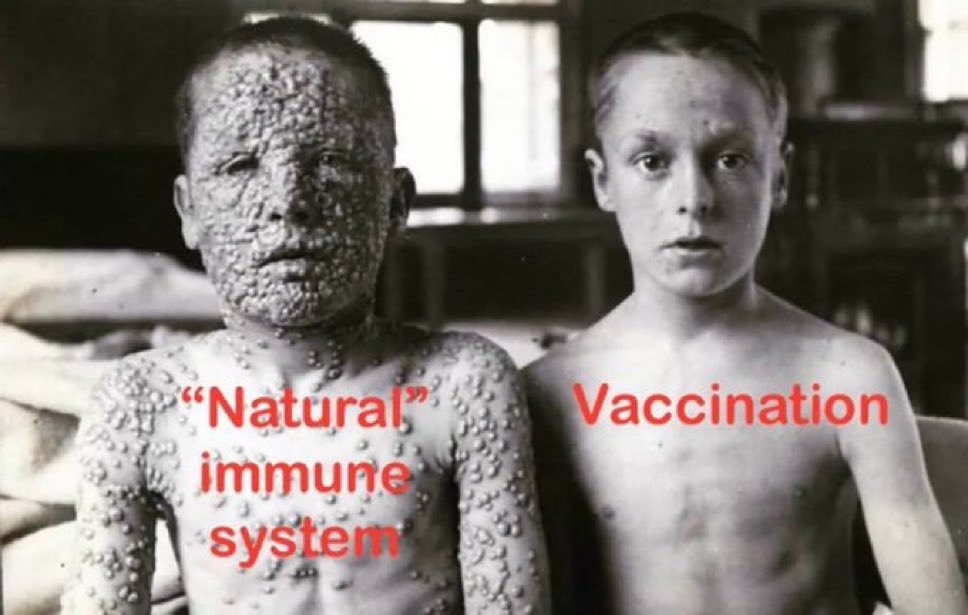
New: Researchers at Stanford University modeled how many people could die or be disabled in 25 years if vaccines for polio, measles, rubella or diphtheria were no longer available. https://t.co/UD5CqAr17X
Strengthening capabilities needed to advance a Lassa fever vaccine are also those needed to ensure any vaccine can be developed, whether for a known disease like Lassa fever or a future Disease X.
This approach sits at the heart of CEPI 3.0 and the 100 Days Mission. More ⬇️