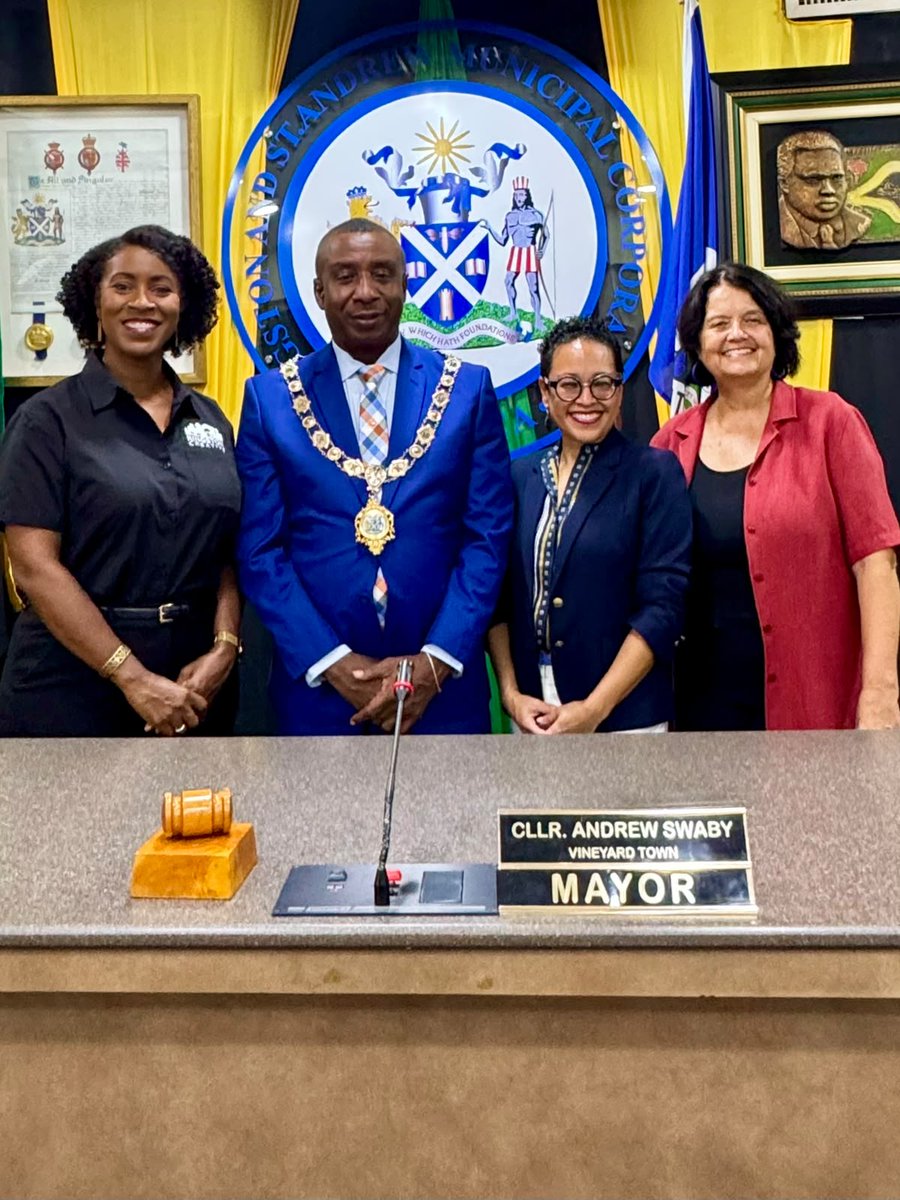
It's official! Downtown Kingston is now an Art District. @ksamcorp voted to establish the Downtown Kingston Art District. What began in 2017 as eight murals on Water Lane is now 100+ public artworks, festivals & tours. See it at #KIF2026, 6–13 Dec. #Jamaica#DKAD@kgncreative
At 2 a.m., exhausted and overwhelmed, she reached for a pair of scissors and a shower curtain. Manufacturers told her nobody would buy it. It sold out almost at once and helped spark a billion-dollar industry she was never properly credited with creating.
Marion Donovan was born in 1917 in Indiana, into a world where women were expected to follow certain paths: marriage, motherhood, homemaking. Invention was not supposed to be one of them.
But Marion’s childhood was different.
She lost her mother when she was young. Instead of being sent to relatives or a boarding school, she remained with her father, an engineer whose work shaped early industrial manufacturing. While other children played with dolls and tea sets, Marion spent her time in her father’s workshop, surrounded by tools, blueprints, and the constant rhythm of problem-solving.
She learned to look at the world the way an engineer does: nothing was fixed, everything could be improved, and every frustration was really an invitation to redesign.
That instinct appeared early. While she was still in grade school, she brought her father an idea for a cleaning product. Most parents might have smiled and told her to focus on school. Her father did not. He helped her think it through, test it, and improve it.
That early support taught Marion a lesson she would carry for the rest of her life: ordinary frustrations could become opportunities. Problems were not things to endure. They were things to solve.
She thrived in school and earned a degree in English literature in 1939. She moved to New York City, where she worked in fashion publishing, a respectable and creative job for a young woman. Her life appeared settled. Successful. On course.
She married in the early 1940s and eventually left her job to raise a family in Connecticut. By then, she had everything society said she was supposed to want: a husband, children, a comfortable home.
But motherhood brought a reality no one had prepared her for.
By the mid-1940s, Marion found herself buried under endless household demands. Caring for small children meant constant outfit changes, soaked bedding, and piles of laundry. Every day. Every night. Again and again.
The baby products available then were crude. Cloth diapers leaked all the time. The rubber pants meant to cover them were rigid, uncomfortable, and caused rashes. Babies cried. Parents suffered through it. And everyone simply accepted it as normal.
Marion did not.
One late night, running on almost no sleep, changing yet another soaked outfit and washing yet another load of bedding, she searched the room for something, anything, that might help.
Her eyes fell on a shower curtain.
It was flexible. Waterproof. Light enough to be comfortable.
That moment, 2 a.m., exhausted, holding scissors and a shower curtain, changed everything.
She cut. She sewed. She tested different shapes, different designs, and different ways of fastening the material. She worked through the night, through nap times, through every spare minute she could find.
And she created a waterproof diaper cover that actually worked.
But the shower curtain material was still too stiff. Babies could not move easily in it. So Marion kept experimenting. She found lightweight nylon fabric, originally developed for parachutes during World War II. It was breathable. Gentle on skin. Strong enough to keep moisture out, yet soft enough to stay comfortable.
She added snap fasteners to replace the sharp safety pins parents dreaded. No more accidentally pricking a baby’s skin while fastening a diaper in the dark. No more loose pins creating danger.
The result was revolutionary: a product that kept babies dry, prevented diaper rash, cut down endless laundry, and made parenting a little easier.
Marion knew she had something important. She was sure of it. She had solved a problem millions of parents faced every day.
So she approached manufacturers. Major companies. The ones with baby product lines, distribution networks, and the ability to put her invention in the hands of every parent who needed it.
One after another, they said no.
Executives, mostly men who had likely never changed a diaper themselves, insisted there was no demand. They believed parents were satisfied with what already existed. They could not see the problem Marion had solved because they had never lived it.
Marion disagreed.
If manufacturers would not help her, she would do it herself.
In 1949, she persuaded Saks Fifth Avenue, a luxury department store in New York, to carry her invention. She called it the “Boater.”
It sold out almost immediately.
Word spread. Parents told other parents. Stores that had once passed on it suddenly wanted to stock it. By the early 1950s, Marion’s invention was bringing in more than a million dollars in revenue.
She secured multiple patents. She improved the design. She built a business from the ground up while raising two young children, because that is what mothers do: solve problems with one hand while holding a baby with the other.
Eventually, she sold her company for $1 million. In 1950s money. For a product she had invented at her kitchen table because no one else was willing to solve the problem.
But Marion was not finished inventing.
She kept experimenting with new materials. She began developing ideas for fully disposable baby care products, diapers parents could throw away instead of wash.
She pitched the idea to major manufacturers. Once again, they showed little interest. They did not see the market. They did not understand why parents would pay for something disposable.
Marion knew they were mistaken. But she could not make them listen.
Years later, Procter & Gamble introduced Pampers and built a multi-billion-dollar industry around disposable diapers. It was the very idea Marion had proposed. The very problem she had tried to solve.
She never received proper credit for it.
Over the course of her life, Marion earned 20 patents. Every one of them focused on practical ways to improve daily life. Storage ideas. Organizational tools. Small innovations that made ordinary tasks easier.
In her forties, she returned to school and earned a master’s degree in architecture from Yale University. She kept designing, inventing, and solving problems well into later life.
Her home became a workshop. Drawings covered the walls. Prototypes filled the rooms. Materials and tools lay scattered across tables. The question that guided her, asked over and over each day, remained simple:
“What problem can I fix?”
Marion Donovan died on November 4, 1998, at the age of 81.
For years, her contributions remained largely overlooked. The disposable diaper industry she had imagined became a global empire worth tens of billions of dollars, and most people never knew that an exhausted mother in Connecticut had first recognized its potential.
In 2015, seventeen years after her death, Marion was finally inducted into the National Inventors Hall of Fame. Her work is now preserved in the Smithsonian and other national collections.
But the real proof of Marion Donovan’s impact is not in a museum or a hall of fame.
It is in every parent who has ever used a waterproof diaper cover. Every baby who slept comfortably through the night. Every exhausted mother or father who got a little more rest because someone invented something that made life easier.
A global industry worth tens of billions of dollars can trace its beginnings to one woman who refused to treat inconvenience as permanent. Who looked at a problem everyone else had accepted and said, “I can fix this.”
Who picked up scissors and a shower curtain at 2 a.m. because her baby was crying and there had to be a better way.
Sometimes progress does not begin in corporate labs or boardrooms full of executives making strategic decisions.
Sometimes it begins at 2 a.m., with scissors, fabric, and the certainty that things can be better.
Sometimes it begins with a mother too exhausted to accept the world as it is and too determined to stop trying to improve it.
Marion Donovan was told her invention had no market. She proved them wrong when it sold out immediately.
She was told disposable diapers would never succeed. Years later, companies built fortunes on the exact idea she had already proposed.
She earned 20 patents. She earned a degree in architecture in her forties. She spent her whole life asking, “What problem can I fix?” and then finding a way to fix it.
And for most of her life, almost no one knew her name.
That is the reality for so many innovators, especially women, especially mothers, who solve problems because someone must, not because they expect recognition.
But the problems remain solved. The innovations remain. The world becomes a little better because someone refused to accept that things had to stay the way they had always been.
Marion Donovan learned to think like an engineer because her father taught her to.
She invented like a mother because she had to.
And she changed the world with a shower curtain and a pair of scissors because no one else would.
I saw this coming. Meghan’s relationship with her father broke down around the time of her wedding, amid the controversy surrounding his dealings with the tabloids. Yet she remained largely silent while he publicly criticised her, and the press had a field day portraying her as the heartless daughter.
None seemed interested in what she might have been feeling or what had led to that silence. The narrative became that she had abandoned her father. The few times she spoke about him, it was to express how much she had lost. Harry even suggested that if he hadn't been in the picture, she might still have had her dad. But let's not twist what that meant. The media attention surrounding Meghan intensified because she was marrying into the Royal Family.
By the time she was notified about the letter concerning her father, their relationship was already strained, and he was deeply immersed in media interviews and seemingly enjoying the attention. Yet Meghan didn't retaliate publicly or respond to every humiliation. She simply learned to live with the constant public scrutiny and the narrative being constructed around her.
Now, years later, the same press that helped turn this family breakdown into a public spectacle is questioning Meghan's motives and scrutinising her account. Where was this energy when she was being cast as the antagonist? Why was there so little interest in hearing her side of the story then?
You cannot spend years allowing one person to be portrayed as the heartless one, ignore or dismiss the circumstances that contributed to the breakdown, and then act surprised when the story doesn't fit your preferred narrative.
You cannot demand empathy for one side of a family breakdown while refusing to extend the same consideration to the other.
#IStandWithMeghan
En 1907, une fillette de trois ans dégringola l'escalier de la maison familiale à Londres. Quand le médecin de famille arriva, il la trouva sans connaissance et la déclara morte. Ses parents étaient dévastés, mais environ une heure plus tard, la petite fille se réveilla soudainement et semblait en parfaite santé. À partir de ce jour, elle se mit à affirmer que sa vraie maison se trouvait quelque part très loin, dans l'Égypte ancienne.
Elle s'appelait Dorothy Eady, et ses expériences singulières allaient finalement faire d'elle l'une des figures les plus fascinantes associées à l'égyptologie.
Après l'accident, Dorothy demandait sans cesse à être ramenée chez elle. Ses parents tentaient de lui expliquer qu'elle y était déjà, mais elle refusait d'accepter leur réponse. Elle décrivait plutôt un lieu magnifique avec de beaux jardins, d'immenses colonnes de pierre et des arbres que sa famille ne reconnaissait pas. Ils n'avaient aucune idée d'où pouvaient venir ces souvenirs.
Tout bascula lors d'une visite au British Museum. Quand Dorothy entra dans les galeries égyptiennes, elle s'anima visiblement. Elle se précipita vers les statues antiques et en embrassa les pieds, insistant sur le fait qu'elle était des leurs. « Laissez-moi ici avec les miens ! » s'écria-t-elle, laissant ses parents déconcertés par sa réaction.
Sa fascination s'intensifia lorsqu'elle vit une image du temple de Séthi Ier à Abydos. Dorothy reconnut immédiatement le bâtiment et s'exclama : « Voilà ma maison ! » Elle se demanda ensuite ce qu'étaient devenus les arbres et les jardins dont elle se souvenait autour de lui. Ses parents y voyaient une obsession d'enfance extraordinaire, mais Dorothy était convaincue de se remémorer un endroit où elle avait autrefois vécu.
En grandissant, son intérêt pour l'Égypte ancienne prit une tournure plus sérieuse. Elle en étudia l'histoire, la religion et la langue, apprit à lire les hiéroglyphes et acquit une solide connaissance des traditions égyptiennes antiques. Pourtant, Dorothy affirmait faire bien plus qu'étudier une civilisation disparue des millénaires plus tôt. Elle croyait y avoir vécu dans une vie antérieure.
Selon son récit, elle avait jadis été une femme nommée Bentreshyt, qui officiait comme prêtresse au temple de Séthi Ier. Elle prétendait également avoir entretenu une relation interdite avec le pharaon lui-même. Beaucoup balayaient ces histoires d'un revers de main, les attribuant à l'imagination, tandis que d'autres les considéraient comme le fruit d'une expérience psychologique hors du commun. Dorothy, elle, n'abandonna jamais sa conviction que ces souvenirs étaient réels.
En 1933, elle se rendit enfin en Égypte. Plutôt que de se sentir étrangère dans un pays inconnu, elle décrivit l'expérience comme un retour au bercail. Elle épousa un Égyptien et eut un fils prénommé Sety. C'est grâce à lui qu'elle finit par être connue sous le nom d'Omm Sety, signifiant « Mère de Sety ».
Sa vie se trouva peu à peu intimement liée à Abydos, ce site antique vers lequel elle se sentait attirée depuis l'enfance. Elle quitta finalement Le Caire pour s'installer près des ruines, dans une modeste maison en briques de terre crue, à deux pas du temple de Séthi Ier. Mais elle n'était plus simplement une femme passionnée d'histoire ancienne. Elle s'impliqua dans des travaux archéologiques et collabora avec le Département des Antiquités d'Égypte. Sa connaissance des inscriptions antiques, des rituels religieux et des traditions du temple lui valut le respect de ceux qui travaillaient sur le terrain, y compris de certains qui ne croyaient pas à ses affirmations sur une vie antérieure.
Des récits sur les capacités inhabituelles de Dorothy continuèrent à circuler. L'un d'eux décrivait un inspecteur sceptique qui aurait décidé de mettre ses connaissances à l'épreuve en l'emmenant dans le temple de Séthi Ier dans une obscurité totale. Il lui demanda d'identifier l'emplacement de peintures murales particulières qui n'avaient pas été documentées publiquement. D'après l'histoire, Dorothy les désigna sans hésiter, expliquant qu'elle se souvenait des murs de son existence passée.
Un autre récit concernait un jardin que Dorothy croyait avoir autrefois jouxté le temple. Elle décrivait s'y être promenée parmi les plantes et la verdure des millénaires plus tôt, alors que le paysage environnant semblait sec et aride. Des archéologues auraient exprimé leurs doutes, mais des fouilles auraient mis au jour des traces d'anciennes racines végétales et des canaux d'irrigation dans la zone qu'elle avait décrite. Pour ceux qui la croyaient, ces découvertes semblaient corroborer ses souvenirs. Les sceptiques, eux, se demandaient si ses années d'étude approfondie de l'histoire égyptienne ne suffisaient pas à expliquer ce qu'elle paraissait savoir.
Dorothy ne semblait guère troublée par ces désaccords. Elle continua à étudier le temple, à aider les archéologues et à consigner les détails des pratiques religieuses de l'Égypte ancienne. Même parmi ceux qui rejetaient son explication par la réincarnation, ses connaissances et son dévouement étaient largement reconnus. Quelle que fût la source de ses convictions, elle avait développé une compréhension remarquable de la civilisation qui la captivait depuis l'enfance.
Au fil des années, Omm Sety devint une figure familière et mémorable à Abydos. Les visiteurs croisaient une vieille dame vivant paisiblement au bord des ruines antiques, parlant avec passion d'un monde disparu des millénaires avant sa naissance. Elle resta attachée à l'Égypte jusqu'à sa mort en 1981.
Son histoire laissa derrière elle une question qui n'a jamais trouvé de réponse. Dorothy Eady se remémorait-elle une vie qu'elle avait autrefois vécue, ou bien un accident d'enfance traumatisant et une fascination d'une puissance inhabituelle pour l'Égypte avaient-ils façonné l'identité qu'elle porta tout au long de sa vie d'adulte ? Aucune réponse définitive n'existe. Ses affirmations demeurent une part du mystère qui entoure son existence, tandis que sa connaissance de l'histoire égyptienne antique et son travail à Abydos constituent des pans importants de son héritage.
Dorothy avait commencé comme une petite fille qui affirmait que sa vraie maison se trouvait quelque part que sa famille n'avait jamais vu. Adulte, elle traversa des continents, apprit une langue ancienne et se consacra à l'étude et à la préservation de la civilisation qu'elle aimait. Que ses souvenirs fussent authentiques ou imaginaires, son attachement à l'Égypte ne se démentit jamais.
Perhaps that is what makes her story so compelling. Dorothy Eady spent much of her life searching for a place she believed she had lost. In the end, she settled beside the ancient stones of Abydos, close to the temple she had recognized as a child, and devoted her remaining years to the world she had always called home.
#storytime #truestory
https://t.co/hoLnjGN8db
@PursueTheDream_@cee_suella You're correct that primary or elementary (depending on the country) teachers are trained this way. However, specializations such as reading specialists do exist.
I took this photograph 20 years ago, in the French Quarter in April 2006, eight months after Katrina.
Two girls in a slow moving pickup kept yelling, take our picture, take our picture. One of them got shy and turned away, so her friend pushed her face back towards my camera. Snap. The truck was gone in an instant.
As far as I know, neither of them has ever seen this photograph.
I wrote that the girl on the left embodies the joie de vivre New Orleanians have, that even the people hardest hit by life here carry a spirit about them. Twenty years of photographing cities later, I still believe that.
Tennessee Williams said America has only three cities: New York, San Francisco, and New Orleans. Everywhere else is Cleveland.
San Francisco is home. I have spent half my life photographing New York and New Orleans. There is a lot of truth in that quote, and some days, standing on a corner in the Quarter, I believe every word of it.
But I am also in the middle of photographing the 100 largest cities in America, with albums published for 60 of them, and the project has ruined the quote for me a little. Detroit has a grit and a dignity all its own. So does Pittsburgh. So does Memphis, and El Paso, and a dozen other places Williams would have waved off as Cleveland. And of course Chicago has that pizza. And don't you dare try to say Lou Malnati's deep dish is not pizza. Every great city has its own charm. You just have to walk it with a camera until it shows you.
So no, I will not take the Williams quote as religion. But back here in New Orleans this weekend, with the food and the music and the art and the people. I understand exactly why he said it.
My 100 Largest American Cities collection: https://t.co/9n8XuEzubr
Now the part I actually care about. Somewhere out there are two women who were girls in a truck in the Quarter in 2006. Were they sisters? Friends? I would love to take their portrait again, 20 years later. How awesome would it be if this found them?
And Cleveland, defend yourself. Tell me why your city belongs on the list. You are one of the hundred American cities I still need to photograph.
@KellyKatharin@TeraLepido I'm in a book club that has discussed several Marlon James books, most recently A Brief History of Seven Killings. Some members weren't "brave" enough to finish it, and if The Disappearers is added. I might be among those who aren't "brave" enough to finish it.
Imagine being so consumed by hatred for a public figure that you choose to harm a nonprofit helping vulnerable families.
Meghan Markle shared a post supporting Moms Offering More, a charity providing essentials for mothers and children. Trolls have swarmed the charity’s page with harassment, vitriol, and negativity solely because of the association.
This is no longer mere internet drama. When obsession with a celebrity leads you to attack a group that feeds, clothes, and supports struggling mothers, you have lost your moral compass. If hatred for one woman outweighs empathy for families in need, step away from the screen and reflect.
How do you look a family still sleeping under tarpaulin in St. Elizabeth, Westmoreland, Hanover or St. James in the eye and explain that only 1.8% of donated relief funds was spent, while millions go into a brand-new agency?
why aren’t the robots working in the mines and oil fields and handling toxic chemicals or picking plastic out of the ocean? why are they writing emails and making powerpoint presentations? what the hell are we doing
Yesterday, teaching my Grade 9 class the history of Caribbean agriculture, we arrived at the word "colonial," and I wanted to give them some context for it.
I asked, "Have you guys heard about slavery?"
Yes, they said.
"What is slavery?"
"Work without being paid."
And I thought to myself — that's reasonable. That's not a bad starting answer for a fourteen-year-old.
So I pushed a little further. "Give me an example of slavery."
The examples they gave me were schoolwork. Chores at home. I give them a lot of homework, one of them said, and they don't get paid for it.
And it struck me — descendants of enslaved people, sitting in a classroom in Jamaica, reaching for schoolwork as their example of slavery. Not because they were being flippant. Because that is genuinely the frame they have been given.
So I had to back up and explain what chattel slavery actually was — that our ancestors were legally reduced to property, that they did not own their labour, their homes, their relationships, or even their children.
Then they asked the question that always comes next: how did slavery come about? How did the Africans even reach the Caribbean?
I explained that they were sold off by other Africans first — that part of the story has to be told honestly too. But then I detailed what awaited them once they hit those ships and reached the Caribbean, and that's where the numbers came in, and the contrast — because nowhere was it more brutal than right here.
The United States received roughly 450,000 Africans over the entire course of the slave trade. Today, the African-American population descended from that group is over 40 million.
Jamaica took in up to a million people — more than double what the US received. Today, home and diaspora combined, we have not reached five million.
Same trade. Same era. Wildly different arithmetic.
The difference isn't a mystery. Sugar slavery in the Caribbean worked people to death at a rate so brutal the enslaved population couldn't sustain itself by birth — planters had to keep importing people just to replace who was dying. In the American South, the enslaved population actually grew through birth, even under bondage. Two systems, both evil, but one consumed life faster than it could be replaced.
Our ancestors did not merely work without pay. Many were worked to death. Families were broken faster than they could become established. Those who survived the plantation often left their descendants with little land, little property, no accumulated wealth.
We rightly call ourselves resilient. But sometimes that language becomes so triumphant it hides the graves.
Yes, we survived — but a lot of us died.
This doesn't excuse what we fail to do now. History cannot become an alibi. But responsibility without historical understanding becomes condemnation. We cannot repair what we refuse to face.
That's why homework is not slavery. Chores are not slavery.
Slavery enriched somebody else while consuming the worker. Education, discipline, responsibility "done right" place something in a child's hands that becomes theirs to keep.
We owe our children that difference. Not just because our ancestors were enslaved, but because so many of them never lived to see freedom.
3.3 MILLION LIGHTNING STRIKES! ⚡️
That's how many we've had across #Florida in 2026 so far. The lightning total is 28% above average and the highest in at least 8 years with also a wet and stormy El Nino ahead. So if you thought it seemed like we've had more lightning this year, you were right!