If I were being asked to lead a new team next year, I'd get damn good at these 9 essential skills fast.
(You might want to bookmark this for later)
1. Establish Clear Employee Expectations
💡Key Lessons:
- Author together for ownership
- Align on How, not just What
- Amplify w/ clear feedback
🔥Bonus: Free expectations template https://t.co/TUogexKPoT
2. Delegate Work That Empowers
💡Key Lessons:
- Bucket the work by risk level
- Pick the person for skill or interest
- Tasks -> Responsibility -> Ownership
🔥Bonus: Revised Eisenhower framework https://t.co/x8gHa3LcWh
3. Hold Effective One-on-One Meetings
💡Key Lessons:
- Don't cancel
- Make it their meeting
- Ask empowering questions
🔥Bonus: Free 1:1 Dashboard Template https://t.co/qYIrzKQHDE
4. Deliver Honest Feedback
💡Key Lessons:
- Lead with questions, not critiques
- Avoid secret expectations
- Structured & succinct
🔥Bonus: The Critical Feedback "Mad-lib" https://t.co/i6X4AgRa18
5. Deftly Handle Poor Performers
💡Key Lessons:
- Ensure they're enabled to win
- Pinpoint why they're underperforming
- Be clear about acceptable vs. unacceptable
🔥Bonus: The Spectrum of Underperformance
https://t.co/zm5liNiVkf
6. Avoid Making a Bad Hire
����Key Lessons:
- Spot the signs of common culprits
- Focus on the Why more than the What
- Use unexpected questions for authentic answers
🔥Bonus: My 6 Favorite Interview Questions https://t.co/ig6SfNiugn
7. Build A Magnetic Team Culture
💡Key Lessons:
- "What you do is who you are."
- Share your myths. Hold your rituals
- Values strong enough to repel & attract
🔥Bonus: Templates from Netflix & Zappos https://t.co/gb7RSDxxgO
8. Make Better Decisions
💡Key Lessons:
- Establish Operating Principles
- Keep a Decision Journal
- Daily Answer Drip
🔥Bonus: Hindsight is 20/20 Decision Template
https://t.co/Tqa4OY0sRW
9. Learn How to Coach
💡Key Lessons:
- It's their path with your push
- Experience or Evolution?
- Amplify their advantage
🔥Bonus: Keep-Stop-Start Development Template
https://t.co/VdGDoEUleD
******
We've welcomed 15,000+ leaders to our MGMT Playbook community this year. And they received one practical playbook each week. Always less than a 5 minute read.
https://t.co/O8QrxvN6pA
The best part, I take requests. Drop your biggest leadership challenge in the comments and I'll see if we can work it into next year's topic list.
Quality without a name
As companies grow, they often have a hard time with quality, and usually just give up on it. Main reason is that quality is something which cannot be easily measured or defined. As the companies scale, the way they operate or make decisions, are based more on measurements. They start flying with the dashboard instead of flying by looking out of the window because the former is easier to do in scale.
Christoper Alexander opens his book Timeless Way of Building, that in order to build with a timeless way, we first need to find the “quality without a name”.
What he is saying is that quality exists, it can be experienced and perceived, but it cannot be described by words. A town, place, or building that just feels good and natural.
You can spec that a door needs hinges and locks that function, but we all have experienced a wide range of very smoothly working, quality doors, and very janky working, bad quality doors.
Usually the quality doors happen because someone took the care to first build the door and all of its parts, and then install the frame and the door correctly, and kept it maintained over the years. Measurement like number of doors installed or times the door is used never gives you anything about how good it is.
This throws off many people in the tech world, where often things are seen as binary and belief that the world or anything can be reduced to mathematical formulas. It’s almost as if you have to stop thinking for a minute, and just focus on the experience.
The only way I know to promote quality in companies is to keep reminding people about the quality and why it matters. Most of us are in the retention business. We like to see our customers stick around, build trust and loyalty. Quality of the product, and customer is one the key drivers of that - yet many companies forget that.
So how to promote it? You can give examples of previous quality things the team has built, show other products or show your way of looking at things. When something feels quality, it often feels natural and you may even feel positively surprised. Quality is so rare generally that people are often surprised by it.
Quality rarely happens as an accident, it usually means someone is willing to go further building something that necessarily. At least, someone has to be motivated and allowed to do it, not forced to solely focus on some measurements.
Quality, brand and culture are some of those intangible things you need to create as a company founder.
@danmall It’s more uk biased but rebel finance school from the Donegans has a bunch of videos and explanations on tracker investing, along with tools - it is also about how we think about money and building wealth. Been a good resource https://t.co/dnlxx4tjWc
Often founders think brand is a logo or the colors, and that it’s something you can think about later.
With @linear we thought about it the brand from the day one.
But brand is not a logo, colors or the website. It’s what you stand for as a company. You then build the brand in people’s minds over time with the actions you take, the service you produce and the things you say.
At Linear we often ask an ourselves if something we do internally or externally “on brand”. If it’s not, we won’t do it.
The visual representation or the name of the company only serves as the anchor what people can associate their feelings and thoughts about your company.
@designsystemu To learn more about growing in design and design systems:
1. Follow me @danmall.
2. Please RT the tweet below to help others grow in a design systems career.
"Hire slow. Fire fast."
Easy in theory.
But most leaders struggle in practice.
- Am I being fair?
- Have I set them up for success?
- What if they're about to turn a corner?
Here's my playbook to help you decide:
Anyone who manages people has been there:
- You found the perfect person for the team
- You rationalize their initial slow start
- You see effort but little impact
That's when you go into coach mode.
But 6 months later, they're still not clicking.
Better.
But not good enough.
Is it your coaching or their fit?
Make sure you're not making any of these classic coaching mistakes:
Talking Too Much
- You're the stimulus, not the response
- Think of yourself as the prompts in a journal
- Your best tool: silence
Talking Too Little
- They're called blindspots b/c they can't see them
- Do your questions help them discover the truth?
- Your best tool: compassionate candor
Being Too Loose
- Every journey needs a map
- Frameworks provide shape; people put in the effort
- Your best tool: accountability
Being Too Rigid
- You're coaching humans, not AI models
- Meet them where they are, not where you wish they'd be
- Your best tool: active listening
You're Not The Hero
- Managers answer questions. Coaches question answers.
- Guide them to solve the problem, don't solve it.
- Your best tool: Socratic questioning
You're Not The Expert
- The problem is that you might be the expert
- With coaching, you create space for them to be
- Your best tool: curiosity
There's one other mistake, but it's not yours.
You can't coach someone who doesn't want to improve.
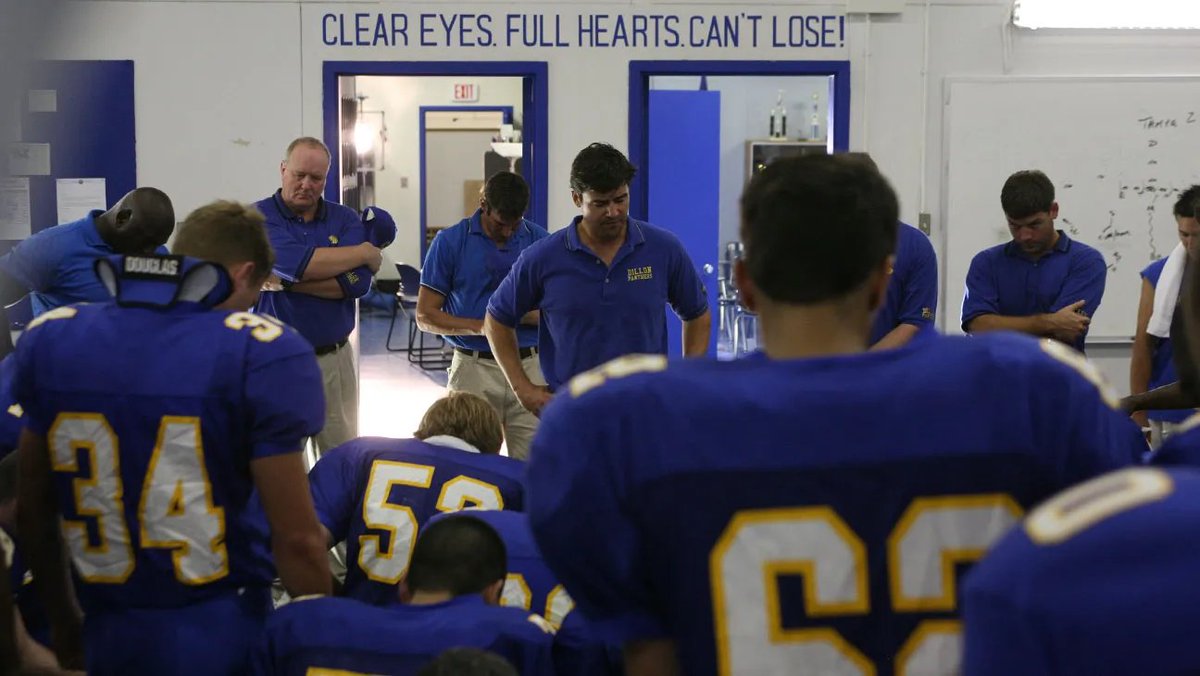
There's a classic scene in Friday Night Lights. Coach Taylor sees one of his star players, Smash Williams, who stopped playing football because he injured his knee senior year and lost his scholarship.
Coach keeps trying to coax him back. Smash keeps avoiding his help.
Finally, Coach throws down the gauntlet:
"I can't want this for you."
You might be an amazing coach, but they have to want it.
The last mistake to avoid:
Don't confuse a lack of skill for a lack of will.
I'm still finding my groove on X. If this resonates with you, please share it or jump in on the comments. And give me a follow @dklineii for more like it.
Reasons to join us at #LeadingDesign London on 8-9 Nov at @BarbicanCentre.
🌎 World-class speakers (https://t.co/WdcM2QArfq)
💕 Lovely design leader peers
🌴 A very cool venue
☕️ Delicious food and coffee
🥂 A drinks party!
Andreas Wannerstedt crafts unique 3D sculptures and mesmerizing looping animations. His synchronised animations have often been described as “oddly satisfying”, since the overall effect evokes a hypnotizing feeling
Product Management is not about:
- Asking customers about the requirements
- Writing detailed specifications
- Creating prototypes and wireframes
- Assigning tasks to developers
- Verifying and accepting the work of others
- Obsessing over velocity, deadlines, and roadmaps
- Mastering Scrum to perfection
- Acting like the CEO of the product
Anyone can do that.
It's about:
- Understanding customer's problems, needs, and desires
- Understanding the market and the business in depth
- Collaborating closely with engineers and designers
- Identifying opportunities, ideating solutions, and tackling the risks together
- Marrying customer goals and business goals
- Influencing others to work toward the common goal
- Being humble (it's ok not to be the smartest person in the room)
- Experimenting to validate assumptions
- Leading without authority
- Turning chaos into clarity
Start with these questions:
- Why are we building this thing?
- Why are we building it now?
- For whom are we building it?
- What's the unique value of our product?
- How is it aligned with the company's vision?
- How is it aligned with the business strategy?
- What does success look like? How can we measure it?
- What are the customer needs/jobs (functional, emotional, social)?
- How will it affect our customers and users?
- How will it create value for the business?
- Can we buy it instead of building it?
- How can we make sure that our customers would love it?
- Will our customers know how to use it?
- Can our business support it (e.g., legal, finances)?
- Is it feasible? Can we build it?
- How can we bring it to the market? Do we have the required channels?
- Should we do it at all? Are there any ethical considerations?
- What are the riskiest assumptions? How can we validate them?
- What does the data tell us?
- How can we get maximum validating learning with minimum effort?
Be curious. Learn and experiment. Question solutions and push back on things handled down.
Remember that product management is about creating a "product customers love, yet also works for our business" (Marty Cagan, Inspired), not about pleasing stakeholders.
After 9 years, I'm still learning daily, and I do not know everything, but I can give you my perspective on any questions you have.
Drop them below.
🤿 Deep Dives just crossed 10k downloads in ~3 months
The crazy thing is it was all by accident...
I did NOT plan to release a podcast lol
The goal was just to record conversations that I could slice up for the Dive website.
But after 3 chats with Joey Banks, Steph Engle and Bonnie Kate Wolf I thought...
Geez these are pretty epic? Like I would TOTALLY listen to this straight through.
And so we switched strategies and decided to release them on Spotify/Youtube because why the heck not 🤷♂️
Fast forward to today and it's one of the most energizing parts of my life. It pulls me out of my comfort zone in the best way and I think I plan to do this for a very long time...
Being able to ask designers at the top of their game the exact questions I'm curious about is a superpower 💪
So ya... that's a fun little update that I didn't see coming 😆
Moving forward is there anyone you'd like me to interview?
🤿 Deep Dives season 1 is officially LIVE
The goal is to unlock expertise from the best designers so you can learn from their journey and take a leap forward in your own career
All the streaming links are below 👇