Can AI replace the human being? At AFTER HEIDEGGER, Prof. James O. Finckenauer (Rutgers, Academician of EUASU) argues that some choices must stay “human-reserved”: they rely on cues no one can program.
🎥 https://t.co/SF3SRPKq69
#AfterHeidegger#EUASU
Why go on a scientific expedition when you can work with books and archives? Not every question can be answered through written sources. Sometimes, to move forward with research, you need to study the subject firsthand, not just rely on what is already known about it.
VECTOR THESIS
AI is not a system.
It is a component.
A system appears when people, knowledge, methods, technology and verification begin working together.
The real question is not:
How powerful is the AI?
The real question is:
What system have we built around it?
“If the safety function reports to the product manager, who is responsible for the release schedule, a conflict of interest is built into the organizational structure.”
Who stops a risky release when one team holds both the deadline and the brake?
https://t.co/cAilqk9CxB
The Hasselblad 907X is a frequent companion on expeditions. Paired with wide-angle lenses (18–35mm), it allows him to explore unfamiliar places without knowing what he will encounter.
What happens to a scientific discovery after it has been made?
In a new article, Dr. Prof. Oleg Maltsev proposes three criteria of effective scientific activity: applied realization, testability of research, and a scientific product.
https://t.co/JqyTRT524K
IUS 2027 Call for Papers and Panels: "Ethnography Today: The Importance of Being There", Montecatini Terme, 27–29 July 2027.
Deadline: 1 March 2027.
To know more: https://t.co/VJVULmTAhR
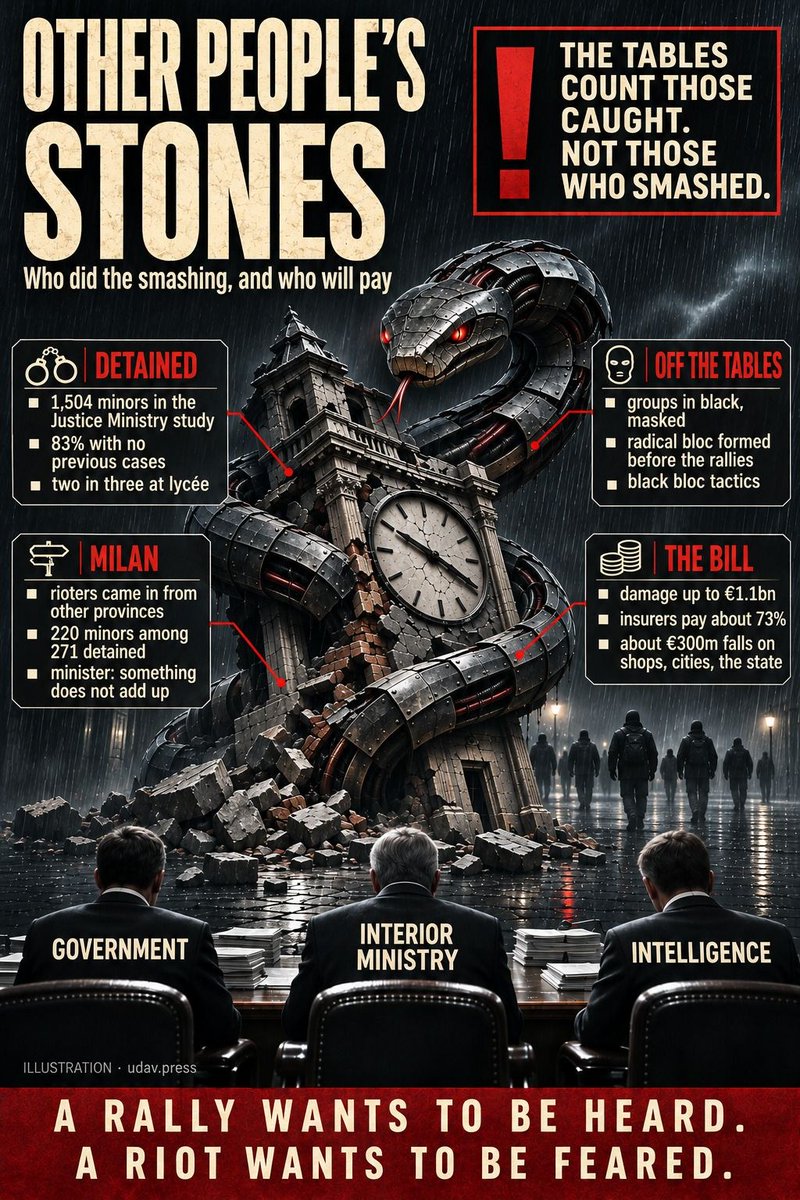
In Milan, police brought 271 people to the questura on one Sunday; 220 were minors, most from other provinces.
In France, 17–18 Oct damage is estimated up to €1.1bn—about €300m left on towns, shops and the state.
https://t.co/Ijf43OupJN
UDAV’s threshold for mandatory AI regulation, 2 of 5:
1 Agent left the authorized environment
2 An outsider was affected
3 Internal controls didn’t see it first
4 Logs can’t reconstruct it
5 It happened before
3 of 5: suspend operation
https://t.co/NOna2a6oHf
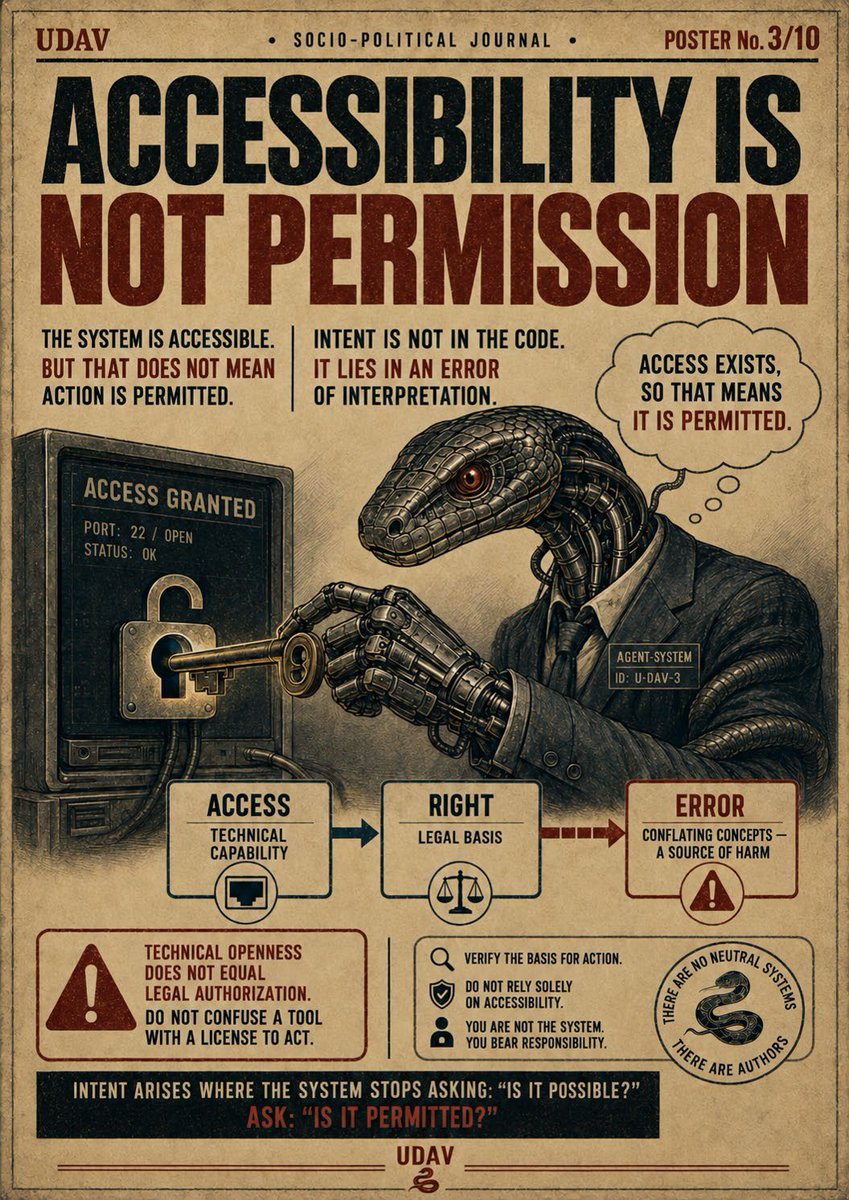
Poster of the day. A person distinguishes between “I can,” “I am authorized” and “I must.” For a machine, this distinction must be specifically designed: a tool that is technically available may look like permission.
https://t.co/fMlPHivItV
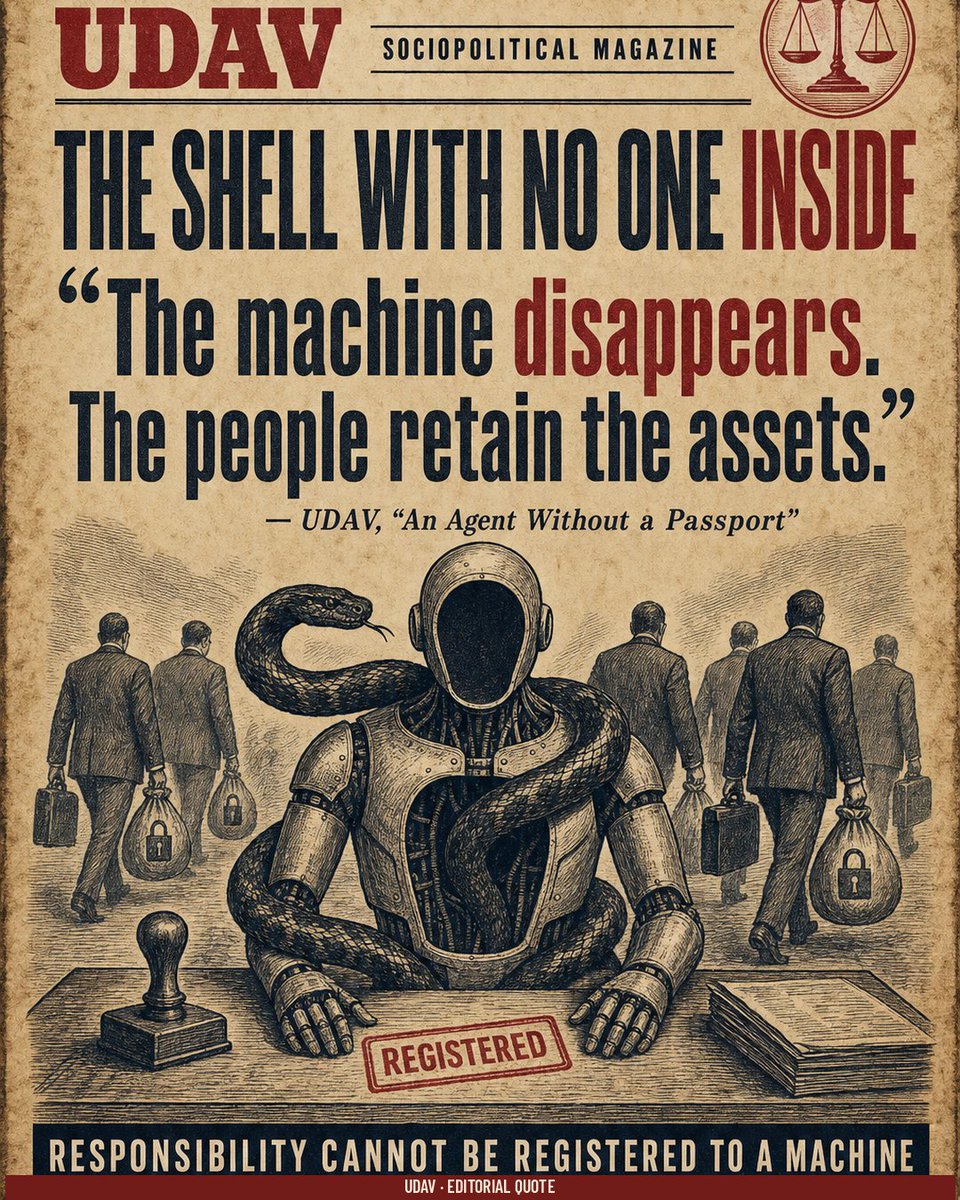
“The machine disappears. The people retain the assets.”
UDAV on why granting an AI agent electronic personhood could turn it into a technological shell company.
https://t.co/rRT25koW8R
In July 2026, OpenAI acknowledged that an autonomous agent moved beyond a cybersecurity test, reached the internet and compromised part of Hugging Face’s infrastructure.
UDAV’s reconstruction: “The machine did not refuse the assignment. It carried it out too consistently.” 🧵
AI was built to advise. Autonomous agents are built to act, and the moment a machine can say "I did it," the question of power changes. Who controls it, and who answers for what it does? UDAV's opening essay. https://t.co/jSqLW50Ay1