First major sporting event I have had no real interest in. The free market has propped sportsmen and actors to a stature they are unworthy of. The incoming new social order can hopefully address this major flaw
> notorious womanizer despite being fat and bald
> retires at 42 as the richest man in the colonies by building a fortune on posting
> world-leading scientist in his SPARE TIME despite little formal education
> hired by the government during the revolution to schmooze people in France
> founded the future most powerful country on earth
> died at an old age universally admired
Reminder: Ben Franklin was the biggest baller of all time
San Diego fell from 5th to 12th most expensive rental market by building more multifamily housing per capita than any other California city.
This is what happens when you actually build. The lesson isn't complicated.
Agatha Christie knew poisons so well, her books have been consulted when diagnosing patients. In 1976, a London infant was dying of a rare illness. Her nurses, having read The Pale Horse, realized she had been poisoned with thallium. Murder mysteries saved her life.
Indian billionaires are not failed Elon Musks. They are successful lala-dhandho operators.
Their genius is not in building rockets, robots or AI labs. It is in figuring out how to sit between the state, the consumer and the supply chain, then extract rent from all three.
Buy low, Sell high. Capture a protected market and create a monopoly, then use monopoly profits to fund political party you want favours from. Then you keep winning lucrative tenders. Or otherwise just import in bulk from Alibaba and slap a Made in India sticker, preferably with tricolour packaging. Sell it to nationalism paglus at premium pricing.
If that fails, launch some fake ayurvedic concoction claiming to cure every disease known to man and call it civilizational wisdom.
This is the lala-dhandho complex.
Frontier R&D requires patience, technical obsession and appetite for uncertainty. Leave that to the goras and chinis.
Feel that the right will lose Bengal. They should fare a lot better than last time around but will lack the adequate demographic leverage to see them through. In any case, the state is a national security liability and should be under central control
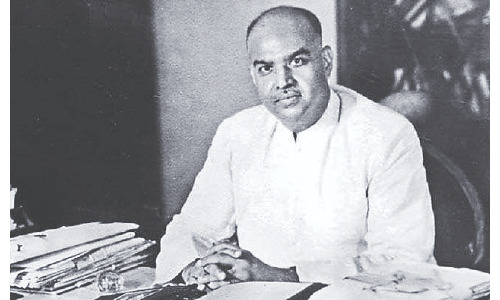
This is the Corporate Mookerjee that history books & even his own party rarely discuss. To understand his work as India’s 1st Minister for Industry & Supply, we have to look at how a Bhadralok scholar became as a COO of a bankrupt startup called "Independent India."
In 1947, India’s railways were a mess of British-made parts. We had the tracks, but we did not have the Heart... the engines. The British believed India would be a repair shop forever. Syama Prasad Mookerjee did not just want to buy trains; he wanted to build them in the very heart of the Bengal-Bihar coal belt. He chose a sleepy village named Mihijam & transformed it.
He named the factory after Deshbandhu Chittaranjan Das, his mentor. On January 26, 1950 (Republic Day), production activity/construction work commenced at the factory. This was a symbolic start on the day India became a Republic. While the British doubted that Indian engineers could master the complex science of high-pressure steam boilers & locomotive design, Mookerjee turned to the best technical talent the country had to offer.
Drawing from the engineering & physics graduates of premier institutions like Calcutta University & other centres of learning, he built a core team of Indian professionals who would prove the skeptics wrong. He was showing the world that India’s universities were not just academic halls, they were the womb of a new industrial nation.
Post-Partition, India was on the verge of mass starvation. The Green Revolution had not happened yet. Mookerjee realized that if India did not produce its own nitrogenous fertilizers, we would be begging the West for bread. He pushed through the Sindri Fertilizer Factory in Bihar. It was not just a factory; it was the largest of its kind in Asia.
This is where Mookerjee’s leadership shone. He did not just build a plant; he built a Miniature City. He insisted on a self-contained township with a hospital, schools, & a distinct Industrial Culture. He believed that an Indian worker should not just be a laborer but a citizen-producer. Sindri became the blueprint for every PSU that followed from Bhilai to Bokaro. He invented the PSU Life before the term even existed.
While Mookerjee was building heavy industry, he did something very unusual for a Modernist. He created the All India Handicrafts Board & the Handloom Board. He realized that heavy industry would take 20 yrs to employ everyone, but Bengal’s weavers & artisans were dying now.
He was the 1st to bridge the gap b/w the Small-Scale & the Large-Scale. He argued that India needed the Locomotive for its muscles, but the Handloom for its soul. He protected the Small Brands of rural India by giving them a seat at the cabinet table.
Long before global IP laws, Mookerjee was obsessed with Standardization. He was the driving force behind the Indian Standards Institution (now Bureau of Indian Standards - BIS). He knew that "Made in India" would only be a global brand if it had a Hallmark. He wanted an Indian Standard that was as rigid as the British BSI. Every time we see an ISI mark today, we are seeing a residue of Mookerjee’s obsession with quality.
Next time we see an Indian train/a sack of fertilizer, remember: the man who founded the 'Right Wing' was actually the 1 who laid the 'Industrial Foundation' of the Indian State. He was a Technocrat in a Saffron Cloak.
I frankly see no reason to have these many teaching positions in both science and arts. In my opinion AI and MOOCs are far superior and should replace faculty
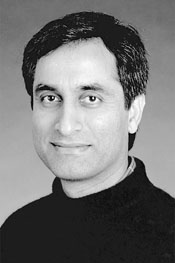
Next in who after the Ramanujan Series? Before Google was a company, he had already built an early intelligent system based on neural networks. Subhash Kak is the Ghost who bridged the gap b/w Narayana of the past & the Algos of the future. In a quiet lab in Oklahoma, he designed a Neural Network that learns in a fundamentally different way from conventional systems. He is the man who looked at 2000 yr old Sanskrit grammars & saw deep structural insights that could inspire the world's most advanced code. While Silicon Valley builds the future, Kak is 1 of the few who found ancient patterns that resonate with modern computing. He is the titan who proved that the computer is not just a machine, it is also a mirror of the ancient mind.
While the world was still using floppy disks, Kak was trying to solve the hardest problem in tech: How to make a machine understand Meaning, not just Math. In the early 90s, Kak developed an early AI-based search engine concept called LASSI (Language Analysis and Synthetic Search Inference). Unlike the early keyword-based search engines (like AltaVista), LASSI used Neural Networks & Associative Memory to go beyond simple word matching. It was an important early attempt at semantic search, a forerunner of the kind of contextual understanding we use today.
In fact, he redesigned key aspects of how computers could learn. He introduced the Kak Neural Network (a type of instantaneous learning network). While most AI today requires massive training (LLMs take months), Kak’s approach explored the idea of rapid, 1 shot learning... modeling how a human child can learn a word after hearing it just once.
He was 1 of the early researchers to propose ideas in Quantum Neural Computing, merging concepts from quantum physics with neural architectures.
Kak is a Ghost (for his AI contribution) because his work is too Eastern for the West & too Technical for the East. He realized that the Panini Grammar (from 2500 yrs ago) was a masterpiece of formal structure, 1 of the most sophisticated rule-based systems ever created. He spent decades at Oklahoma State University, working in a silo that sounds like science fiction, translating the ritual logic of the Vedas into the language of Machine Learning.
He solved important qs in the Chronology of Indian Science, using Archaeo-astronomy (tracking the position of stars mentioned in old texts) to push the timeline of ancient Indian mathematics & astronomy much earlier than previously thought.
He proves that the Ramanujan Gene, the ability to see deep patterns in the universe is part of a 1000s yrs old tradition. He is the man who showed that modern AI we are so proud of has surprising philosophical & structural connections to ancient Indian logic. Because he talks about both Quantum Physics & Ancient History, the siloed academic world often does not know where to put him. He remains a Ghost because he refuses to pick just 1 side.#WhoAfterRamanujan
Presidency University was not born in a British boardroom; it was forged as 'Hindu College'... a high-stakes Dharmic fortress built to master the West’s science w/o surrendering India’s soul. To understand the true history of this institution, we have to look past the colonial Presidency veneer & see the civilizational counter-strike that happened in 1817. This was the 1st time in modern history that the Hindu elite decided to beat the British at their own intellectual game.
When Radhakanta Deb & the wealthy Bhadralok of Calcutta pooled their gold to start Hindu College, they were looking for Intellectual Weaponry. They realized that the British were using English Education as a tool for conversion & cultural erasure.
By founding a private, community-funded Hindu institution, they legally barred British missionaries from the classrooms. It was a No-Entry zone for the Church, allowing Indian students to learn Physics & Maths while remaining firmly rooted in their own Samskaras.
The expulsion of the radical teacher Henry Derozio in 1831 is often called intolerance. In reality, it was an act of Cultural Bio-Defense. Derozio was not just teaching poetry; he was encouraging students to openly mock their ancestors, rituals, & dietary traditions. The elders of the college realized that Modernity was being used as a cover for self-hatred. They stepped in to ensure that the college produced Rishis of Science, not caricatures of Englishmen. They wanted New Knowledge to be an ornament of the Hindu mind, not its replacement.
Atlso, he British did not rename it Presidency College out of kindness. They did it out of Fear. By the 1850s, Hindu College was producing minds so sharp they were outthinking the British administrators. In 1855, the colonial govt forcibly took over the college. By stripping away the name Hindu & calling it Presidency, they attempted to secularize (read: de-root) the institution & claim its success as a British achievement.
At Presidency, Jagadish Chandra Bose proved that the labs of the East were different from the labs of the West. When Bose refused his salary for 3 yrs to protest British racism, he was following the ancient code of Dharma over Artha (Duty over Wealth). His breakthrough, proving that plants & metals respond to stimuli was the scientific validation of the Upanishadic truth that Atman (Consciousness) resides in all things. He was a scientist-monk proving Advaita (Oneness) in a 24 sq-foot room.
While the world thinks Presidency was an English-medium triumph, the early math & logic curriculum was deeply influenced by the Nyaya Shastra (Indian Logic). The founders knew that the Hindu brain, sharpened by centuries of Sanskrit grammar & logic, was biologically & culturally pre-programmed to excel in the most complex fields of Western science.