Policymakers also use different policy instruments for different strategies. We find that cities rely more on direct investment and policy support, while regions use more economic and regulatory instruments.
Read our full pub here: https://t.co/XWsAvtXY14
We find that the strategies researchers and policymakers focus on differ from those with the highest expected impacts. Transportation strategies🚆 are most popular with policymakers.
Although cities, states, & regions are increasingly involved in #climateaction, questions remain about what strategies are most effective.
@kburley_ reviewed 234 case studies quantifying the efficacy of subnational mitigation strategies to find answers: https://t.co/XWsAvtXY14
Our 2023 Global Climate Action (GCA) report is officially live! If you missed our launch webinar, you can still watch the recording ⬇️
📖Read the full report: https://t.co/PCDNhM18Q5
👀Watch the webinar: https://t.co/nIoySADlxv
For key findings, follow the 🧵:
A consulting firm has charged state taxpayers over $500K while trying for 13 years to write energy efficiency policy for the Louisiana Public Service Commission. On Wed., it approved giving the firm more money + time because the work is still not complete. https://t.co/3ai4jhcn9s
#SB58 wknd recap w/ @kburley_:
Sat: "I attended the integrated & holistic approaches round table session + had dinner w/ @IKEA team members!"
Sun: “I had a great annual mtg w/ our @IKEA partners, reviewing past work & planning for the future of the #GlobalClimateAction project!"
Day 5 of #SB58 from @kburley_:
“I attended the implementation & support round table on finance, tech, & capacity building + a @UNFCCC transparency division side event abt the Enhanced Transparency Framework. In the evening, I went to @ClimateWorks Friends of the GST reception!”
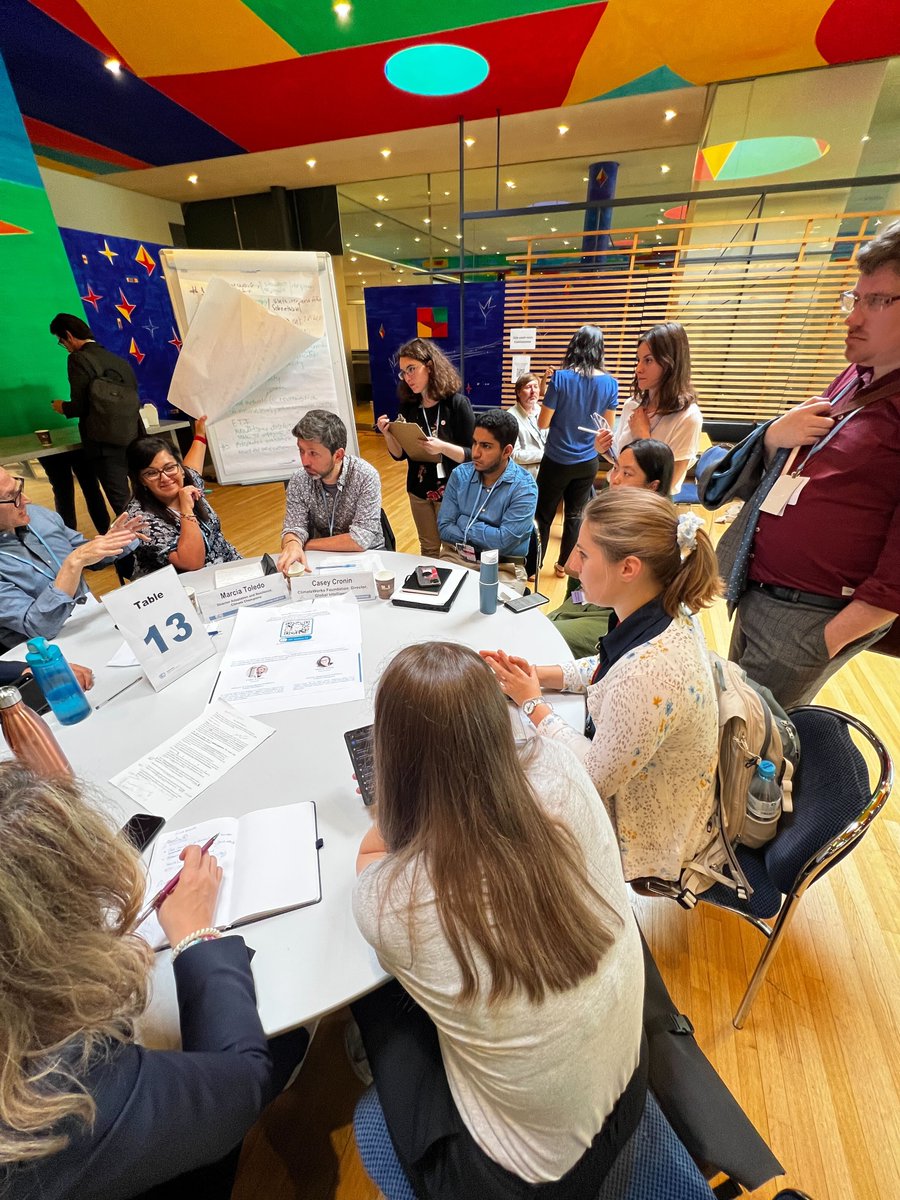
From @kburley_ - "It was amazing to hear such a variety of perspectives on how to promote #accountability of actions from Non-Party Stakeholders! Christian and I were able to contribute to the round table discussion during the Global Stocktake World Cafe event." #SB58
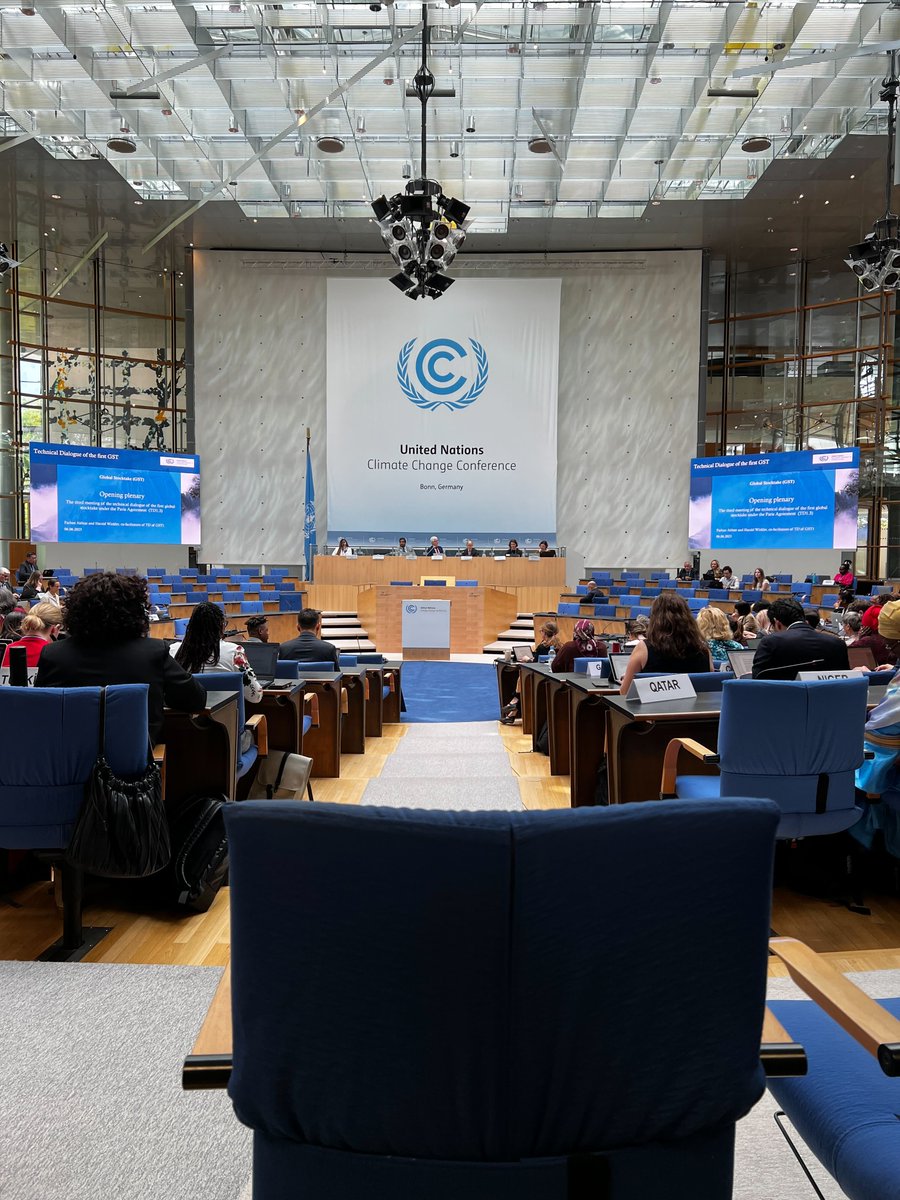
The @UNFCCC#SB58 kicked off yesterday with this: a Recognition + Accountability framework for non-state actors (NSAs). Since NSAs aren't included in other Paris transparency mechanisms, it's high time for some more guidance that will hopefully result in greater accountability.
#SB58 Day 3 from @kburley_ :
"I went to some great side events highlighting the role of non-party stakeholders & the barriers they face.
I also enjoyed getting to meet w/ the CAD2.0 community & the new Global Climate Action Portal team during our meeting in the UNFCCC offices!"
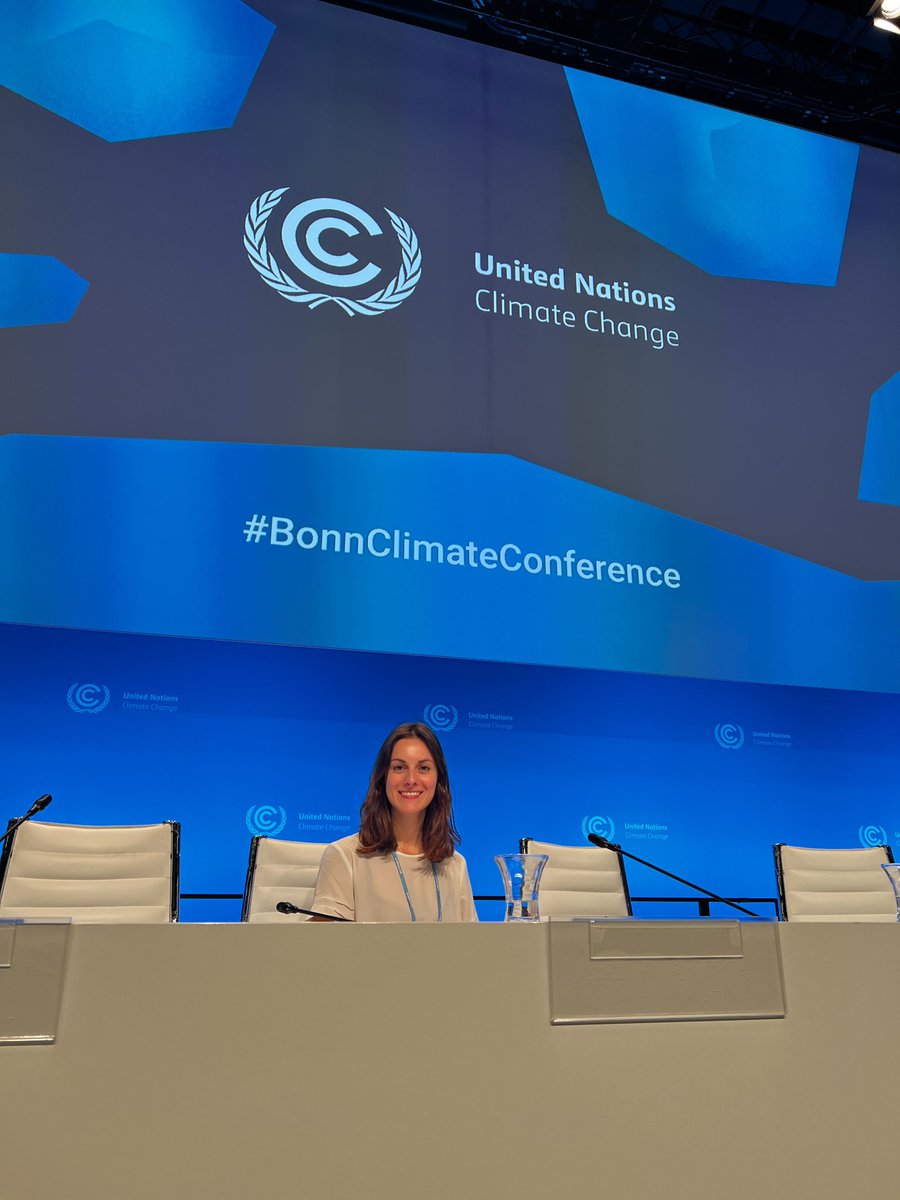
DDL student RAs Katherine Burley (@kburley_) & Christian Chung (@cakc0717) are at the @UNFCC#BonnClimateConference this week, talking to stakeholders about climate data & accountability!
Read on to hear their reflections from the first few days of the conference⬇️ #SB58
Join us in congrats! 🎉Seven NC students will be conducting research in energy & data science as the 5th cohort of the Energy Data Analytics Ph.D. Student Fellows Program this summer. They join us from @DukeU, @ncatsuaggies, @NCState, & @UNC.
Read more: https://t.co/8JS1v4XXAN.
Yesterday, our 3 Duke energy analytics fellowship PhD students present their summer research plans: from #energy burden equity, to micro-grid planning, to electricity restoration equity, @kburley_, Beth, & @yingyu_eee have a busy summer ahead!
NC’s building code already lags behind international standards. HB 488 - introduced by a builder - would lock in 2009 standards until 2031, preventing the energy cost and climate benefits of improved energy efficiency in new homes.
https://t.co/yrfojMO49s
Congratulations @kburley_, Ying Yu & Beth Brown for being selected for the prestigious @NichInstitute Energy Data Analytics PhD Student Fellows program!🎉
Learn about their projects for the summer fellowship on the #DDLdigest: https://t.co/C4VIwWrl56
@ecoangelhsu
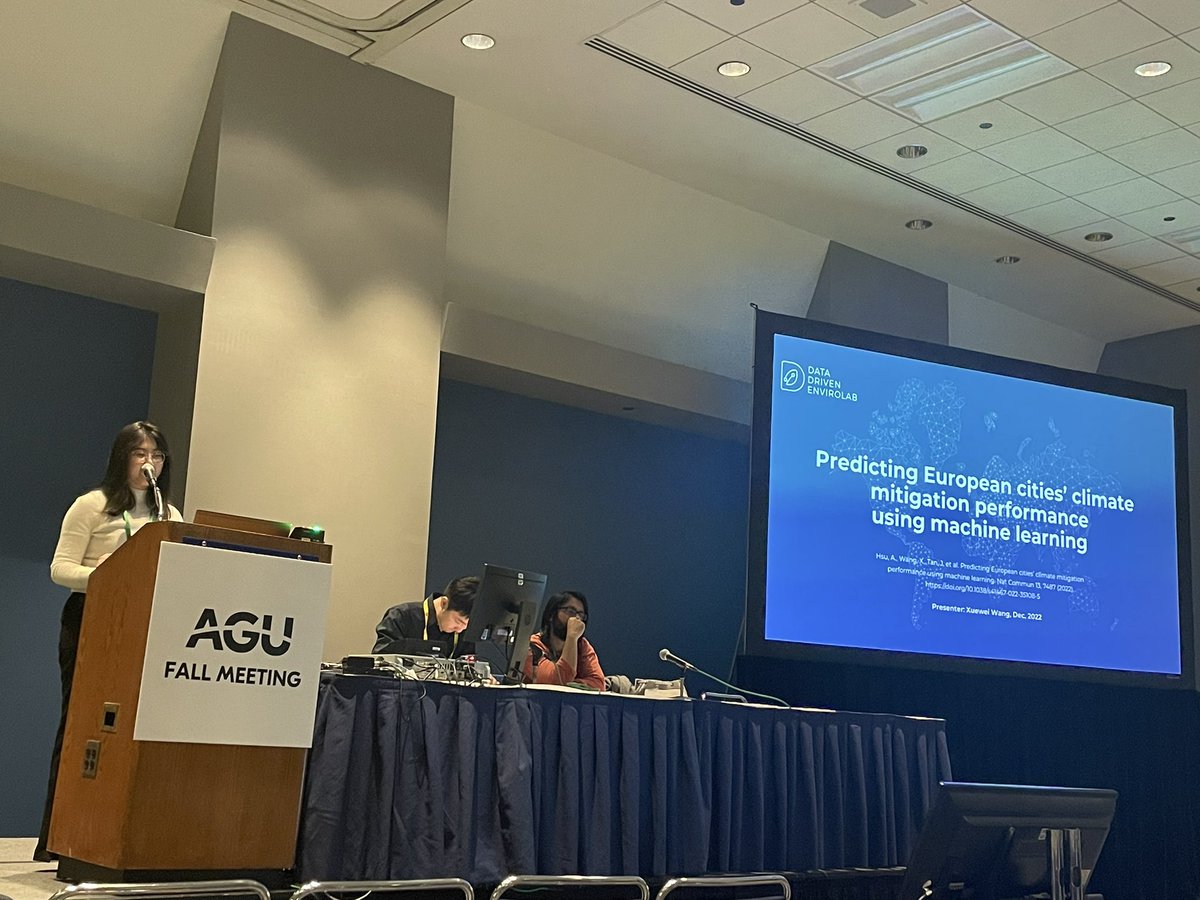
Great presentation today at #AGU22 from my @datadrivenlab colleague Xuewei Wang on her recent work with @ecoangelhsu using machine learning to predict the climate mitigation progress of European cities and help fill in the gaps where self-reported data is lacking
6/ We were only able to assess progress for a fraction of actors due to a lack of reported emissions data. Of those assessed, only 46% of subnationals are on-track to meet targets.
Companies performed slightly better, with 75% on-track to meet their self-reported targets.