All this is to say, deeply inspecting execs don’t have to be stressful and can (should!) be additive. BUT one word of wisdom: if you’re working for someone like this, it’s a culture they’re cultivating. Which means you’re gonna struggle if you don’t dig in too. Fluff won’t fly.
@Sc_Meerkat We’ll agree to disagree here.
It is the team’s responsibly to agree what they are building to try and achieve an outcome for a user.
Who documents the requirements is so far down the list of importance in my view.
I wouldn’t mind if they didn’t exist outside the code…
What is product management? (a memo)
Product management is the art, science, and practice of making products successful.
You can begin evaluating product success via the product’s User adoption, Customer satisfaction, and Business impact.
Consistent product success only comes from unique customer & market insights, creative product solutions, and disciplined execution across the various functions & teams involved in building & distributing the product. Anybody who has these abilities (or has the capacity & desire to develop them) can do product management. You do not need a specific job title to do product management.
In technology product companies, one or more of the founders initially perform the product management role. As the company grows, product management usually morphs into a specialized role because the depth & complexity of each aspect of the role (i.e. insight, solution, execution) grows. When that happens, the person doing the role typically gets the title of Product Manager.
Product management is a team sport, by definition. This means that The Product is not just the Product Manager’s concern. It is everyone’s concern: the designer’s, the engineer’s, the data scientist’s, the researcher’s, the marketer’s and so on.
An effective Product Manager orchestrates opinions, priorities, and actions across the org while bringing his/her own unique insights and creativity to the mix. A good PM strikes a balance here, just like a good tour guide: when you are visiting a new country, you don’t want your tour guide to order you around & be bossy—but you also do not want your tour guide to simply follow you around without offering any interesting context or observations.
Product Manager is the most generalist role on a product team. A Product Manager must play to the strengths of his/her team and fill gaps where needed. This means that Product Managers’ work will look very different across companies, and even different across different teams within the same company.
Due to the inherently ambiguous & cross-functional nature of the role, Product Managers constantly have to build entirely new skills and adapt their traits to be most effective in new environments. That said, the fundamental skills & traits don’t vary all that much.
3 fundamental skills of effective Product Managers are:
- Critical thinking
- Cognitive empathy
- Influential communication
3 fundamental traits are:
- Curiosity
- Deep care
- High agency
Because product management requires you to “work through others”, Product Managers are rarely in full control of their inputs, outputs, and outcomes. This makes the PM role fairly stressful. Because it is a leadership role, product management comes with major responsibility, but also gives you high leverage from your time.
Product management is not for everyone, but it can be a very fulfilling role & career for people who like solving business & customer problems via products and genuinely enjoy working with other people. And implemented right, it can also be quite impactful for companies.
In summary:
1. Figma is the only company poised to launch a major AI product in the design space because of its large proprietary dataset.
2. Other AI products in the design space are vaporware or will not be useful.
3. AI will augment designers, not replace them.
Most non-designers think of a designer and assume they can only do a number of things closely related to design, but in reality, you can take design sensibilities to new mediums and remix. Design entrepreneurs are a great example. This is a huge unlock.
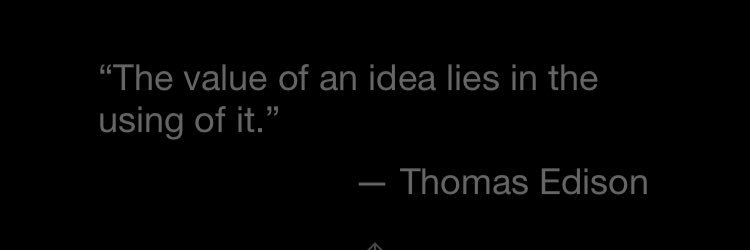
Ever wonder why our v1 designs never feel right? It isn't because we didn't have enough time to design it, rather, we didn't have time to live in it or with it. The reason perfection doesn't pay upfront is because the insights we get from actually using the widget day-to-day is 10X that of whatever insight we think we're getting by pixel-fudging. It also doesn't pay to try and anticipate every edge case in a spec, I don't care who you think you are, you're not that good. Get your product out there, live with it, the core cases and edge cases will show themselves faster. Good designers know that moving into a fully built and beautifully designed home is unrealistic, the job is to move into a home with some foundation and guide the build as you walk its walls day-to-day. It's super frustrating, but it is the way.