I just wrote my MP urging them to sign the pledge to stop school cuts. The more of us who do this, the more likely they are to listen and sign-on. Will you join me? https://t.co/radWwCjVJA
Get Palantir out of our NHS.
The clock is ticking. The Government needs to notify Palantir by December this year if they are not extending the contract. We therefore need to make sure that this issue is at the top of Andy Burnham’s list.
https://t.co/WYXWUcoI3f
I'm quitting my job to go full-in on Claude.
Just Asked it to:
Analyze mispriced Polymarket markets for arbitrage opportunities and find wallets using it to copy.
Turned $2K into $12K overnight.
Monitored 1,000+ wallets.
I realized something fast.
There are arbitrage bots I can't beat without code knowledge.
But I can find them. And copy them.
Claude built a monitoring terminal and connected it to a Telegram copytrading bot.
It's not a script. Not even a bot.
It's an AI agent that improves with every wallet it finds.
Fetches wallet behavior. How it trades. Arbitrage patterns. Position sizing. Timing.
70% win rate.
7 wallets copytrading right now from 500+ monitored.
Bot never pauses. Never gambles. Just math and profit.
You only need: Claude + a device + 1 hour per day.
Giving this free for 24 hours.
To get it:
1. Comment "cash"
2. Like and retweet this
3. Follow me @codewithimanshu so I can DM you
The AI model race is over. Most people won’t realize it for another six months.
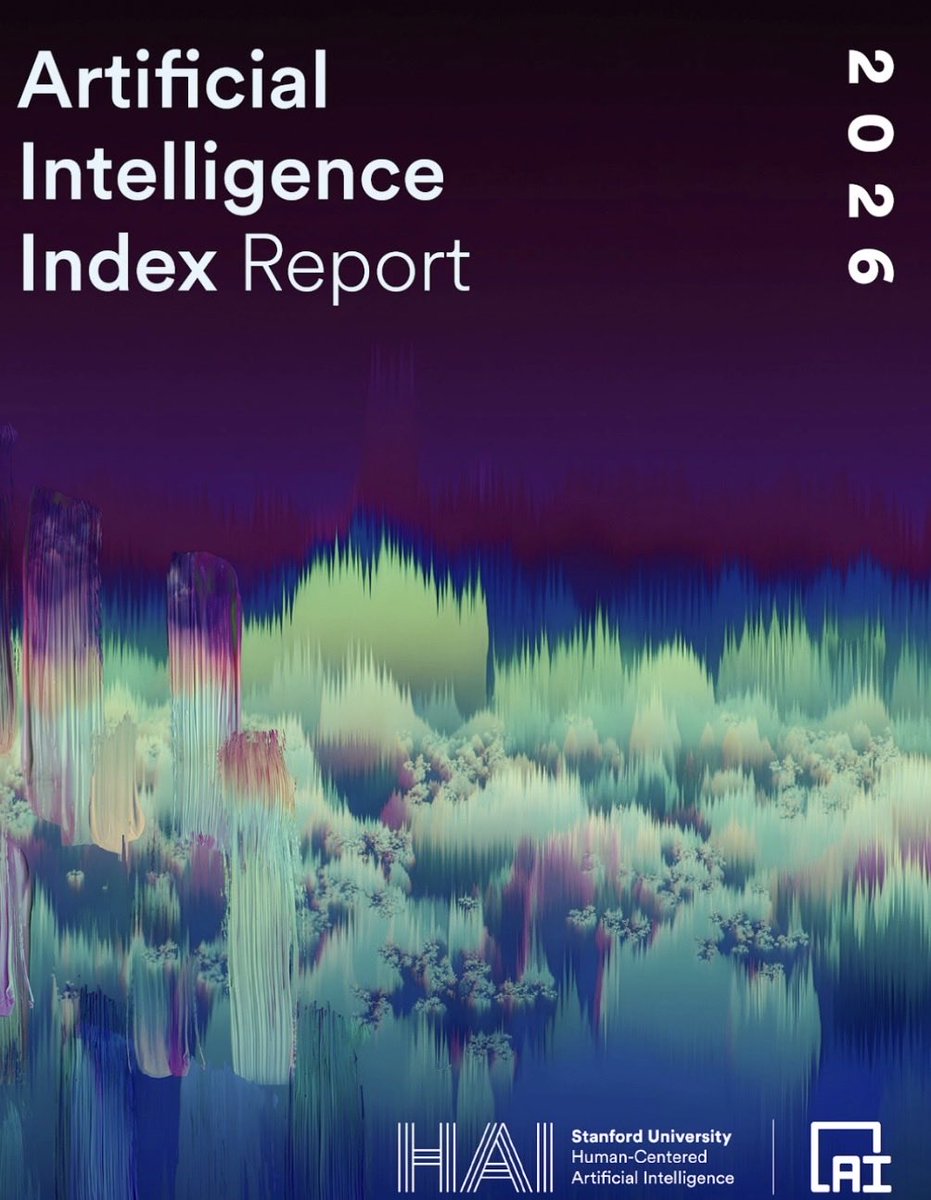
Stanford’s 2026 AI Index published the numbers two weeks ago.
Arena Elo ratings across every major lab:
Anthropic 1,503.
xAI 1,495.
Google 1,494.
OpenAI 1,481.
Alibaba 1,449.
DeepSeek 1,424.
Six companies separated by 79 points.
The top US model leads the top Chinese model by 2.7%. These models are functionally converging.
OpenAI shipped five major GPT-5 versions in eight months.
GPT-5.2 in December.
GPT-5.3 on March 3rd.
GPT-5.4 on March 5th.
Two days apart.
GPT-5.5 landed April 23rd.
Tom’s Guide ran it head-to-head against Claude Opus 4.7.
It lost all seven categories.
The releases keep accelerating. The performance gaps keep shrinking.
Last week, a 23-year-old named Liam Price solved a 60-year-old math problem that professional mathematicians couldn’t crack.
No advanced training. No PhD.
His tool was a $20/month ChatGPT Pro subscription running GPT-5.4.
Terence Tao validated the result.
Every headline framed this as “AI solves impossible math.” Every headline got it wrong.
The raw proof output was, in Stanford mathematician Jared Lichtman’s words, “actually quite poor.”
Experts had to sift through it to extract the insight. But buried inside that messy output was a 90-year-old mathematical technique that no human researcher had thought to apply to this problem class.
The AI surfaced a connection. Price’s exploratory thinking process created the conditions for it.
Same model. Available to millions of subscribers. One person’s thinking approach produced the result.
That’s the entire story of AI in 2026 compressed into a single data point.
Stanford’s report confirmed the pattern at scale.
Employment among software developers aged 22-25 dropped nearly 20% since 2024. Senior developer headcount grew.
AI reached 53% population adoption in three years. Faster than the personal computer. Faster than the internet.
The professionals who think systematically through AI are pulling ahead. Everyone using it casually is falling behind. The gap is measurable now.
The model you choose accounts for roughly 20% of your output quality. Your thinking framework before you prompt accounts for the other 80%.
Define the problem before you touch the AI. Run iterative sessions instead of single prompts. Push back on bad output. Follow unexpected threads. Validate and refine. The AI generates raw material. Your judgment turns it into something real.
Price didn’t type a magic prompt. He thought clearly, let the AI explore, and recognized value in messy output. That process is learnable. It’s also the exact process most people skip.
The model race produced one useful side effect: it made every major AI tool good enough.
The new competition is between people who prompt casually and people who think systematically before they prompt.
That divide is widening every month.
In #SocialMedia news, a trial in the U.S. is testing the boundaries of social platforms as addictions. The outcomes are yet to be seen but it could mean changes in how these platforms work. https://t.co/bZtZqq9rHT
700+ people joined us last year. WP:26 will be even bigger 🔥
You'll learn:
- The biggest changes shaping WP in 2026
- How AI is already changing the way WP operates
- What high performing, future ready WordPress stacks look like
Save your seat:
https://t.co/U0lWW7Waua