Change isn’t going to slow down.
The question isn’t how to endure it, though—it’s how to stay oriented inside it without burning out or numbing out.
In this week’s #TheTalentCode, we're talking about personal adaptability: how sensemaking, curiosity, learning how to learn, managing cognitive load, and setting intentional boundaries help people stay effective in a world of constant change.
Adaptability and resilience are skills more than traits, and those take practice, and we'll talk about how and why that works here.
If you’re navigating continuous change, this one’s for you.
👉 Read it here: https://t.co/7H51quIh8Y
#Adaptability #FutureOfWork #Leadership #ChangeResilience
Most change models were built for a world that no longer exists.
Change isn’t episodic anymore. It’s continuous, overlapping, and often outside our control. And that means the way we lead change has to evolve too.
In this week’s #TheTalentCode, I’m writing about why we need adaptive change models—and what it actually takes to build change capacity into an organization.
I’ve also included an expanded Leader Playbook with practical guidance on:
• managing change load
• building sensemaking into the work
• running change in smaller loops
• rewarding adaptation, not just compliance
If you’re leading through constant change, this one’s for you.
👉 Read it here: https://t.co/Rj0wXL8RLX
#Leadership #ChangeManagement #FutureOfWork #AdaptiveTalent #WorkThatWorks
We talk a lot about hustle and work ethic, and about self-care and recovery, like they're incompatible. They're not.
Human performance is cyclic.
We surge.
We sustain.
We recover.
The problem comes in when we treat surge pace like a baseline, and we forget to build in time for sustainment and recovery. And then we treat burnout like it's an individual failing and not a failure of the system.
This week's #TheTalentCode is about finding rhythm. Knowing when to push, when to recover, and how leaders can design work-rest cycles that support sustained performance. And how we can keep from conflating hard work with, well, stupid work--or work for work's sake.
📖Read it here: https://t.co/OZis80zRal
#WorkThatWorks #WorkByDesign #PerformanceManagement
You don't need more hours. You need clearer priorities, better boundaries, and fewer unnecessary decisions.
You don't need more time, you need a better system.
Flexibility in work isn't about where you work, it's about whether the work is designed not to break down if you're not in one particular location. Flexibility is the ultimate tool for continuity of operations.
Here's my 2026 vision for designing work that, well, works.
📖 https://t.co/4TvOverYlH
It brings together what I’ve written about talent management, strategic workforce planning, and adaptive skills, and where I’m headed next.
At its core, it’s a simple belief: We all work for a reason, but work should also work for you.
People shouldn’t have to sacrifice their lives to do meaningful work, and vice-versa. If we design work that works for people's values, skills, energy, and the impact they desire, the rest sorts itself out.
I use this to guide my writing, teaching, speaking, and upcoming work on designing adaptive talent—with a familiar focus on:
• skills over headcount
• outcomes over optics
• systems that scale trust
• work designed for humans
If you’re rethinking how work is designed, I hope this resonates.
#WorkThatWorks #StrategicWorkforcePlanning #TalentManagement
The holidays can be heavy for many in our formation. What should be a season of light can feel like a season of weight. Too many Soldiers carry that burden alone.
If you’re carrying the weight, don’t go silent. Reach out. Let your team help you move forward because you are not alone.
If you or someone you know needs immediate help, call 988 and press 1 for the Military Crisis Line. The @USArmy is a people business and we’re strongest together.
As I wrap up the year with #TheTalent Code, I wanted to pause and say thank you.
Thank you for reading, sharing, engaging, and thinking alongside me since March. My community on social media has shaped my thinking more than you probably realize.
Here’s a brief note of thanks before I pause the newsletter until the New Year:
👉 https://t.co/UPej0KhcG1
Thanks again!
Having the right headcount doesn't mean you have a workforce.
Most organizations still plan their workforce on single variables: positions, billets, vacancies, requirements. Counting people. That's it.
But counting tells you nothing about:
• whether you have the right skills
• whether capability matches the work
• whether your workforce can adapt
• or whether you’re competitive for the talent you say you want
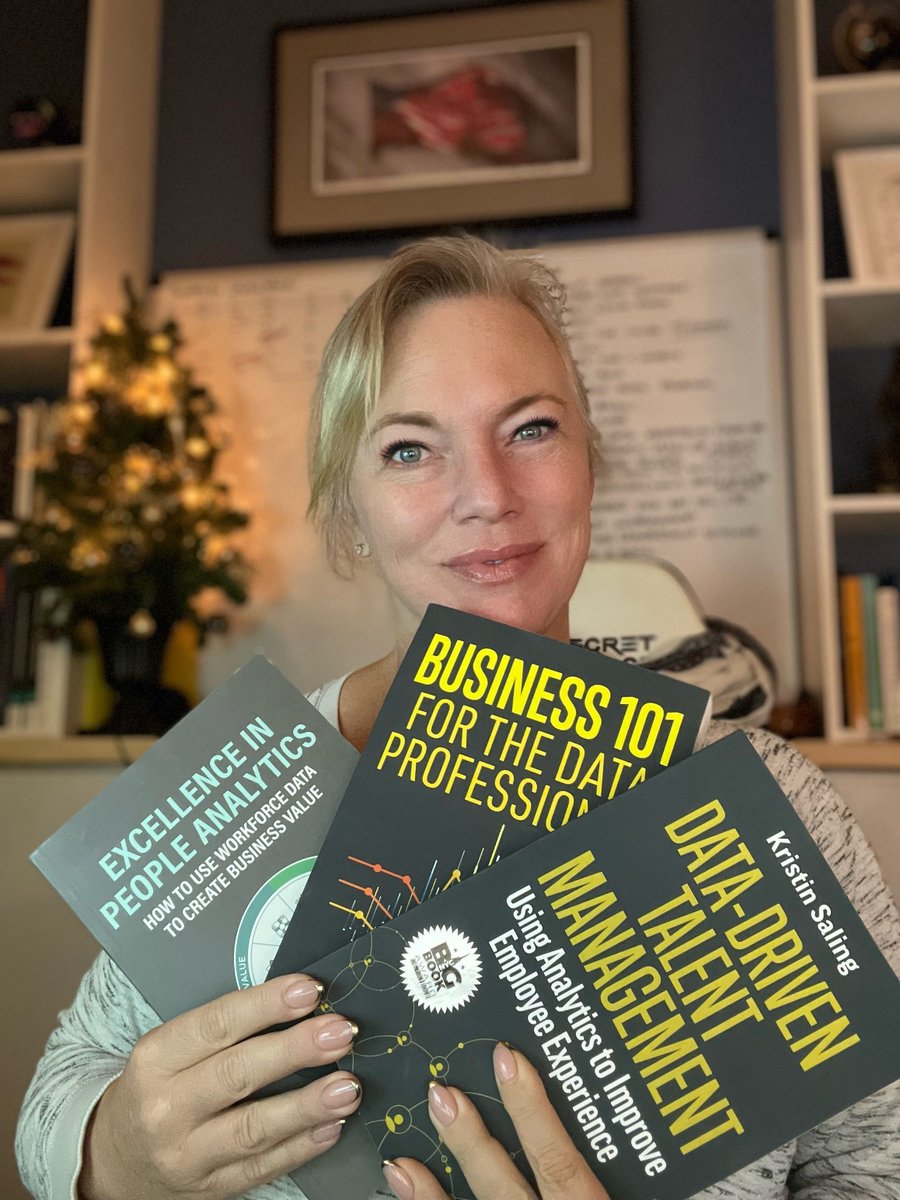
In this week's #TheTalentCode, I'm going back to my roots, the very reason I wrote my book, and talking about why modern workforce planning has to stop thinking about "how many" and instead think about "who."
When everywhere around us, commercial experience focuses on hyper-personalization, outdated one-size-fits-all talent systems aren't just a competitive disadvantage but a competitive liability.
You want to win the war for talent? Stop counting and start seeing.
👉 Read the full article here: https://t.co/6UJMp1qhYD
#WorkforcePlanning #TalentManagement #PeopleAnalytics #FutureOfWork
We all want a crystal ball for talent--something that tells us who will thrive, who will grow, and who's ready to for the next challenge.
But let's talk about what we can actually, reliably...predict.
Predictions are probabilities, not prophecies, and we as humans are notoriously BAD at understanding probability.
In this week's #TheTalentCode I break down what data can predict about human potential, what it can't, and how to set up the guide rails for your programs responsibly.
If you're working on programs to identify future leaders and future talent, please take a look at this, and let's talk about how to wield probability the way it's supposed to be used.
Read it here: https://t.co/VnOOYCNFzv
#PeopleAnalytics #FutureOfWork #TalentManagement #Leadership
So many organizations are data-rich but information-poor. Drowning in metrics but starving for insight? Why?
As Charles Goodhart warned, "When a measure becomes a target, it ceases to be a good measure." And that's what we've done with a lot of our talent metrics.
Time to hire? It's great if it feeds the context of your employee experience, not so great if your recruiters are looking at who they can get quickly vs. getting the right person.
In this week's #TheTalentCode, I offer up ten metrics for talent management that are difficult to game, necessary to keep in context, and do what your metrics should do: inform decisions.
Check it out here 👉 https://t.co/Fbo0DoE9hi
#PeopleAnalytics #TalentManagement #HRLeadership #WorkforceStrategy #FutureOfWork
'Tis the season for gifting books! 📚
And right now, our friends at Kogan Page have started their #BlackFriday sale - 40% off all their books to help you sharpen skills and business strategy and lead with confidence, from now through 1st December!
Just go visit them at https://t.co/kZjvTVbAjs and use the code SALE40 to get your discount, and enjoy the gift, to yourself or friends, of your choice from over 1200 of the best reads in the business space!
✍️ If you want to lead today, you have to write.
Everywhere.
Social media, too.
Writing is how you clarify your thinking, share what you've learned, influence beyond the room you're in, teach at scale, build trust with people you might have never met, and capture ideas that would otherwise disappear, even if that speech you gave on them was 🔥
I've heard "leaders are readers" frequently, but leaders are also writers--or they should be.
Last week in #TheTalentCode, we talked about how to become a speaker. This week, I'm talking about why I believe WRITING is a modern leadership necessity.
Let's talk about it. Let me know what you think!
https://t.co/vPMoY1UVWd
You learn a bit about public speaking by the time you hit 200 stages. 🎤
That's about the tally for me, after six years of speaking about talent, data, and AI for the US Army, from press round tables to podcasts to panels to national conferences!
My last official speaking engagement for the Army was AUSA last October. While I'm far from done talking about how we build tech-ready people-centered workforces and how we continue to evolve work in my personal capacity, I'm retiring from the Army in six months and I'm done hogging the mic--and more than ready to support the up and coming band of speakers!
In the meantime, I get asked frequently how I get to speak as much as I do--or really, why people ask me to speak and why the Army has signed me up so frequently to speak on topics.
I'm answering that in today's #TheTalentCode, where we'll cover how to find your voice, pick topics that matter, engage your audience, and grow from every talk you give.
If you're looking to start public speaking, or wondering if there's a reason you should think about it as a leader (spoiler: you absolutely should), this one's for you.
Read it here ➡️ https://t.co/BpDnCnEHOh
#PublicSpeaking #Leadership #Storytelling