A symposium on IOs law would be incomplete without Dame Rosalyn Higgins. @kdaugirdas revisits Higgins’ pioneering works on IOs and argues that they showcase the strength and limits of a policy-oriented approach to international law.
https://t.co/QraCKNr4YT
@AdHaque110@NicolasCS@ejiltalk The central argument I make in the just-published article https://t.co/jDlYOjB8rI is that IOs can and do make CIL -- so it's *not* just states that make the rules that apply to IOs.
@columlynch The WHO Constitution expressly contemplates the WHO accepting $$ from non state actors. See art. 57 ("The Health Assembly or Board . . . may accept and administer gifts and bequests made to the Organization . . .") For more detail and analysis, see https://t.co/DvMQufyGNO
In this very insightful podcast, Gian Luca Burci, former general counsel of the World Health Org, explains the international law of epidemics--what it does, doesn't, & should do, as well as and how it relates to trade law, human rights, and Taiwan's contested status. Listen!
OK, so this is super cool. It's a deep dive into the themes that @kdaugirdas and I identified as recurrent patterns in past outbreaks -- and how those patterns are recurring with the latest coronavirus. https://t.co/t9QGhATESN
cc @HowardMarkel
@dovjacobs@AdHaque110@opiniojuris Yes, there is! Scholars disagree, many rely on a single sentence from an ICJ opinion that's indeterminate, and almost no int'l orgs expressly acknowledge any CIL obligations. For a fuller discussion, see the article on which the lecture is based: https://t.co/7Q7paDVuyS
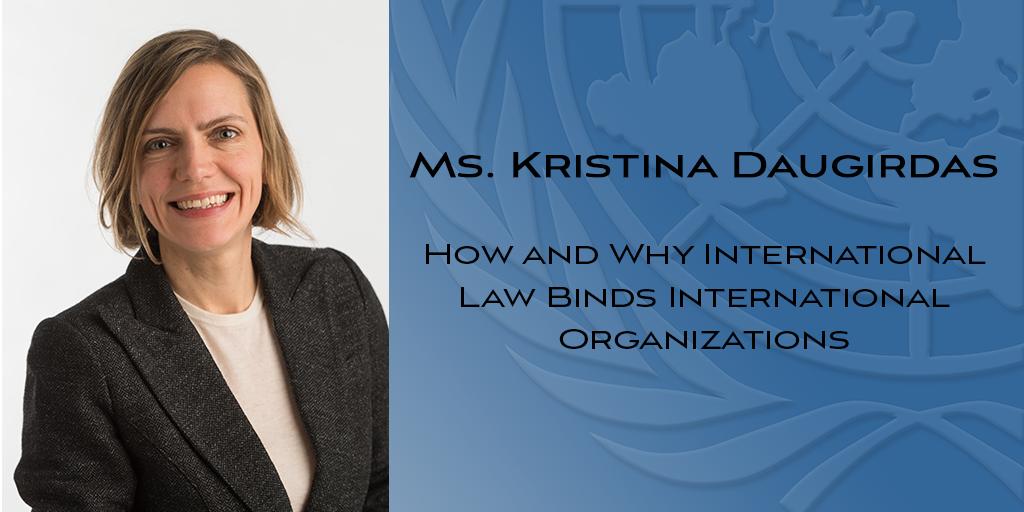
New lecture by Kristina Daugirdas (@kdaugirdas), Professor of Law at @UMichLaw, on "How and Why International Law Binds International Organizations", now available at the @UN_AVL at https://t.co/VnEvJoTrU8
The two startling facts that motivated this article: (1) more than 80% of the World Health Org's budget is financed by voluntary contributions; (2) the Bill & Melinda Gates Foundation provides more money to WHO than any member state except the US.
Thrilled that @AlterKaren organized this interdisciplinary symposium to further explore reputational dynamics among international organizations, with terrific contributions from @pbstephan3, @sabrinamkarim, Kristen Boon, Lorna McGregor, Emilie Hafner-Burton, and @C_J_Schneider.
ICYMI: New Unbound symposium on @kdaugirdas “Reputation as a Disciplinarian of International Organizations” edited and introduced by @AlterKaren https://t.co/AAIHWYS4Al
In which I explore the dark side of reputation—and explain why international organizations sometimes fail to prevent or address to problems that are sure to result in reputational harm. Key example: sexual violence by UN peacekeepers.
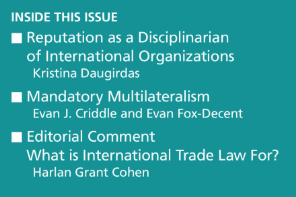
The April issue of AJIL is now available online, featuring articles from Kristina Daugirdas, Evan J. Criddle and Evan Fox-Decent, and @harlangcohen. @CUP_Law@asilorg https://t.co/2Jc5pApjVQ
Why I'm more pessimistic than other commentators about the impact of the Supreme Court's recent decision restricting the immunity of international organizations: https://t.co/mF0lgPw0Nc
@just_security I explain why I'm more pessimistic than other commentators about the impact of the Supreme Court's recent decision restricting the immunity of international organizations: https://t.co/mF0lgPw0Nc