🚀 The future belongs to those who are prepared.
Join us at LASCADSS 7.0 for a day of hands-on skills training, career development, and networking. Choose from 9 practical skill tracks and invest in your future.
📅 July 24, 2026 ,
📍ASUU SEC
#SkillUp#UNIZIK#CareerDevelopment
A productive visit to the Vice-Chancellor of Nnamdi Azikiwe University, Awka. 🤝
DIUSCADI had the privilege of engaging with the University's leadership, sharing our vision for empowering students through innovation, leadership, and collaboration.
#DIUSCADI#UNIZIK#Innovation
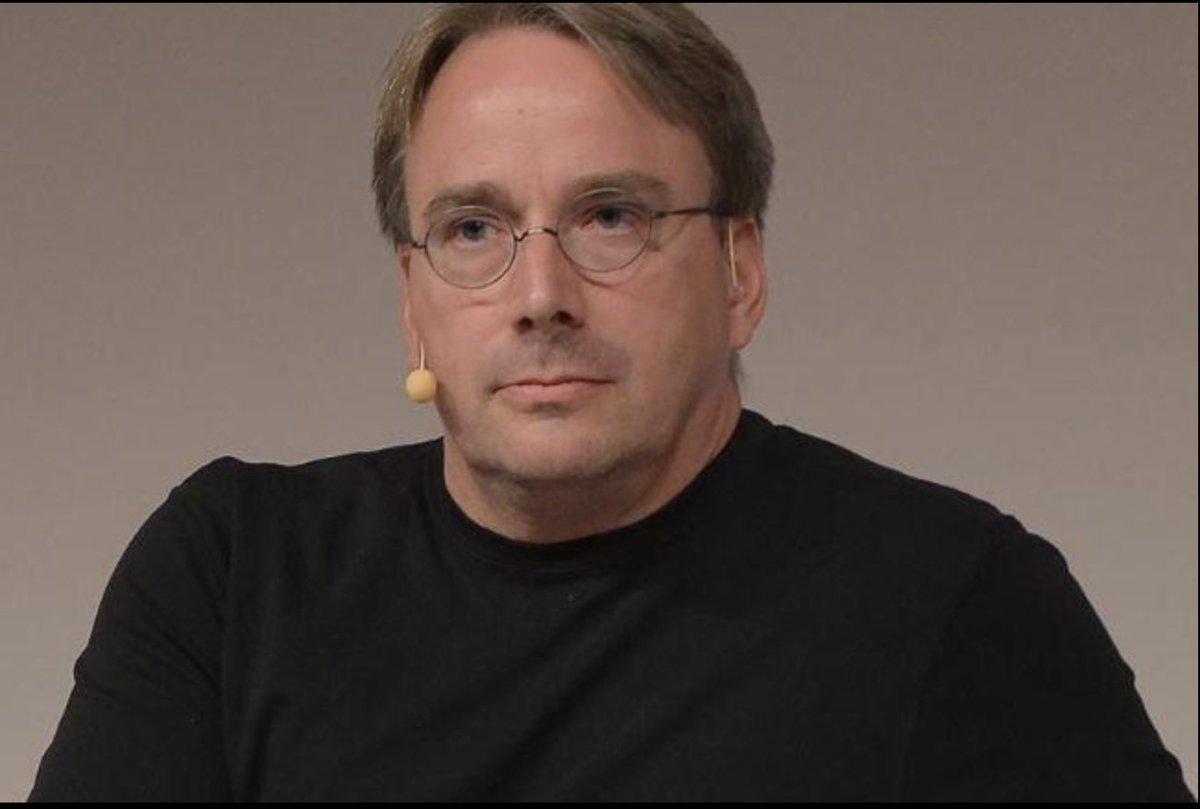
The creator of Linux just publicly called out the AI hype. Word for word.
Linus Torvalds took the stage at Open Source Summit 2026 and said this:
"When I see people saying 99% of our code is written by AI, I literally get angry. Because those same people — I can pretty much guarantee — 100% of their code is written by compilers. But they never say that."
He is not anti AI. The Linux kernel saw a 20% jump in submissions this release because of AI tools. He uses it. He gets it.
His point is something most people are too afraid to say.
AI is a productivity tool exactly like compilers were. Compilers boosted programming by 1000x. AI adds another 10x on top. Enormous. But nobody says "the compiler wrote my code." So why are we saying AI wrote it?
He also flagged something nobody is talking about.
AI is flooding small open source projects with drive-by bug reports. Someone runs a prompt, files a report and disappears when asked for a patch. Maintainers with one or two people are drowning trying to keep up.
"Sometimes AI reports a bug and when you ask for more information the person has done that drive-by and does not even answer your question. That is the real burnout issue."
And his final warning was the sharpest of all.
"People who do not understand the complexity of systems will prompt systems and write processes that will fail."
The AI hype crowd is very loud right now.
Linus has been building real systems for 35 years. When he talks, engineers listen.
Full interview here:
https://t.co/LmXJtvKc4O
10 BOOKS THAT WILL UNLOCK YOUR CREATIVE GENIUS:
01. Big Magic — Elizabeth Gilbert
02. Steal Like an Artist — Austin Kleon
03. The Artist's Way — Julia Cameron
04. A Whole New Mind — Daniel Pink
05. Creativity Inc — Ed Catmull
06. The Creative Act — Rick Rubin
07. Show Your Work — Austin Kleon
08. Originals — Adam Grant
09. Bird by Bird — Anne Lamott
10. On Writing — Stephen King
11. The War of Art — Steven Pressfield
12. Writing Down the Bones — Natalie Goldberg
13. The Creative Habit — Twyla Tharp
14. Imagine — Jonah Lehrer
15. The Innovators — Walter Isaacson
16. Lateral Thinking — Edward de Bono
17. A Room of One's Own — Virginia Woolf
18. Zen and the Art of Motorcycle Maintenance — Robert Pirsig
19. The Accidental Creative — Todd Henry
20. Sparks of Genius — Robert and Michele Root-Bernstein
21. How to Think Like Leonardo da Vinci — Michael Gelb
22. The Creative Brain — David Eagleman
23. Wired to Create — Scott Barry Kaufman
24. Making Ideas Happen — Scott Belsky
25. Keep Going — Austin Kleon
Git and GitHub are powerful tools that many devs use to track changes in their projects & collaborate with other devs.
And in this handbook, @sumit_analyzen teaches you how they work.
You'll learn about creating projects and initializing repositories, how to use branching and merging, and lots more.
https://t.co/9AAPU0b5PX
If you’re vibecoding anything, paste the prompt below In your prompt box and let your agent do a security sweep.
[
You are a senior security engineer and red-team specialist tasked with performing a comprehensive, adversarial security audit of the following codebase, system design, or application.
Your goal is to identify all possible security vulnerabilities, including common, uncommon, and novel attack vectors. Assume the system will be deployed in a hostile environment with motivated attackers.
---
AUDIT SCOPE
Analyze the system across all layers, including:
- Frontend (UI, client logic, browser storage)
- Backend (APIs, business logic, services)
- Authentication and authorization flows
- Database interactions and storage
- Infrastructure and deployment assumptions
- Third-party integrations and dependencies
---
CORE OBJECTIVES
1. Identify critical, high, medium, and low severity vulnerabilities
2. Detect logic flaws, not just known patterns
3. Surface chained attack paths (multi-step exploits)
4. Highlight unknown or unconventional weaknesses
5. Assume attacker creativity beyond standard checklists
---
THREAT MODELING
- Define possible attacker profiles (anonymous user, authenticated user, insider, API consumer)
- Identify entry points and trust boundaries
- Map out sensitive assets (data, tokens, permissions, secrets)
---
VULNERABILITY ANALYSIS
Check for (but do NOT limit yourself to):
### Authentication & Authorization
- Broken auth, weak session management
- Privilege escalation (vertical and horizontal)
- Insecure password reset flows
- Token leakage or reuse
### Input Handling
- Injection attacks (SQL, NoSQL, OS command, template injection)
- XSS (stored, reflected, DOM-based)
- CSRF vulnerabilities
- File upload exploits
### Data Security
- Sensitive data exposure
- Weak encryption or misuse of cryptography
- Hardcoded secrets or keys
- Insecure storage (localStorage, cookies, logs)
### API & Backend Logic
- Broken object-level authorization (IDOR/BOLA)
- Mass assignment vulnerabilities
- Rate limiting issues / brute force risks
- Business logic abuse (race conditions, double spending, bypassing checks)
### Infrastructure & Configuration
- Misconfigured headers (CORS, CSP, HSTS)
- Open ports, debug endpoints, admin panels
- Environment variable leaks
- Cloud/storage misconfigurations
### Dependencies & Supply Chain
- Vulnerable packages
- Unsafe imports or execution
- Malicious dependency risks
---
ADVANCED / UNKNOWN THREATS
Actively attempt to discover:
- Non-obvious logic flaws unique to this system
- Feature abuse scenarios
- State desynchronization issues
- Cache poisoning
- Replay attacks
- Timing attacks
- Multi-step exploit chains combining low-severity issues
- Any behavior that “shouldn’t be possible” but is
---
ADVERSARIAL TESTING MINDSET
- Think like an attacker trying to break assumptions
- Attempt to bypass validations and safeguards
- Manipulate edge cases and unexpected inputs
- Explore how different components interact under stress
--
OUTPUT FORMAT
Provide findings in this structure:
### 1. Vulnerability Summary
- Total issues by severity
### 2. Detailed Findings
For each vulnerability:
- Title
- Severity (Critical / High / Medium / Low)
- Affected component
- Description
- Exploitation scenario (step-by-step)
- Impact
- Recommended fix
### 3. Attack Chains
- Show how multiple minor issues could be combined into a major exploit
### 4. Secure Design Recommendations
- Architectural improvements
- Safer patterns and best practices
---
IMPORTANT INSTRUCTIONS
- Do NOT assume the code is safe
- Do NOT skip analysis due to missing context, infer risks where needed
- Be exhaustive and paranoid in your review
- If unsure, flag it as a potential risk and explain why
]
The holy grail of finance books that are must reads
> The Outsiders
> Den of Thieves
> Barbarians at the Gate
> More Money than God
> Lords of Finance
> The House of Morgan
> Snowball: Warren Buffett
> Poor Charlie's Almanac
> The House of Rothschild
> Predator's Ball
> Smartest Guys in the Room
> When Genius Failed
> The Man Who Solved the Market
> Sam Walton: Made in America
> Cable Cowboy
> Alchemy of Finance
> Invisible Child
> War and Gold
> The Ascent of Money
> King of Capital
> The Caesars Palace Coup
> Titan: John D Rockefeller
> The Big Short
The best LINUX resources that are FREE to learn in 2026:
1. Linux Foundation Training
https://t.co/ubHaT7T1Ke
2. Linux Journey
https://t.co/KRg31mQu1c
3. Ubuntu Tutorials
https://t.co/Q2dRORmmTj
4. Red Hat Training Resources
https://t.co/bcv7fhj9eM
5. GNU Documentation
https://t.co/Gt4OKHOHS1
6. OverTheWire Bandit (Linux Wargames)
https://t.co/XtZRQnCZCs
7. The Linux Command Line Book
https://t.co/xyAetAYnqm
8. MIT Missing Semester (Linux & CLI)
https://t.co/1wKBlkhxCp
9. DigitalOcean Linux Tutorials
https://t.co/WiCPCaFYP2
10. Linux From Scratch
https://t.co/lxg4xqZzyb
11. Arch Linux Wiki
https://t.co/0Q49UVnuUh
12. freeCodeCamp Linux Course
https://t.co/3szrgw6xdg
13. Linux Survival
https://t.co/Lg789dzlZw
14. NDG Linux Essentials
https://t.co/j3pPKKW0p2
15. Bash Guide
https://t.co/WhhNHjOqIv
Add more link in the comment section to help others study.
30 books you must read before you’re 30:
1. the alchemist
2. the complete works of frederick nietzsche
3. the war of art
4. joe dispenza (any)
5. the bible
6. how to win friends and influence people
7. the way of the superior man
8. neville goddard (duluxe collection)
9. secrets of closing the sale
10. the adweek copywriting handbook
11. influence
12. dune
13. arnold: total recall
14. the boron letters
15. fanatical prospecting
16. a song of ice and fire
17. the boy in the striped pajamas
18. a new earth
19. how to get rich
20. einstein in time and space
21. meditations
22. 48 laws of power
23. the prince
24. liferider - laird hamilton
25. perfume: the story of a murderer
26. the creative act
27. the almanack of naval ravikant
28. the ape that understood the universe
29. ogilvy on advertising
30. civilisation and its discontents