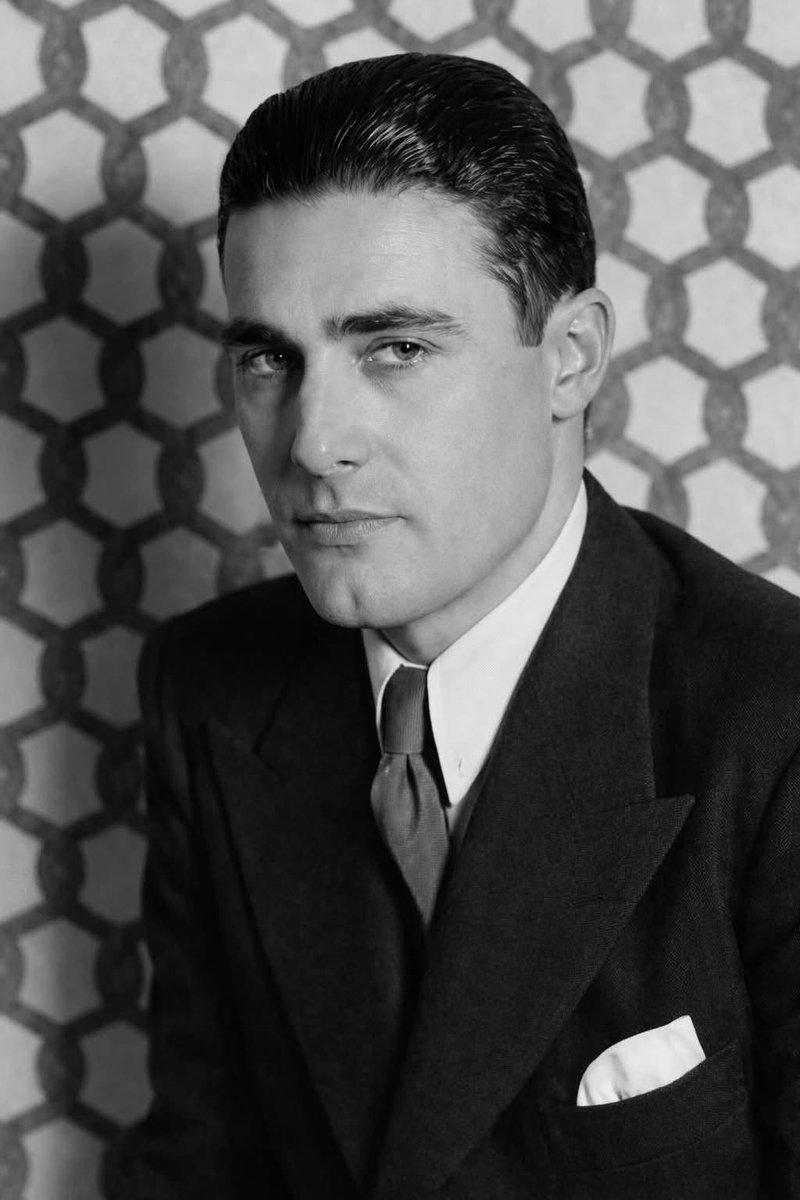
In 1942, a drunk German officer sat at dinner and bragged about the Jewish woman he had selected from the brothel the Nazis had forced open in town. He said her name out loud. The Tunisian Arab sitting across from him stayed calm, smiled, poured more wine, and finished the meal. Then he drove the officer home, sped through the dark streets, and knocked on a door close to midnight. That night, he hid 25 people for four months. He never spoke about it again.
His name was Khaled Abdul-Wahab. He was 31 years old, a wealthy Muslim Tunisian who had studied art and architecture in New York and spoke fluent German. Nazi officers trusted him. They invited him to their dinners.
Tunisia was the only Arab country directly occupied by Nazi Germany during the war. Jewish families were pushed from their homes. More than 5,000 Jewish men were sent to forced labor camps. Yellow stars marked every chest.
That December night in the coastal town of Mahdia, Khaled listened as the officer boasted. The woman he named belonged to a family Khaled had known all his life.
He left immediately. He drove through the night. He knocked on their door at midnight.
Pack nothing. Come now.
He gathered 25 people — mothers, fathers, cousins, and children — and drove them nearly 20 miles to his family farm, hiding them inside the olive press, stables, and storage buildings.
This was not one brave act. It was four straight months of courage.
He fed them while supplies grew scarce. He kept babies quiet. He trusted his servants to stay silent. When German soldiers arrived to count Jewish families, the hidden people pinned yellow stars onto their clothes and stood motionless. When the soldiers left, the stars came off again.
One night, a drunken soldier wandered onto the farm and discovered them. An eleven-year-old girl hiding under a bed watched him laugh and threaten to kill everyone there. Then Khaled appeared. She remembered him her entire life as a guardian angel. He calmly walked the soldier outside, took away his weapon, and sent him off the property.
Nobody on that farm died.
In May 1943, British forces liberated Tunisia. All 25 people returned home alive.
Khaled went back to a quiet life. He married, raised daughters, painted, and worked in government service.
He never told anyone what he had done. Not his wife. Not his children. No one.
He died on September 4, 1997, at the age of 86. His story was buried with him.
Ten years later, his daughter Faiza was sitting in a café in Paris reading a Sunday newspaper when she came across an interview with an American historian describing a Tunisian Arab who had hidden 25 Jews in 1942.
The historian mentioned her father by name.
She was 45 years old and had never heard the story before.
She contacted the historian. One of the children saved on the farm had left behind 83 pages of testimony before her death. Every detail matched.
“I rediscovered my father,” Faiza later said.
Khaled was nominated for Israel’s highest honor given to non-Jews who saved Jewish lives. He would have been the first Arab to receive it.
The committee declined, saying he had not risked his own life enough.
Faiza answered with a line history should never forget:
“My father opened his home to Jews. They did not open theirs to us.”
Today, the 25 people Khaled saved have hundreds of descendants living across Israel, France, America, and Tunisia. The little girl hidden beneath the bed grew up, moved to Paris, and built a family of her own. None of them would exist if Khaled had stayed silent that night.
He had everything to lose. He acted anyway. Then he spent the rest of his life saying nothing about it.
The world nearly forgot him twice. Now you know his name.
Again, the brutality is the point. Believe your lying eyes. You can't afford what you used to, and you're pointed to a road being built and told the economy is working. You're abducted, or beaten, and told "si sorry bas, we have a good constitution". Goons roam the streets and you're told security starts with you. This is an argument between Kenya's past and its future.
Four years of raiding payslips for "Housing" you'll never own.
Four years of SHA taking money while hospitals turn sick children away.
Four years of blaming a retired president.
2027 is personal.
This song is called Tres impoli (You are impolite) by Franco Makiadi, the leader of TPOK Jazz.
The song is 42 years old. It was recorded in 1984 in Gabon.
It is about an impolite, mannerless man.
The truth about this song is that Franco was impatient with a band member called Papa Ndombe Opetum, whom he sent to police remand for stealing a piece of meat.
Opetum was a stubborn, mannerless band member who, whenever he was sent to buy meat, sliced a portion for himself.
In fact, one of the songs composed for him by Simaro Lutumba, called Mbongo (Money), was later recorded by another obedient member, Djo Mpoyi, because Opetum had misbehaved.
When he sliced Franco's meat, Franco called the police on him. After staying in remand for 2 weeks, Opetum took off and rejoined Tabu Ley's band, Afrisa International.
He is seen here with Tabu Ley's band in a London Live concert, dancing like a comedian in Beyou Ciel's song Embouroumounkoue at 0:04 - 0:08 (https://t.co/isiWn6836M)
It is after Opetum left that Franco composed this song, Tres Impoli (Why are you impolite?)
My favourite verse in the song: 3:25
Chaussette etoboka - (Your socks are torn.)
Okoti na ndako ya bato oti makolo na mesa. Nzoka ezali mesa bato ba lelaka. - (You enter someone’s house and put your legs on the table. Yet people use that table to eat.)
This was Opetum's character.
Later, in 1988, when Franco was sick in Belgium, Opetum sneaked back to TPOK, where he composed two hits, ANGELA and TAWABA (https://t.co/aolQYdYCAe.)
Opetum collapsed and died in Kinshasa on 24th May 2012, aged 68 years.
Our girl @shikshaarora_ amerudi na Vitungu. They say a moving man will one day meet his luck, for the road favors a traveler... It's amazing how our boy values his children's education despite his financial difficulties. Remember to always fuel at @Shell_Kenya to support their good course of empowering the boychild. #KameivanaNaShellClub
I think the questions that we are not asking loudly enough are:
If Ebola is mainly in the DRC why is America crying the loudest about it?
How are Americans getting Ebola?
What are Americans doing in DRC?
PS in charge of internal security Dr. Raymond Omollo always posts sleek and amazing roads, beautiful stadiums the government of H.E @WILLIAMSRUTO built over the years. And Kenyas of roho safi take judicial notice of the good work done. But roads and other infrastructure aren't Dr. Omollo's docket. He is in charge of law and border...to make our streets and neighbourhoods safe and secure. Strangely, you will never see Dr. Omollo post anything meaningful on matters relating to the welfare and security of the citizenry. He knows too well that Boda Boda riders have taken over the streets of Nairobi and many cities, robbing and pillaging at will and without fear. The Westlands incident is the latest instalment of this sad state of insecurity in Nairobi. But such occurrence are many and frequent. So, Dr. Omollo please, leave matters of roads and stadiums to CS Chirchir and CS Mvurya...when will you address the work you are employed and paid for?
X is a public platform.
Public participation now!
It is a legal requirement .
If you want me to impeach the dumb guy!
Retweet and like.
24k likes guarantee progress .
Lets do this for our nation.
Kenya needs a renaissance !
Bruh! 16 children are dead in a school fire. We are opening borders up to terrorism & Ebola. Dawa zimelala KEMSA expired. Children & women are dying everyday. Fuel prices, proposed finance bill, murder in police cells, looting, education ruined, unemployment, pia wewe hutajam?