Building KeepRate — tax clarity for gig workers, freelancers, and independent earners.
We help people understand what they actually keep after taxes, track mileage/deductions, and plan quarterly payments before tax time gets painful.
Need: beta users in the 1099/gig-work world + intros to creator/community leads, gig worker groups, and operators who understand fintech/tax.
https://t.co/R9wgXuDHpf
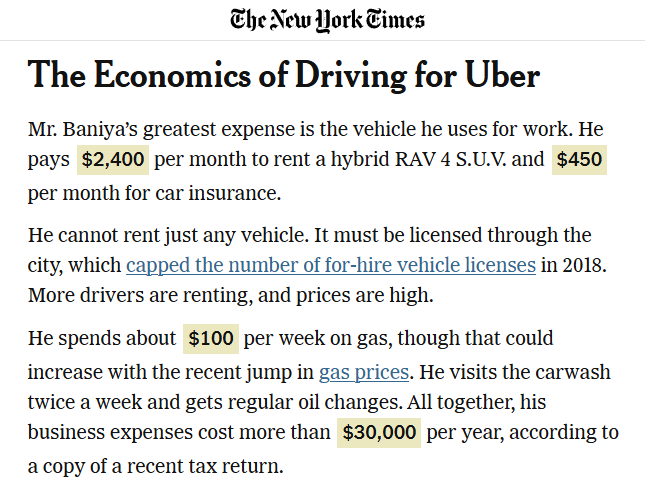
The New York Times has an article examining how a Nepalese Uber driver named Anup Baniya supports a family on $25k take-home pay.
Midway down the article, we learn a shocking fact: Baniya pays $2,400 per month to rent a Toyata RAV4 hybrid SUV. A new RAV4 costs around $32,000 for a base model. The monthly payment on a 60 month financing plan is $629. So why is this guy paying four times that?
Because NYC caps the number of licenses it grants for for-hire vehicles, so people with the licenses rent out their cars and plates to people who don't have them for hundreds of dollars per week.
But why would anyone take such an arrangement? Why would Baniya pay $30k in overhead to earn $25k? Why doesn't he just walk into a McDonald's and ask for an application? Hourly fast-food workers earn about $40k per year in NYC.
According to the article, Baniya drives under this arrangement because he likes being able to choose his own hours, though he complains about the impact of sedentary 10 hour driving shifts on his health. But if you find that unpersuasive, another possible reason someone might work under such an arrangement could be that his legal status bars him from other work (the article does not say whether Baniya is legally allowed to work in the US).
Platforms like Uber require drivers to provide Social Security Numbers to set up a driver account, but illegal immigrants routinely circumvent this by buying or renting active accounts from other people who are legally allowed to have them. A recent Transunion survey of gig workers found that 45% of respondents had rented out or sold access to an account.
The article mentions "a recent tax return," but that doesn't mean Baniya is here legally. Illegal immigrants in New York file tax returns under ITINs, which enables them to get refunds for taxes withheld, as well as qualify for public subsidies on health insurance and childcare. Illegal immigrants who file this way are protected from immigration enforcement by New York's sanctuary law.
KeepRate is now in beta.
We’re building a simple tax clarity app for gig workers who want to know what they actually keep after taxes, mileage, write-offs, and quarterly payments.
No bank login. No ID upload. Just clearer numbers before tax season surprises you.
@TheGeorgePu I mean it is unsustainable to have unlimited for sure. It was long coming and other companies has started doing or gonna do the same thing for sure