Today, June 5, marks eight years since photo journalist David Gilkey and Afghan interpreter Zabihullah Tamanna were killed while on assignment for NPR in Afghanistan. We remember them as colleagues, as professionals, and as friends.
https://t.co/S1UnYMQlBM
I just wanted to say thank you for all the prayers, kind words, and love that you all have shown our entire family these last few days. Every text, comment on social media, and beautiful tribute has brought us some light. It means so much to hear what a special woman she was to you all, as well. From the bottom of our hearts, thank you. 🤍
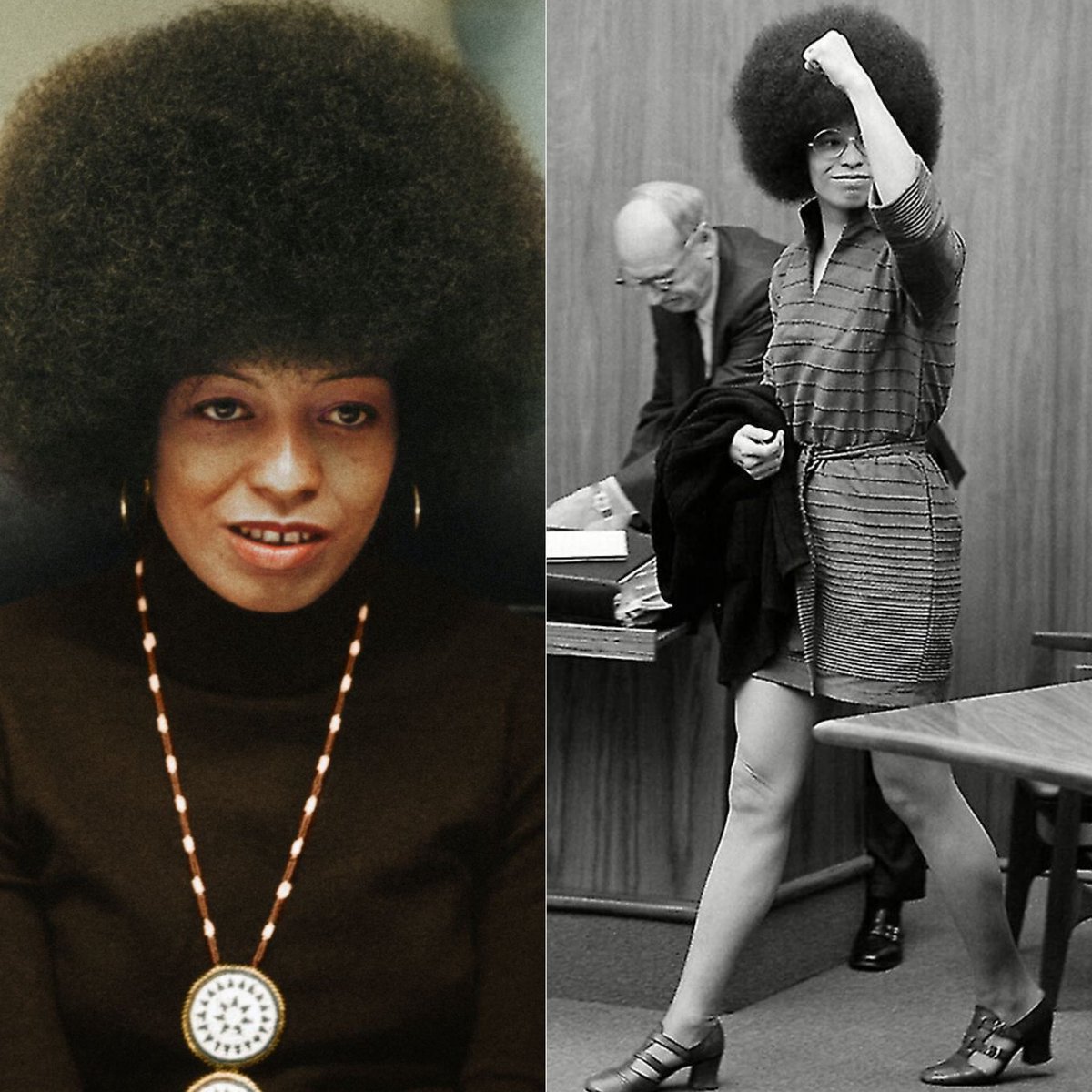
On this day in 1972, Angela Davis was acquitted of charges stemming from a 1970 courtroom shootout.
Angela Davis, an iconic figure in the Civil Rights Movement and a prominent political activist, faced trial in 1972 on charges related to a courtroom shootout in Marin County, California.
Angela Davis, a scholar and member of the Communist Party USA, was a prominent advocate for prisoners' rights and an outspoken critic of racial injustice. In 1970, firearms registered to Davis were used in an armed takeover of a courtroom in Marin County, California, in an attempt to free the Soledad Brothers (3 black inmates charged with the murder of a prison guard).
The incident resulted in the deaths of four individuals, including a judge. Angela Davis was charged with aggravated kidnapping and first-degree murder in connection with the courtroom incident.
Her arrest and subsequent trial drew international attention, sparking a global "Free Angela Davis" campaign. The trial commenced in March 1972.
Davis was defended by a team of notable lawyers, including Howard Moore Jr., Leo Branton Jr. and Doris Brin Walker. The prosecution argued that Davis was complicit in the planning of the escape attempt, while the defense contended that she was being persecuted for her political beliefs and activism.
Her trial highlighted issues of racial inequality, the justice system's treatment of African-Americans, and political repression. Angela Davis was acquitted of all charges on June 4, 1972, after a 13-week trial. The jury concluded that she had not been involved in the planning of the kidnapping and murders.
“I had him in the viewfinder,” Mr. Edmonds said in an interview with the Gannett News Service in 1982. “He waved once to the right and turned to the left as I pushed the shutter down. That’s when the shots rang out.” https://t.co/jTYTwpslns
"Tiny Desk Concerts Japan can become a place for the full spectrum of Japanese music to shine, not just the top-level stuff. This is actually the function of Tiny Desk Concerts Korea, the first non-American version of Tiny Desk..." https://t.co/VMzo4j5X7j
"Phil’s family had a well-stocked collection of records at home, which provided the first courses of his musical education...and with a small income from a newspaper route, the only thing he could afford was a plastic harmonica." https://t.co/GuKdvdve18
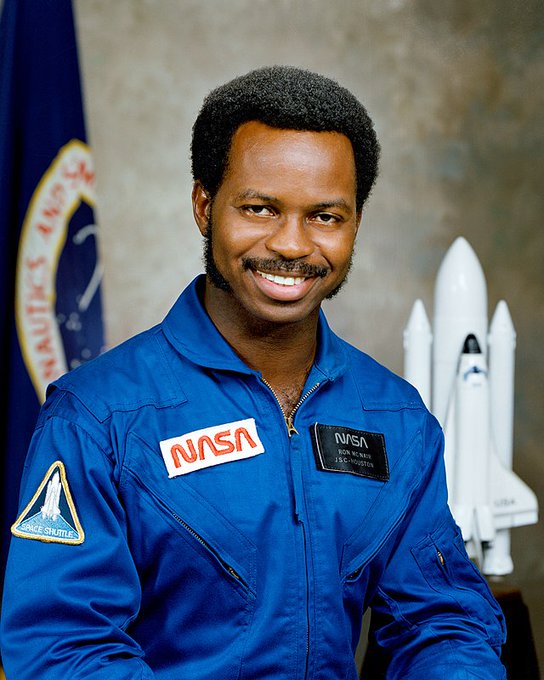
In 1959, 9 yo Ronald McNair was told he couldn't check out his books from Lake City's segregated library. He went on to become Karate champion, earned an MIT PhD in physics, and became a NASA astronaut.
Today that library is named after him.
"Since my first day as an intern, I was rattling off weird ideas, pipedreams, strange pitches—I didn't really expect anyone to take them seriously...I was blindsided by the generosity...they were encouraged and pushed along."
https://t.co/vkgdH6jf9T
"Beyond his work to make Tiny Desk one of the most in-demand live music platforms in the world, he unapologetically stands up for culture with everything he touches," said Keith Jenkins, Vice President for Visual and Music Strategy for NPR.
https://t.co/prmzCPhvMe