Let’s be clear about where we are, because there is a lot of noise surrounding the current security situation in Europe.
A lot of headlines keep talking about invasion after invasion but the reality is much more complicated. The war in Ukraine is likely to continue for a long time, and European security policy needs to be built around that reality rather than around the expectation that Russia will suddenly collapse or that the war will simply disappear.
Will Russia face serious problems? Absolutely. The war is costing Moscow enormous amounts of money, equipment and personnel. But expecting Russia to collapse is not a strategy. There are also countries that have no interest in seeing Russia collapse and will continue supporting Moscow in different ways.
At the same time, NATO can and should do more. The Alliance has been too slow in some areas to adapt to modern warfare. Defence cannot be based on the assumptions of decades ago.
Drones, cruise missiles, electronic warfare, GPS disruption, cyberattacks and increasingly sophisticated unmanned systems have fundamentally changed the battlefield.
At least we are seeing some adaptation. When a drone actually enters allied airspace and the circumstances require an interception, shooting it down is better than simply watching it.
But the biggest test facing NATO is not technological.
It's unity.
NATO has never really been tested in this way. Today, it is being tested and every member looks first at its own region and its own security priorities.
Italy has major concerns in the Mediterranean and around Libya. Spain has its own strategic concerns around North Africa and Morocco. Poland and the Baltic states see Russia as an immediate and potentially existential threat. Other members view the Russian threat very differently.
That does not automatically mean NATO is divided or becoming irrelevant. But it does demonstrate how difficult it is to maintain a common perception of the threat when every country has different geography, interests and political priorities.
This is why I believe that, alongside NATO, strong bilateral and multilateral security agreements with clear defence commitments could provide additional guarantees. Article 5 remains fundamental, but its political interpretation can create uncertainty in a crisis. Clearer commitments between allies could make deterrence more credible.
And if there were genuine preparations for an invasion of NATO territory, we would see the signs. Are military facilities and infrastructure being built closer to NATO borders? Yes. Will they host more troops, equipment and capabilities? YES. But these things take time.
As long as NATO manages to keep its footing and, most importantly, maintain its unity, the Alliance should remain in a strong position.
The bigger uncertainty is political.
Europe is going through major political changes, and there will be many more over the next few years. Governments will change, priorities will change and public opinion will change. Some of those changes will significantly alter how individual countries approach Russia and Ukraine.
And honestly, I doubt every one of those changes will be good news for Ukraine.
Then there is the issue of hybrid operations.
Will they continue? Absolutely. That is precisely why they are called hybrid. Much of this activity happens behind closed doors: intelligence gathering, identifying networks, arresting suspects, expelling agents, disrupting operations and dealing with incidents that never make the headlines.
There are also cyberattacks, sabotage investigations, disinformation campaigns, GPS interference, suspicious incidents and other activities where attribution is extremely difficult.
There has also been a significant amount of luck involved.
Look at how many drones, missiles and other incidents we have already seen around the region. So far, we have largely avoided mass casualties or a major strike on critical infrastructure in NATO territory.
But luck does not last forever.
The more incidents occur, the greater the possibility that eventually something goes seriously wrong a populated area is hit, critical infrastructure is damaged, or an incident escalates beyond what anyone intended.
That is why the answer cannot be panic, but neither can it be complacency.
Whether we are talking about an invasion or not, military movements will be seen, preparations will be monitored, provocations will continue and hybrid operations will continue.
The question is whether Europe and NATO can remain united enough to respond when the situation becomes more difficult.
Could NATO eventually become less relevant? Who knows.
But one thing is certain: this is the most difficult test the Alliance has faced in its history.
And finally, don’t let every headline make you panic. Things happen, incidents happen, and the security situation is serious but that doesn’t mean every development signals an imminent war.
For the rest, time will tell.
Anyway, that’s my view.
T5 at Qatar North just went offline. We know because we can see it from space.
Kayrros LNG Intelligence monitors thermal signatures at individual train level across every major LNG facility. Proprietary satellite data, direct from the facility, in real time.
Yesterday's image: thermal signatures at T6 and T7 North only. T5 North, active last week, is now dark. Five trains online across QatarEnergy facilities in total, down one week-on-week.
The market narrative this week has been about Qatari capacity recovering. Proprietary data tells a different story, and tells it first.
#LNG #Qatar #Kayrros #EnergyMarkets
*Data as of 12 Aug 2026
War with Iran is effectively over.
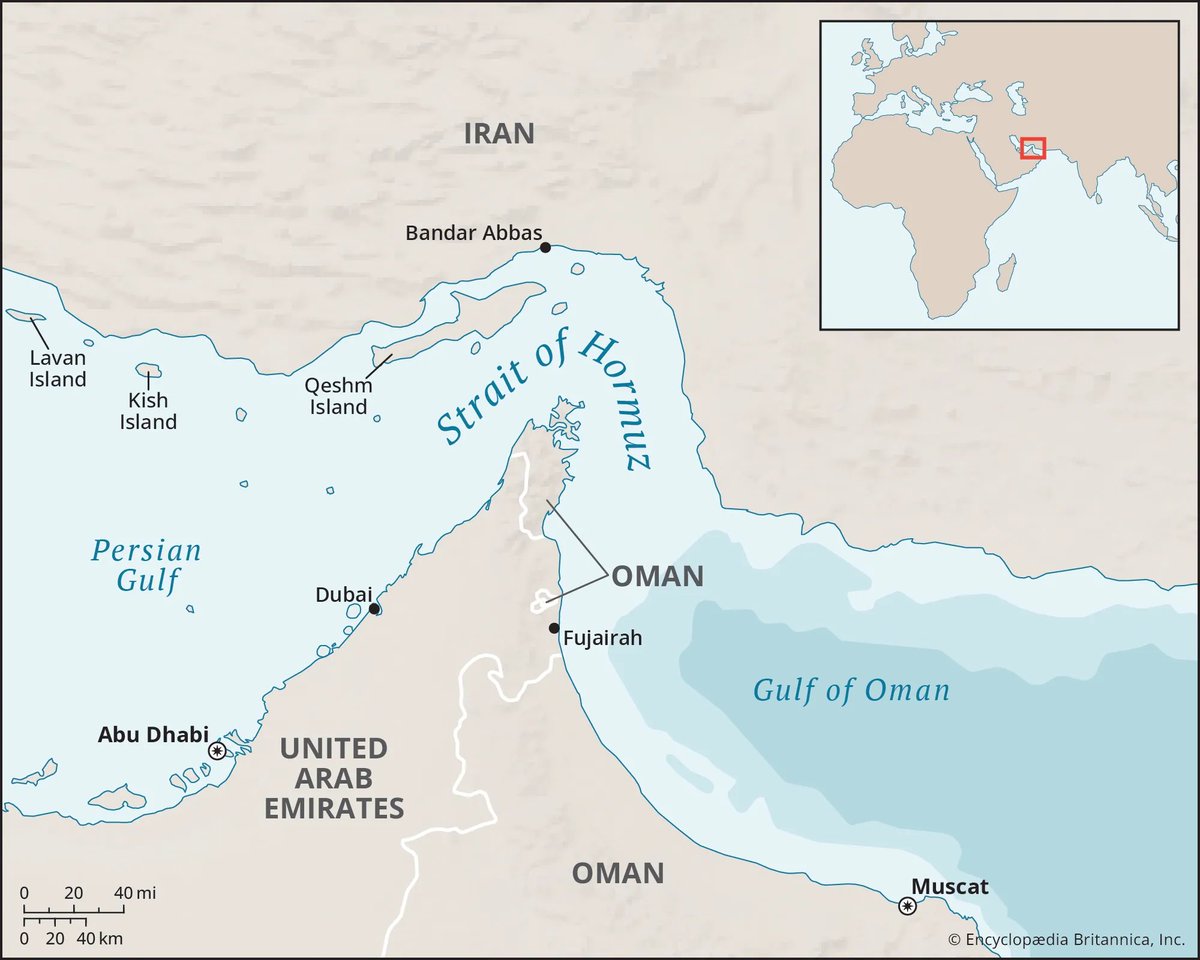
I expect that Washington maintains its current posture rather than pursuing another escalation. The U.S. is gonna keep forces in the region, continue maritime security operations around the Strait of Hormuz, and avoid a wider conflict. The conflict will now be entirely focused on Saudi vs Houthis.
If that’s the case:
- Shipping disruptions and shipping attacks are likely to continue for the foreseeable future.
- U.S. forces will pull out of the Strait of Hormuz and let Iran take control, and Trump is gonna call himself a man of peace and lie about how well he handled the situation.
- Potentially we will see Israel vs Iran being the main thing and the U.S. will just provide intelligence.
- Saudi Arabia v.s. the Houthis will be the main card and groups in Iraq will probably throw a rock across the border once a month.
Trump will avoid another escalation before the election and leave responsibility for Iran to the next administration, similar to how he messed up Afghanistan and is entirely to blame, but most of the blamed was put on Biden cause it happened while he was in office. He's gonna sit in the Oval Office and change his mind back and forth for the next 2 years and that's it. Trump's time in office is done, in my opinion. No Cuba, no Iran. He's just gonna keep issuing threats and shift focus back to Ukraine, probably.
Iran’s Supreme National Security Council secretary Mohammad-Bagher Zolghadr says the Strait of Hormuz will remain closed unless the U.S. changes course — demanding an end to threats and attacks, withdrawal of U.S. forces near Iran, sanctions relief, release of frozen assets and compensation for war damages.
Man, I love these IRGC pages run by idiots.
IRGC, if you're gonna pay idiots to make propaganda posts for you, at least pay me I'll do a good job and make it believable.
#BREAKING
Per media advisor to the Bahrain King, Bahrain is currently confronting an aerial attack by Iran.
Sirens have gone off a few hours ago due to the attacks.
I have a feeling this 60 day ceasefire between Iran and the U.S. that is supposed to be announced today, will fail.
Clearly, there is a lack of coordination and communication between the IRGC and the Iranian negotiators. Either we see a ceasefire signed and then missiles in the air 12 hours later, or we don't even get a deal signed.
Iran and Oman are expected to announce a deal within 24 hours regarding the Strait of Hormuz with the following guidelines :
- 7% share of the revenue from every commercial ship that passes through the Strait of Hormuz goes to Iran (The U.S. wanted 5%).
- Ships belonging to Russia and China will be exempt from this % charge. (Unclear reports suggest Iraq could be the only Gulf state granted exemption)
- Ships will only be permitted to transit from the Omani side of the Strait after receiving Iranian authorization.
If the U.S. accepts this, they'll be getting slapped in the face by the Iranians. 2% more + Exemption for China and Russia.