LAST tweet for #ENGL3220 - THANK YOU to @_JoyCastro for a rich semester of fruitful discussion & examining the “connective tissue” of narrative. An uplifting reminder to use our writing as a vessel for sociopolitical intervention, advocacy. It has been a joy to be your student.
Smith's "Flores Woman" - a reminder of life’s music reverberating thru our nature, if only we take a second to observe, pause. This ephemeral life commands us to use our voice to advocate for our human family & our planet. #ENGL3220#EarthDay@PoetryFound https://t.co/9qOQzRAwIv
In "Dispatch from Flyover Country," @megogieblyn exhibits ephemerality of the Midwest thru diction - "slippery," "gateway funneling travelers." Passage of time & change captured thru a “rash of artisanal shops” & “hinterland becoming conscious.” #ENGL3220
https://t.co/f9p7JF0bCg
A fav poet @kaysarahsera shares a poem by @NifMuhammad about rejections from a publisher - a topic that #ENGL3220 discussed recently. Rejection - the “writer’s version of acquiring scrapes and bruises.” Not a reflection of WHO the writer is. @parisreview https://t.co/RG6N9VHXDQ
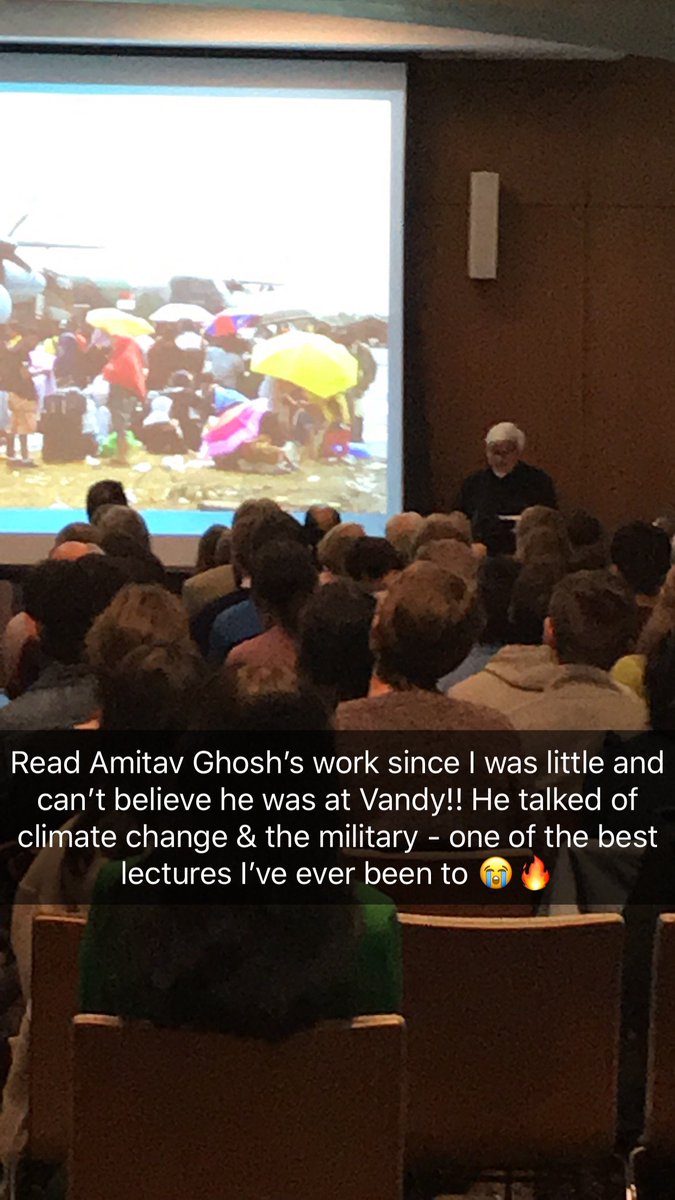
Still in awe of @GhoshAmitav’s talk yesterday - weaved personal reflection into the history of the Indian Ocean. A call to approach climate change w/ urgency & hope. Much like writing personal (political) essays - the art of writing that wrestles w/ nature/the world. #ENGL3220
In “10 Best American Essays,” @lsjamison declares the personal essay as political. @salesses' urgent, painful piece does exactly that - he viscerally details the racially-marked flaws of US healthcare & his wife’s “too sick, too Asian” body. #ENGL3220
https://t.co/EAybDV7VGO
Thank you @Karen_Palmer for a stirring portrayal of books as companions - healers willing us to be the protagonist in our own story. A raw gesture to the spine & heartbeat of books, their steadiness - whispering to us to love & have courage. #ENGL3220@VQR https://t.co/IUrLeK93wV
Body-centered details in “Turn, Bend, & Spread” evoke visceral feelings in the reader. Reveals the unseen aftermath of family visits & prison ordinances threatening to strip away dignity. Thank you, Michael Fischer for your bravery. #ENGL3220@brevitymag https://t.co/UuntkmDYYh
This semester, I have felt more emboldened than ever to experiment w/ psychic permission, not for myself, but for the reader, to explore my work w/out holding their hand. As our professor @_JoyCastro advises, “Trust that the reader is even smarter than you are.” #ENGL3220
Brenda Miller’s “The Shape of Emptiness” weaves delicacy into the heart of creative nonfiction - her students as teachers to one another, quilt, soap, washing essays, play-dough - love & loss depicted thru creation from white space.
#ENGL3220@brevitymag https://t.co/ejaKHbE78h
In “Swamp Boy,” @rickbass27 begins w/ “There was a kid…” & ends w/ “I was that boy.” Psychic distance decreases as Bass brings the reader face-to-face w/ Swamp Boy thru use of “I" - a searing moment, then zooms out again, describing rain falling & swamp life. #ENGL3220
“How do you want the movie of your essay to open?” @_JoyCastro prompts our workshop. Psychic distance. I wish to unveil my next piece w/ measured balance - inviting readers to understand from outside in. #ENGL3220@parisreview Gardner, "The Art of Fiction" https://t.co/PNDWILpwz9
"Up the Mountain Slowly, Very Slowly" - Bissell nuances his experience climbing Kilimanjaro w/ a keen eye toward race, class, gender, & his own body - his “brain mining...zircons of nonsense"...body doing "violence" to the mountain. #ENGL3220@nytimes https://t.co/V39AsvSduU
In “The Book of the Dead,” Catherine Moore captures the power of naming what was lost to the families of Hawk's Nest, of coal mines. Poetry (Rukeyser’s poems) “fills the gaps” & paves ground for healing - for all.
@oxfordamerican@PoetryFound#ENGL3220
https://t.co/r8X3B1bbKQ
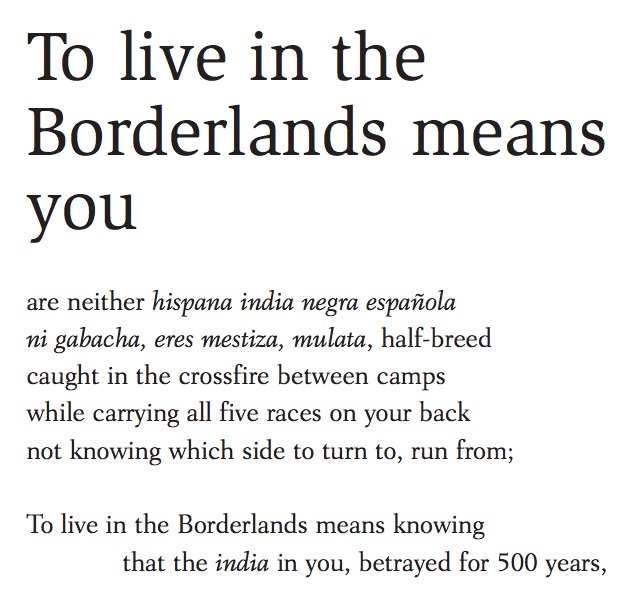
Language informs our thoughts, shapes our worldview & identity. I constantly think about my Thai & American identity & how it translates to my writing - am reminded this morning of a Gloria Anzaldúa poem - a mélange of culture, love, navigating the space in-between. #ENGL3220
I'm exploring ways to write INTO conflict as @_JoyCastro advised. In “Sparrow Needy," McClane depicts conflict via BODY: “his spine...infected w/ a deadly virus,” “body in its oscillations was his language,” “body...yawing between anticipation & dread." #ENGL3220@kenyonreview
I wish to be a public health servant & share stories that empower others. @kwamedawes does exactly that as he begins his essay w/ "There are two Jamaicas," depicting the nuances & truth behind Jamaicans living with HIV/AIDS.
@VQR#ENGL3220
https://t.co/h8GCDn5n7E
In #ENGL3220, Professor @_JoyCastro prompts students to deeply explore the story behind our names.
"Kelly" - a vessel containing multiple identities/cultures/meanings & more - what else will I uncover as I delve deeper into my name, a primer to who I am?
https://t.co/K484vkLINP
I wrote my 1st piece for #ENGL3220, “Alive in the Land of Smiles,” on people living with HIV/AIDS in Thailand & their empowering stories of hope. Reminded me of @lsjamison’s words - the essay as made of “proximate lives & bodies.” Love, pain, #community - what makes us human.